Are O-type stars the hottest?

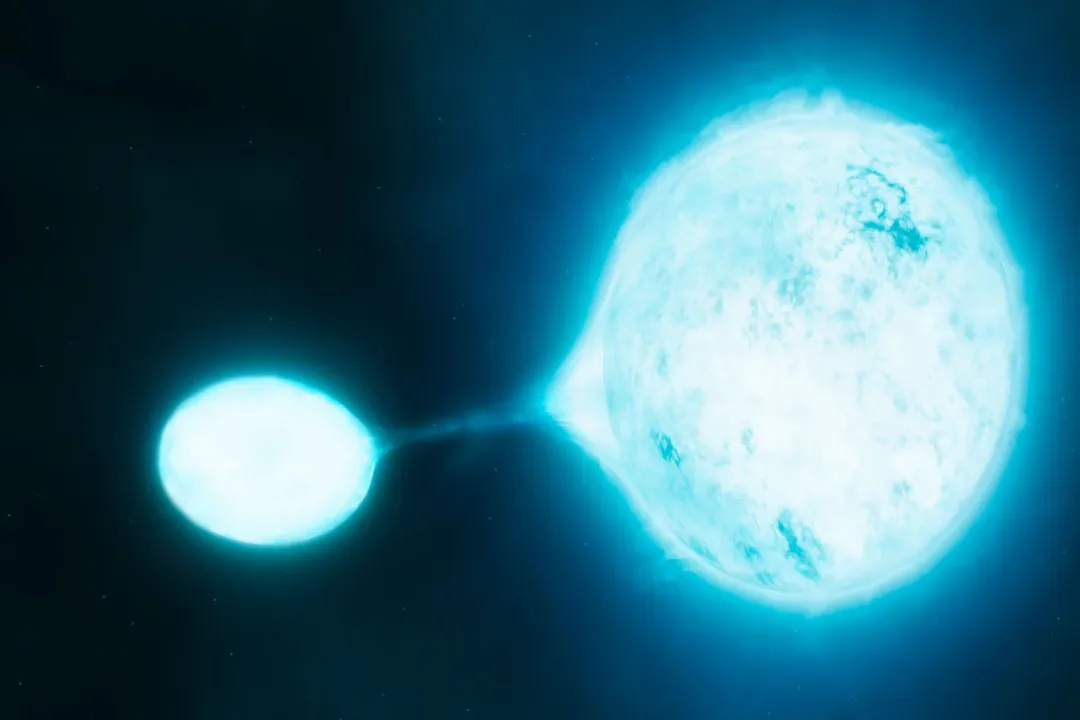
The short answer to whether O-type stars are the hottest is an emphatic yes. Within the primary sequence of stellar classification, these celestial titans occupy the very top rung, defined by their extreme surface temperatures, immense mass, and brilliant luminosity. [1][6] They represent the most energetic and fleeting members of the main sequence family that our current astronomical understanding recognizes. [1]
# Spectral Ranks
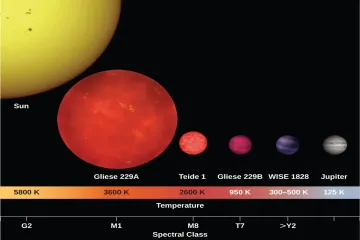
To understand just how hot these stars are, we need to situate them within the standard system used by astronomers to sort stars based on their temperature and spectra: the Morgan-Keenan (MK) system. [8] This system uses letters arranged alphabetically, starting with the hottest, most massive stars: O, B, A, F, G, K, and M. [8] Our own Sun is a G-type star, placing it squarely in the middle of this sequence, with a surface temperature around 5,778 Kelvin. [1][6]
O-type stars are the extreme end of this scale. [1] They are classified based on spectra that show evidence of the hottest possible atomic processes occurring in a star’s atmosphere. [6] Specifically, the hallmark of an O-type star’s spectrum is the presence of strong lines of ionized helium (). [1][6] It takes extraordinary heat—temperatures far exceeding what is necessary to strip electrons from hydrogen—to create and sustain significant quantities of helium ions radiating visible light, solidifying their position as the cosmic temperature champions. [4]
# Subdivisions Matter
Even within the 'O' group, there is a significant temperature gradient. Astronomers use numerical subdivisions, from 3 down to 9, with lower numbers indicating greater heat. [1] The hottest known stars currently fall into the O3 class. [1] A star designated as an star—an main sequence star—is at the absolute pinnacle of this thermal ladder. [5] For perspective, the coolest O-type stars might hover near $30,000$ Kelvin, while the hottest ones blaze at or above $50,000$ Kelvin. [6][4]
Consider this temperature spread: the difference between the coolest O-star (around ) and the hottest () is a gap of $20,000$ Kelvin. When we compare that to the Sun (), the difference between the Sun and the coolest -star is only about $24,000$ Kelvin. This means that the thermal range within the O-class alone is nearly as large as the entire temperature span separating the Sun from the hottest stars. A change of a single digit in the spectral classification here translates into an astronomical difference in internal physics and energy output. [1][7]
# Mass and Power

Temperature in a main-sequence star is inextricably linked to its mass. The intense heat of O-type stars is a direct consequence of the gravitational pressure created by their enormous bulk. [3] These are the massive stars, often exceeding $15$ to $20$ times the mass of the Sun, with the most massive examples potentially reaching $100$ solar masses or more. [1][9]
Because they are so massive, the core fusion processes—the burning of hydrogen into helium—occur at an unbelievably accelerated rate. [7] This extreme rate of energy generation results in immense luminosity; O-type stars can shine hundreds of thousands, or even millions, of times brighter than the Sun. [1][3] The energy output is so vast that it dramatically inflates the star's outer layers, making them extremely large, often $15$ to $20$ times the Sun's radius, though their sheer temperature dominates their apparent color. [1]
These stars are truly powerhouses of the galaxy. While the Sun releases energy steadily over billions of years, an O-type star exhausts its core fuel reserves in a cosmic blink of an eye. [7] This rapid consumption is precisely why they are so rare; they simply do not exist long enough to populate the galaxy in large numbers like smaller, cooler stars. [3]
# Color and Visibility
Given their extreme heat, the light emitted by O-type stars is not golden or yellow like our Sun; it is intensely bright blue or blue-white. [4] The peak emission for these stars falls deep into the ultraviolet portion of the electromagnetic spectrum. [6] While we perceive them as intensely blue from Earth, much of their most energetic radiation—the X-rays and hard ultraviolet light—is absorbed by our planet’s atmosphere, which is fortunate for life as we know it. [9]
If you were observing an O-type star from a safe distance, say a few light-years away, its sheer brilliance would likely make it the brightest object in its local star cluster, outshining dozens of dimmer stars easily. [7] They are visually spectacular but spectroscopically demanding due to the unique signature of their superheated gas. [6]
If you were able to construct a hypothetical, heavily shielded viewing platform near a relatively "cool" star (say, ), the constant bombardment of high-energy photons—mostly in the UV range—would necessitate shielding materials far beyond what is required for typical solar radiation. The energy flux would be so intense that materials used for conventional spacecraft would degrade rapidly through photo-dissociation, illustrating that their 'hotness' translates directly into a highly hostile environment for any nearby complex chemistry. [2]
# Short Lives
The relationship between mass, luminosity, and lifespan forms a critical point of comparison for understanding O-stars. While the Sun is expected to live for about $10$ billion years, an -type star may only survive on the main sequence for a few million years. [1][7]
This short tenure is a key characteristic. These stars are cosmic adolescents, burning through their nuclear reserves with astonishing speed. [7] Once the core hydrogen is depleted, the star rapidly evolves, usually leading to a core collapse and one of the universe's most dramatic events: a Type II supernova, often leaving behind a black hole or a neutron star. [1][9] The very existence of an O-type star in the galaxy means it formed relatively recently, as their existence time is too short for significant stellar drift or complex orbital dynamics to accumulate over galactic history. [5]
# The Rarity Factor
The rarity of O-type stars further emphasizes their extreme nature. They constitute only about one in every ten million stars in the Milky Way galaxy. [3] This low population density means that finding one often requires looking toward the youngest, most active star-forming regions, as they die so quickly. [3]
To put this scarcity into a local context, if you were to take a sample of $100,000$ stars chosen at random from the galaxy’s older, more stable population, you would likely not find a single O-type star among them. You would probably find many more -dwarfs (the coolest type) than -stars in that entire sample combined. [8] They are the unicorns of the main sequence—spectacular, powerful, and exceedingly rare because their energetic existence is inherently brief. [7]
In summary, O-type stars are decisively the hottest stars known, distinguished by temperatures often exceeding . [6] This temperature is not just a minor increment up the scale; it is a threshold indicating massive gravity, frantic nuclear fusion, unparalleled luminosity, and a life destined to end quickly and violently. [1][7] They are the fleeting giants that shape their local stellar environments with raw, ultraviolet power.
#Videos
Why Are O-Type Stars the Hottest and Bluest? - YouTube
Related Questions
#Citations
O-type star - Wikipedia
Why Are O-Type Stars the Hottest and Bluest? - YouTube
O Stars
O-type Stars - eSky - Glyph Web
r/astrophysics on Reddit: O-type main sequence stars and B-type ...
O-type star | astronomy - Britannica
Encyclopedia Galactica - O-type Star - Orion's Arm
Stellar Classification | The Schools' Observatory
O-Type Stars | Terraforming Wiki - Fandom