What is the hottest type of star letter?
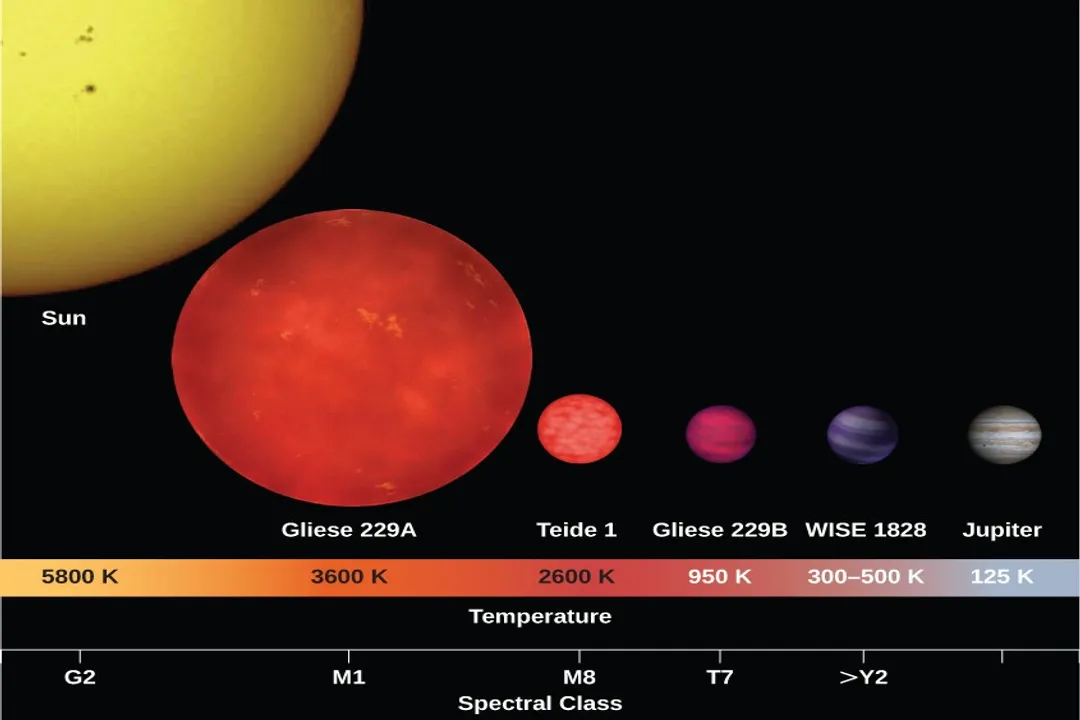
The sheer variety of stars visible in the night sky might suggest an infinite list of names, but astronomers have developed remarkably concise systems to categorize these celestial bodies based on their physical properties. [8] At the heart of this organization lies a sequence of letters, designed to immediately inform an observer about a star's surface temperature and, consequently, its spectral appearance. [1][4] When seeking the "hottest type of star letter," we are directly referencing this fundamental spectral classification scheme.
# Seven Classes
The backbone of stellar categorization uses seven main spectral types, often remembered by the mnemonic "Oh Be A Fine Girl/Guy, Kiss Me". [1][5] These letters, in order from hottest to coolest, are O, B, A, F, G, K, and M. [1][5] While these letters are often discussed in relation to a star's size—O-type stars being the largest and M-type stars being the smallest red dwarfs on the main sequence—the defining characteristic that dictates the letter assignment is actually the star's surface temperature. [5]
For instance, stars classified as G-type are those similar to our own Sun. [5] Conversely, the two extremes of the main sequence represent the opposite poles of stellar life: the O-type stars sit at the high-temperature, high-luminosity end, while the M-type stars are the dimmest and coolest. [5] It is important to recognize that size and color are consequences of the temperature profile revealed by the spectrum, not the primary sorting criterion for the letters themselves. [4] An O star is huge and hot because its extreme temperature forces the outer layers to expand and causes specific chemical elements to ionize in a unique way that creates a distinct spectrum. [4]
# Hottest Class
The letter corresponding to the hottest type of star is O. [5] These are the behemoths of the main sequence, possessing the highest surface temperatures of the standard classes. [5] Because of their intense heat, these stars emit the vast majority of their energy in the shorter, bluer end of the visible electromagnetic spectrum, making them appear brilliantly blue-white when viewed through a telescope or when analyzed spectrally. [4]
While the sequence is generally OBAFGKM, modern, more detailed classifications often add numbers after the letter to denote finer temperature distinctions—for example, an O3 star would be hotter than an O9 star. [1] However, within the primary seven-letter sequence, the O-class undeniably holds the title for maximum heat. These stars are incredibly luminous, often thousands or even millions of times brighter than the Sun. [7]

# Absorption Lines
The reason these letters align so perfectly with temperature lies in the physical interpretation of a star's light, which is gathered through spectroscopy. [4][8] When light from the star's interior passes through its cooler outer atmosphere, certain elements absorb photons at specific wavelengths, creating dark absorption lines in the continuous spectrum. [4] The pattern and strength of these lines depend critically on the temperature of the stellar atmosphere. [4][8]
For example, in the extremely hot O-type stars, the atmosphere is so energetic that hydrogen atoms are almost completely ionized—their electrons have been stripped away. [4] Consequently, the spectral lines for neutral hydrogen are actually quite weak compared to cooler stars where hydrogen is still primarily neutral. [4] Conversely, in cooler M-type stars, the temperature is low enough for molecules, such as titanium oxide, to form stable bonds in the atmosphere, leading to very strong molecular absorption bands. [4] The A-class stars, sitting somewhere in the middle of the temperature range, exhibit the strongest hydrogen lines because their temperatures are just right to maximize the number of hydrogen atoms existing in the first excited state, which is most efficient at absorbing light. [4]
# Stellar Mapping
This classification system is not merely an arbitrary list; it is intrinsically linked to the way stars evolve and spend their lives, often visualized using the Hertzsprung-Russell (HR) diagram. [7] The HR diagram plots a star’s luminosity against its temperature (or spectral class). [7] On this diagram, the vast majority of stars, including our Sun, fall along a distinct band known as the main sequence. [5][7]
O-type stars reside at the upper-left corner of this main sequence band, signifying high temperature and high luminosity. [7] Their lives, however, are short and dramatic due to their immense mass and high rate of fuel consumption. Conversely, the dim, cool M-type stars are found at the lower-right, representing incredibly long lifespans, often trillions of years. [5] Understanding this placement on the HR diagram gives context to the "hottest letter"—an O star is a short-lived, brilliant stage in a massive star’s existence. [7]

# Contextual Detail
The seven primary letters do not capture every single type of star known, but they provide the essential framework. [8] Astronomers often add Roman numerals to denote luminosity class, differentiating, for example, a bright giant from a main-sequence star of the same spectral type. [1] A common example is G2V, where G2 is the temperature/spectrum subclass, and the Roman numeral V indicates it is a main-sequence star, which is the classification for our Sun. [1]
The concept of a "hottest star letter" is therefore somewhat simplified by focusing only on the main seven. There are cooler classes that have been added as our understanding of very low-temperature objects improved, such as L, T, and Y spectral types, which include brown dwarfs—objects too small to sustain hydrogen fusion like true stars. [1] However, these later classes are significantly cooler than even the M-dwarfs.
If one were to track the very hottest objects observed—those just starting to fuse hydrogen or those that are extremely young—they would still fall within the O-class, perhaps O1 or O2, confirming that O remains the designation for the peak of stellar heat as defined by the established spectral sequence. [1] Given that O stars burn through their fuel so rapidly, an interesting implication is that while they are the hottest, they are also statistically the rarest type we see in the local universe at any given moment, simply because their stellar lifespan might only be a few million years compared to the billions of years a G or K star is active. Thus, cataloging an O star is a much rarer observational event than cataloging a G star. [5][7] Furthermore, while the primary sequence is OBAFGKM, the physical reality of stellar atmospheres means that astronomers often break these down further; for instance, a B-type star might only be a few thousand degrees cooler than the hottest O star, but the subtle difference in atmospheric hydrogen ionization leads to a distinct spectral signature that warrants the separation.
Related Questions
#Citations
Stellar classification - Wikipedia
Stellar Classification | Beyond Universe Wiki - Fandom
Types of Stars - Name a Star
The Spectra of Stars (and Brown Dwarfs) | Astronomy
For the types of stars we see, what does to the letters O, B, A, F, G, K ...
Star Classification | CK-12 Foundation
HR Diagram
Stellar classification | Types, Spectral Classes & Luminosity
Stars are classified based on their temperature and luminosity. The ...