What are the colors of a star in order from hottest top to coolest bottom?
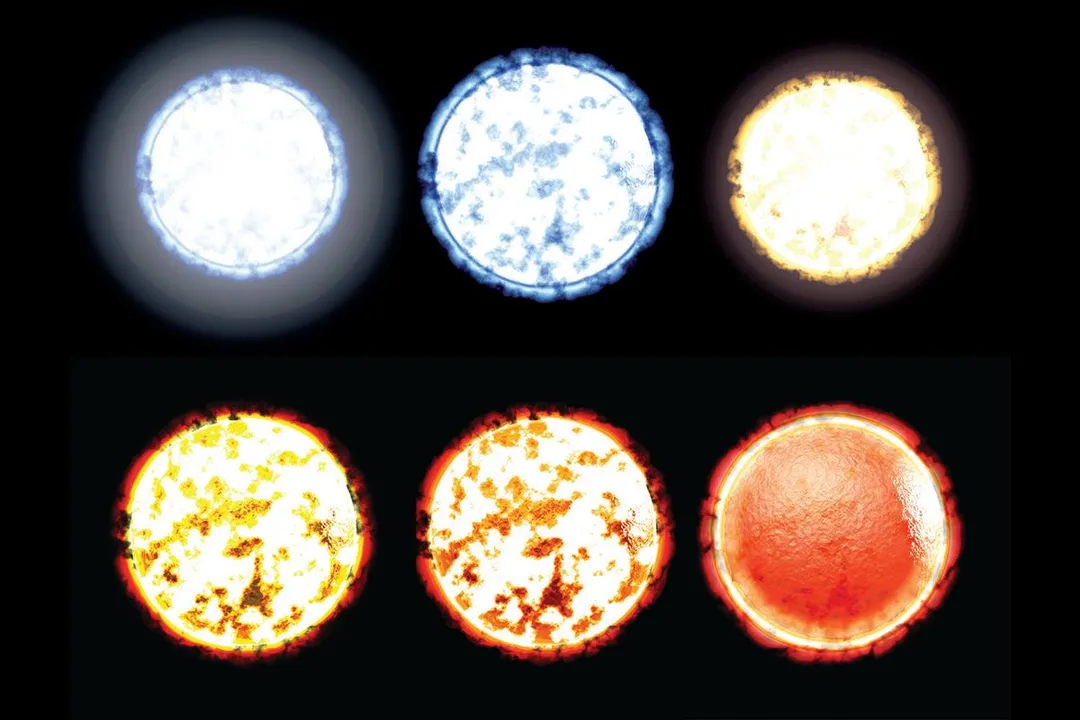
The hue radiating from a star acts as a direct indicator of its surface temperature, providing astronomers with an immediate, observable clue about the object's characteristics. [1][2] When arranging stars by color, there is a distinct sequence that runs from the searingly hot on one end down to the relatively cool on the other. [2][6] Understanding this progression allows stargazers to gauge the immense energy output of distant suns just by observing the light that reaches our eyes. [4]
# Color Temperature Link

The fundamental relationship between a star's color and its temperature stems from the physics of light emission. [5] A star glows because it is intensely hot; the peak wavelength of the light it emits shifts depending on that surface temperature. [5] Very hot objects radiate energy across a broad spectrum, but the dominant color we perceive changes predictably as the temperature varies. [2] In simple terms, the hotter the star's surface, the bluer its light will appear, while cooler surfaces trend toward the red end of the spectrum. [1][6]
# Hottest Blue
At the very top of the temperature scale are the blue stars, representing the hottest class of stellar objects visible to us. [1][2][6] These stellar behemoths burn at the highest surface temperatures recorded among stars. [4] Following closely behind the pure blue giants are stars described as blue-white, indicating they are still incredibly hot, though slightly cooler than the most extreme blue ones. [2] When looking through a telescope, spotting a brilliant, almost piercing blue star immediately signals a massive, very energetic body dominating that region of the sky. [9]
# Mid Spectrum

Moving down the thermal ladder brings us to white stars, which occupy a central position in the color sequence. [2] These stars possess a surface temperature intermediate between the hotter blue varieties and the cooler yellow and red stars. [2] As the temperature decreases further, the color shifts again into yellow-white before settling into the familiar yellow category. [2]
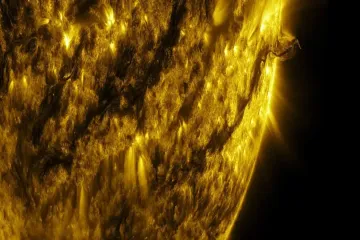
Our own Sun is perhaps the most famous example of a yellow star. [1][4] While we perceive the Sun as yellow, its light output peaks in the green-blue part of the spectrum, but due to atmospheric scattering and how our eyes integrate the full range of colors, it appears yellow or white to us on Earth. [9] Stars like the Sun are significantly cooler than their blue or white counterparts, making yellow a marker for mid-range temperatures in this sequence. [4]
# Coolest Red
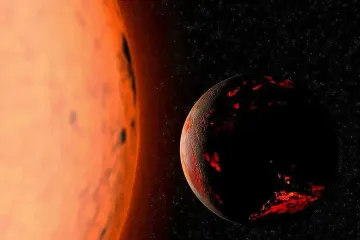
The coolest stars visible through observation terminate the sequence at the bottom with shades of orange and deep red. [2][6] Red stars have the lowest surface temperatures among the stars that produce visible light. [1][6] These cool, dim giants contrast sharply with the brilliant blue stars, both in terms of temperature and lifespan, though all these colors still represent immense heat when compared to everyday terrestrial objects. [4]

# Color Temperature Sequence Summary
To better visualize this temperature gradient, one can arrange the primary colors observed in the sky from hottest to coolest, which corresponds to the sequence from shortest to longest peak wavelengths visible to the eye. [2][9]
| Color | Relative Temperature | Spectral Type Analogy |
|---|---|---|
| Blue | Hottest | O, B |
| Blue-White | Very Hot | A |
| White | Hot/Mid-Range | F |
| Yellow-White | Mid-Range | G (like the Sun) |
| Yellow | Cooler | K |
| Orange/Red | Coolest | M |
| [2][4][6] |
It is fascinating to consider the sheer scale of the temperature differences represented by this visual scale. For instance, the hottest O-type blue stars can reach surface temperatures well over 30,000 Kelvin, while the coolest M-type red dwarfs hover around 2,500 to 3,000 K. [4] This nearly ten-fold difference in Kelvin temperature results in a dramatically different color output, showcasing how efficiently temperature governs the star's visible signature. [5] The visible range—blue through red—only captures the middle ground of stellar physics; stars far hotter than blue or far cooler than red exist but are often obscured or emit most of their energy in invisible wavelengths like ultraviolet or infrared. [9]
# Classification Context
Astronomers classify stars formally using spectral types, often remembered by the mnemonic "Oh Be A Fine Guy/Girl Kiss Me," which orders them by decreasing temperature: O, B, A, F, G, K, M. [6] This spectral sequence directly maps onto the color sequence: O and B types are blue, A types are white, F and G types are yellow-white to yellow (Sun is a G-type), and K and M types are orange and red. [4][6] This system, based on the absorption lines in a star's spectrum, provides a much more precise temperature gauge than simple visual estimation alone. [4] Knowing that a star's classification ties so directly to its color offers an excellent starting point for anyone interested in identifying celestial objects more accurately than just by appearance. For instance, a casual observer might note a bright white star; knowing that this corresponds to an A-type star immediately tells them it is hotter than the Sun (a G-type) but cooler than Sirius (an A1 star, which is very bright blue-white). [2]
# Observing the Rainbow
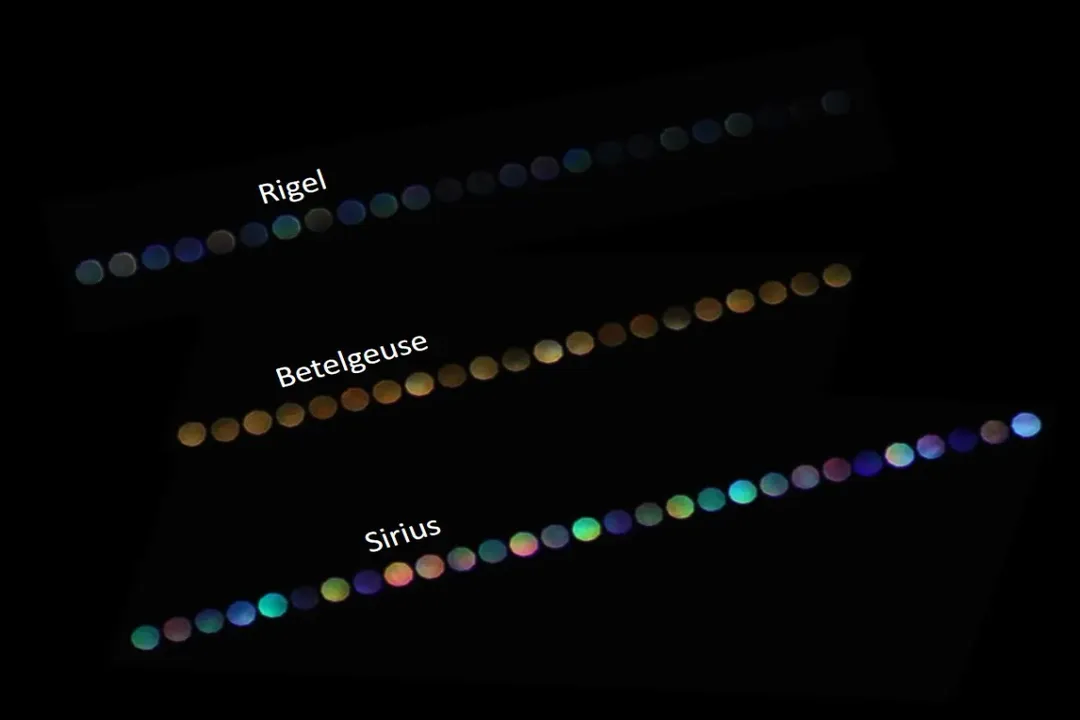
While blue, white, yellow, and red are the primary colors stars exhibit, achieving an accurate visual assessment can sometimes be tricky. [9] Atmospheric conditions on Earth can distort the light from stars, causing them to twinkle or shift color slightly, especially near the horizon. [9] Furthermore, our eyes have limitations in distinguishing subtle color variations, particularly when a star is faint. [9]
A helpful tip for those beginning to look for these differences is to observe very bright, prominent stars across the sky, ideally when they are high overhead to minimize atmospheric distortion. Compare Rigel (a blue-white giant) in Orion with Betelgeuse (a red supergiant, also in Orion) for the most dramatic, easily observable contrast in stellar hues. [1] This side-by-side comparison reinforces the simple rule: blue means hot, red means cool, with white and yellow falling in between. [1][6] This visible rainbow is not just a pretty pattern; it is a direct readout of stellar physics written in light across the cosmos. [5]
Related Questions
#Citations
Stars come in different colors, and their color reveals their surface ...
The Colors of the Stars From Hottest to Coldest - Science Notes
Star colours explained for beginners | BBC Sky at Night Magazine
Stellar Classification | The Schools' Observatory
The color of a star is a function of its surface temperature : r/spaceporn
Mastering Astronomy: Patterns Among Stars Flashcards - Quizlet
The colors of stars guide their temperature. Why? - Quora
What gives stars their colors? - Astronomy Magazine