Can shooting stars change color?
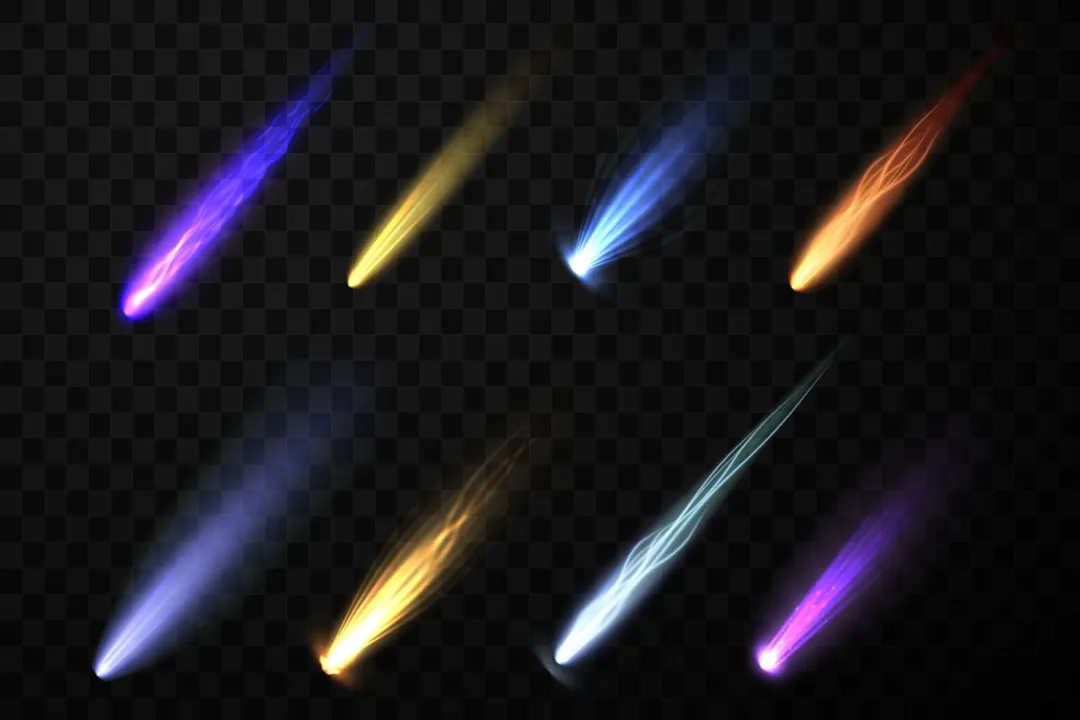
The streak across the night sky, popularly known as a shooting star, is certainly a dazzling, ephemeral sight, but the question of whether its color can shift during its brief appearance is answered with a definite yes. That momentary burst of light is not just a random flash; it is a high-speed chemical reaction taking place tens of kilometers above your head, making the resulting hue a direct reading of the object’s composition and the conditions under which it disintegrates. [5]
# The Flash
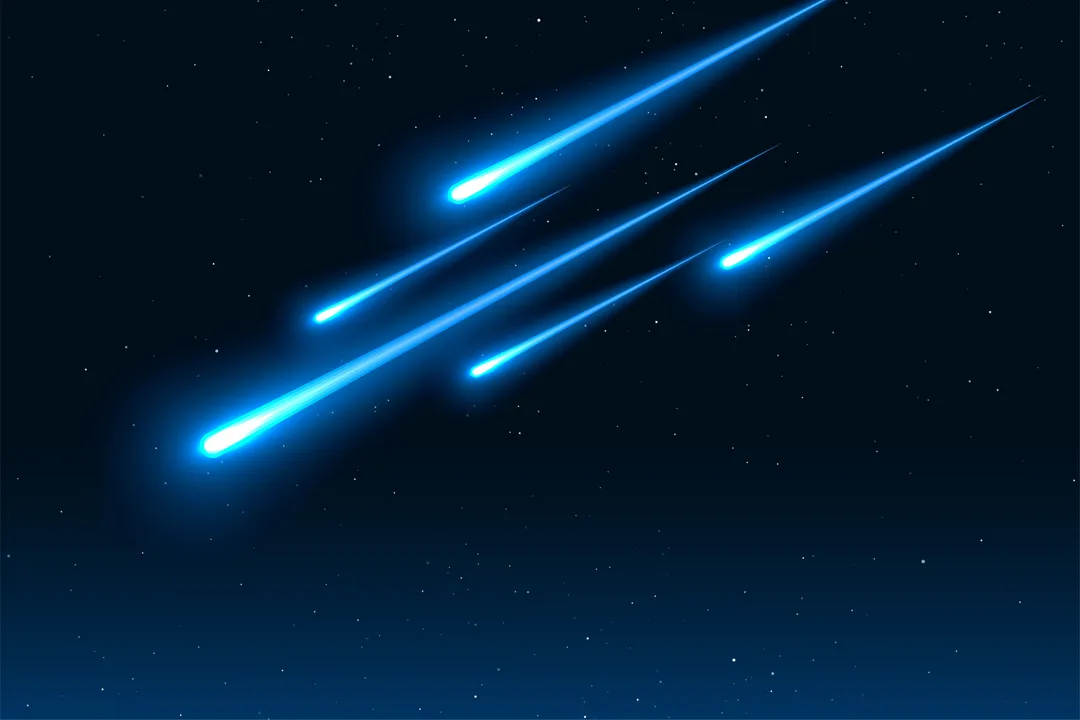
What we see as a shooting star is scientifically termed a meteor. It is the brilliant streak of light created when a tiny piece of cosmic debris, a meteoroid, slams into Earth’s atmosphere at astronomical velocity. [3] These particles, often fragments of asteroids or dust shed by comets, approach our planet at speeds that can reach 71 kilometers per second. [3] The light itself is not the particle glowing white-hot like a piece of metal in a forge, but rather a result of intense friction and compression. As the meteoroid plows through the air, it compresses the gas ahead of it, generating extreme heat. This heating sputters away the outer layers of the particle, vaporizing its constituent atoms. [3] These vaporized atoms then collide with atmospheric molecules, exciting their electrons to higher energy orbits. When those electrons fall back to their stable resting positions, they release energy in the form of visible light, a process akin to how a gas discharge lamp works. [3]
# Elemental Fingerprints
The specific color emitted during this ablation process is dictated by the chemical makeup of the meteoroid itself. [5] Different elements emit light at distinct wavelengths when ionized, creating a unique spectral fingerprint that an observer on the ground can see.
When considering the chemical palette, several key elements found in space rocks yield observable colors:
- Sodium (): This element typically produces an orange-yellow light. [3]
- Iron (): Iron-rich materials often contribute a distinct yellow glow. [3]
- Magnesium (): Magnesium vaporizes to create a blue-green or teal shade. [3][5]
- Calcium (): Ionized calcium atoms can introduce a noticeable violet or purple tinge to the light. [3][5]
- Nickel (): This element, often found alongside magnesium, contributes to a greenish-blue color, common in meteor showers like the Geminids.
It is interesting to note that not all colors come directly from the incoming rock. The atmosphere itself, composed primarily of nitrogen () and oxygen (), glows red when heated by the meteor's passage. [3] The resulting observed color is a mixture, depending on which emission source is stronger at that moment. [3]
| Element / Gas | Primary Color Contribution | Notes |
|---|---|---|
| Sodium () | Orange-Yellow | Common spectral signature. [3] |
| Iron () | Yellow | Prevalent in many rocky meteoroids. |
| Magnesium () | Blue-Green | Often associated with green streaks. [3][5] |
| Ionized Calcium () | Violet/Purple | Imparts a distinct tint when present. [3][5] |
| Atmospheric / | Red | Emission from the surrounding air. [3] |
Some older or less specific source material suggested copper produces green or silicates produce red. [4] While copper does burn green in laboratory flame tests, the scientific consensus points toward magnesium or nickel as the primary source for the vibrant green seen in many meteors, though the sheer variability of cosmic dust means that mineral composition is complex and layered. [3]
# Atmospheric Context
The speed at which the particle enters the atmosphere significantly modulates the final appearance, influencing the dominance of the meteoroid's chemistry versus the air's reaction. [5]
When a meteoroid travels very quickly—often those on a head-on collision course with Earth—the energy transfer is intense enough that the light emitted from the vaporized space dust tends to dominate the visual output. Conversely, slower-moving meteors, perhaps those traveling in the same direction as Earth’s orbit, may show a more pronounced red hue because the less intense heating allows the atmospheric nitrogen and oxygen emissions to be more visible.
This interaction between speed and material explains why faint meteors might look white to the eye, but a photograph taken under clear conditions can reveal surprising coloration. [5] The initial flash is a race between the vaporization temperature of the elements and the rate at which the atmospheric gases are superheated and ionized around the streak.
# Shifting Light
To answer whether a shooting star can change color, one must consider the internal structure of the meteoroid. If an object were composed of perfectly uniform material, the color would remain constant, fluctuating only slightly due to minor speed variations. [5] However, meteoroids are rarely uniform blocks of a single mineral.
The phenomenon of a single streak exhibiting multiple distinct colors, such as shifting from yellow to green and then fading to red, is a direct, visual signature of its layered or mixed mineral content, sequentially vaporized by the atmosphere's increasing thermal energy as it plunges deeper. [3] Think of it as a slow-motion fireworks shell where different chemical components ignite at different atmospheric pressures or ablation temperatures. For example, if a meteoroid has a casing rich in sodium (yellow/orange) that burns off first, followed by a core heavy in magnesium (blue-green), the observer will literally see the color change as the material exposed to the superheated air shifts from one element to the next. [3]
Given that common rock-forming elements like iron and silicon are prevalent, and sodium is also a common impurity encountered in space, an observer might statistically expect a greater frequency of yellow, orange, and white streaks compared to the rarer violet (calcium) or intense green (magnesium/copper) hues. [3] Therefore, witnessing a distinct color change is a lucky sign that the particle contained a complex, varied chemical makeup, rather than a simple, singular composition.
# Afterglow Effects
For exceptionally bright meteors, often called fireballs or bolides, the light show doesn't entirely cease when the main streak vanishes. [3] These objects are large enough to create lingering atmospheric effects that can last significantly longer than the main event.
The initial glowing track left immediately behind the meteor head is frequently described as a brief wake, which often manifests as a green light caused by neutral oxygen atoms in the air, rather than the material of the meteoroid itself. [3] This wake typically lasts only a few seconds. [3]
Following this, a brighter, metal-laden residue can produce an afterglow, whose color reflects the dominant metals that were vaporized, such as sodium or iron oxides (). [3] In rare, very bright instances, this emission can persist long after the meteor has disappeared entirely, creating what is known as a persistent train. [3] These trains can hang in the upper atmosphere for minutes—sometimes up to half an hour—distorted by high-altitude winds, allowing instruments to be pointed at the path long after the visual spectacle is over. [3] The optical light in these long-enduring trails is sustained by the recombination of atmospheric oxygen and ozone, a process catalyzed by the residual sodium and iron atoms left behind by the passing space rock. [3]
Related Questions
#Citations
I just saw a green shooting star, was I just seeing things or ... - Reddit
Why do meteors glow in vibrant colors? - AccuWeather
Leonid MAC - Facts on meteors and meteor showers
What is a Shooting Star? Science, Facts & Significance - Starscapes
What Do Meteors' Colors Tell Us? - IFLScience