What accounts for the very strong molecular absorption bands observed in cooler M-type stars?
Answer
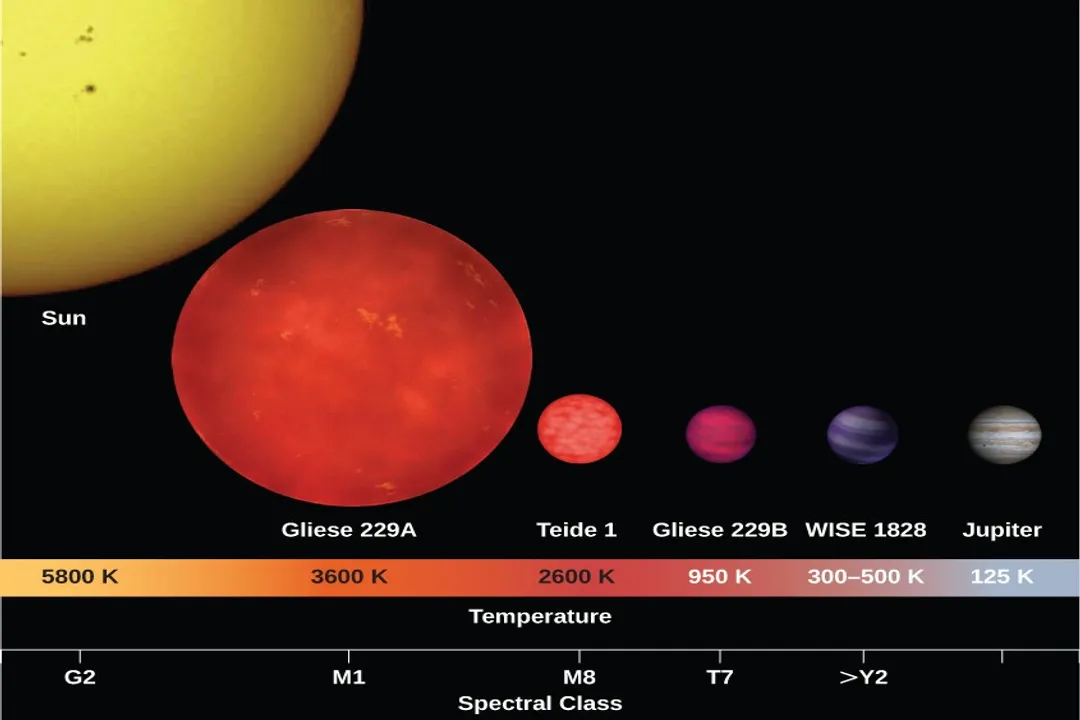
Formation of stable molecules such as titanium oxide.
The lower temperatures found in M-type star atmospheres allow molecules, like titanium oxide, to form stable bonds, resulting in strong molecular absorption features in the spectrum.
Related Questions
Which spectral class letter designates the hottest type of star in the primary seven-letter sequence?What physical property is the defining characteristic used to assign the spectral class letters to stars?Due to their intense heat, in which part of the visible electromagnetic spectrum do O-type stars emit the vast majority of their energy?Why are the spectral lines for neutral hydrogen relatively weak in extremely hot O-type stars?On the Hertzsprung-Russell diagram, where are the high-temperature, high-luminosity O-type stars located along the main sequence band?Which spectral type represents the coolest standard class in the OBAFGKM sequence?In the classification notation G2V, what information does the Roman numeral V convey?Compared to stars like the Sun (G-type) or K-type stars, how long are the typical lifespans of massive O-type stars?What feature causes the spectral lines of neutral hydrogen to be strongest in A-class stars compared to O-type stars?What accounts for the very strong molecular absorption bands observed in cooler M-type stars?