What determines how long a star will stay on the main sequence?
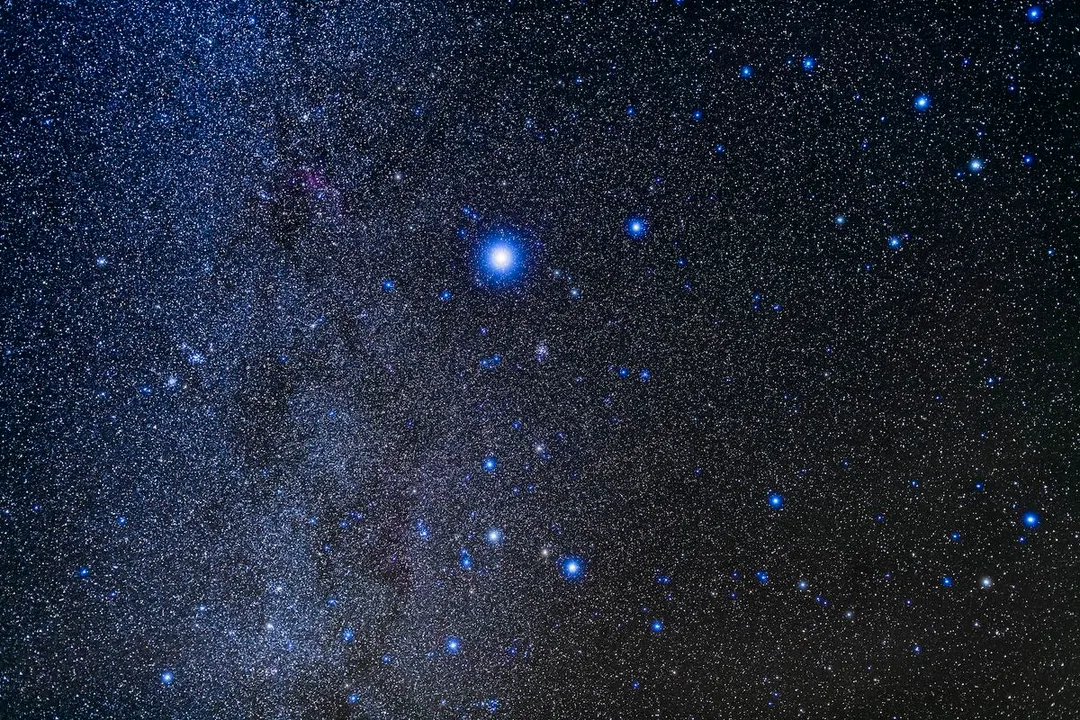
The length of time a star spends on the main sequence—that glorious, stable period where it fuses hydrogen into helium in its core—is perhaps the single most important factor determining its entire life story. This phase represents the vast majority of a star’s existence, sometimes making up 90% or more of its total life span. [6] Understanding what dictates this duration is key to comprehending stellar evolution, and while many factors play a small part, one variable stands head and shoulders above the rest: the star's mass. [5][9]
# Stellar Stability
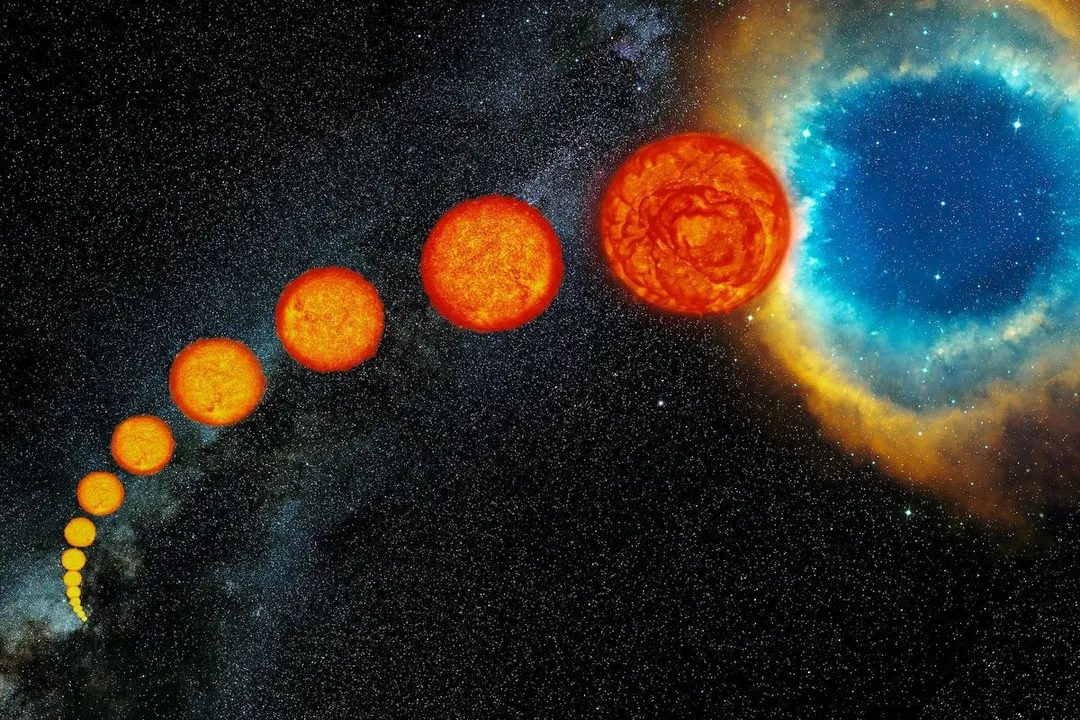
Before diving into duration, it is useful to remember what the main sequence represents. A star achieves this status when it settles into a state of hydrostatic equilibrium. [1] This is a delicate, dynamic balance where the immense, crushing force of gravity attempting to collapse the star inward is perfectly counteracted by the outward pressure generated by the heat from nuclear fusion occurring in the core. [1] As long as the star has ample hydrogen fuel available in that core to sustain the fusion reaction, it remains locked in this stable main sequence phase. [3][6]
# Stellar Mass
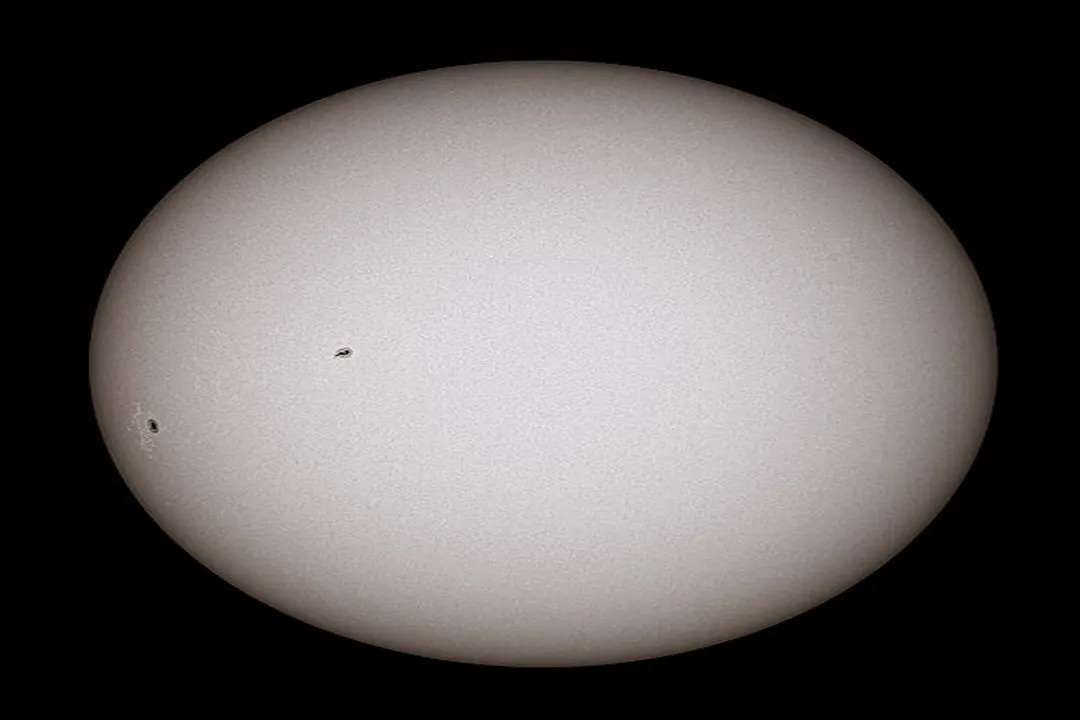
The initial mass a star is born with sets its destiny, acting as the fundamental control knob for its entire main sequence tenure. [5][9] Simply put, the heavier the star, the shorter its life on this stable plateau will be. [2][5] This might seem counterintuitive; one might assume that a more massive star, having more hydrogen fuel available, would live longer. However, the relationship is inverted due to the physics governing the core reactions.
# Burning Speed
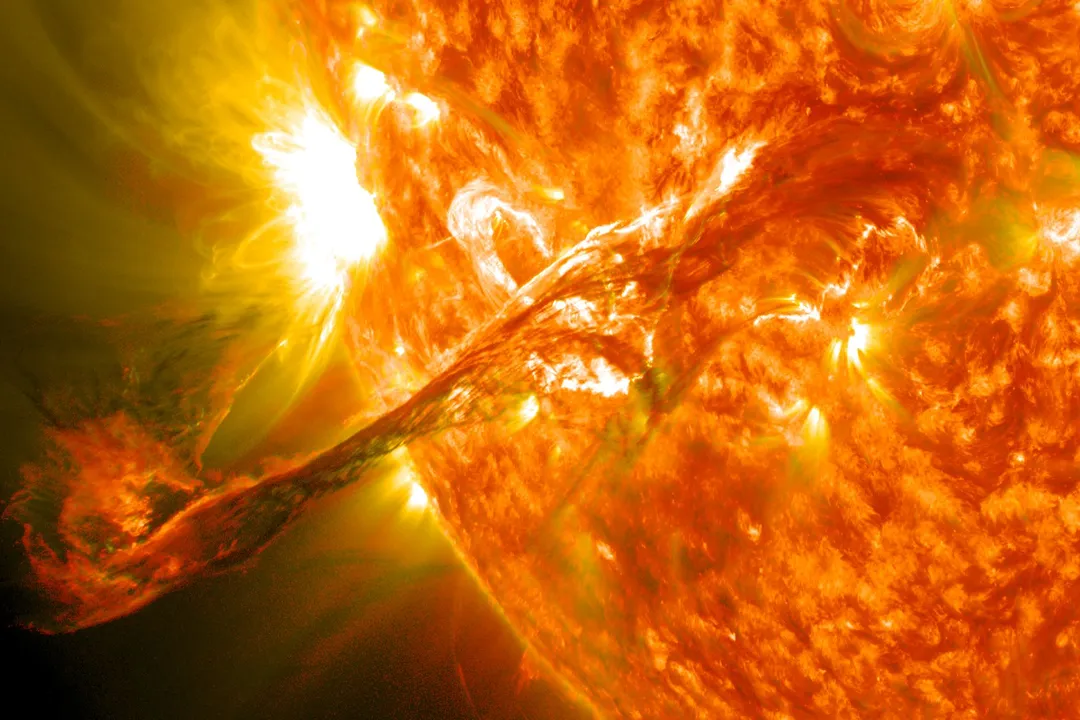
The critical link between mass and lifespan lies in the star's luminosity, or how much energy it outputs per second. [1] For stars on the main sequence, luminosity is extraordinarily sensitive to mass. [9] A star roughly $3.5$ times the mass of our Sun might be about $100$ times more luminous, and this relationship becomes even more pronounced for heavier stars, often approximated by the formula . [1]
This tremendous increase in luminosity means that a more massive star burns its nuclear fuel at an exponentially higher rate. [5][9] Imagine two identical buckets of water, one representing the available hydrogen fuel, which is roughly proportional to the star's mass. If one star (the massive one) drains its bucket through a firehose, and the other (the Sun-like one) drains it through a garden hose, the firehose star will exhaust its supply far quicker, despite having the same initial volume of water. It’s not just about how much fuel you have, but how fast you are forced to consume it by the core conditions. [9]
A star that is only slightly more massive than the Sun will have a core operating under far greater pressure and temperature, driving fusion reactions that drastically exceed the Sun's output. [5] This rapid energy generation is what keeps the massive star bright and inflated, but it is also what guarantees a swift evolutionary path away from the main sequence. [1]
# Lifespan Scale
To appreciate the difference in timescales, it is helpful to look at a few examples based on mass:
| Star Type (Mass relative to Sun, ) | Approximate Main Sequence Lifetime (Years) |
|---|---|
| Massive Star () | Tens of millions of years |
| Sun-like Star () | billion years |
| Low-Mass Star () | Hundreds of billions of years |
| Red Dwarf () | Potentially trillions of years |
Our own Sun, residing near the middle of the main sequence spectrum, is currently about $4.6$ billion years old and is expected to remain there for approximately another $5$ billion years, totaling about $10$ billion years on the main sequence. [2][5] Contrast this with stars nearing the upper end of the main sequence, say one with $20$ times the Sun's mass. Such a star might only last $10$ to $20$ million years. [2] While a million years sounds like an eternity to us, in cosmic terms, it is the blink of an eye, highlighting the extreme longevity difference governed by mass alone. [5]
This phenomenon suggests a physical trade-off: for a star to achieve greater gravitational stability against its own weight (requiring more mass), it must generate far greater internal pressure, which necessitates burning fuel at an accelerated pace. [1] It is this acceleration of the consumption rate, rather than the absolute amount of fuel, that truncates the life of massive stars.
# Lifetime Estimation
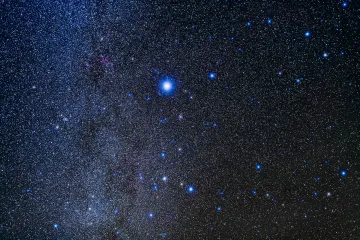
The basic physical model for estimating a star's main sequence lifetime () is derived by considering the fuel available divided by the rate of consumption, which is the luminosity (). [9] Since the fuel available is generally proportional to the mass (), the relationship simplifies to: . [9] Because itself is highly dependent on , this ratio results in the stark differences we observe.
While mass is the dominant factor, the initial chemical composition, or metallicity—the abundance of elements heavier than hydrogen and helium—can introduce minor adjustments to the lifespan. [1] Stars with lower metallicity might burn slightly more efficiently or have slightly altered opacity, subtly tweaking the core temperature and thus the fusion rate, but these effects are minor compared to the influence of mass. [1]
If we consider a hypothetical star with just five times the mass of the Sun (), we can use the Sun's $10$ billion year lifespan as a baseline. Since its luminosity will be significantly higher than the Sun's (likely in the range of $100$ to $200$ times greater based on mass-luminosity relationships), its lifetime will not be th of the Sun's (which would be $2$ billion years). Instead, its actual lifespan might dip below $100$ million years. This means an increase of four times the mass results in a lifespan reduction of over 100 times—a clear demonstration of how quickly the consumption rate overtakes the fuel supply as mass increases. [1][9]
Stars that form with very little mass, like the common red dwarfs, have their own unique advantage. Their cores remain cooler and dimmer, allowing them to sip their fuel extremely slowly. [5] They are so frugal that their main sequence lives are predicted to last for hundreds of billions, or even trillions, of years, far exceeding the current age of the universe, which is about $13.8$ billion years. [2] They are the marathon runners of the cosmos, while the massive O-type stars are the sprinters, completing their run before our galaxy even had a chance to fully settle into its modern shape. [5]
Related Questions
#Citations
Main sequence - Wikipedia
Main Sequence Lifetime | COSMOS
Main Sequence Stars: Definition & Life Cycle | Space
Stellar Evolution - | The Schools' Observatory
What is the relationship between a star's mass and how long it stays ...
Main Sequence Star Lives | CK-12 Foundation
How can I estimate how long will a main sequence star stay on the ...
What determines a star's lifespan? - Facebook
Lifetime on the Main Sequence
5.2: Measuring Ages - Lifetimes of Stars - Physics LibreTexts