How do all stars begin life?
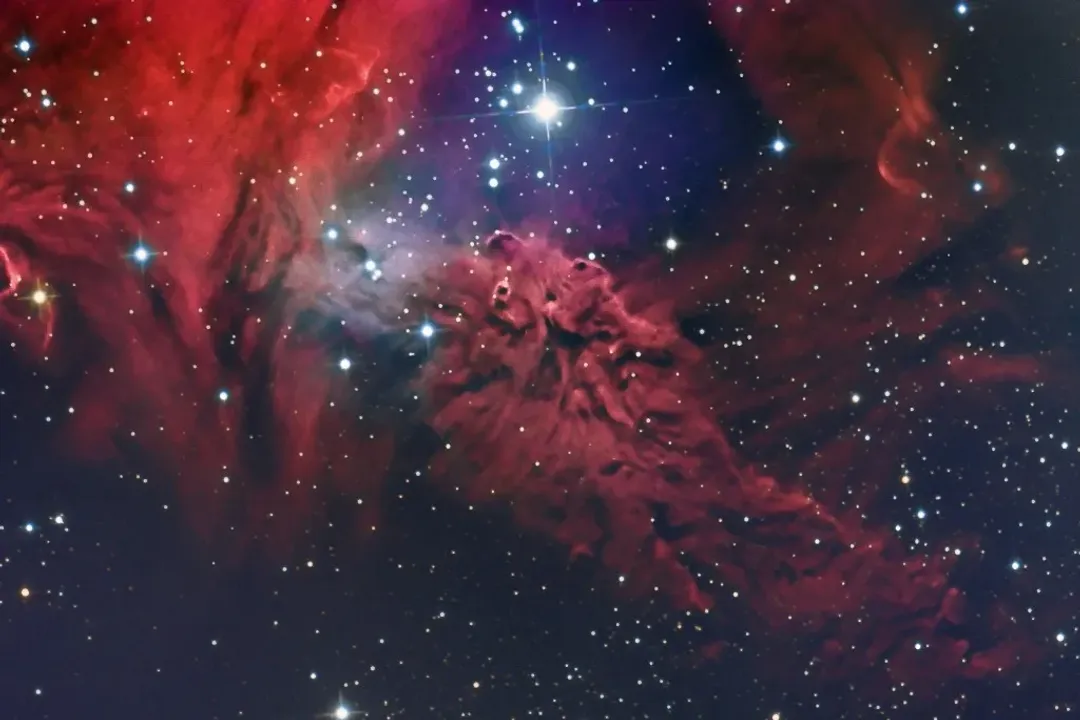
The process by which a star begins its life is a majestic, slow-motion collapse driven purely by gravity, starting in the coldest, darkest regions of space. Long before any light shines steadily, the ingredients for a star—vast quantities of gas and dust—must first be gathered together. [1][4][7] Stars are not eternal fixtures; they are born, they live by fusing elements, and eventually, they die, but their genesis is a fascinating study in cosmic mechanics. [3][5]
The very first material involved in star formation is found in what astronomers call giant molecular clouds (GMCs) or simply nebulae. [1][7] These structures are immense reservoirs of mostly hydrogen gas, along with some helium and trace amounts of heavier elements in the form of dust grains. [3][4] Within these clouds, temperatures are incredibly low, often just a few tens of degrees above absolute zero. [1] While these clouds seem placid, they contain the raw material for everything from small red dwarfs to the brightest blue giants. [7] The total mass contained within a single GMC can be hundreds of thousands of times the mass of our Sun. [1] It is important to note that the initial conditions—the temperature, density, and sheer amount of mass concentrated in one locale—set the eventual destiny of the star that will form there. [7] A star forming from a cloud that accrues only a fraction of a solar mass will have a vastly different life and death than one born from a region hundreds of times more massive, demonstrating how crucial those initial gathering phases are for the rest of cosmic history. [1]
# Cosmic Nurseries
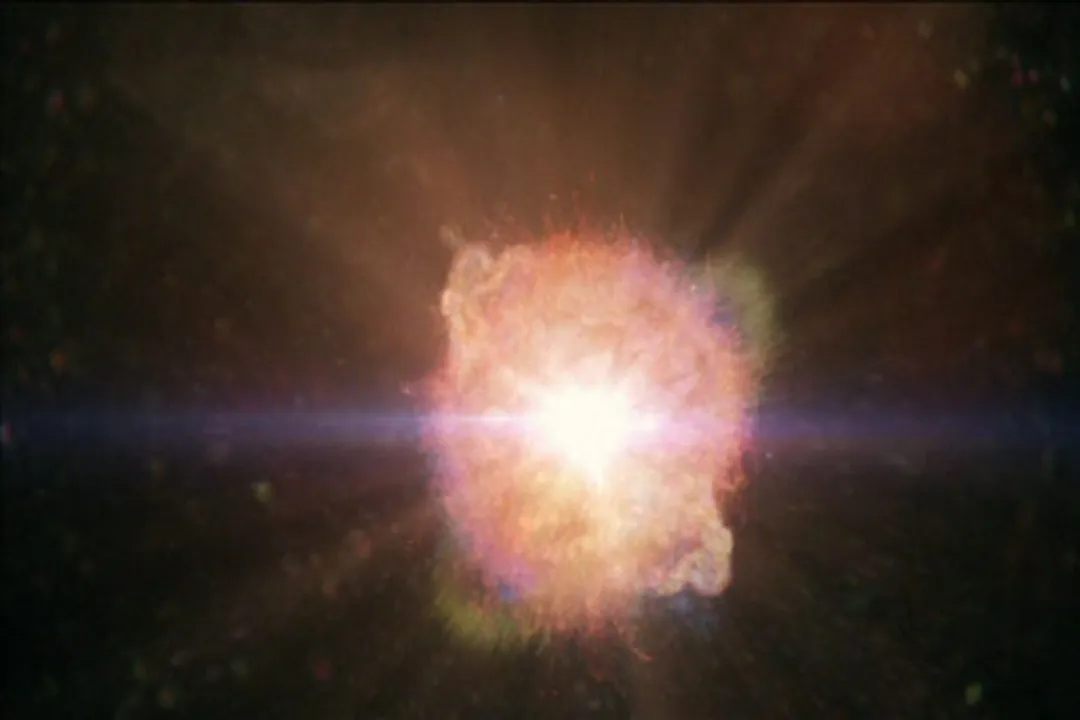
These stellar nurseries exist throughout galaxies, though only relatively dense patches within them are destined to become new stars. [4] The gas and dust are spread so thinly that despite the enormous volume of a cloud, the material is far less dense than the best vacuum achievable on Earth. [1] For star formation to commence, this diffuse matter needs a significant gravitational imbalance, an impetus strong enough to overcome the internal pressure of the gas resisting contraction. [5]
# Cloud Collapse
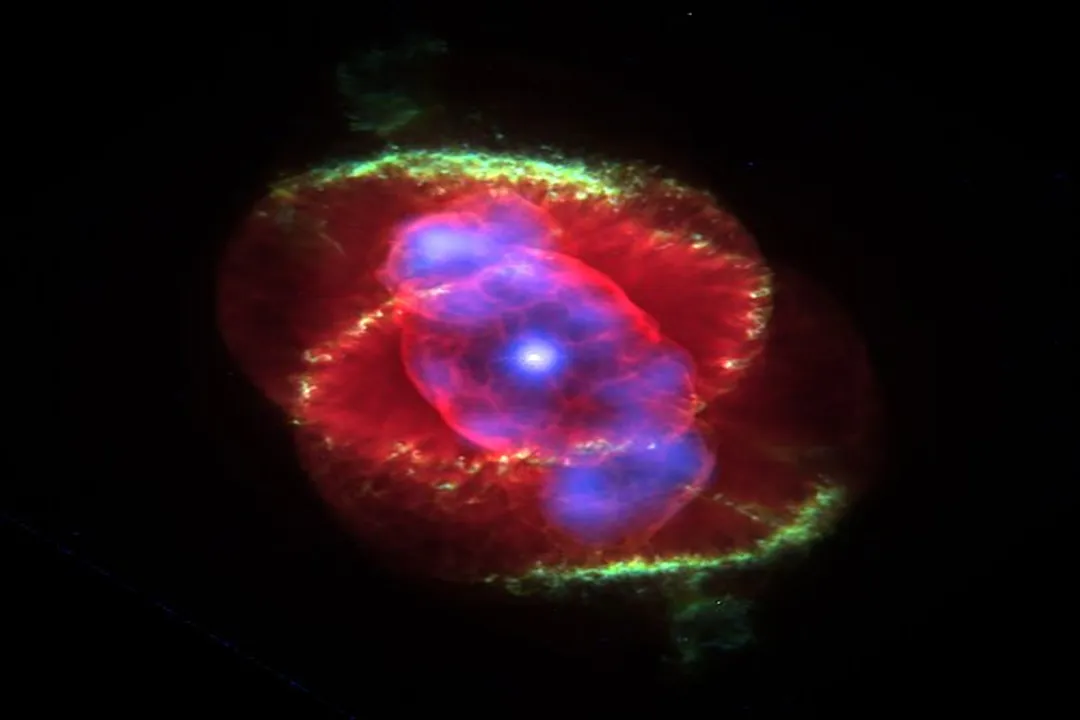
The collapse rarely begins on its own. It typically requires an external trigger to compress a region of the cloud, increasing its density enough for gravity to take over permanently. [1][5] Common triggers include the shockwave propagating from a nearby supernova explosion—the violent death of another massive star—or the gravitational disturbance caused by the collision or near-miss between two large molecular clouds. [1][5] Once a region becomes gravitationally unstable, it begins to shrink, or collapse, under its own weight. [3][5]
As this massive clump contracts, the gravitational potential energy of the falling matter is converted into kinetic energy, which then transforms into thermal energy, causing the core temperature to rise steadily. [1] The cloud fragments during this process; the largest fragments continue to condense, while smaller bits may either be ejected or go on to form other stars or planetary systems. [1] This stage can last for millions of years as the material slowly spirals inward toward the center of the forming mass. [5]

# Protostar Birth
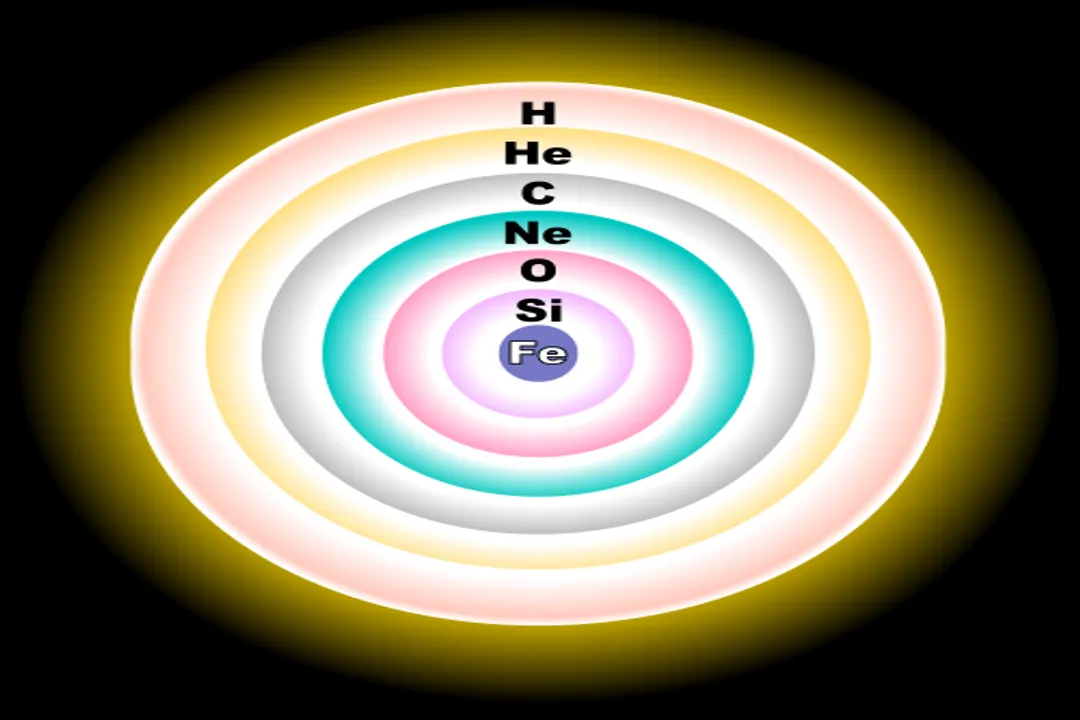
The very dense, hot core that forms during this sustained gravitational collapse is known as a protostar. [1][3][5] A protostar is not yet a true star because it does not generate energy through nuclear fusion in its core. [2][8] Instead, its heat comes entirely from the ongoing process of gravitational contraction. [1]
During this phase, the protostar continues to gather mass from the surrounding envelope of gas and dust that has not yet fallen into the core. [1] This process of material accreting onto the growing central object is often accompanied by the ejection of powerful jets of material streaming out from the poles of the protostar. [1] These jets help shed angular momentum, allowing more material to fall onto the core rather than orbiting it indefinitely. [1] The object glows visibly, often within an opaque cocoon of dust that makes it difficult to observe directly with visible light, but infrared telescopes can clearly detect this nascent stellar object. [4][5]
If the accumulating mass is insufficient—less than about 8% of the Sun’s mass—the core will never get hot or dense enough to start fusion, resulting in a brown dwarf, an object sometimes described as a "failed star". [1][7] For a true star to be born, the protostar must successfully gather enough material to cross a critical mass threshold. [7]
# Heating Up
Before achieving stable fusion, the protostar enters a phase called the pre-main-sequence stage. [1] During this period, the contraction continues, pushing the core temperature higher and higher. [3][6] Astronomers track this progression by observing how the object's surface temperature and luminosity change as it shrinks. [1] The object slowly moves toward the main sequence on the Hertzsprung-Russell (H-R) diagram, which charts the relationship between a star's temperature and its brightness. [1]
For a star with the mass of our Sun, the pre-main sequence contraction phase lasts for roughly 50 million years. [1] Think of it this way: the intense gravitational work done to compress the Sun from a diffuse cloud to its current size is a relatively short sprint in cosmic terms. The time spent accumulating mass and heating up, while dramatic, is an infinitesimal fraction of the billions of years the Sun will spend steadily generating light and heat from its core. [1]
# Fusion Ignition
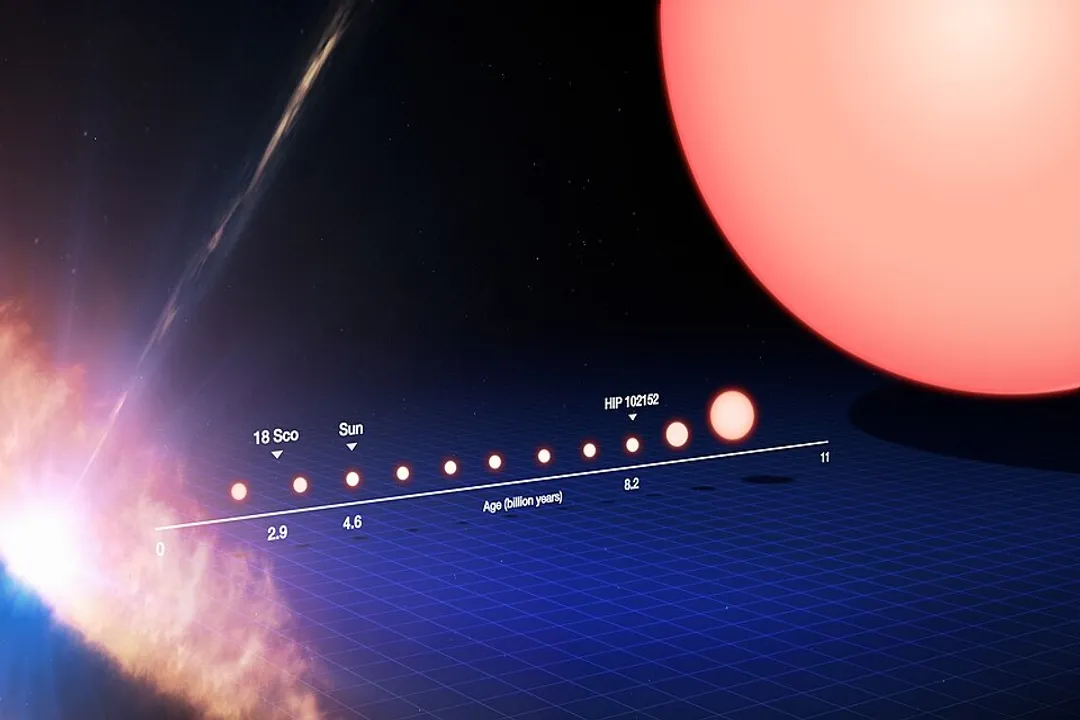
The birth of a true star is marked by a single, definitive event: the onset of sustained nuclear fusion in the core. [2][6] When the core temperature reaches approximately 10 million Kelvin (about 18 million degrees Fahrenheit), the immense pressure finally overcomes the electrical repulsion between hydrogen nuclei (protons). [1][2][6]
At this critical temperature and density, four hydrogen nuclei fuse together to form one helium nucleus, releasing an enormous amount of energy in the process. [2][5][8] This outward flow of energy generates a corresponding outward pressure that precisely counteracts the inward crush of the star's enormous gravity. [1][6] When this state of hydrostatic equilibrium is finally achieved, the object stops contracting, settles into a stable size, and officially joins the main sequence of stellar evolution. [1][6] This marks the start of its long, stable adult life, during which it will spend the vast majority of its existence. [1]
# Mass Matters
The final mass locked into that core during the formation process is the single most important factor determining the star’s future path. [1][7]
| Star Type (Mass Relative to Sun) | Approximate Main Sequence Lifetime | Key Characteristic |
|---|---|---|
| Low Mass (e.g., to ) | Trillions of years | Slow fusion, very cool and dim [1] |
| Solar Mass () | billion years | Stable, yellow dwarf [1][6] |
| High Mass () | A few million years | Extremely hot, bright, and short-lived [1] |
Stars that barely meet the fusion threshold—the low-mass red dwarfs—burn their hydrogen fuel incredibly slowly, allowing them to shine steadily for trillions of years. [1] Conversely, the most massive stars ignite with fury, achieving cores millions of times hotter than the Sun's core, which means they burn through their fuel supply very quickly, sometimes lasting only a few million years before moving on to the next stage of their evolution. [1][7] Thus, the gentle, almost imperceptible gravitational gathering in a cold, dark cloud culminates in one of two extremes: either a slow, enduring ember or a blazing, short-lived giant. [1]
Related Questions
#Citations
Stellar evolution - Wikipedia
The Life Cycles of Stars: How Supernovae Are Formed
Stellar Evolution - | The Schools' Observatory
The Life Cycle of Stars | National Air and Space Museum
Life Cycle of Stars - WorldWide Telescope Ambassadors
The formation and life cycle of stars - AQA - AQA - BBC Bitesize - BBC
Stellar Structure and Evolution | Center for Astrophysics | Harvard ...
Life Cycle of Stars - BYJU'S
The life cycle of stars - by Manar Bouazza - Medium
27.1 The birth of a star | Birth, life and death of a star | Siyavula