What commonly triggers the gravitational collapse within a diffuse molecular cloud?
Answer
Shockwave from a supernova explosion
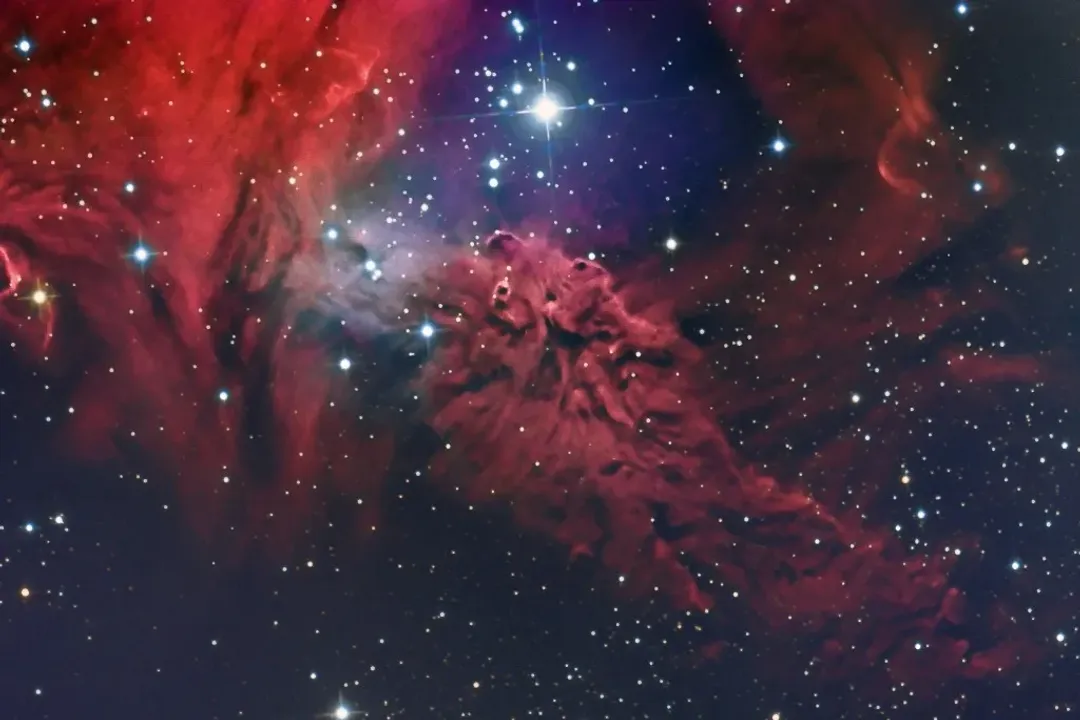
While molecular clouds possess immense mass, the material is spread so thinly that gravity often struggles against the internal pressure resisting contraction. Therefore, the collapse leading to star formation rarely begins spontaneously; it usually requires an external catalyst or trigger to sufficiently compress a region, raising its density past a critical threshold. The most cited examples of such triggers include the powerful shockwaves generated by the violent death of a massive star in a supernova explosion, or the gravitational instability induced when two large molecular clouds pass near or collide with one another.
Related Questions
What are the initial reservoirs of gas and dust for star birth called?What commonly triggers the gravitational collapse within a diffuse molecular cloud?Where does the heat of a protostar originate before fusion begins?What object results if a core fails to accumulate mass greater than 8% of the Sun's mass?Approximately what core temperature must a protostar reach to ignite sustained nuclear fusion?What state is achieved when outward energy pressure counteracts the inward crush of gravity?What physical process characterizes the pre-main-sequence stage of stellar evolution?How long does the pre-main sequence contraction phase last for a star with the mass of our Sun?What is the single most important factor determining a star’s future path and lifetime?Compared to low-mass red dwarfs, what is the approximate main sequence lifetime for high-mass stars (> 8 M☉)?