What is the life cycle of a star for kids?
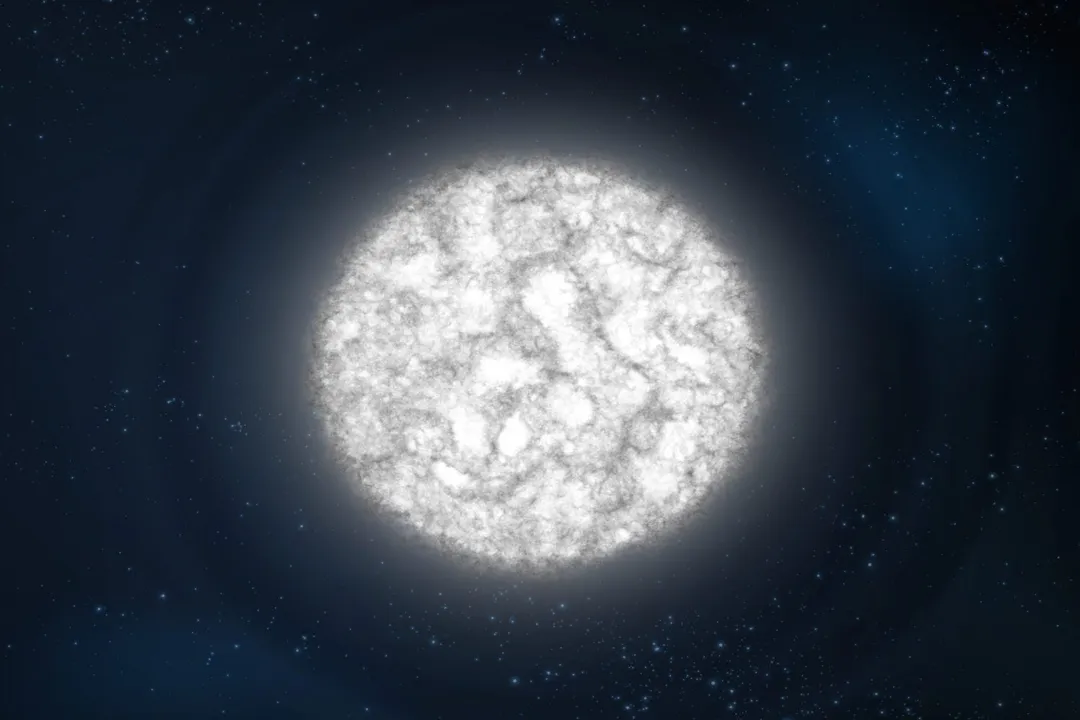
When you look up at the night sky, it is easy to think that stars have always been there, just hanging like static lights. However, stars are constantly changing. While they do not breathe or eat like living things, they go through a clear life cycle consisting of birth, a long adulthood, and eventually, death ([2]). This process happens on a timescale that is hard for humans to imagine, often spanning millions or even billions of years ([6]).
To understand how a star lives, you have to look at the ingredients. The universe is filled with massive clouds of gas and dust known as nebulae. These areas are often called "stellar nurseries" because this is where all stars begin their existence ([5][7]).
# Stellar Nurseries
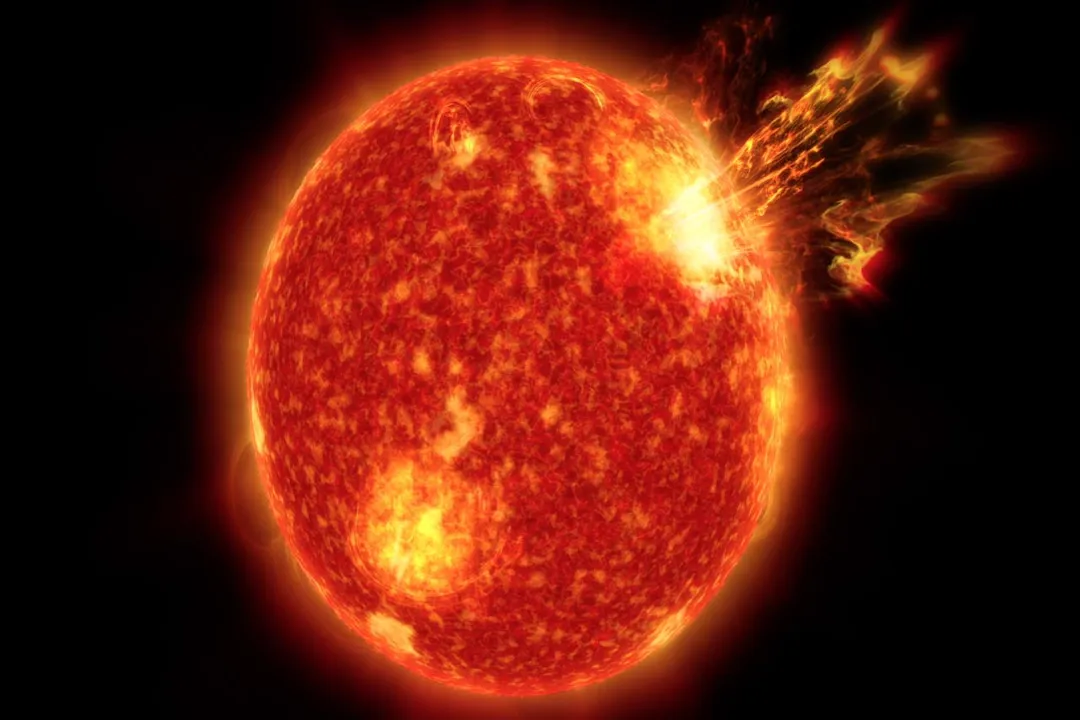
A nebula is a giant collection of dust and hydrogen gas drifting through space ([6]). These clouds might look quiet, but inside them, there is a lot of activity. Gravity, the same force that keeps your feet on the ground, plays the most important role here. Gravity starts pulling the gas and dust particles closer together ([10]).
As these materials clump together, the area gets denser and hotter. This rotating ball of gas and dust is called a protostar ([5]). At this stage, the star is not yet shining with the bright light we recognize because it hasn't started the process of nuclear fusion yet. It is essentially a baby star, still gathering its mass from the surrounding cloud ([6]). It might take millions of years for a protostar to gather enough material to become a true star.
# Main Sequence
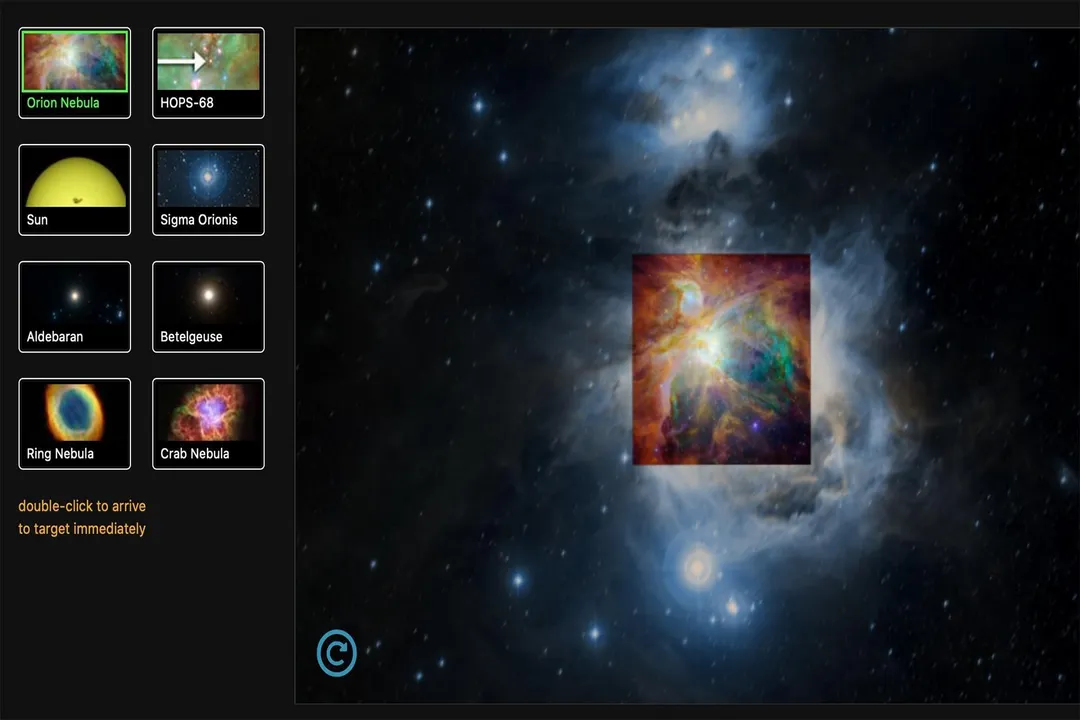
Once the temperature inside the core of the protostar gets high enough—reaching millions of degrees—something magical happens. The hydrogen atoms inside the core start smashing together to form helium. This process is called nuclear fusion ([4][10]). Fusion releases an incredible amount of energy, which creates an outward pressure. This pressure fights against the inward pull of gravity. When these two forces balance out, the star becomes stable, and it enters what astronomers call the "main sequence" ([6]).
This is the phase where stars spend the majority of their lives. Our Sun is currently in this main sequence phase, and it has been shining steadily for about 4.6 billion years ([2][3]). A star’s time in the main sequence depends entirely on its mass. Paradoxically, the biggest, hottest stars burn through their fuel the fastest. While a massive star might live for only a few million years, smaller stars like our Sun can stay in the main sequence for billions of years ([7]).
To visualize how these stars behave, consider the following comparison of star types:
| Star Type | Lifespan | Energy Output |
|---|---|---|
| Low-Mass (Like our Sun) | Very long (10+ billion years) | Steady, moderate |
| High-Mass (Massive stars) | Short (Millions of years) | Extremely high/bright |
# Aging Stars
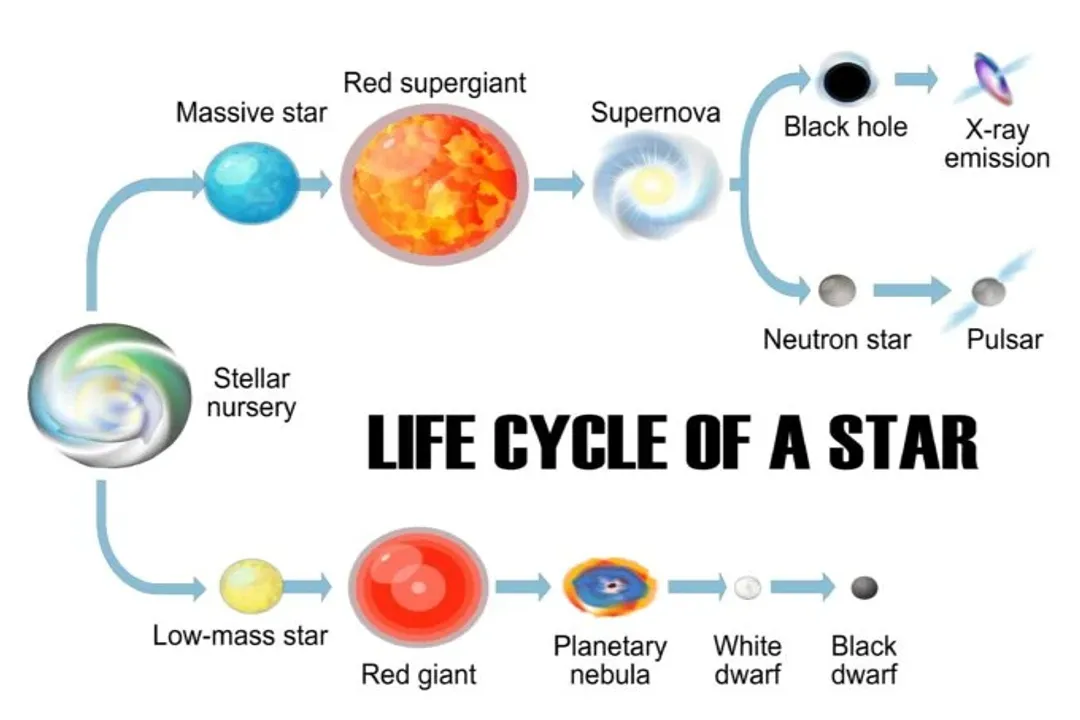
Eventually, every star runs out of its hydrogen fuel. When the hydrogen in the core is used up, the balance between gravity and internal pressure is lost ([6]). Gravity wins, causing the core to collapse and get even hotter, while the outer layers of the star expand and cool down. At this point, the star enters its "old age" phase.
For a star similar in size to our Sun, it swells up to become a Red Giant ([5]). It turns red because the surface is cooler than it used to be, but because it is so large, it still emits a lot of light. If the star is very massive, it turns into a Red Supergiant. These are some of the largest objects in the universe, growing to sizes that would easily swallow planets if they were nearby ([10]).
# Two Paths
How a star dies depends entirely on how much "stuff" or mass it started with. This leads to two very different endings for stars in the cosmos.
# Low-Mass Stars
When a medium-sized star like our Sun reaches the end of its life, it cannot burn heavier elements to keep itself stable. It sheds its outer layers gently, creating a beautiful, glowing shell of gas known as a planetary nebula ([2][5]). Do not let the name fool you; it has nothing to do with planets.
The remaining core of the star shrinks down into a small, hot, dense object called a White Dwarf ([7]). A white dwarf is about the size of Earth but has the mass of the Sun. It no longer performs fusion; it just glows with leftover heat until it eventually fades away, cooling down over billions of years to become a dark, cold object known as a Black Dwarf ([6][9]).
# High-Mass Stars
The end of a high-mass star is much more dramatic. Because these stars have so much mass, gravity is incredibly strong, allowing them to fuse heavier and heavier elements until they create iron. Once iron is made, the star can no longer generate the energy needed to support itself ([8]).
The core collapses in a fraction of a second, resulting in a colossal explosion called a Supernova ([5][7]). This is one of the most powerful events in the universe, briefly outshining entire galaxies. What is left behind depends on how much mass remains after the explosion. If a moderate amount of mass remains, it forms a Neutron Star—an object so dense that a single teaspoon of its material would weigh billions of tons ([6]).
If the remaining core is extremely massive, not even the density of a neutron star can hold it up. It collapses indefinitely, creating a Black Hole. This is a region of space where gravity is so intense that nothing, not even light, can escape its grasp ([10]).
# The Cycle Continues
While it might seem like a tragic end for a star to explode or shrink into a white dwarf, this is how the universe recycles itself. When a star dies, it ejects materials—elements like carbon, oxygen, and iron—back into space ([2]). These are the building blocks for new stars, new planets, and eventually, life.
Every atom of iron in your blood and calcium in your bones was likely cooked up inside the heart of a giant star that exploded long ago ([2]). We are, quite literally, made of stardust. The dust and gas blown out by supernovae mix into new nebulae, where gravity pulls them together to start the cycle all over again ([6]).
For a deeper understanding of these changes, it helps to view the transition as a balance of pressure. Think of a star as a campfire. The fuel (wood) creates the heat (energy/light). If you stop adding wood, the fire dies down. In a star, the fuel is hydrogen, and the "fire" is the fusion process. When the fuel is gone, the star's "structure" changes. A low-mass star is like a small fire that slowly fizzles out into embers. A high-mass star is like a massive bonfire that burns intensely and then collapses when the fuel runs out, causing a major event.
This cycle is the engine of the galaxy. Without the death of old stars, there would be no new stars, no rocky planets like Earth, and no raw materials to form the complex structures we see in our solar system today ([2][7]). Understanding the life cycle of a star is essentially understanding the history of the materials that make up everything in your bedroom, your home, and your own body.
#Videos
Life Cycle of a Star | KS2 Science | STEM and Beyond - YouTube
Lifecycle of a star | Astrophysics | Physics | FuseSchool - YouTube
Related Questions
#Citations
Life Cycle of a Star | KS2 Science | STEM and Beyond - YouTube
The Life Cycle of a Star - Little Passports
Life Cycle of a Star
Video: Life Cycle of a Star Lesson for Kids - Study.com
Life Cycle of a Star: Stages, Facts, and Diagrams
Life Cycles of Stars (Grades K-8) - Page 1 - Imagine the Universe!
How Stars Form: A Star's Life Cycle in Six Stages - KiwiCo
Life Cycle of Stars | PBS LearningMedia
Stellar Evolution - | The Schools' Observatory