How do stars begin their life?

The vast, cold reaches of interstellar space are not entirely empty; they are peppered with colossal clouds of gas and dust where the universe manufactures its most brilliant beacons: stars. Understanding how these celestial furnaces ignite requires us to look at the largest, coldest structures in the galaxy, places where gravity finally wins its long battle against the random motions of gas particles. [1][2] It is a process spanning millions of years, transforming diffuse, nearly invisible material into a blazing sphere of thermonuclear power. [3]
# Cosmic Nurseries
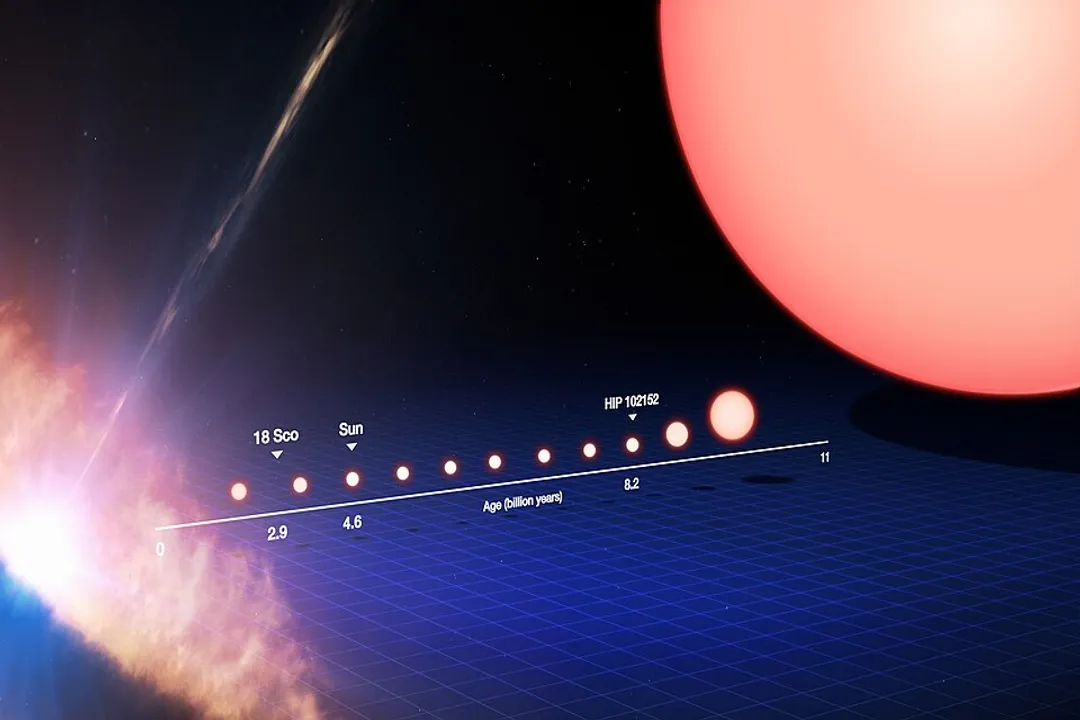
The birthplace of stars is almost always found within Giant Molecular Clouds (GMCs). [4][5] These are immense reservoirs of primarily molecular hydrogen, interspersed with traces of helium and dust grains made of heavier elements forged in earlier stellar generations. [1][6] A typical GMC can contain enough material to form thousands, or even millions, of stars like our Sun. [5][7] The sheer scale of these clouds is staggering; they can stretch for hundreds of light-years across the galaxy. [2][4]
The conditions inside a GMC are extreme, but essential for star formation. Temperatures hover just above absolute zero, often between $10$ and $30$ Kelvin ( to ). [1][6] This extreme cold is crucial because the internal thermal pressure of the gas, which pushes outward, must be overcome by the inward pull of gravity. [3] If the cloud were warmer, the outward pressure would resist collapse indefinitely. The density, while much higher than the average interstellar medium, is still incredibly low by terrestrial standards—perhaps only a few hundred to a few thousand particles per cubic centimeter. [2][7] Yet, because the cloud is so vast, the total mass is enormous, providing the necessary gravitational impetus. [4]
# Collapse Trigger
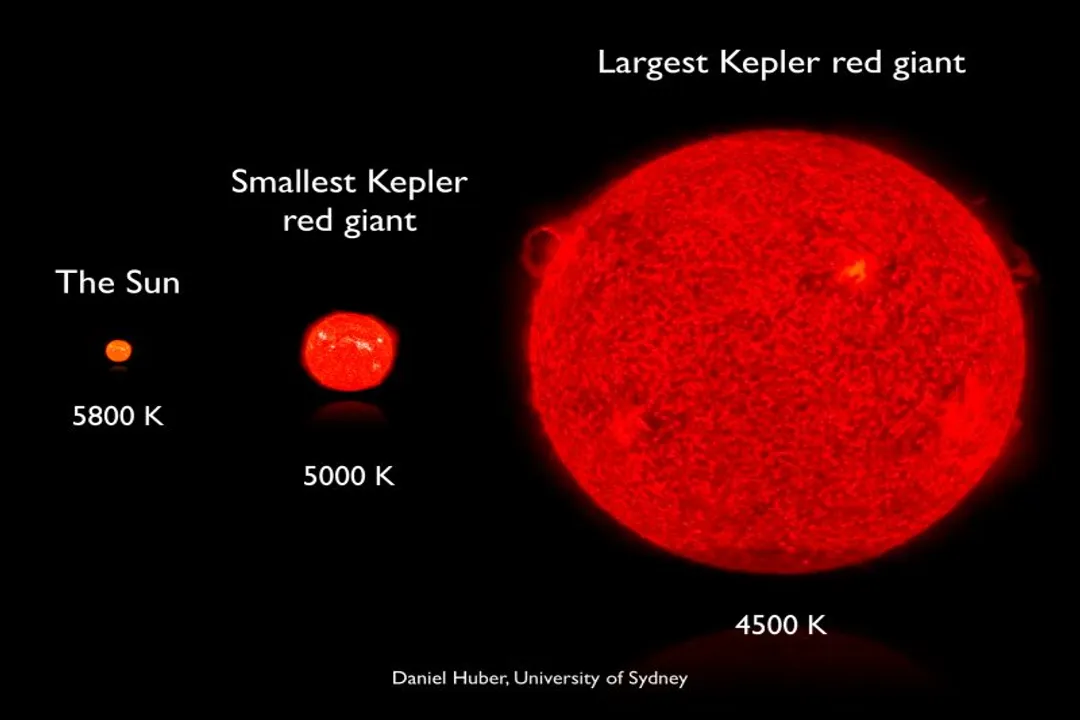
A GMC does not spontaneously begin forming stars everywhere at once; the entire cloud structure is usually stable for long periods. [3] Star formation requires a trigger—an external event that compresses a region within the cloud, increasing its local density beyond a critical threshold known as the Jeans mass. [5][6]
Various galactic events can serve as this trigger. The shockwave from a nearby supernova explosion, the violent tidal forces generated by a passing star or another cloud, or even the compression felt as a cloud passes through the spiral arms of the Milky Way galaxy can initiate this collapse. [1][4][7] Imagine the cloud as a vast, loosely packed Jell-O mold; a strong vibration on one side causes a section in the middle to suddenly compact tightly enough for gravity to take over. [8] Once this localized region becomes gravitationally unstable, the process accelerates rapidly. [5]
# Fragmentation
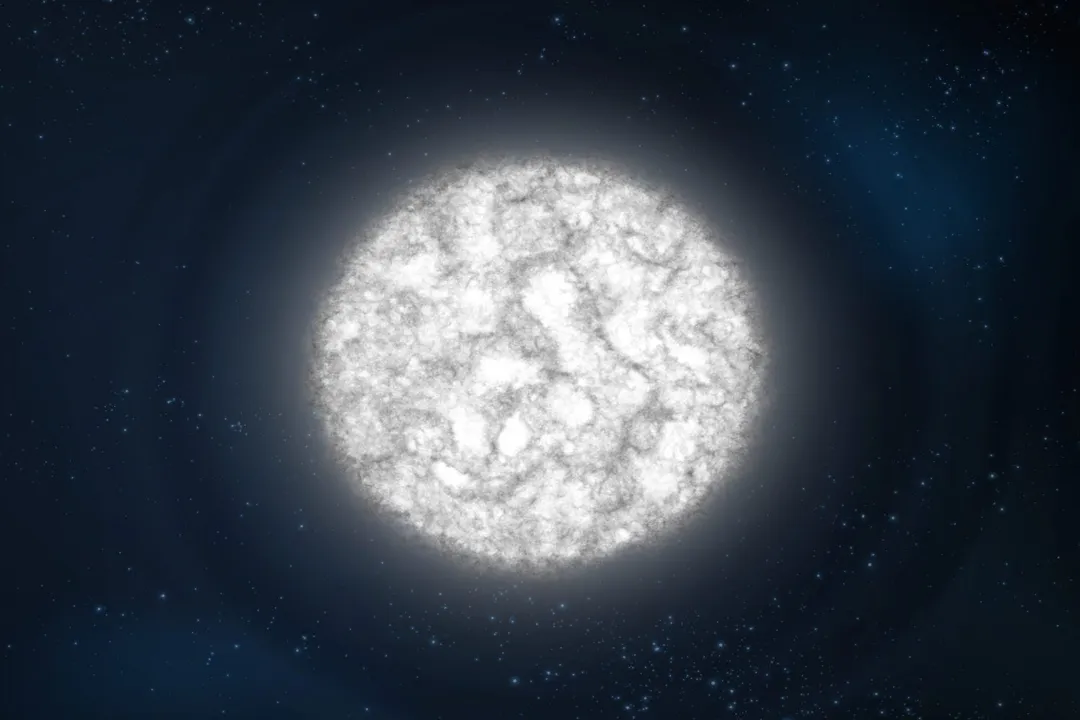
As a large section of the GMC collapses inward, it rarely does so uniformly to form a single, supermassive star. [3] Instead, the collapsing region fragments into numerous smaller, denser clumps. [4][6] Each of these clumps is destined to become a star system, often containing one or more central stars surrounded by a disk of material that might later condense into planets. [1][7] This fragmentation explains why stars are typically found in clusters rather than being scattered individually throughout the galaxy. [4]
The timescale for this initial collapse is relatively quick compared to the star's subsequent life. For a solar-mass object, the entire process from cloud core to the ignition of fusion might take only a few million years. [7] It is quite interesting to pause and consider this temporal dynamic: forming a star like our Sun takes roughly $50$ million years, but it will spend about $10$ billion years on the Main Sequence. Thus, the intense, chaotic birth phase consumes less than one percent of the star's total existence, highlighting how comparatively brief the formation process is relative to its stable, mature life. [8]
# Core Formation
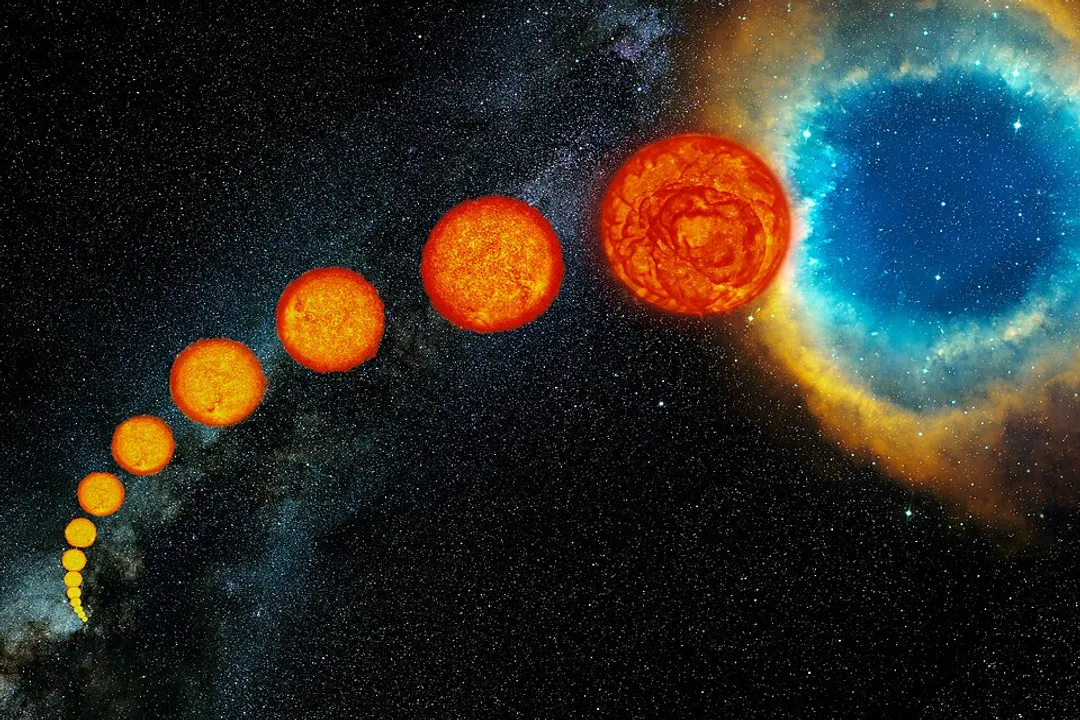
Once a fragment has separated, its internal core begins its free-fall contraction. [3] As the gas falls inward, gravitational potential energy is converted into kinetic energy, and subsequently, into thermal energy. This conversion causes the temperature and pressure inside the collapsing core to rise dramatically. [1][6] This dense, hot, central object is now classified as a protostar. [4][5]
However, the protostar is not yet a true star. It cannot generate energy through nuclear fusion because its core is not yet hot or dense enough—it needs to reach about $10$ million Kelvin for hydrogen fusion to begin. [3][6] For now, the protostar glows solely due to the heat generated by its gravitational contraction. [1]
The infalling material does not hit the protostar directly. Due to the conservation of angular momentum, the gas and dust swirling around the central object flattens into a rotating accretion disk. [7][4] This disk feeds material onto the growing protostar, continuing to increase its mass. [5] This accretion process is chaotic; the protostar often undergoes dramatic outbursts and luminosity variations as it gathers mass. [6]
# Disk Dynamics
The existence of this accretion disk is one of the most significant byproducts of star birth, directly linking stellar formation to planetary system genesis. [7] The disk serves as both a delivery mechanism for mass and a protective barrier. [4]
A fascinating feature accompanying the early protostar phase is the ejection of powerful, highly collimated jets of material from the poles of the forming system. [1][6] These jets, often observed perpendicular to the accretion disk, are thought to clear away the surrounding envelope of gas and dust that has not yet fallen onto the protostar, effectively halting the main phase of mass accumulation. [7] Observing these Herbig-Haro objects, which are the visible knots of gas shocked by these powerful jets, provides direct evidence of this early activity. [5][6]
For stars similar to our Sun or smaller, this phase is marked by intense stellar winds and variability, often grouped under the name T Tauri stars once the surrounding envelope thins enough for the object to be optically visible. [1][4]
# Mass Limits
It is crucial to note that not every collapsing core becomes a star. The final mass of the object dictates its fate. [3]
| Object Type | Mass Range (Solar Masses, ) | Energy Source |
|---|---|---|
| Brown Dwarf | to $0.08$ | Deuterium fusion (briefly) or none |
| Main Sequence Star | Hydrogen fusion | |
| Failed Star | $< 0.013$ | Contraction only |
Objects below about $0.08$ solar masses lack the gravitational force to heat their cores sufficiently to ignite sustained hydrogen fusion. [3][5] These are the brown dwarfs, often called "failed stars," which continue to contract and cool over eons. [6] Star formation is thus a process strictly governed by mass thresholds derived from the initial density and temperature conditions within the cloud core. [1]
# Ignition
The final, defining moment in a star's birth occurs when the core temperature and pressure finally cross the necessary threshold: about $10$ million Kelvin. [3] At this point, the intense pressure forces hydrogen nuclei close enough together to overcome their natural electrostatic repulsion, initiating the nuclear fusion chain reaction, primarily the proton-proton chain. [1][6]
This ignition releases an enormous amount of energy, creating a powerful outward thermal pressure that counteracts the relentless inward force of gravity. [3][5] The star stops contracting and achieves hydrostatic equilibrium. [1][7] This balance marks the end of the birth process and the beginning of the star's long, stable life on the Main Sequence. [6] The star's final mass, determined by how much material it accreted before ignition, sets its position on the Main Sequence, determining its temperature, luminosity, and total lifespan. [1][5]
A simple way to conceptualize the strict conditions required is to view the birth environment as having two primary "gates" that must be passed sequentially: first, overcoming thermal pressure to achieve gravitational collapse (the GMC stage), and second, overcoming quantum mechanical pressure to achieve sustained fusion (the final ignition). If the initial cloud fragment is too small (leading to a brown dwarf), it only passes the first gate. If the core never heats enough, it fails the second, never truly becoming a star in the sustaining sense. [8]
# Stellar Variety
The initial conditions of the molecular cloud core—its mass, rotation rate, and chemical composition—directly influence the type of star that forms. [4][7] The most massive stars, those that burn hottest and die youngest, require the initial core to be significantly more massive than the one that forms a star like the Sun. [1][3] Conversely, the vast majority of stars formed are low-mass red dwarfs, which condense from smaller initial clumps and boast lifespans that stretch for trillions of years. [5][6] The initial density fluctuation in the GMC essentially pre-ordains the star's entire destiny, from its formation speed to its ultimate demise. [2] This entire magnificent process, spanning hundreds of millions of years for lower-mass stars and just a few hundred thousand for the most massive ones, is the universe's mechanism for converting diffuse gas into structured, radiant energy sources. [7][4]
#Videos
The Life Cycle of Stars - YouTube
Related Questions
#Citations
Star Basics - NASA Science
Stellar Evolution - | The Schools' Observatory
Stellar evolution - Wikipedia
Life Cycle of Stars - BYJU'S
How Stars Form: A Star's Life Cycle in Six Stages - KiwiCo
The Life Cycle of Stars - YouTube
A Star is Born: The Life Cycle of Stars | Wisconsin Space Grant ...
The formation and life cycle of stars - AQA - AQA - BBC Bitesize - BBC
Star Formation | Center for Astrophysics | Harvard & Smithsonian
Stars and their life-cycle (article) | Khan Academy