What stars are good for life?
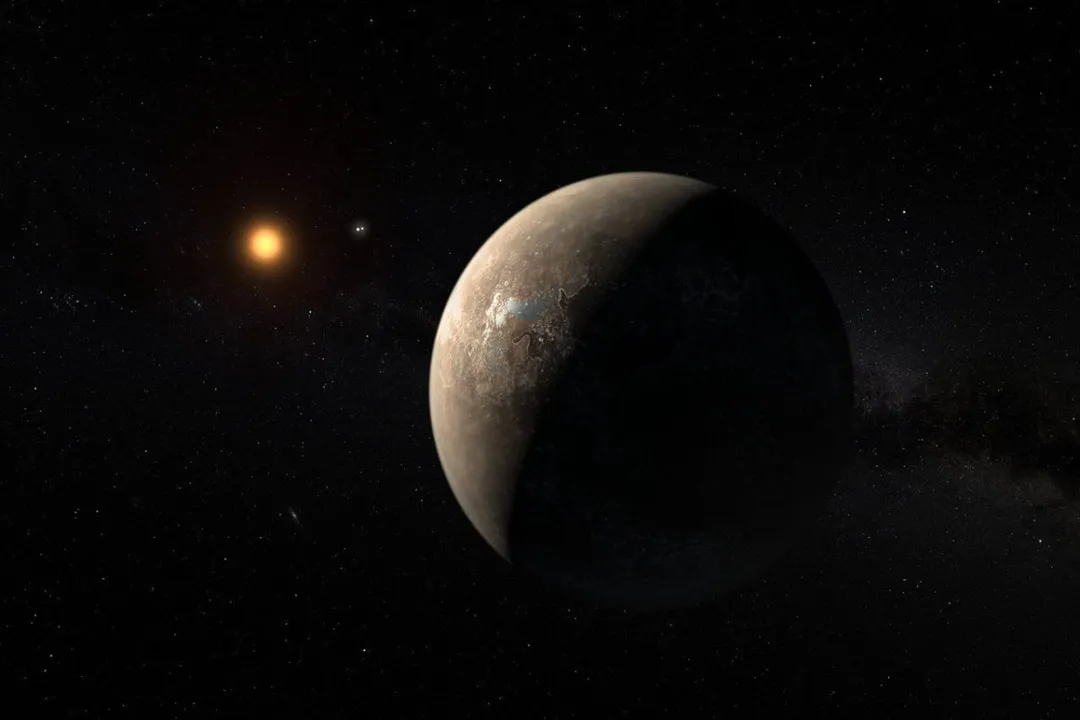
The search for life beyond Earth inevitably centers on finding the right kind of star to anchor a habitable world. It's easy to assume our own Sun, a G-type star, sets the standard, but when astronomers look closely at the criteria necessary for life—especially complex, long-term life—the best candidates often turn out to be stellar neighbors we rarely see in our night sky. [4][5] The characteristics of a star dictate everything about its planetary system, from the energy received by a planet to the sheer amount of time available for biology to develop. [2]
# Habitable Zone
The concept of habitability is fundamentally tied to the Habitable Zone (HZ), often nicknamed the "Goldilocks Zone". [1][9] This is not a fixed distance but rather the orbital band around a star where temperatures are just right for liquid water to exist on a planet’s surface. [1][2] If a planet orbits too close, water boils away; too far, and it freezes solid. [9]
This zone is entirely dependent on the star's luminosity and size. [1] Brighter, hotter stars, like blue-white A-type stars, have HZs situated much farther out, requiring their planets to have very long orbits to stay warm enough. [9] Conversely, dimmer, cooler stars have their HZs pressed tightly against them. [9] A key factor, therefore, is matching the life-bearing planet’s orbital distance to the star's energy output. [1]
# Sun's Drawbacks
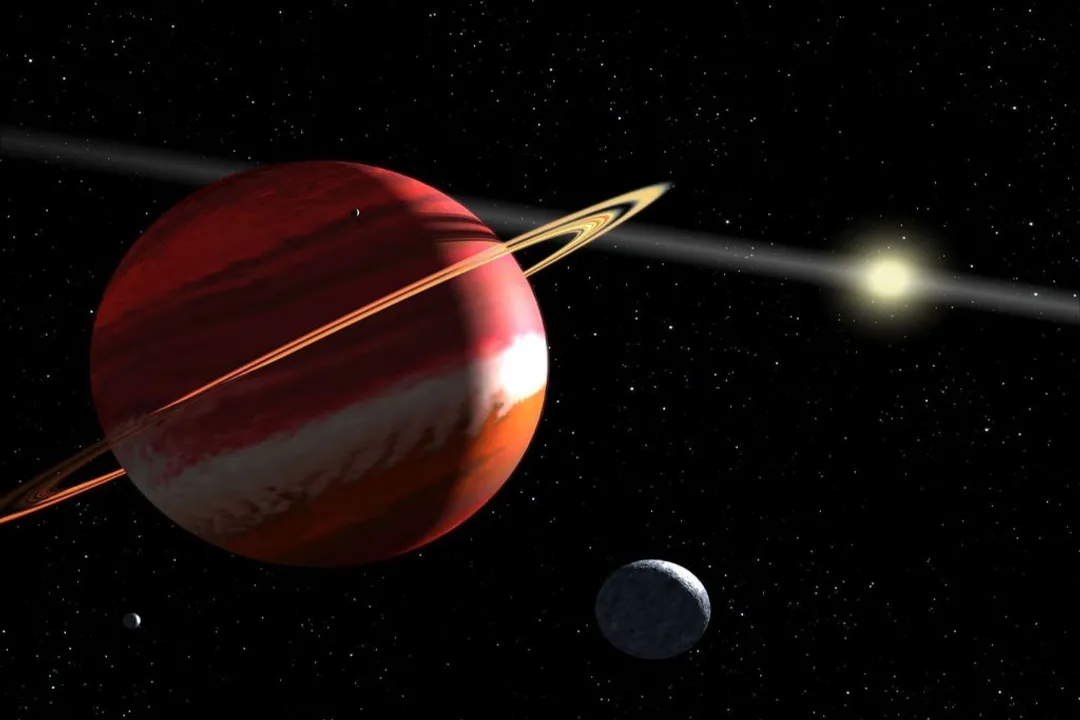
Our Sun, a G2V main-sequence star, has provided Earth with about 4.6 billion years of stable energy, allowing life to evolve significantly. [4] However, comparative studies suggest that this G-type classification might not be the most optimal host for sustained life. [4] G-type stars burn through their hydrogen fuel much faster than smaller, cooler stars. [4][5] While a 10-billion-year lifespan seems generous, some stellar types offer timescales trillions of years longer, potentially allowing for far more protracted evolutionary processes. [2][5]
Furthermore, the Sun experiences periods of increased activity, including solar flares, which can impact the habitability of nearby worlds by stripping away atmospheres or bathing surfaces in high-energy radiation. [5] Though currently relatively calm, understanding life's origins often requires billions of years of quiet stability, a criterion where other stars excel. [2] The Sun is, in many ways, a decent star, but perhaps not the best star science can define. [4]
# K Stars Sweet Spot
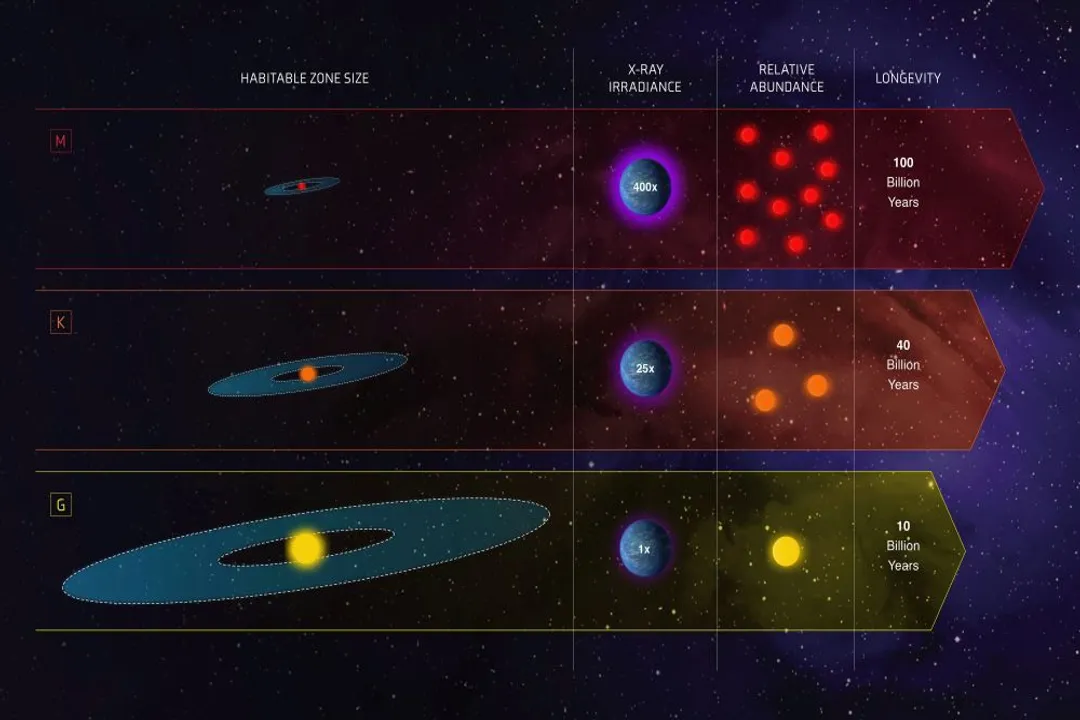
Many astronomers suggest that K-type stars, often called Orange Dwarfs, represent the best compromise for supporting life. [1][2][4] These stars are intermediate in mass and temperature between the Sun (G-type) and the much cooler M-type Red Dwarfs. [1]
K dwarfs are dimmer and cooler than the Sun, meaning their Habitable Zones are closer in, but this proximity comes with significant advantages. [1][9] The primary benefit is their longevity. While the Sun will remain on the main sequence for roughly 10 billion years, K-type stars can burn steadily for 20 to 70 billion years. [1][4] This provides an enormous buffer of time for life to originate and develop even complex biological structures. [2][5]
Another advantage lies in their temperamental nature. K dwarfs exhibit far less extreme flaring activity compared to their smaller cousins, the M dwarfs, during their long lives. [2] They are generally stable enough to permit long-term atmospheric retention on orbiting planets, while still providing enough warmth and light to drive photosynthesis processes similar to those on Earth. [4]
Considering the required planetary mechanics, a world orbiting a K dwarf at the inner edge of its HZ might have an orbital period measured in mere weeks or months relative to Earth’s year, yet its day/night cycle would be subject to a much slower, gentler stellar radiation profile than one orbiting a much hotter star. [1] If a planet orbits a K star at roughly 0.5 AU (astronomical units), its year would be around 200 Earth days, meaning a solar cycle of intense radiation is stretched over a longer, more manageable period than the 365 days we experience, perhaps easing the selection pressure on an early biosphere to adapt to sharp seasonal shifts. This intermediate position—cooler than the Sun but significantly more active and long-lived than M dwarfs—puts them in a prime position according to several models of stellar habitability. [2]
# M Stars Commonality

The most common stars in the Milky Way are M-type stars, or Red Dwarfs. [2][5] Because they are so abundant—outnumbering G and K stars combined—statistically, the chances are high that any potentially habitable exoplanet will orbit an M dwarf. [2][6] These stars are small, cool, and incredibly fuel-efficient, leading to lifetimes that stretch into the trillions of years. [2][5][6] This sheer duration offers the longest possible window for life to emerge. [5]
However, orbiting a Red Dwarf presents serious hurdles for potential life forms. [2][5] To receive enough warmth to maintain liquid water, planets must orbit extremely close to the star, often within 0.25 AU. [9] This close proximity almost guarantees that these worlds will become tidally locked. [2][5] Tidal locking means one side perpetually faces the star (eternal day), and the other faces away (eternal night). [2][5]
Furthermore, M dwarfs are known for intense magnetic activity, especially early in their lives, emitting powerful flares of X-rays and extreme ultraviolet radiation. [2][5] These flares can potentially sterilize the dayside of a closely orbiting planet or erode its atmosphere over time. [5]
For a tidally locked world around an M dwarf to truly thrive, the atmosphere would need to be substantial enough to effectively redistribute the heat from the dayside to the nightside, preventing the dark side from freezing completely and the dayside from boiling off all water. [5] The atmospheric dynamics required for true planetary habitability on a tidally locked M-dwarf world would likely necessitate a much higher surface pressure than Earth’s, allowing heat to be carried efficiently around the terminator line—the region between perpetual light and dark—making the planet's climate profile more like a runaway global hurricane than a balanced day/night cycle. While the stellar lifespan is a massive plus, the initial environmental hostility and subsequent planetary synchronization pose significant evolutionary roadblocks that must be overcome. [2]

# Stellar Lifespan Criteria
The evolution of complex life, as we understand it on Earth, requires a significant amount of time, typically measured in billions of years, to move from single-celled organisms to multicellular complexity. [2] This places a hard lower limit on the required main-sequence lifespan of the host star. [5]
Stars significantly larger and hotter than the Sun (like F, A, or O types) burn through their fuel rapidly, often living only hundreds of millions of years or less. [5] This is generally considered too short a window for creatures capable of building civilizations to evolve. [5] For example, an F-type star might last only 3 to 4 billion years, which is comparable to the Sun's total main-sequence life but without the stability of the G-type star. [4]
When comparing the optimal hosts, the metric shifts from "how long can it live?" to "how long can it live stably?". [2]
| Star Type | Stellar Class | Example | Main Sequence Life (Billions of Years) | HZ Characteristics |
|---|---|---|---|---|
| Red Dwarf | M | Proxima Centauri | Trillions | Very close orbit; high tidal lock risk [2][5] |
| Orange Dwarf | K | Alpha Centauri B | 20–70 | Close orbit; moderate stability [1][4] |
| Yellow Dwarf | G | The Sun | ~10 | Moderate orbit distance; moderate stability [4] |
This comparison illustrates why the K-dwarf sits in the theoretical sweet spot. [1][4] It offers vastly superior temporal resources compared to the Sun, while mitigating the immediate, harsh physical constraints imposed by the M dwarfs. [2]
# Search Priorities
Current scientific searches for exoplanets often prioritize the closest and best-studied systems, but the search strategy must also incorporate statistical likelihood and stellar characteristics. [6] When surveying the galaxy for the best place, the focus must balance the inherent longevity of the star against the challenges its Habitable Zone presents. [2][5]
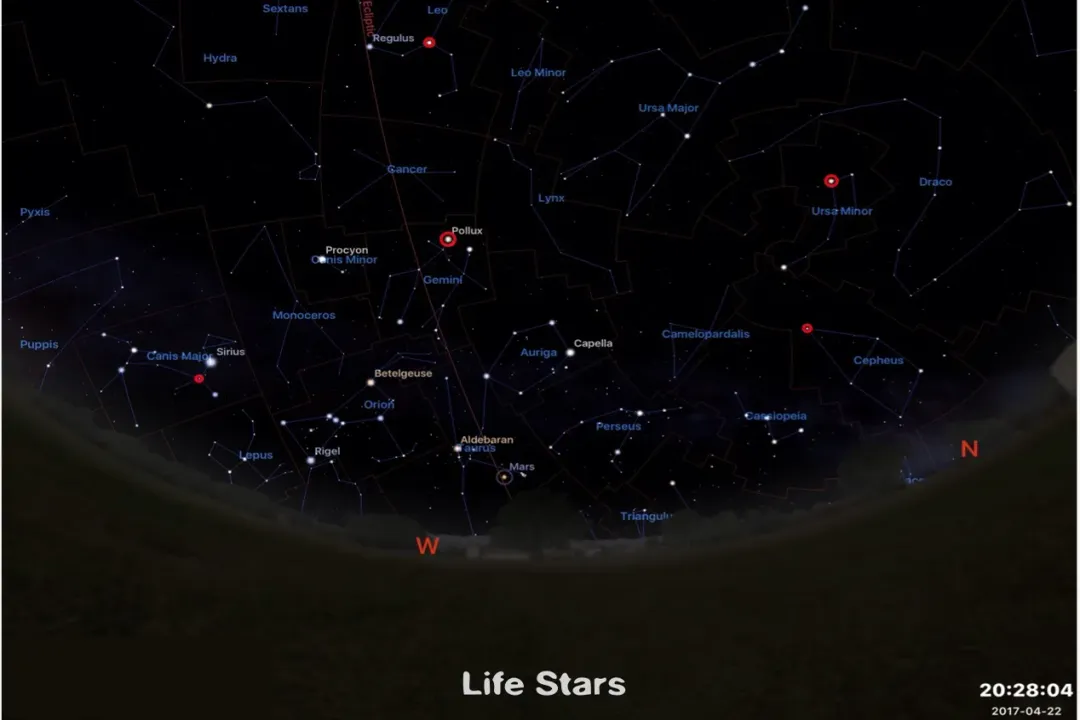
If complex life requires, for instance, 6 billion years to develop, any star with a lifespan less than that is immediately disqualified, ruling out all stars larger than the Sun. [5] This narrows the field to K, M, and the Sun itself. [4] If the target life form is extremely slow to evolve, the Red Dwarfs become almost mandatory due to their trillions-of-years lifespans. [6] However, if we prioritize maximizing the chance of Earth-like evolutionary paths—where liquid water is sustained without the absolute need for extreme atmospheric circulation to offset tidal locking—then the K-type Orange Dwarfs appear to be the most promising long-term hosts. [1][4] These stars offer a long, relatively calm environment, akin to a much longer-lived, slightly gentler version of our own solar setup. [2] Therefore, an active, well-funded search for planets around K-type stars like Tau Ceti or Epsilon Eridani (though Epsilon Eridani is a K-type star and Tau Ceti is a G-type star, they are often cited as good targets for differing reasons) remains a high-value endeavor for astrobiology. [1][9]
The ultimate determination of "good for life" hinges on knowing what kind of life we are searching for. If microbial life can arise quickly and survive flares, M dwarfs are excellent. If sophisticated biology demands vast stretches of calm mediocrity, the quiet, long-burning K dwarfs are the superior cosmic neighbors. [2][5] The fact that our Sun is an intermediate star suggests that environments slightly cooler and significantly longer-lived offer the statistical and physical prerequisites for greater biological endurance. [4]
#Videos
These Are The Best Stars to Find Potentially Habitable Earth Like ...
Related Questions
#Citations
The Perfect Stars to Search for Life On Their Planets - Universe Today
Which type of star is the most habitable? : r/askastronomy - Reddit
Top 10 List of Habitable Stars to Guide Search - Space
Our Sun Is Not an Optimal Star to Support Life - RealClearScience
What star type is most optimal for hosting life on its planets? - Quora
Stars like ours - 9 bright "Life Stars" - Star In A Star
These Are The Best Stars to Find Potentially Habitable Earth Like ...
Which stars could host alien life? | The Planetary Society
What kind of star should I use for my world?