What is the most suitable star for life?
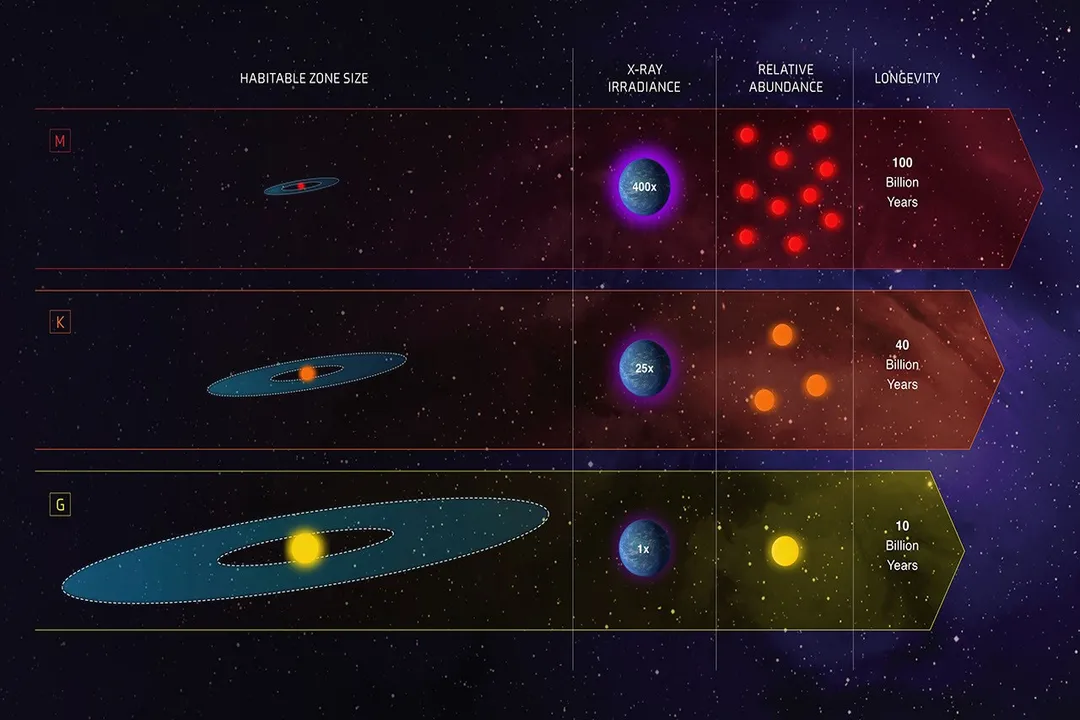
Finding a suitable star for life is far more complex than simply locating a planet in the "Goldilocks Zone"—the region where liquid water could exist on a world's surface. While our own Sun, a G-type star, seems like the obvious choice since it supports us, astronomical data suggests that other stellar classes might actually offer a better, more stable environment for life to emerge and thrive over cosmic timescales. The critical difference often comes down to time and temperament.
# Stellar Spectrum
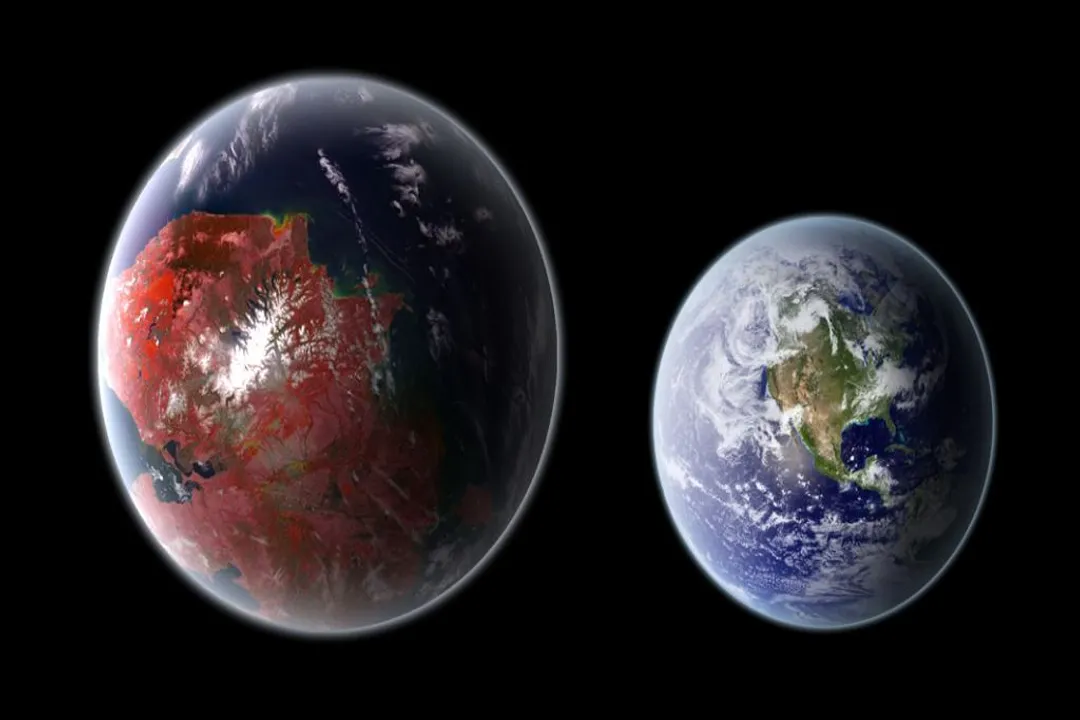
Stars are categorized based on their temperature and mass, often represented by spectral classes like O, B, A, F, G, K, and M. The stars most frequently discussed in the context of extraterrestrial life are clustered in the middle and lower end of this sequence: F, G, K, and M types. The mass of a star dictates its entire life story, including how long it burns its fuel and the location of its habitable zone. A massive star burns hot and fast, while a smaller star sips its fuel over eons.
# Sun Baseline
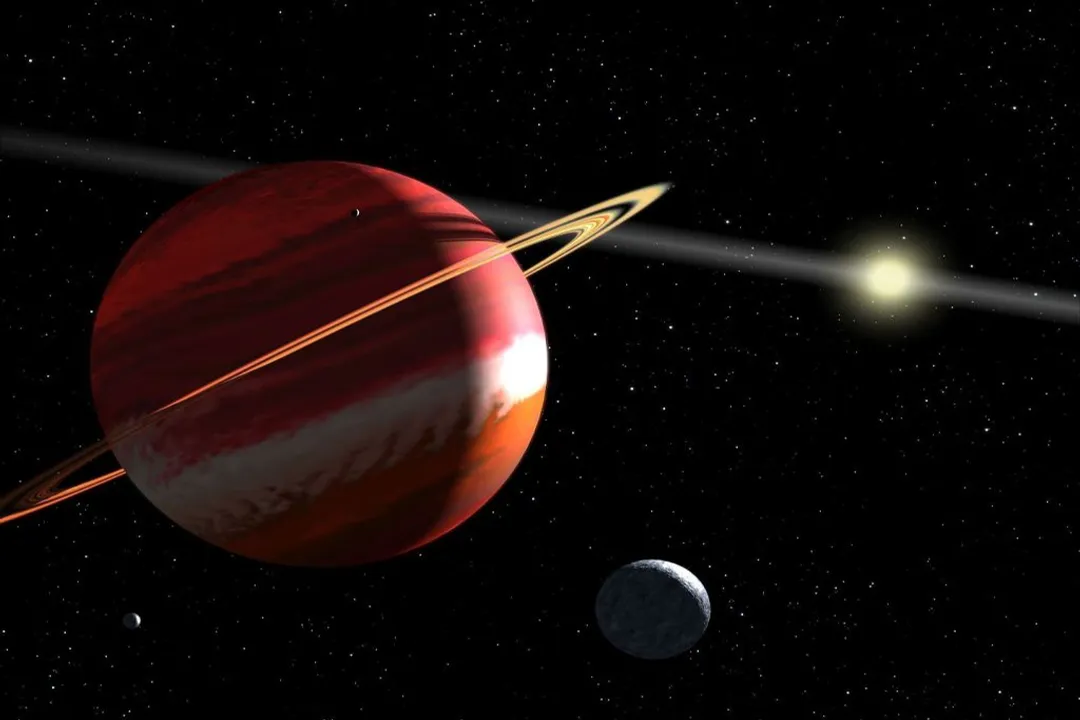
Our Sun is a G-type main-sequence star, often referred to as a yellow dwarf. G-stars offer a relatively warm, steady light source, and their habitable zones are positioned at a comfortable distance, which typically allows orbiting planets to avoid the intense gravity-induced tidal locking seen around smaller stars. However, there is a significant limitation to G-type stars: their lifespan. A star like the Sun has a main-sequence lifetime of roughly ten billion years. While this seems inexhaustible, the timeline for complex life to evolve on Earth took close to four billion years. If evolutionary processes stalled or required a specific, long environmental window, a ten-billion-year limit might prove too short for truly advanced civilizations to develop or persist.
# Orange Stability
The K-type stars, or orange dwarfs, are frequently highlighted by researchers as the most promising candidates for hosting long-term, stable life. These stars are slightly cooler and less massive than our Sun. This lower mass translates directly into a significantly longer lifespan, potentially tens of billions of years, or even trillions, depending on the exact K-class subtype. This extended lifespan provides an enormous evolutionary buffer, allowing far more time for biological complexity to arise without the host star threatening to evolve off the main sequence.
K-stars also possess favorable temperaments compared to their neighbors on either side of the spectral class. They are much more stable than the smaller, cooler M-dwarfs, experiencing fewer catastrophic stellar flares. Furthermore, their habitable zones are typically located a bit closer in than the Sun's, but far enough out that planets are less likely to become tidally locked, meaning they can maintain a day/night cycle crucial for climate moderation. NASA’s Hubble mission data points to these "Goldilocks Stars" as the best targets in our search.
# Red Dwarf Challenges
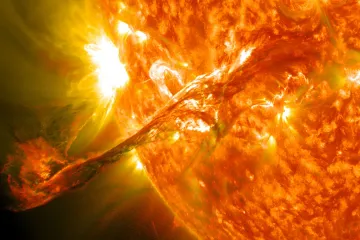
The smallest and coolest stars, the M-dwarfs (red dwarfs), are by far the most numerous stars in the Milky Way galaxy. If sheer numbers dictated habitability, red dwarfs would win by a landslide. However, their characteristics present serious hurdles for life. Because their habitable zones are so close to the star—often inside the orbit of Mercury in our Solar System—planets in these zones are highly susceptible to tidal locking. This means one side perpetually faces the star in scorching daylight, while the other freezes in eternal night.
Additionally, M-dwarfs are prone to dramatic, powerful stellar flares, especially when young, which can strip away the atmospheres of close-in planets, effectively sterilizing them. While older M-dwarfs are more placid, the sheer energy needed to sustain a protective atmosphere against billions of years of sporadic flare activity remains a significant concern for astrobiologists.
# The Hotter Edge
Moving toward the brighter, more massive stars, we encounter the F-type stars. These stars are hotter and burn through their fuel supply much faster than G-types, offering a comparatively brief window for complex evolution to take hold. Their habitable zones are also positioned farther out, and because of their higher energy output, the range of stable orbital distances—the habitable zone itself—is much narrower. While they offer a great deal of energy, their short lives and intense radiation make them less suitable for long-term biological development compared to the steady K-dwarfs.
To better visualize the trade-offs astronomers consider when prioritizing targets, one can compare the characteristics of these four major habitable classes:
| Stellar Class | Color | Mass Relative to Sun | Main Sequence Lifespan (Estimate) | Habitable Zone Proximity | Primary Concern |
|---|---|---|---|---|---|
| F-Type | White-Yellow | $1.0 - 1.4$ Solar Masses | Billion Years | Farther Out | Short Lifespan, Intense Radiation |
| G-Type | Yellow | Solar Mass | Billion Years | Moderate | Limited Time for Evolution |
| K-Type | Orange | $0.5 - 0.8$ Solar Masses | $15 - 50+$ Billion Years | Closer In | None Major; Generally Stable |
| M-Type | Red | $0.08 - 0.5$ Solar Masses | Trillions of Years | Very Close In | Tidal Locking, Intense Flares |
This comparison illustrates why the K-type star strikes such a compelling balance: maximizing lifespan while minimizing extreme environmental volatility.
# System Context
While the spectral type of the central star is paramount, the suitability of a system cannot be judged by the star alone; the planetary environment around that star matters immensely. For instance, our nearest stellar neighbors include a Sun-like star, Alpha Centauri A, and a K-type star, Alpha Centauri B, both orbiting a common center of mass, with a small M-dwarf, Proxima Centauri, in a distant orbit. The presence of a K-star in such a system immediately raises the probability of finding a suitable world within that system's habitable architecture.
Another factor that feeds into long-term habitability, though not explicitly detailed in the lifespan of the star, is the star's metallicity—the abundance of elements heavier than hydrogen and helium. Stars formed more recently in galactic history tend to have higher metallicity, which is necessary for forming rocky planets in the first place. A very old K-star that formed too early in the universe might lack the necessary raw materials for terrestrial planet formation, despite its incredible longevity. Therefore, the ideal star is not just the right type but also the right age—old enough to have formed planets, but young enough to still be on the main sequence for trillions of years.

# Search Prioritization
When astronomers decide where to point our best telescopes like the Hubble Space Telescope, the decision often boils down to a pragmatic balance between biological potential and observational feasibility. While K-dwarfs offer the best potential for life, G-type stars remain important because they are easier to study due to their higher light output.
However, considering the extreme time scales required for life to move past simple forms, a shift in focus toward K-type stars seems analytically sound. If a habitable planet orbits a G-type star, it has perhaps six billion years left for development before the Sun begins its final stages of evolution. If that same planet orbits a K-type star, that timeline extends by a factor of two, three, or more. This difference in available stable surface time is perhaps the most powerful argument for K-stars being the most suitable—they offer the universe's longest-running laboratory for biology.
Related Questions
#Citations
Which type of star is the most habitable? : r/askastronomy
Goldilocks Stars Are Best Places to Look for Life
The Perfect Stars to Search for Life On Their Planets
What star type is most optimal for hosting life on its planets?
Top 10 List of Habitable Stars to Guide Search
One of the Three Closest Stars Looks Friendly for Life
Our Sun Is Not an Optimal Star to Support Life
Orange stars are just right for life