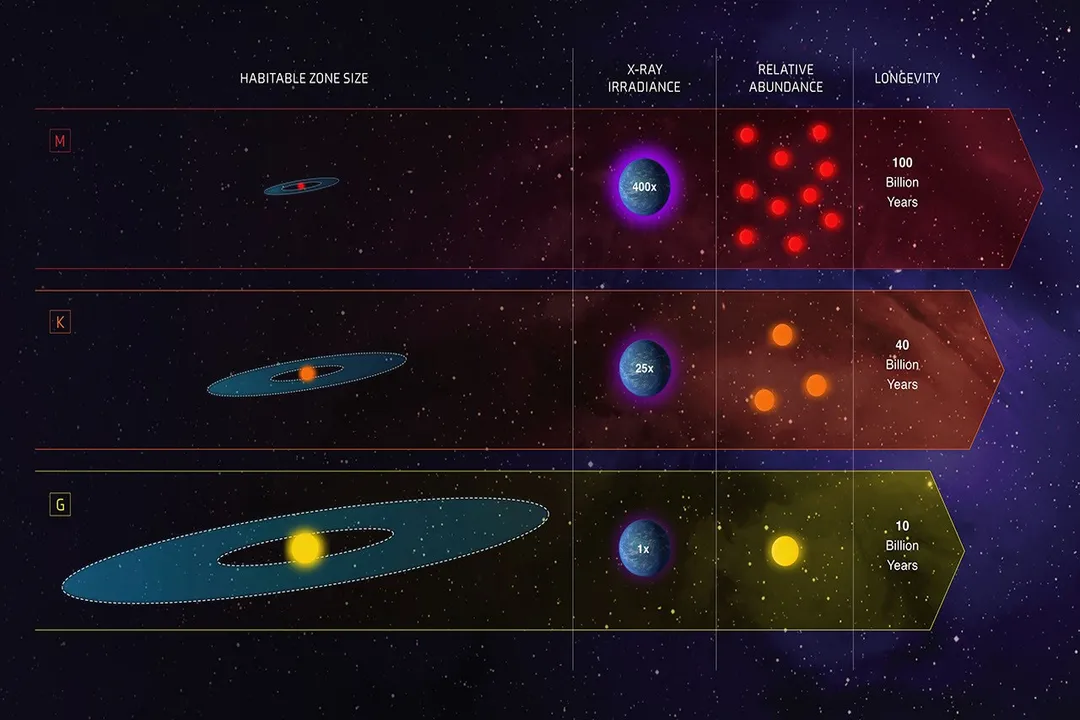
What primary environmental hurdles do planets face within the habitable zones of M-dwarfs?
Planets are highly susceptible to tidal locking and devastating stellar flares.
M-dwarfs, despite being the most common stars and possessing lifespans stretching into the trillions of years, introduce severe environmental challenges for potential life. Because their habitable zones must orbit very closely to compensate for the low energy output, planets within this region are highly susceptible to tidal locking. This process results in one side of the planet being locked in perpetual, scorching daylight while the opposite side experiences eternal, deep freeze. Furthermore, M-dwarfs are notorious for emitting dramatic and powerful stellar flares, especially when they are young, which can be energetic enough to strip away the atmospheres of these close-in worlds, rendering them sterile.