What does a star start out as?
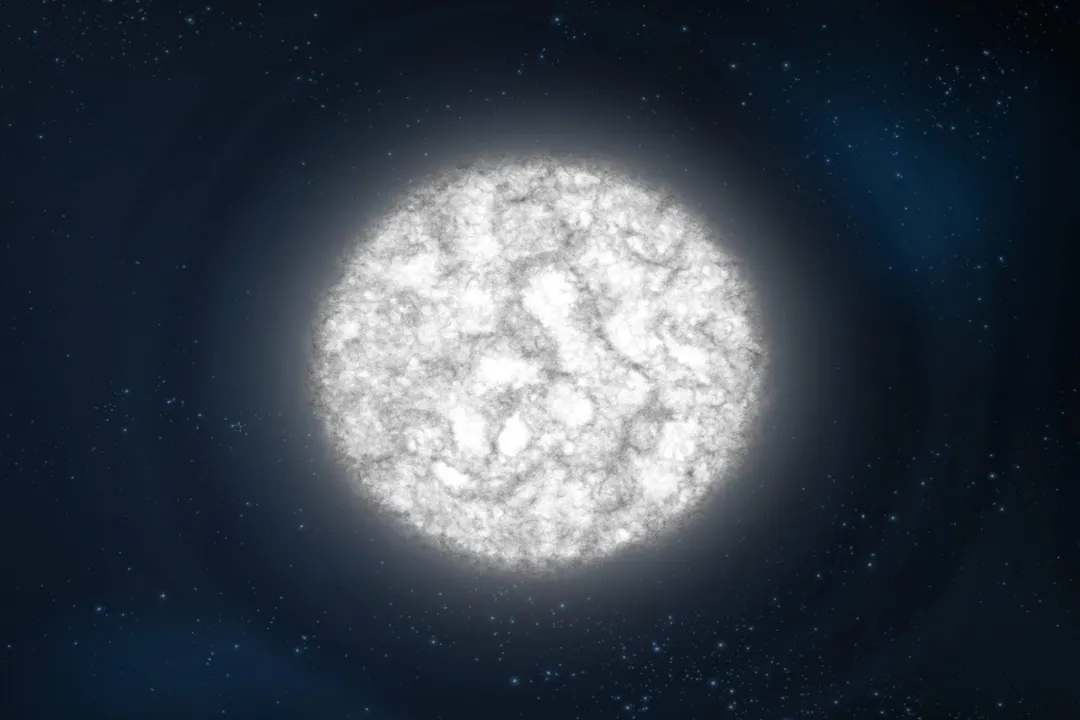
The concept of a star, that brilliant, distant pinprick of light, immediately suggests permanence and stability, yet every single one of these luminous spheroids of plasma is engaged in a slow, continuous process of change, dictated by its birth from the most fundamental building blocks of the cosmos. The story of a star's beginning is not one of sudden appearance, but a gradual, sometimes violent, condensation beginning in the coldest, darkest reaches of interstellar space.
# Cosmic Nurseries
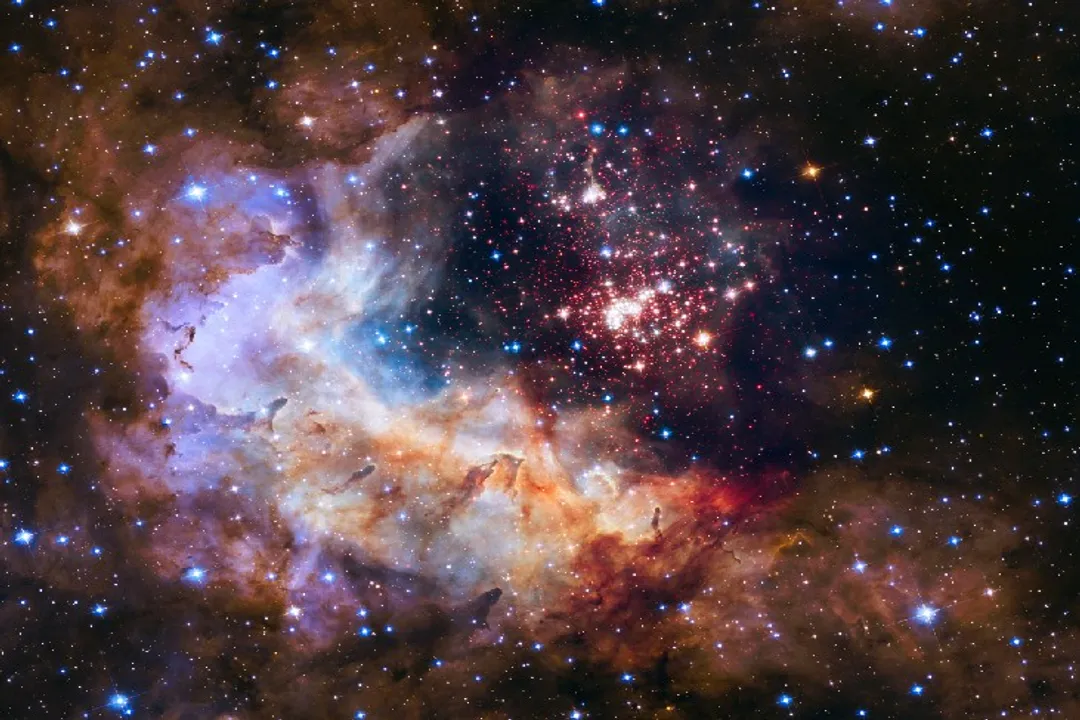
Before a star shines, it exists as raw material within a nebula, which astronomers often refer to as a molecular cloud. These are not sparse wisps of nothingness; rather, they are vast reservoirs of gas and dust, sometimes spanning hundreds of light-years and containing enough matter to form millions of stars, like our own Sun. These areas are sometimes called "stellar nurseries" because they are the cradles of new solar systems.
The composition of these clouds is overwhelmingly simple, reflecting the universe's early makeup. They consist mostly of hydrogen and helium, with only a small fraction being heavier elements—astronomers often group everything heavier than helium under the term "metals". For a molecular cloud in our Milky Way today, this means about 71% hydrogen and 27% helium by mass, with the rest being the products of previous stellar generations. The interiors of these clouds are exceptionally cold, often just 10 to 20 Kelvin. This frigid temperature is essential because it allows gas atoms to bind into molecules, forming the molecular cloud structure itself.
These clouds are not uniform. Within the larger, swirling structure, regions of higher density form, known variously as clumps or dense globules. These clumps, perhaps 50 to 500 times the Sun's mass, contain even smaller, incredibly dense pockets known as cores. It is within these cores that the magic—the transformation from gas to star—is destined to begin.
# Gravitational Collapse
The transition from a static cloud core to a nascent star requires a nudge, which often comes from external events. The gravitational attraction within a core competes constantly with the outward pressure exerted by the gas's random motions. For gravity to win and initiate collapse, the core must either be naturally dense enough or be squeezed by an outside force.
Triggers for this initial squeeze are varied: a passing spiral arm in a galaxy can compress the cloud, or the shockwave from a distant supernova explosion can cause the necessary compression. Once a core reaches a critical density where gravity definitively overcomes internal pressure—meeting the criteria for what is known as Jeans instability—the contraction begins in earnest.
As the core collapses, the matter falls inward. The gravitational potential energy lost by the falling material is converted directly into heat due to friction and compression. This heating is the first step toward stellar fire. As the entire mass shrinks, it begins to spin faster, much like an ice skater pulling in their arms to increase their rotation rate—this is the law of conservation of angular momentum at work.
# The Protostar Phase
This hot, dense object at the center of the collapsing cloud is the protostar. At this stage, the protostar is not yet a true star; it is merely radiating energy generated by its continued gravitational contraction. Its increasing density and temperature can make it visible in infrared light, as it is warmer than the surrounding cloud material.
The rapid spin established during the collapse has a profound effect on how the remaining material feeds the growing core. Because the material at the equator is rotating fastest, it has a harder time falling directly onto the center. Instead, the conservation of angular momentum forces this material into a flattened, swirling structure around the star's equator—the protoplanetary disk. This disk, composed of gas and dust, is the very material that may later coalesce into planets, moons, and asteroids.
One remarkable aspect of this early development is the mechanism by which the protostar sheds excess angular momentum to continue contracting: stellar winds and jets. As the disk blocks material from falling onto the star’s equator, the gas that does fall onto the poles (where rotation is slower) escapes outward along the star's axis of rotation. These high-speed beams of material, often visible as Herbig-Haro (HH) objects when they slam into nearby gas clouds, clear away the natal envelope, allowing the object to eventually be seen in visible light.
For a star that will eventually become like our Sun, this entire protostellar phase, powered only by gravity, can last for tens of millions of years.
# T-Tauri and Failed Stars
The stage immediately preceding full stellar life is often called the T-Tauri phase. This is named after the prototype star, T Tauri, a class of young, highly variable stars found within nebulae. In this phase, material has largely stopped falling onto the core, but the central temperature is still not high enough to ignite sustained nuclear fusion. The T-Tauri star shines brightly from the heat generated by its slow, final gravitational squeeze, a process that can continue for up to one hundred million years.
It is crucial to understand that not every collapsing core succeeds. If a protostar, even after its long gravitational contraction, does not reach the critical internal temperature of approximately one million degrees Kelvin, it will never become a true star. Instead, it becomes a Brown Dwarf, an object caught in a cosmic gray area—too massive to be classified as a gas giant planet, but lacking the necessary mass to sustain the hydrogen fusion that defines a star. Brown dwarfs cool down over time, their initial faint glow fading away as their leftover heat dissipates.
The mass difference between a failed Brown Dwarf and a successful star is surprisingly small, a mere factor of Jupiter masses, highlighting just how precise the physics of star formation must be. A star like the Sun needs a mass of at least about (or roughly 80 times Jupiter’s mass) to kickstart its engine.
If the T-Tauri star's core temperature and pressure requirements are met, the object makes the leap to true stardom.
# Ignition and Balance
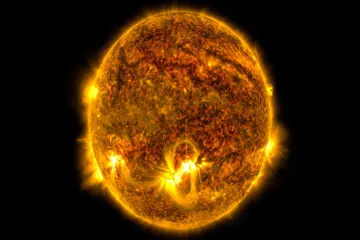
The true birth of a star occurs when the core becomes hot and dense enough for nuclear fusion to begin. In this defining process, the nuclei of hydrogen atoms are forced together to create helium atoms, releasing a tremendous amount of energy in the process—this is an exothermic reaction.
The onset of fusion marks the star's entry into the Main Sequence. This phase is defined by a state of near-perfect balance known as hydrostatic equilibrium. The immense, inward crush of the star’s own gravity is exactly counteracted by the outward pressure created by the energy released from the core’s fusion reactions.
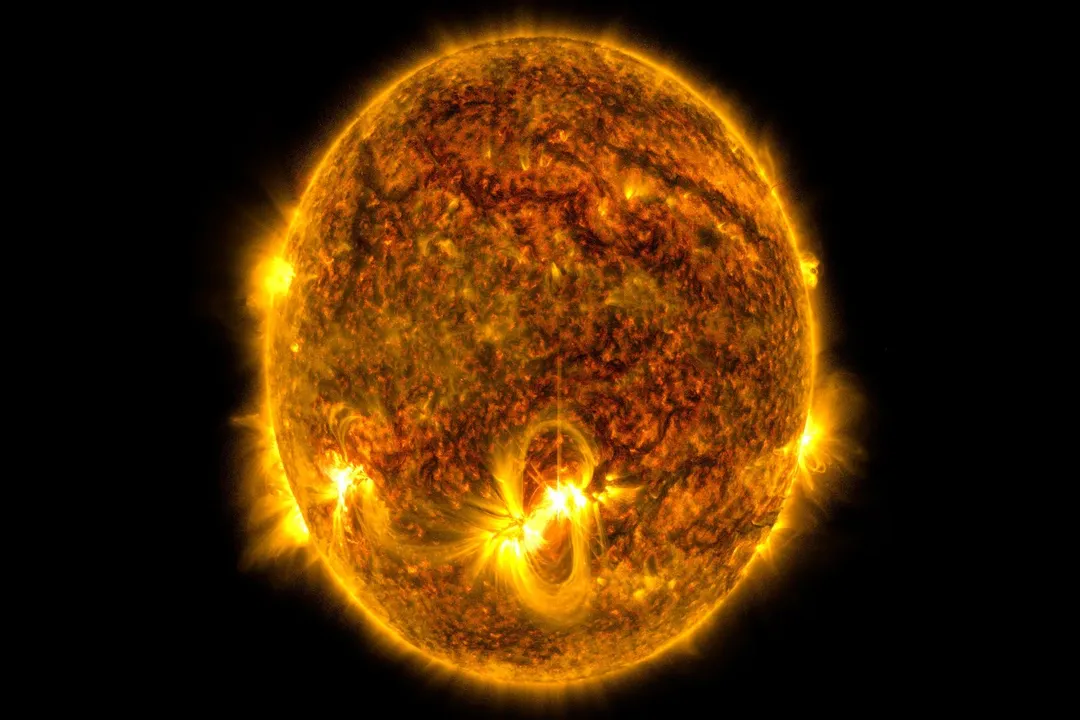
A star will spend about 90% of its entire existence on the Main Sequence, steadily converting hydrogen to helium. The Sun is currently about halfway through this stable period, having begun its main sequence life about 4.5 billion years ago, with another 5 billion years estimated to remain.
The lifespan on the Main Sequence is entirely a consequence of the star’s initial mass, which is a powerful determining factor for everything that follows. It might seem intuitive that a bigger fuel tank (more mass) means a longer burn, but the reality is more complex. A more massive star has far greater gravitational pressure on its core, which forces it to burn its hydrogen fuel at a vastly accelerated rate just to maintain equilibrium. This means that massive stars, while more luminous and hotter (appearing bluer), are short-lived, sometimes lasting only a few million years. Conversely, a low-mass star, like a Red Dwarf (less than ), conserves its fuel so carefully that its Main Sequence lifespan can stretch to trillions of years—longer than the current age of the universe.
This relationship between mass and lifespan provides a fascinating cosmic insight: the very characteristics that make a star shine brightest—high mass, high temperature, and great luminosity—are the very things that ensure its demise happens quickly. Stellar visibility is inversely proportional to longevity on the main sequence.
# Initial Structure and Composition Snapshot
When a star settles onto the Main Sequence, its interior structure is already established based on its mass. The structure generally includes a core where fusion occurs, surrounded by a radiative zone where energy travels via photons, and often, an outer convective zone where hot plasma rises and cool plasma sinks, like boiling water.
For stars like our Sun, the outer layers are convective, while for more massive stars, the radiative zone is closer to the surface. Even at this point of initial stability, the star is evolving subtly. As hydrogen is converted to helium in the core, the helium builds up, slowly increasing the core's density and temperature, causing a gradual, nearly imperceptible increase in the star’s overall luminosity over billions of years.
It is worth noting that the composition of the star also influences its fate; heavier elements (metallicity) can affect the magnetic field strength and the timescale of fuel burning. The material cast out by earlier generations of stars enriches the molecular clouds, providing the heavier elements that end up in later stars and, subsequently, in rocky planets.
If the initial gravitational collapse—the process that gathers the material from the nebula into a core, heats it, and eventually ignites fusion—is the mechanism that creates the star, then the subsequent maintenance of that heat against gravity is what defines the star as a stable entity. From the initial diffuse molecular cloud, through gravitational collapse, past the T-Tauri youth, to the moment of ignition, the entire process is a cascade where gravity initiates the change, and the energy from nuclear fusion halts that change, resulting in the stable, shining object we call a star. This intricate balancing act, entirely determined by the initial amount of gas and dust captured in the core, sets the star on its destiny, whether it be a long, steady burn or a brief, intense existence ending in spectacular explosion. Observing the variety of stars across the galaxy, each at a different point in its evolution, is how astronomers piece together this common, yet mass-dependent, beginning for all stars.
Related Questions
#Citations
Star Basics - NASA Science
Star - Wikipedia
Star Formation - | The Schools' Observatory
How Stars Form: A Star's Life Cycle in Six Stages - KiwiCo
27.1 The birth of a star | Birth, life and death of a star | Siyavula
Stars - American Board
Life Cycle of Stars - BYJU'S
Star Formation | Astronomy - Lumen Learning
Stellar Evolution - aavso