What factors resist the contraction of a cloud of interstellar matter?
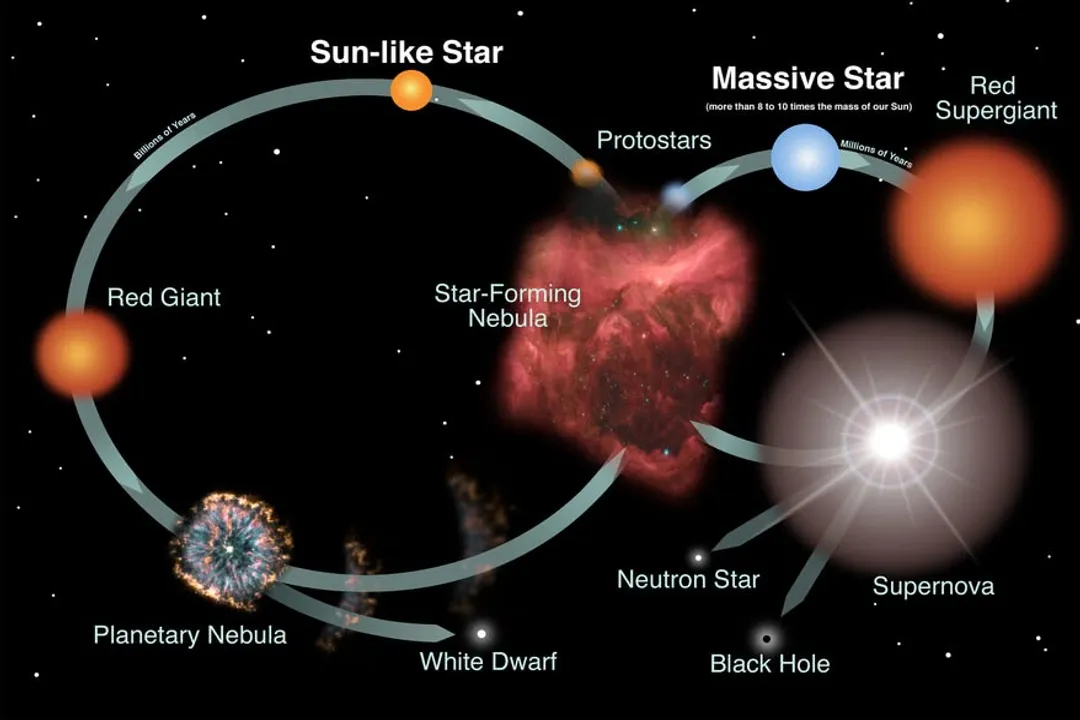
The vast, cold clouds of interstellar matter drifting through the galaxy are perpetual battlegrounds. Gravity, the constant engine of cosmic aggregation, relentlessly tugs every particle inward, driving the process toward the birth of stars and planetary systems. Yet, these immense nurseries do not collapse instantaneously or uniformly. A variety of powerful physical mechanisms actively resist this relentless gravitational crunch, determining the size, density, and timescale over which structure emerges from the primordial gas and dust. [8][9] Understanding what pushes back is as crucial as understanding what pulls inward, as this opposition sculpts the very nature of star formation.
# Gas Pressure
One fundamental counterforce arises directly from the internal energy of the gas itself: thermal pressure, often simply referred to as gas pressure. [4] Interstellar gas is not static; its constituent atoms and molecules possess kinetic energy, causing them to move, collide, and exert a measurable outward push against gravity. This outward pressure is inherently related to the cloud’s temperature; hotter gas exerts a greater pressure for the same density. [4]
In the context of star formation, this concept is deeply tied to the Jeans Mass. A cloud region must exceed a certain critical mass—the Jeans Mass—to overcome its own internal pressure and begin collapsing gravitationally. [8] If the thermal energy (and thus the temperature) is too high, the pressure gradient overcomes gravity, and the cloud remains dispersed or fragments into smaller, stable clumps rather than forming a single large star. [9] This is why star formation occurs predominantly in the coldest regions of molecular clouds, where the thermal resistance is minimized, allowing gravity to dominate the local dynamics.
If we consider an average molecular cloud core, temperatures might hover around $10$ to $20$ Kelvin. The particles are moving relatively slowly, meaning the thermal resistance is weak, which is why collapse can occur. However, this weak pressure is just one part of the equation; if the cloud were perfectly still and devoid of any other forces, the Jeans Mass would be relatively low, leading to the rapid formation of many small stars. The actual outcomes we observe suggest other forces are keeping the resistance higher than thermal pressure alone would suggest.
# Internal Motion
Beyond the simple thermal jiggle of particles, larger-scale motions within the cloud contribute significantly to resisting large-scale contraction. These motions fall into two primary categories: the systematic swirling known as rotation and the chaotic, disordered motion categorized as turbulence. [4]
# Cloud Rotation
Every large structure in the universe, including molecular clouds, possesses some degree of angular momentum. [3] As a cloud attempts to contract under gravity, it is bound by the conservation of angular momentum. Much like a spinning figure skater pulling their arms inward to spin faster, the cloud’s rotation speed must increase as its radius shrinks. [3] This acceleration leads to the development of an outward-directed centrifugal force that opposes the inward pull of gravity, particularly near the cloud’s equator. [3]
Rotation acts as a powerful brake on spherical collapse. A cloud rotating rapidly cannot contract indefinitely along its rotational axis because the centrifugal force prevents further flattening into a point source. Instead, this rotational support tends to channel the collapse along the rotation axis, leading to the formation of a flattened structure, like a spinning disk or a torus, rather than a single sphere. [3] The ability of the cloud to form a star is therefore often decided by whether the mass is concentrated enough in the center to overcome the torque generated by the rotation of the outer layers.
# Turbulent Support
The environment within interstellar clouds is rarely smooth. Clouds are permeated by turbulence, which manifests as chaotic, random motions of gas parcels on various scales, ranging from the scale of a solar system up to hundreds of parsecs. [4] This turbulence injects kinetic energy into the cloud structure, effectively creating a kind of dynamic pressure that resists compression. [4]
When gravity tries to crush a region, the turbulent motions create eddies and vortices that push back, temporarily resisting the local gravitational collapse. This turbulence is often much more significant in resisting collapse than the relatively gentle thermal pressure, especially in the larger, more massive clouds. Think of it as a constant, internal, energetic stirring that prevents the material from settling into a single, gravitationally dominant clump. Without this turbulence, the process of star formation would likely proceed much faster and result in a lower average stellar mass, as smaller regions would cross the Jeans threshold more easily. The observed distribution of star masses, therefore, hints at a complex interplay where turbulence sets the initial conditions for fragmentation before gravity wins out locally.
# Magnetic Influence
Another major player in resisting gravitational contraction involves the pervasive, yet often weak, magnetic fields threading through the interstellar medium. Magnetic fields provide a resistance mechanism known as magnetic pressure or tension. [4]
Interstellar gas is generally ionized enough to be electrically conductive, meaning the magnetic field lines are effectively "frozen" into the gas. As the cloud attempts to contract, the magnetic field lines are compressed and forced closer together. This compression increases the magnetic field strength, which in turn generates a magnetic pressure that pushes outward, opposing the compression. [4] This effect acts like an elastic structure holding the cloud together.
The effectiveness of magnetic resistance is highly dependent on the field orientation relative to the contraction path and the cloud's ability to decouple from the field—a process called ambipolar diffusion. If the cloud is highly ionized, the gas and the field move together, and the magnetic resistance is strong. If the gas is very dense and cold, the neutral particles dominate, and the magnetic field lines cannot effectively halt the collapse, allowing the core to contract until a star forms. [9] In essence, a strong, well-aligned magnetic field can effectively increase the Jeans Mass, preventing the collapse of regions that would otherwise succumb to gravity based on density and temperature alone.
# Competing Forces Synthesis
The formation of a star—a localized, dense object—only happens when gravity successfully overwhelms the combined resistive forces: thermal pressure, rotational inertia (centrifugal effects), turbulent motion, and magnetic field tension. [4] This competition establishes the Jeans instability as the critical metric for star formation. [8]
We can summarize the primary opposing influences:
| Factor | Mechanism of Resistance | Dependence |
|---|---|---|
| Thermal Pressure | Random particle kinetic energy pushing outward. [4] | Temperature (Higher T = More Resistance) |
| Rotation | Centrifugal force due to angular momentum. [3] | Initial angular momentum and degree of contraction |
| Turbulence | Chaotic, non-systematic internal motions. [4] | Scale and intensity of internal flows |
| Magnetic Fields | Tension and pressure from compressed field lines. [4] | Field strength and ionization fraction |
It is interesting to note how these forces decouple or couple during the collapse. Thermal pressure is always present, though weak in cold clouds. Rotation’s influence is most pronounced perpendicular to the axis of rotation. Magnetic resistance is most effective when the density is low enough for the field to be coupled to the bulk of the gas.
A particularly telling observational consequence arises when the resistance mechanisms partially fail. When a dense core begins collapsing but still retains substantial angular momentum and magnetic flux, it often doesn't form a single star; rather, it forms a flattened accretion disk around a protostar, channeling material along the poles via bipolar outflows. [6] These outflows represent a mechanism where the system releases angular momentum and excess energy after overcoming the initial resistance along one axis, but maintaining enough rotational support to prevent total collapse into a single point. This outflow process itself is a testament to the rotational resistance that has not been entirely dissipated by the collapse. [6]
The initial conditions of the cloud matter—its temperature, its initial rotation rate, its magnetic field strength, and the level of turbulence—are therefore the cosmic lottery tickets that determine the eventual stellar population. A cloud born with high turbulence and low rotation might fragment easily into a cluster of low-mass stars, whereas a magnetically dominated, slowly rotating cloud might resist fragmentation until only one or two very massive cores form, assuming the magnetic field eventually diffuses away sufficiently. [9] The sheer variety of stellar objects, from tiny brown dwarfs to massive O-type stars, is a direct consequence of the precise, localized balance struck between gravitational attraction and these four forms of resistance within the initial interstellar medium.
Related Questions
#Citations
Astronomy Chapter 11 Flashcards | Quizlet
Why does rotation prevent the further contraction of the cloud?
What four factors cause a cloud of interstellar matter to resist ... - Gauth
Chapter 9 Flashcards by Mikayla Bertels - Brainscape
The formation of a star begins as a cloud of gas and dust - Facebook
19.1 Gravitational Competition
Cosmic Evolution - Stellar