Which group of stars has the lowest temperature?
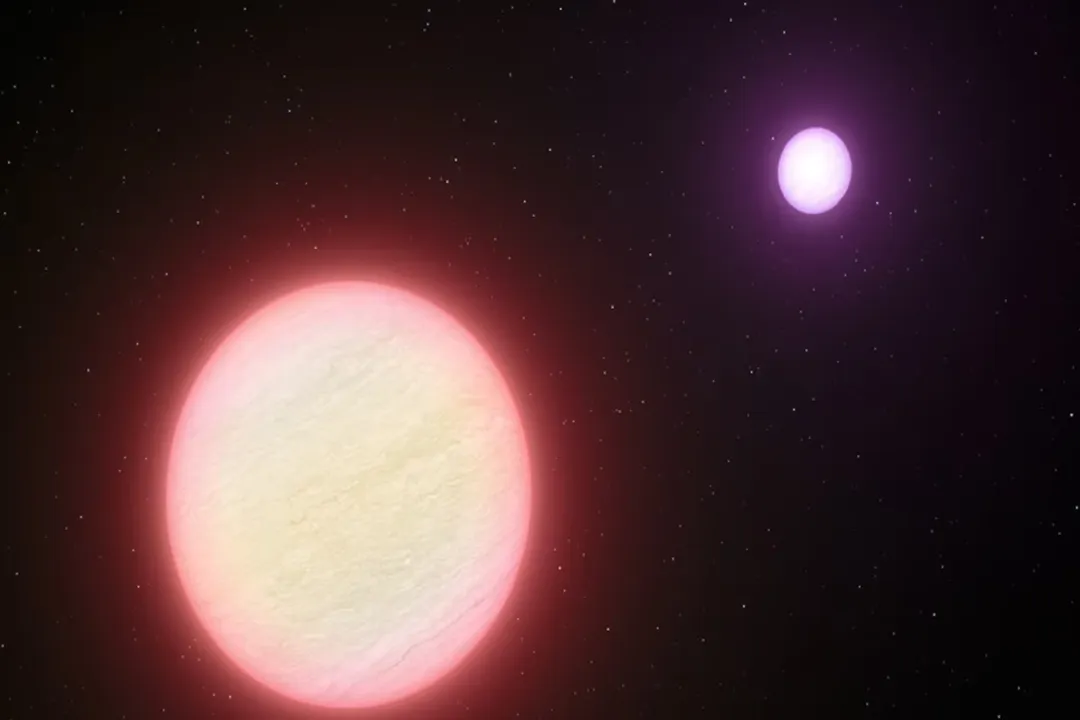
The hue radiating from a star provides a surprisingly accurate initial gauge of its surface temperature, allowing astronomers to categorize the stellar population based on simple visual cues. [6][7] For those seeking the coldest members of the celestial community, the answer leans heavily toward the deep red end of the spectrum. [4] The cooler an object glows, the longer the wavelengths of light it emits, shifting its appearance away from the brilliant blue-white of the hottest stars toward a deep crimson. [7]
# Color Temperature Link
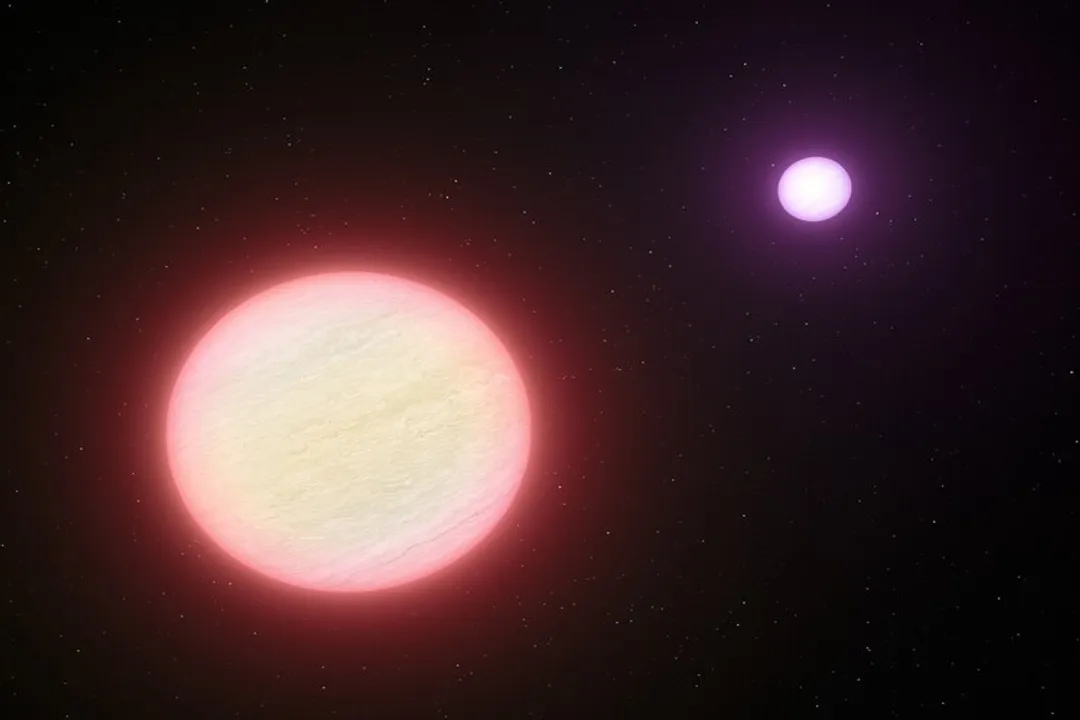
The physics governing starlight dictates a direct relationship between color and heat. The extremely hot stars, classified as O and B types, blaze with blue or blue-white light because their surface temperatures can exceed $30,000$ Kelvin. [7] As we move down the main sequence, we encounter the A, F, and G stars, like our own Sun, which occupy the middle ground with temperatures ranging from about $5,200$ K to $10,000$ K, emitting yellowish or white light. [7] The temperature scale continues downward until we reach the coolest true stars, which present a distinct, deep red color. [4]
# Coolest True Stars
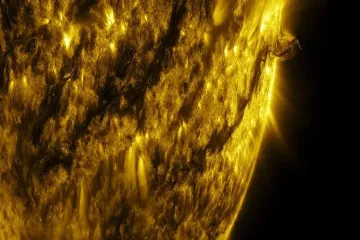
The group of true stars—those massive enough to sustain core hydrogen fusion indefinitely—that possess the lowest surface temperatures are the M-type stars, commonly known as red dwarfs. [3] These are the most numerous stars in the Milky Way galaxy. [1] Their surface temperatures typically fall below about $3,700$ Kelvin. [6] Red dwarfs are famously long-lived, burning their fuel slowly over trillions of years, making them the ultimate stellar survivors. [3] While some might perceive a red star as "warm and inviting," these objects are significantly dimmer and cooler than the stars we observe prominently in constellations like Orion or the Summer Triangle. [3] They represent the lower limit for what we generally classify as a fully fledged, main-sequence star powered by hydrogen fusion.
# Failed Stellar Objects
When we move to objects that fall below the mass threshold required for sustained hydrogen burning, we enter the domain of brown dwarfs. [9] These are often referred to as "failed stars" because they begin forming like true stars but never ignite the primary fusion reaction that defines a star's life. [9] Consequently, brown dwarfs are inherently cooler than even the coolest red dwarfs. Their temperatures are so low that they generate heat primarily through slow gravitational contraction and the fusion of deuterium, a heavier isotope of hydrogen, which ignites at a lower temperature than regular hydrogen. [9]
These objects span a wide temperature range themselves, often designated by spectral types L, T, and Y. [1] The L-type brown dwarfs might have temperatures slightly above the coolest red dwarfs, perhaps in the range of $1,300$ K to $2,400$ K, where molecules like titanium oxide and vanadium oxide are present in their atmospheres. [7] Moving further down the scale, the T-dwarfs, which are cooler still, show methane absorption features, with surface temperatures dropping toward $500$ K. [7] The absolute coldest known stellar objects, the Y-dwarfs, approach temperatures comparable to a cup of coffee, sometimes dipping below room temperature, perhaps around $250$ K or even lower. [9] Thus, the Y-type brown dwarfs hold the record for the lowest temperatures among objects generally included in stellar classification lists. [1]
The distinction between the coolest M-dwarf star and the warmest L-dwarf brown dwarf is fascinatingly narrow in terms of temperature, yet fundamentally massive in terms of sustained energy production. A true M-dwarf has enough mass to sustain the proton-proton chain reaction involving ordinary hydrogen, while the L-dwarf, just shy of that critical mass, relies on the much faster burnout of deuterium. [9] This subtle difference in core physics dictates whether an object can shine for billions of years or only for a few million before fading into a cold, dark remnant.
# Temperature Classifications
To better appreciate the range, it is useful to see the general temperature brackets associated with the cooler end of the spectrum:
| Spectral Class | Typical Color | Approximate Surface Temperature (Kelvin) | Object Type |
|---|---|---|---|
| M | Deep Red | to $3,700$ | Red Dwarf Star |
| L | Reddish/Magenta | to $2,400$ | Brown Dwarf |
| T | Orange/Brown | to $1,300$ | Brown Dwarf |
| Y | Deep Infrared | Below (approaching ambient) | Brown Dwarf |
| [1][7] |
The classification system clearly places the coolest objects, the Y-dwarfs, at the bottom, where their light output is heavily weighted in the infrared spectrum, making them extremely difficult to observe directly without specialized instruments. [9]
# Implications for Orbiting Worlds
The incredibly low surface temperatures of these dim objects have significant consequences for any planets that might orbit them. Since the amount of energy received by a planet depends heavily on the star's intrinsic luminosity, and red dwarfs and brown dwarfs are very faint, an orbiting world must position itself extremely close to its host to receive enough warmth to maintain liquid water on its surface. [4] For example, a planet orbiting a red dwarf might need to orbit inside the orbit of Mercury in our solar system to stay warm enough to be potentially habitable. [4] For the much cooler brown dwarfs, the habitable zone is pushed in so close that the tidal forces and the star's relatively rapid flaring (especially in younger brown dwarfs) could make the environment extremely hostile, even if the temperature itself were technically within a liquid water range. This forces a consideration of not just surface temperature, but the stability and environment of the planet itself when discussing the coolest stellar systems.
In summary, while the coolest true stars are the M-class red dwarfs, the absolute coldest stellar-like objects known are the Y-class brown dwarfs. [1][9] These sub-stellar bodies can have surface temperatures that rival or even dip below those of Earth's polar regions, marking the absolute coolest boundary of objects that form via gravitational collapse in the stellar neighborhood. [9]
#Videos
What Type Of Star Has Low Temperature And Low Luminosity?
Related Questions
#Citations
List of coolest stars - Wikipedia
Which star is the coldest? : r/askastronomy - Reddit
The Gentle Giants Red stars may look warm and inviting, but they're ...
What is the color of the stars with the lowest surface temperature?
What Type Of Star Has Low Temperature And Low Luminosity?
The Colours and Temperatures of Stars
The Colors of the Stars From Hottest to Coldest - Science Notes
Mastering Astronomy: Patterns Among Stars Flashcards - Quizlet
Coldest Star Found—No Hotter Than Fresh Coffee