Why did Russia not land a man on the Moon?

The successful landing of American astronauts on the Moon in July 1969 marked a defining moment of the 20th century, yet the Soviet Union, which had pioneered so much of early spaceflight, never managed to put a cosmonaut on the lunar surface. While the West often viewed the Soviet effort as a simple loss of a technological race, the reality behind why the USSR failed to achieve this monumental goal is a complex narrative involving catastrophic hardware failures, shifting political priorities, and deep organizational dysfunction. [2][5]
# Initial Lead

For much of the early 1960s, the Soviet Union maintained a lead in space exploration, boasting the first satellite, the first man in space, and the first woman in space. [5] This early success built immense public and state confidence that the Moon landing was within reach, perhaps even inevitable. [3] Initial Soviet plans indeed included a crewed lunar program, with significant effort put into designing the necessary hardware to meet the challenge issued by US President John F. Kennedy. [3] However, the nature of the program—its management, its reliance on specific, unproven technologies, and its ability to adapt—ultimately proved less resilient than its American counterpart. [2]
# Rocket Stumbling Block
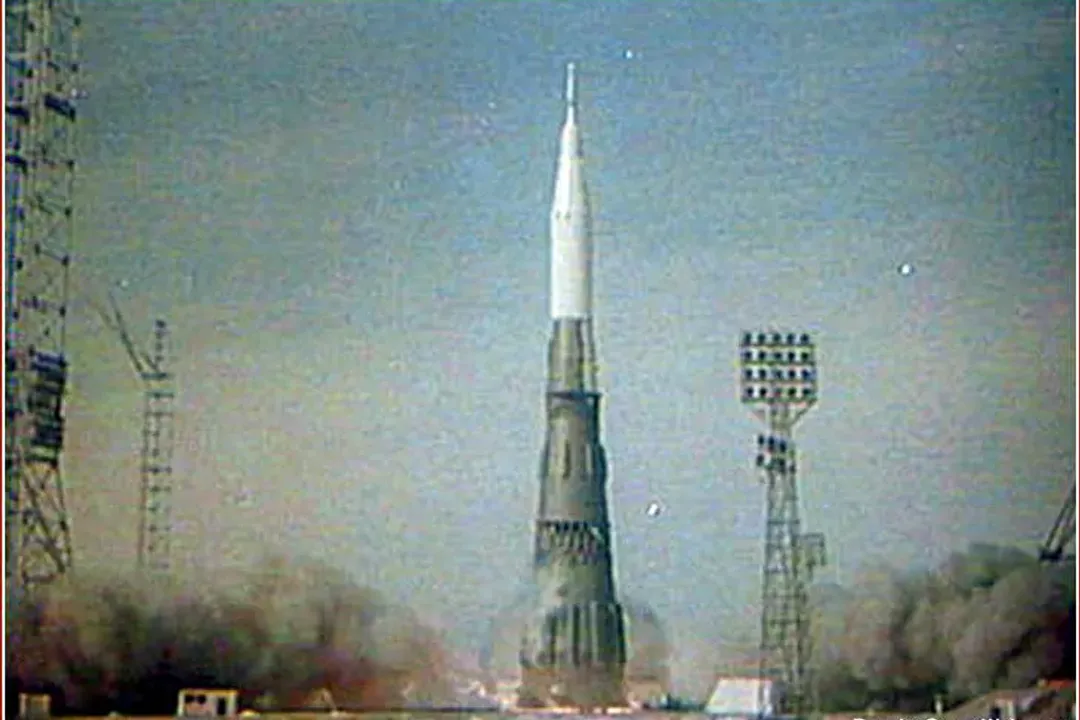
The most tangible and persistent reason for the Soviet failure rests with its designated lunar launch vehicle, the N1 rocket. [4] This gargantuan machine was designed specifically for the Moon mission, intended to carry the massive payload required for a crewed landing and return. [4] The problem wasn't necessarily the underlying theory, but the execution of its sheer scale and complexity. [2]
The N1 required an unprecedented number of engines for its first stage—a daunting cluster of thirty NK-33 engines. [4] This design choice created an immediate technical vulnerability unlike anything seen on the American Saturn V, which utilized only five massive F-1 engines. [4] The vast array of ignitions required for the N1 meant that the probability of one engine failing, or the resulting vibrations causing a chain reaction, was dramatically increased. [4] In practice, this is precisely what happened. The N1 launched four times between 1969 and 1972, and every single launch ended in an explosion, often within seconds of liftoff. [5] The second test, in July 1969, just weeks before Apollo 11 launched, was particularly devastating, resulting in the largest non-nuclear explosion in history up to that point. [4]
This repeated, catastrophic failure meant the Soviets never got a chance to test their complex lunar lander in the vacuum of space, let alone attempt a landing. [5] The sheer number of components that had to work in perfect concert proved too much for the engineering and quality control apparatus of the time. [4]

# Leadership Fissures
A critical element separating the US Apollo program from its Soviet counterpart was the stability of leadership and clear, unified purpose. [2] In the United States, NASA benefited immensely from figures like Wernher von Braun, who commanded the Saturn V development with relatively unhindered authority, and the strong political backing the program maintained. [2]
In the Soviet Union, the architect of their early space successes, Sergei Korolev, the Chief Designer, died unexpectedly during surgery in 1966. [2][5] Korolev was the visionary glue holding the disparate design bureaus together. His passing created an immediate power vacuum and ushered in an era of internal rivalry. [5] Without Korolev’s singular authority, the centralized coordination that marked early Soviet successes dissolved into infighting among competing design teams. [2]
This fragmentation meant that instead of everyone working toward one definitive lunar solution, different groups developed competing lander concepts and launch vehicles, spreading already stretched resources thin. [5] This lack of a unified champion after 1966 meant that when the N1 began failing, there was no single, powerful voice capable of overriding bureaucratic inertia and forcing a necessary pivot or streamlining of the design. [2]
# Bureaucratic Friction
The organizational structure of Soviet aerospace development was inherently less transparent and more prone to political maneuvering than the comparatively open American system. [5] The competition between Chief Designers—such as Vladimir Chelomei, who favored a different rocket design, and Valentin Glushko, who provided engines—became a zero-sum game fought within the Kremlin's halls rather than on the drawing board with a clear goal. [2]
The Soviet leadership never authorized a single, definitive N1/Lunar Lander configuration with the same unwavering, multi-year commitment that the US Congress gave to Apollo. [5] When the N1 failed its initial tests, the project lacked the protected political standing to weather the repeated setbacks. Because the program was highly classified and subject to intense political scrutiny without the mitigating effect of public accountability, these internal stumbles became terminal handicaps. [8] The failure to establish clear lines of authority and a single, non-negotiable path forward meant that the program effectively suffered from design paralysis and organizational gridlock while the US continued its march toward the Moon. [2]

# Strategic Redirection
Another significant factor emerges when we consider the timeline. The Soviet lunar program struggled publicly and technically just as the United States was reaching its goal. By the time the N1 was ready for its first serious test, the political imperative to beat the Americans to the Moon had already begun to fade, especially after the Moon landing was achieved in 1969. [5][8]
Once the symbolic victory was lost, the rationale for pouring immense, economy-straining resources into a program that would only be second vanished. [2] Moscow wisely, from a pragmatic standpoint, redirected its considerable technical expertise and manufacturing capacity toward areas where it could maintain or regain a distinct advantage. This shift prioritized crewed missions in Earth orbit, leading directly to the development of the Salyut space stations and, later, the legendary Mir complex. [3][5]
This pivot represents a key difference in approach: the US saw the Moon race as a singular, existential objective, while the Soviets treated it as one front in a broader technological competition. Once that front was conceded, they moved to secure others. [2] It is interesting to note that while the N1 cluster failed, the powerful NK-33 engines, derived from that effort, proved highly effective in smaller configurations later on, underscoring that the core engine technology was sound, but the system integration for the super-heavy lift vehicle was fatally flawed. [4]
# Secrecy and Denial
The highly secretive nature of the Soviet space program contributed to its eventual demise in the lunar contest. For years, the world, and even much of the Soviet scientific community, was unaware of the specific crewed lunar landing objectives. [8] This secrecy meant that there was no public pressure or morale boost from open achievements, which can often fuel massive state projects. [5]
When the US landed on the Moon, the Soviet government initially responded with a policy of outright denial, claiming they had never intended to land humans there in the first place, framing their efforts as solely focused on robotic probes and orbital stations. [8] This denial, while politically convenient for saving face, obscured the depth of their investment and the extent of their technical failures. It created a culture where admitting failure on the N1 was not just a setback for an engineering team but a national political crisis, which encouraged concealment over correction. [8] This lack of transparency ultimately prevented the kind of open, iterative troubleshooting that marked the Apollo program's recovery from early setbacks.

# Synthesizing the Failure
The inability of Russia to land a man on the Moon was not due to a single flaw but a cascade of interconnected challenges that the American program managed to avoid or overcome. [2] It was the confluence of three major systemic issues: an inadequately proven super-heavy lift rocket (the N1), a fatal political and leadership vacuum following Korolev's death, and a bureaucratic structure that amplified internal competition and punished technical failure through secrecy. [2][5]
If one were to look at the final result, the American Saturn V managed success with fewer engines but greater reliability in its core components, supported by an infrastructure that allowed for focused, singular direction. [4] Conversely, the Soviet program was a study in technological overreach coupled with organizational fragmentation. They possessed engines capable of great things, but the system required to assemble and fly them reliably—the N1—proved to be their undoing. The loss of Korolev meant the loss of the singular will necessary to force that massive, complex machine into submission, leaving behind a legacy of powerful hardware that never quite managed to achieve its ultimate purpose. [2][5]
#Videos
Why Russia Did Not Put a Man on the Moon - YouTube
Related Questions
#Citations
Why did the Soviet Union never send men to set foot on the Moon?
Why the Soviets Lost the Moon Race - Smithsonian Magazine
Soviet crewed lunar programs - Wikipedia
Why didn't Russia ever send a mission to the moon despite ... - Quora
Why Russia Didn't Put Man on Moon - SpaceSpecialists Ltd
Why Russia Did Not Put a Man on the Moon - YouTube
Why didn't the Soviet Union send a man to the moon? - Facebook
The Soviet Response to the Moon Landing? Denial There Was a ...
Why The Soviets Never Landed A Man On The Moon