Why did Russia's spacecraft fail to land on the moon?
The story of Russia’s lunar ambitions is not just about a single failed landing attempt; it is a narrative split across two distinct eras—the intense Cold War race against the United States and the recent, much quieter attempt to reassert deep space capability. When the uncrewed Luna 25 probe crashed into the Moon in August 2023, it marked the end of Russia's first effort to achieve a soft landing in almost fifty years. [7][3] This modern failure, however, sits against a much larger historical backdrop explaining why Soviet cosmonauts never reached the lunar surface decades ago, despite the USSR being the initial pioneer in space exploration. [1][2]
# Recent Impact
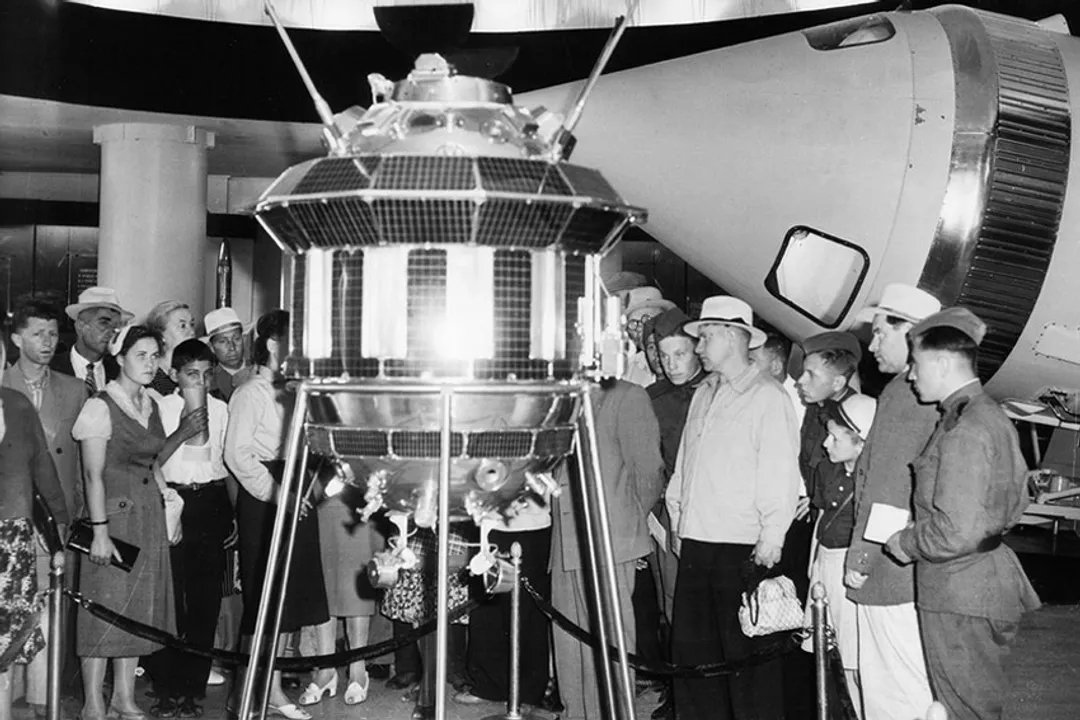
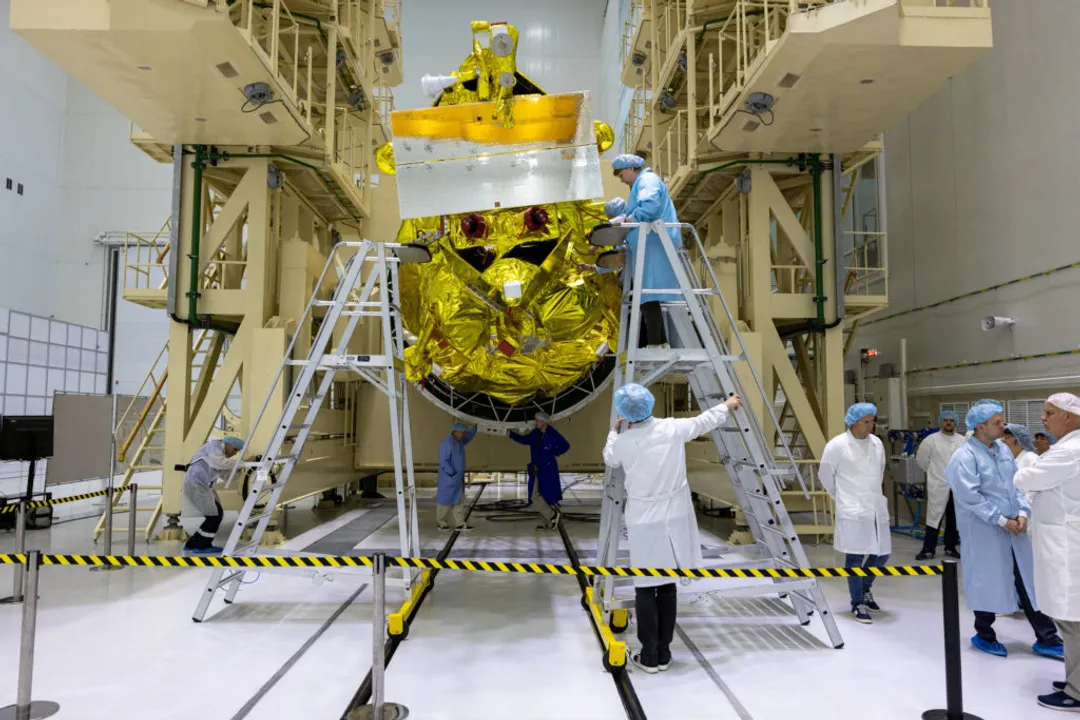
The loss of Luna 25 was a significant setback for the Russian Federal Space Agency, Roscosmos. [3] The mission was intended to be a triumphant return to the Moon, specifically targeting the resource-rich south polar region, an area later targeted by India's successful Chandrayaan-3. [3][7] Its operational goal was to test soft-landing technology and conduct surface research, positioning Russia to potentially be the first nation to land near the lunar south pole. [7] The failure immediately prompted questions about the overall health and technological readiness of the modern Russian space program. [3]
The probe was launched in August 2023, designed to enter lunar orbit and then execute a powered descent. [7] Unfortunately, communications were lost shortly before the planned landing maneuver. [5] This event wasn't merely a simple technical glitch; it pointed toward fundamental issues in the software or hardware necessary for the complex final stages of a deep-space landing. [3]
# Braking Failure

Pinpointing the exact mechanical or software reason for the Luna 25 demise is essential to understanding this specific failure. Reports indicated that the issue arose during the critical braking maneuver required to slow the craft down enough to settle softly onto the surface. [5] Instead of reducing speed correctly to achieve the necessary trajectory, the probe’s engine fired for an unexpectedly long duration. [5] This extended firing propelled the spacecraft into an incorrect orbit, leading to it crashing into the lunar surface. [5]
This suggests a potential breakdown in the autonomous guidance, navigation, and control (GNC) system responsible for executing the final, high-stakes sequence. [5] While the Luna series was historically known for groundbreaking achievements, such as the first probe to reach the Moon, Luna 25's failure highlights that mastering the precision required for a controlled landing decades later remains a formidable challenge. [7] A failure in this specific phase often suggests a problem that should have been caught during ground testing or simulation, leading to scrutiny over oversight processes. [3] The fact that Luna 25 was only an uncrewed lander, designed to test the technology for future sample return missions, underscores the depth of the technical gap that needs bridging. [7]
# Historical Focus
Moving back to the Soviet era, the question of why men never walked on the Moon, despite the USSR having the capability to put rockets into space decades before the US, is rooted in strategy and resource allocation rather than simple technical inability. [1][6] By the late 1960s, the Soviet Union had clearly lost the race to the Moon, largely because the American effort, driven by the Apollo program, enjoyed massive, unwavering political and financial backing focused on a single objective. [10]
When considering the massive complexity involved, it is fascinating to look at the difference in strategic intent rather than just hardware performance. The American approach prioritized beating the Soviets to the Moon above almost all other space goals, channeling immense, centralized funding into the Saturn V rocket and the Apollo architecture. [10] Conversely, the Soviet leadership, after realizing they were behind and facing severe internal difficulties with their own super-heavy launcher, began pivoting their long-term focus toward proving mastery in sustained orbital operations. [1][2] This shift suggests a pragmatic political calculation: better to own the long-term presence in Earth orbit than to pour endless, failing resources into a moon landing that was already slipping away. [2]
# N1 Catastrophes
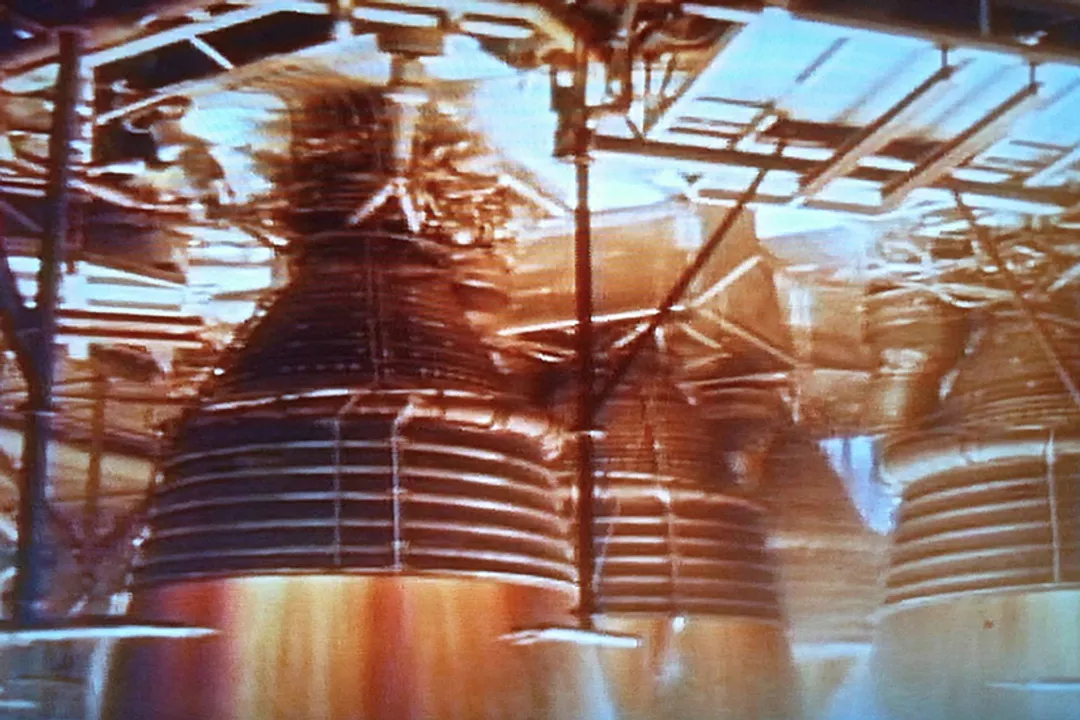
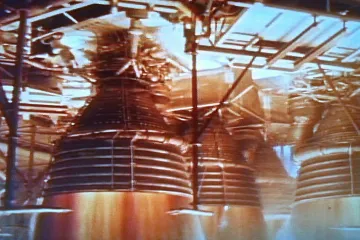
The centerpiece of the Soviet human lunar effort was the gargantuan N1 rocket, intended to lift the required components for a landing mission. [2] This rocket was the Soviet equivalent of the American Saturn V, but it proved to be an engineering nightmare. [6][10] The N1 was plagued by complexity; its first stage featured 30 separate engines clustered together, making the system incredibly difficult to coordinate and tune for a successful launch. [2]
In contrast to the Saturn V, which achieved success relatively quickly after initial development hurdles, the N1 suffered four catastrophic launch failures, all resulting in the destruction of the vehicle shortly after liftoff. [2] The sheer difficulty in perfecting that clustered-engine design proved to be an insurmountable barrier for the Soviet heavy-lift program. [6] While the Soviets undoubtedly possessed powerful engines—some of which were even later adapted for different uses—they never successfully fielded a launch vehicle reliable enough to send a human crew to the Moon. [6] The repeated, high-profile failures of the N1 effectively signaled the end of their manned lunar aspirations, long before the US achieved its goal. [2][10]
# Orbital Strength
The redirection of resources following the N1 failures led the Soviet Union to become the undisputed world leader in long-duration spaceflight. [1] They poured their expertise, funding, and infrastructure into developing the Salyut program, which evolved into the legendary Mir space station. [2] This strategic pivot allowed them to accumulate unique, invaluable experience in keeping humans alive and productive in space for extended periods, an expertise the West could not immediately match. [1] This focus, while costing them the Moon race, secured a lasting legacy in human spaceflight infrastructure. [2]
It's worth noting that even though the N1 failed, the Soviets continued to launch sophisticated, highly successful robotic missions, such as the Luna series, which paved the way for later attempts. [7] This highlights a structural difference: the robotic path remained somewhat viable and funded, whereas the manned program was too politically visible and too dependent on the success of one unreliable rocket to be salvaged once the political will waned. [6]
# Program Strain
When observing the failures of the Luna 25 in the modern context, one can draw a line back to the structural pressures that plagued the Soviet program. The recent mission faced significant delays and restarts following the collapse of the Soviet Union, an event that fragmented the vast engineering and manufacturing base that supported the original space efforts. [7] This fragmentation and subsequent underfunding likely resulted in a loss of deep institutional memory concerning complex, high-reliability engineering practices specific to deep-space soft landings. [3]
If you examine the transition from the Soviet era to modern Roscosmos, the challenge isn't just building a new rocket; it's re-establishing the entire complex ecosystem of ground support, testing protocols, and supplier quality control that existed during the high-stakes 1960s space race. [3] The current Russian space program must now rebuild that technological continuity, a process made harder by economic constraints and international competition. [3] Successfully landing on the Moon requires not just one good engine firing, but decades of accumulated, constantly refined expertise applied flawlessly at the precise moment—a standard that Luna 25 unfortunately did not meet. [5] The gap of five decades between the last Soviet soft lander and Luna 25 represented a half-century where critical knowledge pertaining to the specifics of lunar descent navigation could not be actively maintained or passed down through practical application, leading to a reliance on more recent, less battle-tested software sequences. [7]
#Videos
Why did Russia's lunar mission fail? | NewsNation Live - YouTube
Related Questions
#Citations
Why did the Soviet Union never send men to set foot on the Moon?
Why Russia Didn't Put Man on Moon - SpaceSpecialists Ltd
Russia's lunar mission failure raises questions about state of space ...
Russia's Moon Probe Failure: Why and What Next?
Russia pinpoints cause of Luna-25 moon lander's failure - Space
Why didn't Russia ever send a mission to the moon despite ... - Quora
Luna 25 - Wikipedia
What kept the Soviets from going to the Moon (before the US)?
Why did Russia's lunar mission fail? | NewsNation Live - YouTube
Why the Soviets Lost the Moon Race - Smithsonian Magazine