Why did New Glenn fail?
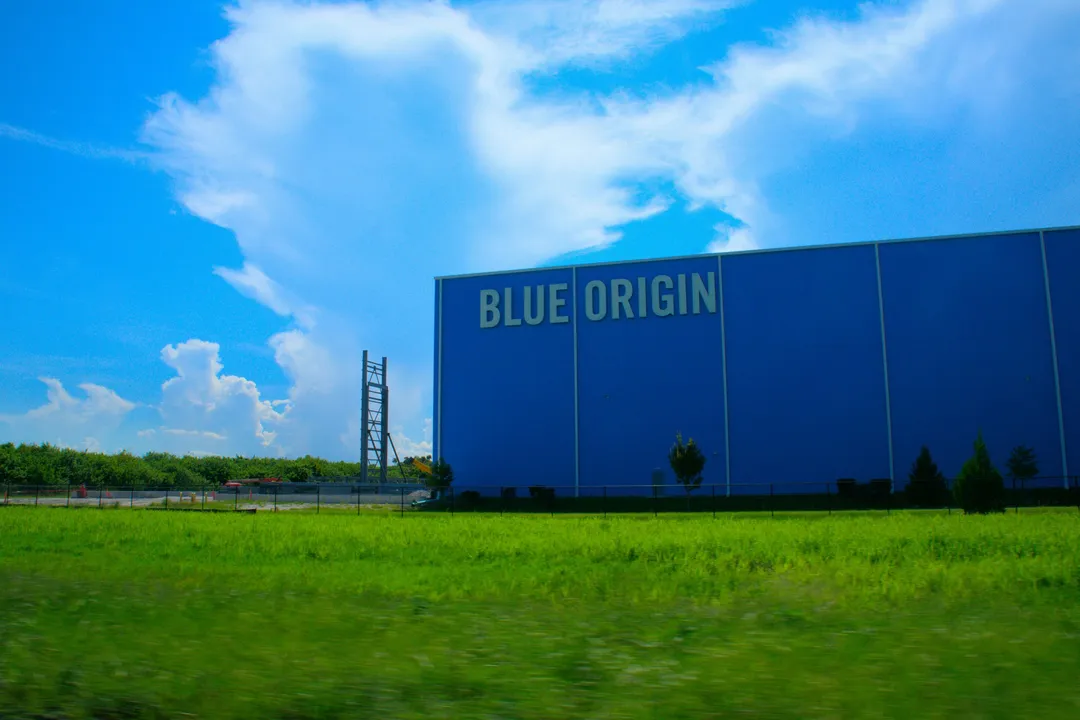
The debut of Blue Origin’s New Glenn rocket, a heavy-lift vehicle anticipated to reshape the launch landscape, has been marked not by immediate orbital success, but by a series of significant, public-facing technical setbacks. Expectations for this venture, backed by Jeff Bezos, were understandably high, yet the initial operational phase has been characterized by delays, a launch stand-down, and most notably, a failure to stick the landing on its first flight's booster stage. Understanding why New Glenn has faced these early challenges requires breaking down the specific incidents that have characterized its recent history, moving past the initial hype to examine the hard engineering and logistical realities.
# Debut Stood Down
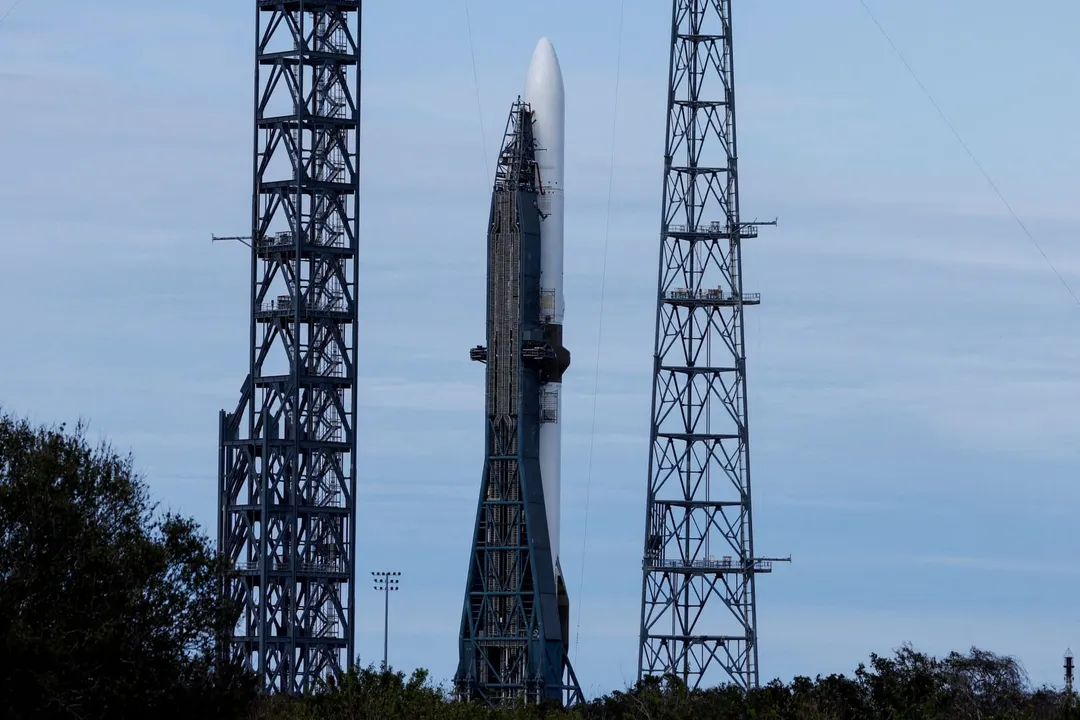
The path to the inaugural flight was not smooth, demonstrating the inherent risks in fielding a new-generation rocket system. Reports indicate that Blue Origin ultimately stood down on the planned debut launch of New Glenn sometime around January 13, 2025. This decision to abort a flight attempt after extensive preparation signifies that the team encountered an issue significant enough—or perhaps an anomaly during final checks—to warrant delaying the mission rather than proceeding to the pad for launch.
Launch scrubs and stand-downs are a fact of life in rocketry, but when they occur so close to the expected debut of a vehicle meant to compete in the high-stakes commercial launch market, they draw intense scrutiny. The exact technical trigger for that specific stand-down remains one of the key unanswered questions from that period, though general launch scrub data points to the inherent complexity in verifying every system before ignition. This initial delay set the tone, suggesting that even with the significant resources available to Blue Origin, systems integration and final verification cycles were proving more challenging than perhaps publicly anticipated.
# Booster Landing Woes
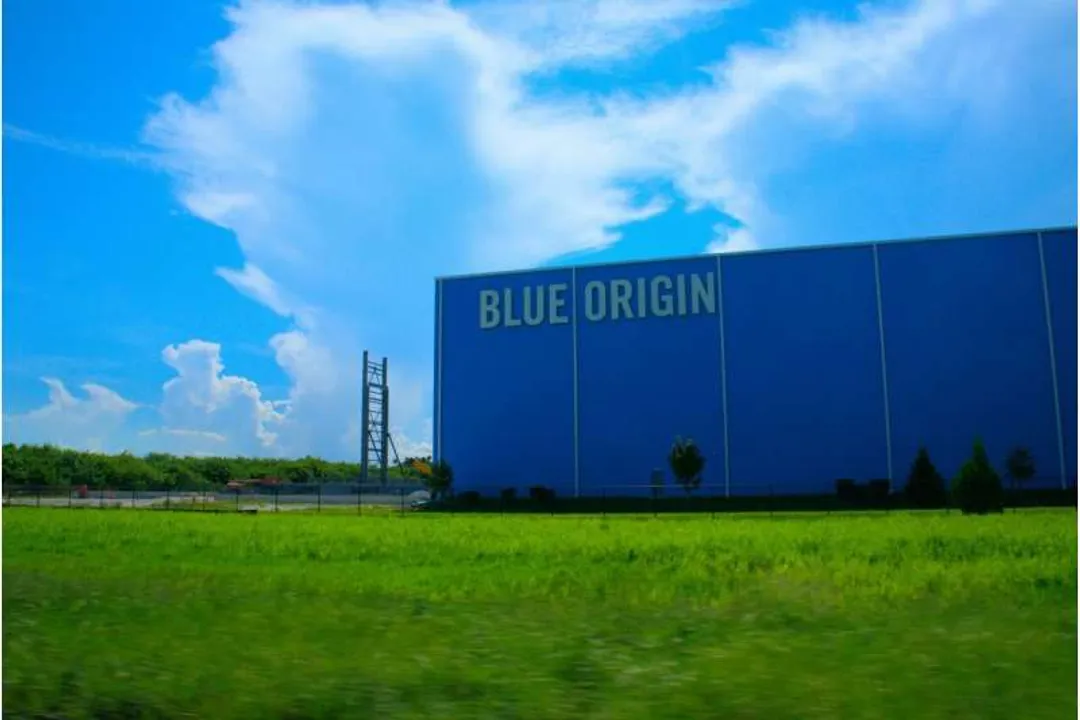
The most dramatic setback, and the one that attracted immediate investigation, occurred during the subsequent attempt to complete the inaugural flight profile, specifically concerning the first stage booster's return. While the successful launch itself marked a monumental achievement—getting the massive rocket off the ground—the follow-up maneuver failed to execute as planned: the booster stage did not stick its landing.
This event, documented around mid-January 2025, specifically concerning the booster on January 16, 2025, became the focus of immediate technical reviews. The public record indicates that instead of a gentle, controlled vertical landing back near the launch site, the return sequence terminated improperly, leading to an investigation into the failure. The specifics of why the landing failed are critical. Propulsive landings on large, first-stage boosters are arguably the most demanding part of reusability architecture. They require precise throttle control of the main engines, flawless navigation and guidance updates during atmospheric reentry, and perfect coordination of terminal engine burns against an ever-changing, high-speed trajectory. Any momentary lag in engine response or slight miscalculation in the final moments can result in a hard impact or a failure to touch down vertically. For a first-time attempt on a vehicle of New Glenn’s scale, this maneuver tests the limits of the engine control software and hardware under extreme stress.
# FAA Review
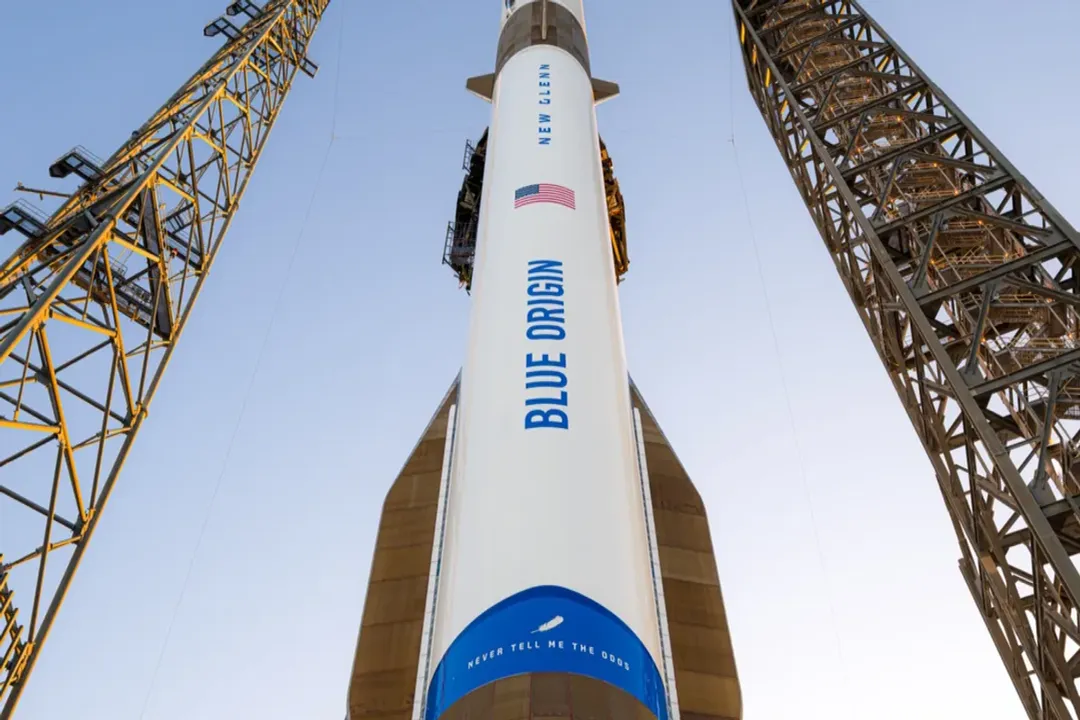
When a booster failure occurs, especially one involving a landing sequence that may result in hardware loss or significant structural damage, it often crosses into the realm of federal oversight. This was the case for the New Glenn landing anomaly. Public reporting confirms that the FAA initiated an investigation into the failure involving the New Glenn booster.
The involvement of the Federal Aviation Administration’s Office of Commercial Space Transportation is standard protocol for launch vehicle incidents, particularly those that fail to meet the terms of their launch license. This regulatory step adds another layer of complexity and time to the recovery process. The FAA's inquiry is not merely about assigning blame; it is a methodical process to determine the root cause of the failure, assess the safety envelope of the remaining hardware, and ultimately approve any necessary design or operational changes before a re-flight authorization is granted. For Blue Origin, cooperating with and satisfying the FAA’s findings becomes a prerequisite for any subsequent attempt at a full-profile mission, essentially pausing the vehicle’s operational progress until the report is closed.
# Landing Dynamics
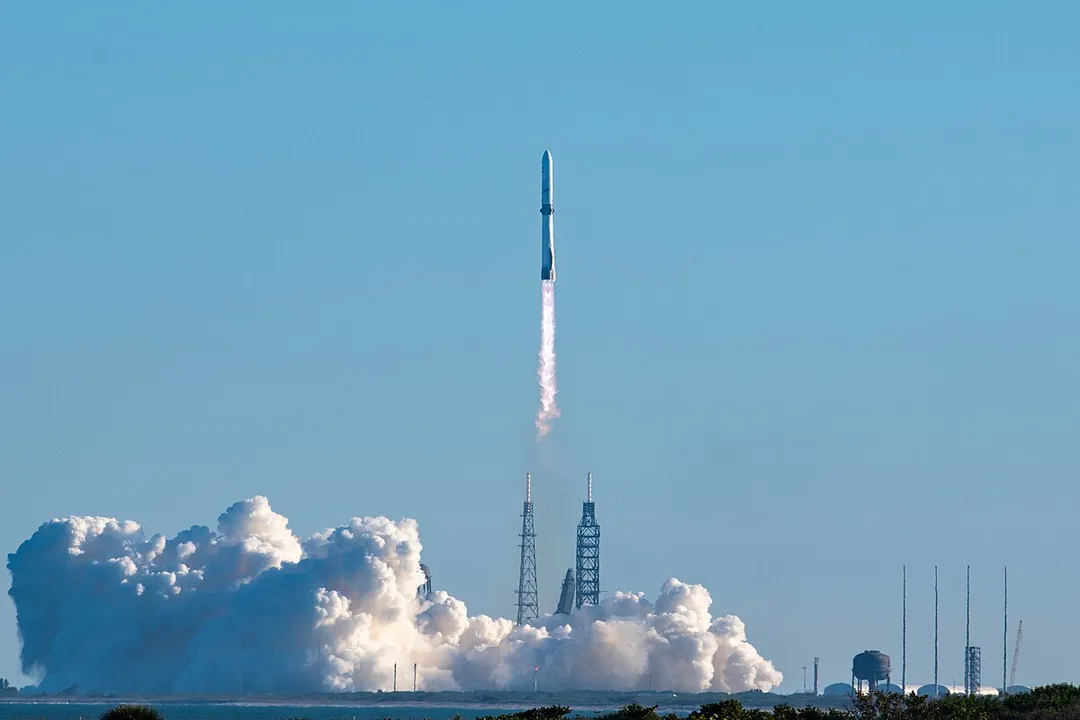
A successful propulsive landing requires overcoming a complex set of physics problems that are unique to the final seconds of descent. While the specifics of the investigation remain internal to Blue Origin and the FAA, we can infer the nature of the challenge based on the vehicle’s design goals. New Glenn is designed to be a super-heavy lift rocket, meaning its first stage carries immense momentum before separation and must decelerate from supersonic or even near-hypersonic speeds back to zero vertical velocity over a very short time window.
Consider the engineering requirement: achieving a "stick" landing demands that the final engine burn must consume the exact required amount of propellant to arrest the descent, without running out of fuel prematurely (a "dry out") or burning too much, leading to an uncontrolled impact. For an inaugural flight, the flight computer is working off expected performance data. If the reentry heating or aerodynamic profile was slightly different than modeled—perhaps due to minor atmospheric variations or slight manufacturing tolerances in the heat shield or airframe—the guidance system might command an engine burn that is either too late or too shallow to stop the descent properly. The very success of getting the rocket airborne and through the main stage burn only increases the pressure on the landing sequence, as the engineering team is essentially asking the booster to perform an aerobraking maneuver followed by a precision hover-landing on its first try. It’s an immense ask, and historical context shows that even programs with established vertical landing capability have experienced hard impacts during early tests.
This presents an interesting programmatic pressure point. While the company has the financial backing of its founder, the time lost due to investigations and redesigns directly impacts their ability to secure future commercial payloads against established competitors. Every day the booster is grounded for analysis on this landing failure is a day their operational cadence slips, which can influence customer commitment to future launch slots. The initial stand-down and the subsequent landing failure compound this issue; they are not isolated events but linked symptoms of a new, complex system being pushed to its limits for the very first time. The data gathered from this failed landing—the telemetry spikes, the engine cutoff commands, the final impact data—will be analyzed to tune the control laws far more aggressively than if the landing had been merely "good enough."
# Development Hurdles
Blue Origin’s development philosophy, often characterized by a steady, methodical approach—sometimes criticized as slow—is now being tested by these highly visible setbacks. The New Glenn vehicle itself is conceived around massive, reusable components, including the BE-4 engines which power the first stage. The BE-4 engine, using liquefied natural gas (LNG) and liquid oxygen (LOX), is a technological centerpiece for both New Glenn and ULA’s Vulcan rocket, meaning its success is watched across multiple programs.
When a booster fails to land, it puts the entire engine restart sequence, the structural integrity of the landing gear attachment points, and the vehicle's avionics under intense scrutiny. For the immediate future, Blue Origin faces the task of not just understanding the landing failure but likely needing to perform extensive non-flight testing—static fires, hardware replacements, and possibly redesigns of the thrust vector control systems used during the landing burn—before they can be cleared to attempt another full mission profile.
Furthermore, the public narrative surrounding these events shapes the perception of the company's technical expertise and reliability. While aerospace engineering is inherently prone to failure during initial development, the public and commercial customers often equate a high-profile landing failure with a lack of control authority, even if the launch vehicle itself performed excellently up to that point. The focus immediately shifts from "they reached orbit" (or attempted to) to "they lost the expensive first stage." A crucial, albeit unstated, goal for Blue Origin now is to close the loop on this failure quickly, turning the telemetry data from the hard landing into the exact software update that guarantees the next landing is successful. This rapid iteration cycle is what separates programs that survive early development challenges from those that stumble indefinitely. The ability to incorporate the lessons from the January 16th event into a re-flight plan rapidly will define the success of their inaugural mission sequence. The challenges faced are not unique to Blue Origin, but the visibility of the New Glenn program means the learning curve is being monitored by the entire industry in real time.
#Videos
It's Embarrassing! Blue Origin New Glenn Failed to Launch after Big ...
What Went Wrong? Blue Origin New Glenn Reached Orbit, But ...
Related Questions
#Citations
Investigation into failed New Glenn landing completed : r/BlueOrigin
Why did Blue Origin's New Glenn launch scrub? - Space Explored
It's Embarrassing! Blue Origin New Glenn Failed to Launch after Big ...
What has really happened with New Glenn booster on 16 January ...
FAA closes investigation into Blue Origin New Glenn booster failure
New Glenn - Wikipedia
Why didn't the inaugural flight booster stage of Blue Origin's New ...
Bezos' Blue Origin stands down on debut launch of New Glenn rocket