Can a protostar fail to become a star?
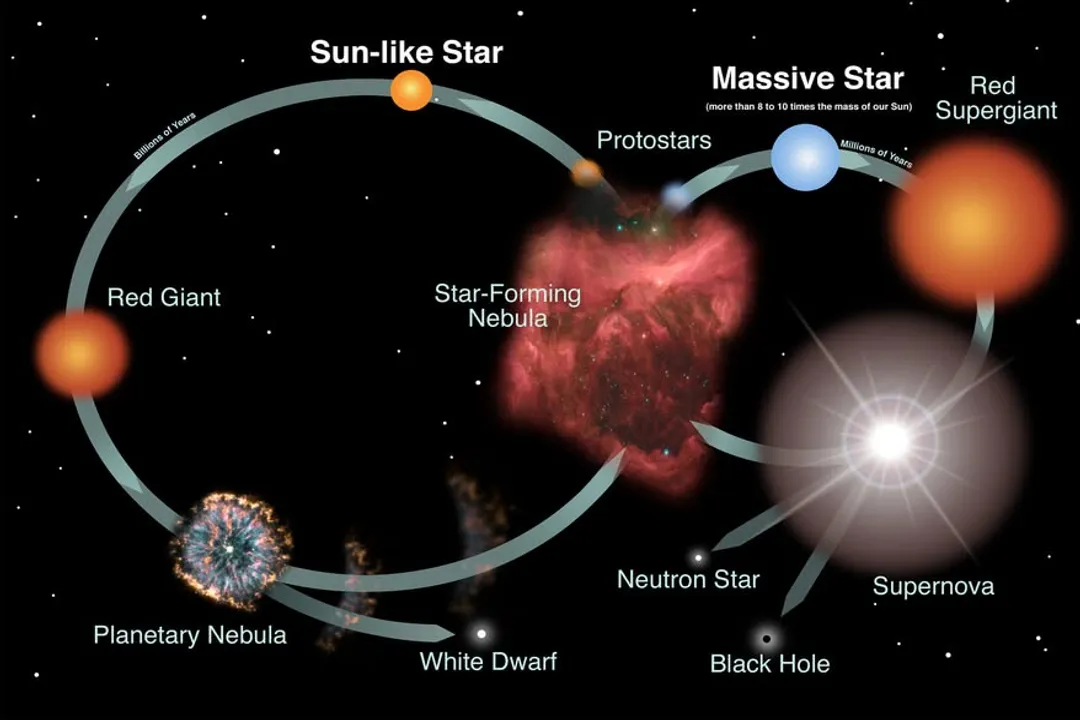
The journey from a diffuse cloud of gas and dust to a stable, shining star is fraught with potential detours, and yes, a protostar can absolutely fail to complete its transformation. Before an object earns the title of a true star, it exists in a dynamic, pre-main sequence phase where its fate is entirely dependent on a single, overwhelming factor: mass. [4][9] During this time, the glowing embryo is known as a protostar, gathering material from its surroundings, but its internal power source is still inadequate for sustained life. [4]
# Collapse Dynamics
The entire process begins with the gravitational collapse of a dense region within a giant molecular cloud. [8] As gravity pulls this material inward, the center of the collapsing mass heats up dramatically. [8] This hot, dense core is the protostar, and it radiates light primarily due to the energy released by this continued gravitational contraction—a process sometimes referred to as the Kelvin-Helmholtz mechanism. [4] While it is shining brightly, this light is temporary; it is the heat of the crush, not the fire of fusion. [4] Furthermore, the protostar is usually surrounded by a disk of leftover material, which it pulls in over time, increasing its overall mass. [9]
# Mass Determination
The critical threshold for stellar stardom hovers near $0.08$ times the mass of the Sun, or $80$ times the mass of Jupiter (). [3][9] If the protostar manages to accumulate enough material to cross this threshold, it is destined for the main sequence. However, if its accretion process stalls prematurely, or if the initial cloud fragment was simply too small, the object will remain stuck in stellar infancy, unable to meet the required conditions for true stellar life. [4] The final mass dictates whether the object becomes a long-lived star or settles into the category of a stellar remnant, sometimes termed a "failed star". [3][5]
# Stellar Failure Defined
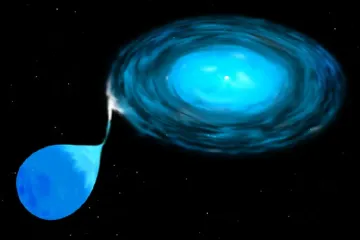
When a protostar falls short of the mark, it never achieves the core temperature and pressure necessary to initiate the self-sustaining fusion of ordinary hydrogen into helium. [1][3] This inability to ignite and maintain the primary energy source of a sun-like object is precisely what constitutes failure in this context. [1] Instead of becoming a true star, the object becomes a brown dwarf. [3][5]
Brown dwarfs occupy a fascinating middle ground between the largest gas giant planets and the smallest true stars. [3] They are massive enough to generate significant internal heat and pressure but not quite enough to kickstart the fusion engine that defines main sequence stars. [3] Interestingly, the slightly lower mass limit for brown dwarfs—around $13$ Jupiter masses—is the point at which they become massive enough to temporarily fuse deuterium, a heavier isotope of hydrogen. [3] This deuterium burning provides a temporary glow, but it is a brief phase compared to the billions of years of hydrogen burning enjoyed by a true star. [3]
This distinction highlights an important nuance: classifying an object as a "failed star" is convenient shorthand, but it risks overlooking the unique physics governing brown dwarfs. They are not merely unlit stars; they are distinct astronomical objects that evolve differently from both planets and main-sequence stars. [3]
# Ignition Point
The official, definitive event that transforms a protostar into a main-sequence star is the start of sustained core hydrogen fusion. [1] When the core temperature surpasses about $10$ million Kelvin, hydrogen nuclei begin fusing into helium at a rate high enough to generate sufficient outward thermal pressure. [1][4] This outward pressure finally balances the relentless inward crush of gravity, halting the long phase of gravitational contraction. [4] At this equilibrium, the object settles onto the main sequence, where it will spend the vast majority of its active life, burning hydrogen steadily. [1][2] If the protostar fails to reach this critical state, the contraction doesn't truly stop; it just becomes much, much slower, driven by residual heat and lower-grade nuclear reactions that eventually fade. [3][4]
When analyzing these objects, it is tempting to view the process as a simple on/off switch, but the physics near the boundary is far more gradual. Consider a scenario involving a binary system where two young stellar objects are forming side-by-side. Object A achieves and ignites hydrogen fusion quickly, becoming a stable star. Object B, only slightly less massive at , experiences the same initial collapse but stalls before ignition. Object A will shine consistently for eons, while Object B will spend its existence slowly cooling down, its luminosity steadily decreasing over time as it radiates away its formation heat. [4]
# Fading Remnants
What then happens to the failed protostar—the brown dwarf? It enters a long, slow decline. [3] Unlike a star that has reached equilibrium, the brown dwarf lacks the internal thermonuclear furnace to replenish the energy it loses to space. [3] It continues to shrink slightly over cosmic timescales, radiating away its initial heat and the energy from any subsequent, temporary fusion reactions (like deuterium burning). [3] They never truly ignite standard hydrogen fusion, meaning they do not graduate to the main sequence. [7]
For astronomers studying very young, low-mass stellar nurseries, distinguishing between an object that is about to become a star and one that is doomed to be a brown dwarf presents a significant analytical challenge. [9] Since the ignition event itself is a rapid phase change, catching a population of objects precisely at that moment of transition is rare. [1] Therefore, experts often rely on precise measurements of the object's mass derived from its gravitational influence on neighboring bodies, or they must track its luminosity and temperature over many years to confirm its cooling trajectory, which is the hallmark of a brown dwarf rather than a stable star. [4][9] An object that fails to clear the fusion hurdle does not get a second chance to build up mass later from the interstellar medium, as its formation cocoon has generally dissipated, leaving it an isolated, cooling remnant. [7]
# Stellar Versus Planetary Limits
It is also helpful to contrast this failure mode with the formation of planets. While a brown dwarf failed to become a star due to insufficient mass for hydrogen fusion, objects below roughly $13$ Jupiter masses simply do not possess the required gravitational energy to trigger any significant nuclear reaction, including deuterium burning. [3] These objects are classified as planets, or sometimes "super-Jupiters." This establishes three distinct categories defined by mass accumulation during the protostar phase: true stars (), brown dwarfs (), and planets (). [3][5] The protostar's "failure" is thus not a single event, but rather a spectrum of outcomes based on how close it came to the necessary mass threshold when its accretion phase ended. [4] A protostar that fails simply becomes the most massive member of the planetary/sub-stellar population, rather than the least massive member of the stellar population. [3]
Related Questions
#Citations
What event officially makes a protostar become a star, the start of ...
Stars - Imagine the Universe! - NASA
Why is a brown dwarf often referred to as a failed star? - Reddit
Failed Stars: Brown Dwarfs | ASTRO 801
Protostars And Brown Dwarfs | Research Starters - EBSCO
The formation of a star begins as a cloud of gas and dust - Facebook
Ask Ethan: Can Failed Stars Eventually Succeed? - Forbes
Star formation - Astronomy 1101 - The Ohio State University
[PDF] Chapter 19 Star Formation