Do small stars become black holes?
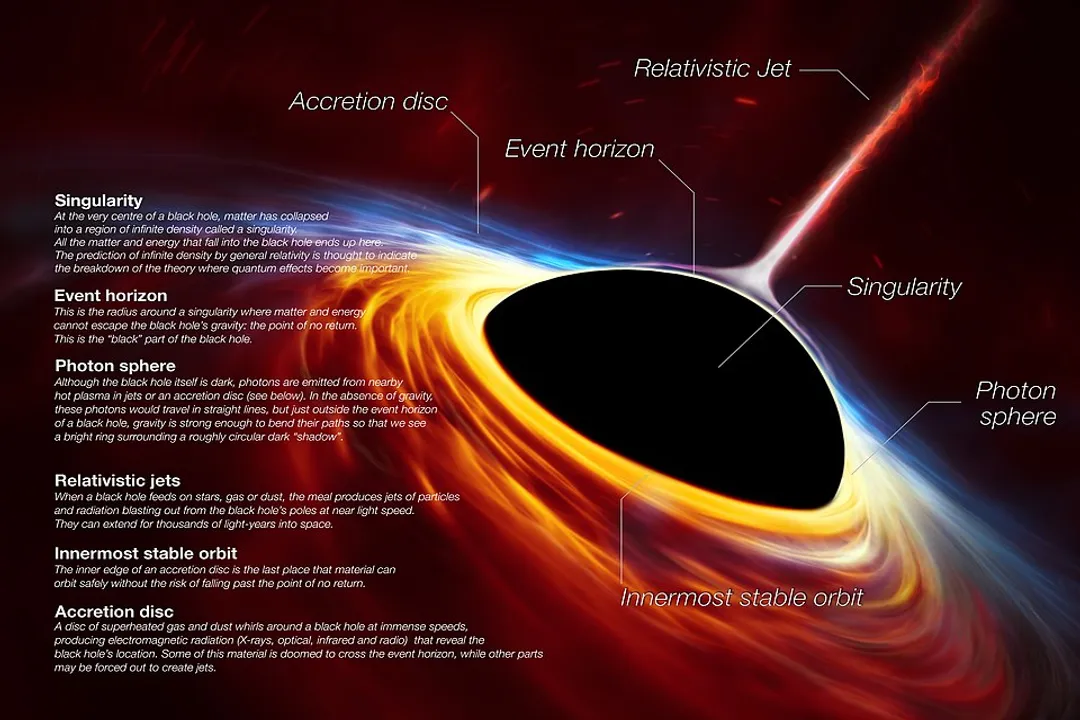
The fate of any star, from the largest giants to the most modest suns, is written in its mass. When we look up and consider the celestial objects that represent the absolute extreme end of gravitational collapse—the inscrutable black holes—a common question arises: can a small star, like our own Sun, ever shrink down to become one of these enigmatic singularities? The short answer, based on current astrophysical understanding, is a definitive no. Smaller stars simply lack the necessary initial heft to overcome the internal physical barriers that prevent total gravitational collapse. [1][5] Instead of crushing themselves into an infinitely dense point, they settle into more stable, though still exotic, final forms determined by the quantum mechanical forces acting within their remnants. [2][7]
# Stellar Destinations
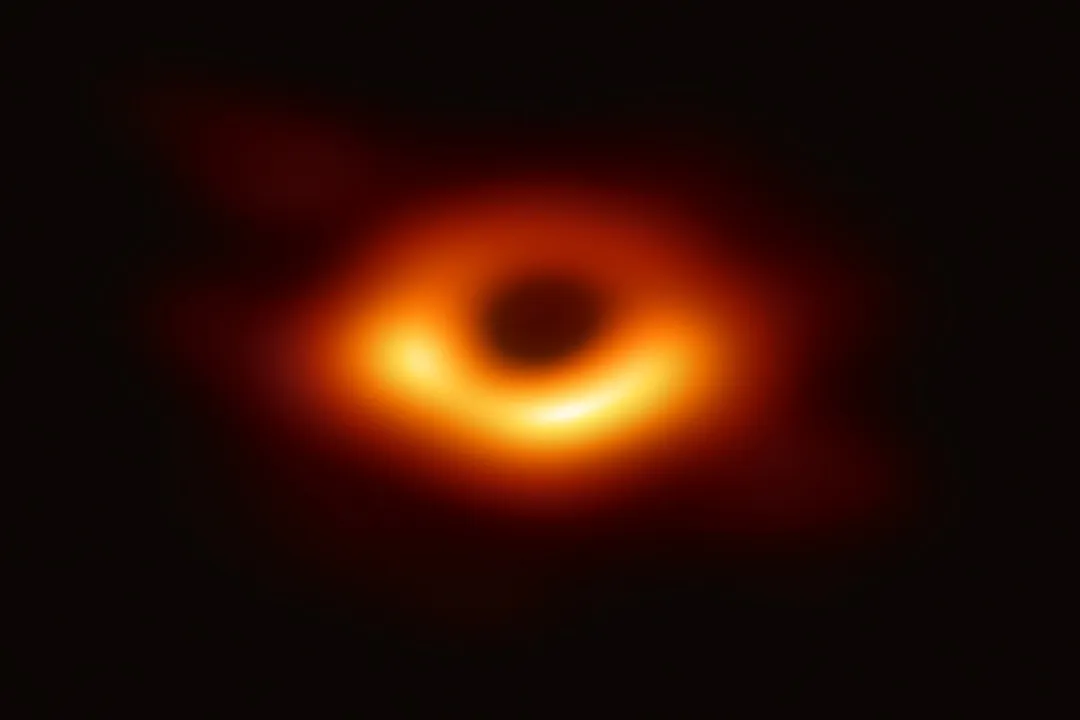
Every star spends most of its life in a delicate equilibrium, where the outward pressure generated by nuclear fusion in its core perfectly balances the inward crush of its own gravity. When the fuel runs out, that balance is broken, and the star begins its final collapse, the outcome dictated almost entirely by the leftover mass of the core. [7]
For stars similar in mass to the Sun, or even those several times larger, the end stage is the formation of a white dwarf. [2][7] Once the outer layers drift away, the remaining core, often around $1.4$ times the mass of the Sun, is supported by electron degeneracy pressure—a quantum mechanical effect that prevents electrons from occupying the same state. [2] This limit, known as the Chandrasekhar limit, defines the maximum mass for a stable white dwarf. [2] If a star begins its life with a mass low enough that its remnant core falls below this threshold, it solidifies into this dense stellar cinder. [7]
When a star is significantly more massive than the Sun, its death is far more violent, usually involving a supernova explosion. If the remnant core remaining after this explosion is too heavy to be supported by neutron degeneracy pressure—the force that resists the crushing of protons and electrons into neutrons—then nothing can halt the collapse, and a black hole forms. [2][9]
# Critical Mass Limits
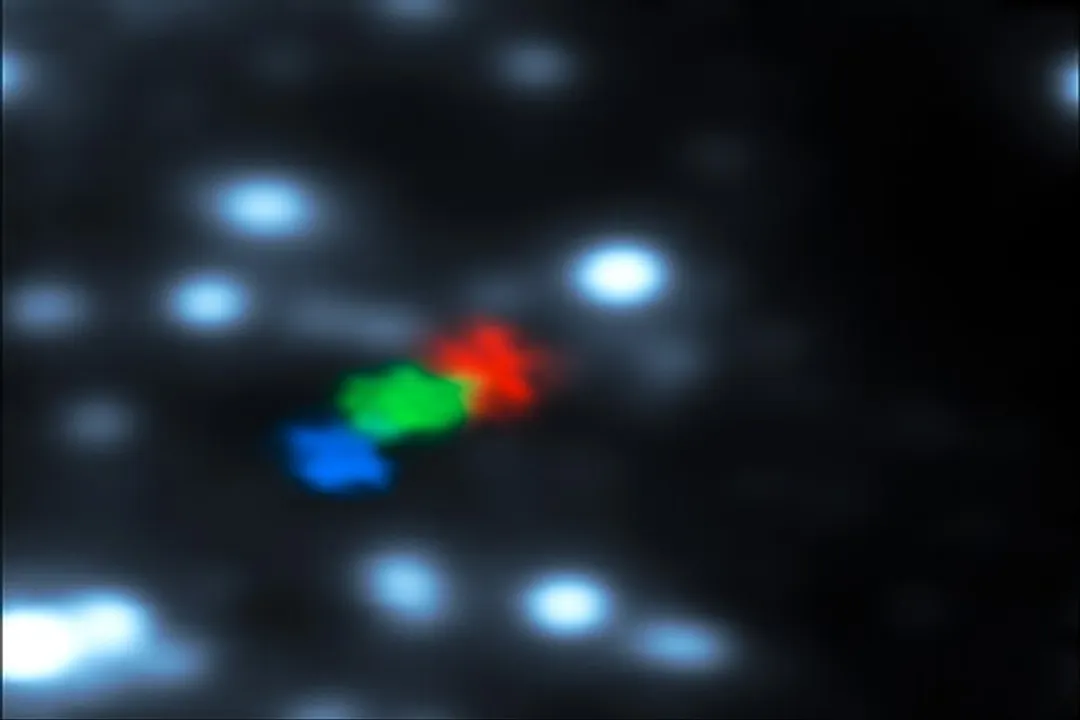
Understanding why smaller stars are excluded from the black hole club requires looking closely at the two primary mass barriers in stellar remnants. [2] The first is the Chandrasekhar limit (about $1.4$ solar masses), which prevents white dwarfs from collapsing further. [2]
If a star's core is too heavy for electron degeneracy pressure to hold it up, gravity forces the electrons and protons to merge, creating a ball composed almost entirely of neutrons, known as a neutron star. [2][7] These objects are incredibly compact, packing more mass than the Sun into a sphere only a few miles across. [2] However, neutron stars themselves have an upper mass limit, often referred to as the Tolman-Oppenheimer-Volkoff (TOV) limit. [2] This limit is the maximum mass that neutron degeneracy pressure can withstand against gravity. [9] While the exact value is still subject to refinement based on the complex equation of state for neutron matter, it is generally thought to lie between roughly $2$ and $3$ solar masses. [2]
A star that begins life less massive than about $8$ times the mass of the Sun is unlikely to leave behind a core remnant that exceeds this TOV limit, even after a supernova, meaning it will almost certainly become a white dwarf or a neutron star, but not a black hole. [7]
# Collapse Mechanics

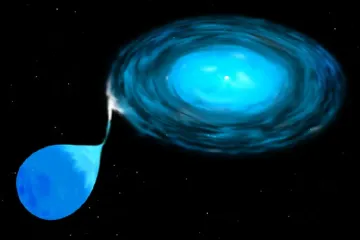
The formation of a stellar-mass black hole is reserved for the true behemoths of the cosmos. [4] For a star to eventually become a black hole, its initial mass must generally exceed about 20 to 25 solar masses. [4] This high starting mass is required because the star must lose a substantial amount of material—sometimes more than half its mass—during its evolution and subsequent supernova explosion. [4][7]
If the core that remains after the explosion weighs more than the TOV limit, gravity wins the final battle completely. There is no known force strong enough to oppose the crushing weight, and the core collapses inward, passing its final event horizon boundary in a fraction of a second to form a singularity. [9] This process bypasses the stable endpoint of a neutron star entirely. [2]
Consider the Sun: our star will end its life as a white dwarf of about $0.6$ solar masses, far below either critical limit. [7] For the Sun to have become a black hole, its entire mass would need to somehow bypass the white dwarf stage and reach a core remnant exceeding $3$ solar masses. This would require an impossible increase in gravitational power, demonstrating the vast gap between a typical star’s destiny and the conditions necessary for black hole formation. [2][4] The physics dictates that the smaller the star, the more pronounced this gravitational 'fail-safe' mechanism becomes, ensuring stability at the white dwarf or neutron star level. [5]
# Observational Ambiguity
While the theoretical physics seems quite clear about the mass boundaries separating neutron stars and black holes, observing objects precisely at that boundary presents a practical challenge to astronomers. [2][9] The TOV limit is not a razor-sharp line, but rather a range, and the precise mass of a compact object is often determined through indirect methods, such as observing its influence on a binary companion star. [2]
This difficulty in measurement leads to what is sometimes called the mass gap—a region in the observed data where objects with masses between about $2$ and $5$ solar masses are rarely, if ever, confirmed. [2] Objects in the lower end of this range could theoretically be the heaviest possible neutron stars or the lightest possible black holes. Confirming whether a newly discovered compact object weighing, say, $2.8$ solar masses is the most massive neutron star ever seen or the least massive black hole formed from a supernova is a high-stakes game in astrophysics, hinging on extremely precise measurements of orbital mechanics and gravitational effects. [2][9]
This ties back to the initial premise: smaller stars simply do not generate enough central energy or possess enough total mass to drive the collapse far enough to enter this ambiguous gap, let alone cross over into confirmed black hole territory. [1][5] They lack the initial energy budget required for such a catastrophic, final collapse. [7]
# Black Holes Beyond Stellar Remnants
It is important to distinguish between the black holes formed by the death of massive stars and other types, as the question of "small stars" usually refers to the stellar-mass variety. [4] Supermassive black holes (SMBHs), which reside at the hearts of nearly all large galaxies, possess masses millions or even billions of times that of the Sun. [4] The formation mechanisms for these gargantuan objects are distinct and perhaps less fully understood than stellar collapse. [5]
Interestingly, the prevalence of these massive objects isn't universal across all scales of galactic structures. While most large galaxies host an SMBH, observations suggest that smaller galaxies might not always follow this pattern, possibly indicating different evolutionary pathways for their central dark masses, or perhaps the absence of a central black hole altogether in smaller systems. [6] This comparison highlights that mass is the defining characteristic in any black hole discussion, whether we are talking about the few-solar-mass remnants of single stars or the billion-solar-mass engines driving galactic evolution. [4][6]
Ultimately, the universe has a clear, mass-dependent rationing system for its most extreme remnants. For the small and medium-sized stars, the forces of quantum mechanics provide an ironclad defense against gravitational singularity, ensuring their final states remain as white dwarfs or neutron stars, leaving the creation of black holes exclusively to their most colossal siblings. [2][7]
Related Questions
#Citations
Stars can only become black holes if they are big enough to begin ...
Why don't small stars end up as a black holes?
How can a star become a black hole?
Black hole - Wikipedia
Why is it such a mystery about how smaller stars can turn into black ...
NASA's Chandra Finds Small Galaxies May Buck the Black Hole Trend
Black Holes - NMSU Astronomy
Is it possible that each neutron star is destined to become a small ...
Shouldn't some stars behave as black holes?