What is the new research Centre of ISRO?
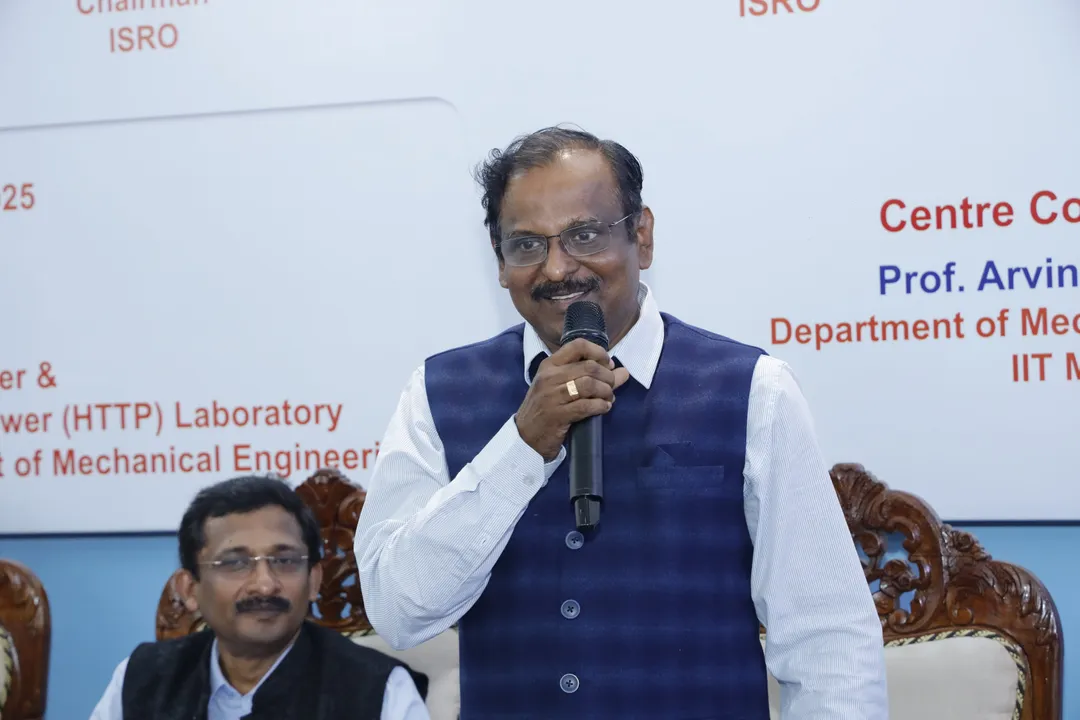
The establishment of a new research facility marks another significant step in the deepening collaboration between the Indian Space Research Organisation (ISRO) and premier academic institutions across the nation. This particular centre, officially named the Advanced Thermal Science Research Centre (ATSRC), has been set up at the Indian Institute of Technology Madras (IIT Madras). The inauguration itself was overseen by the Chairman of ISRO, highlighting the strategic importance placed on this new domain of study by the space agency.
# Centre Location
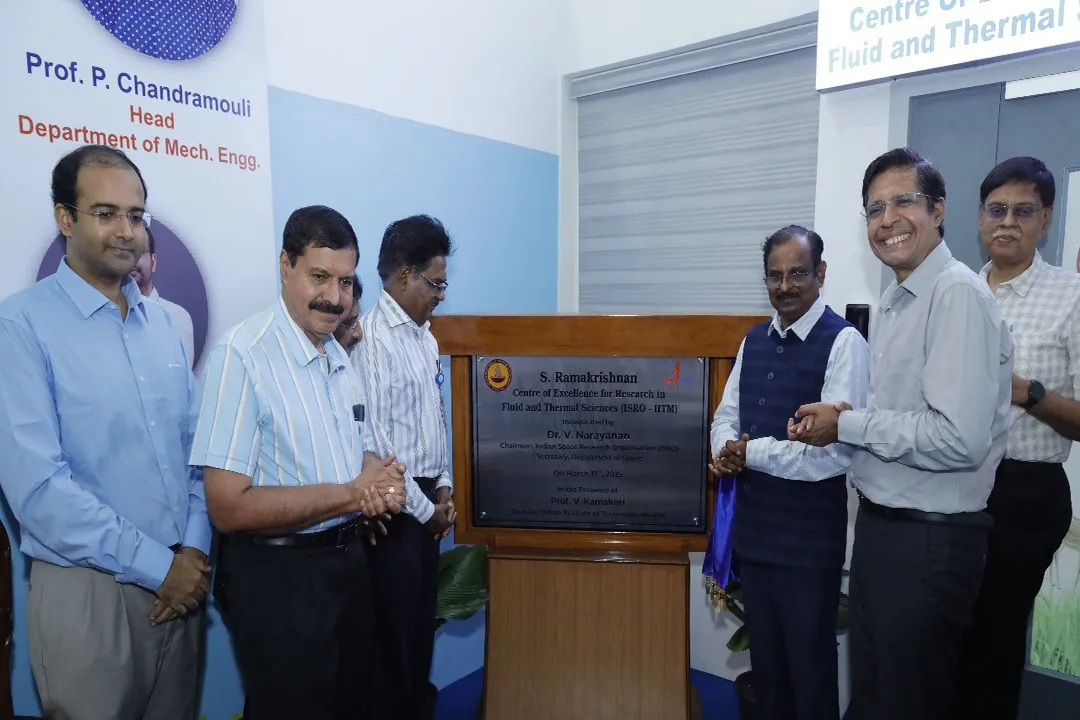
The physical location for this specialized research is IIT Madras. This choice reflects a long-standing pattern where cutting-edge national research efforts find homes within established technical universities that possess deep expertise in various scientific and engineering disciplines. The partnership between ISRO and IIT Madras is specifically aimed at addressing complex technical hurdles that arise during space missions.
# Thermal Focus
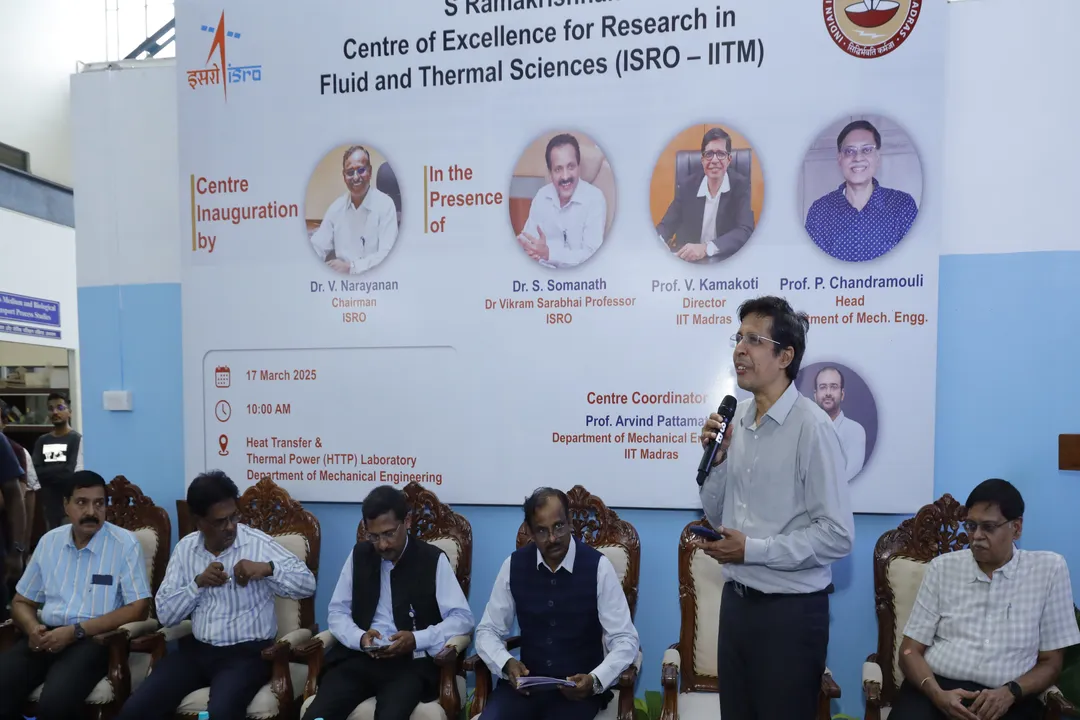
The core mandate of the ATSRC is highly specialized: tackling the thermal challenges inherent in space applications. In the unforgiving vacuum of space, materials and equipment face extreme temperature fluctuations—from intense solar radiation exposure to deep-space cold soak—which can severely compromise mission success if not managed precisely. Understanding and mitigating these effects is critical for spacecraft longevity and instrument performance.
The research within the centre is expected to concentrate on understanding and controlling heat transfer mechanisms in these unique environments. This specialization is vital because as Indian space missions venture further, whether to the Moon, Mars, or into solar observation, the thermal envelopes for spacecraft become increasingly demanding. For instance, success in future deep-space exploration relies heavily on designing electronic systems, propulsion components, and satellite structures that can maintain operational temperatures despite swings that might involve hundreds of degrees Celsius difference across a single component. The centre’s focus is therefore not just academic; it is directly tied to mission reliability for ambitious projects yet to be announced.

# Inaugural Event
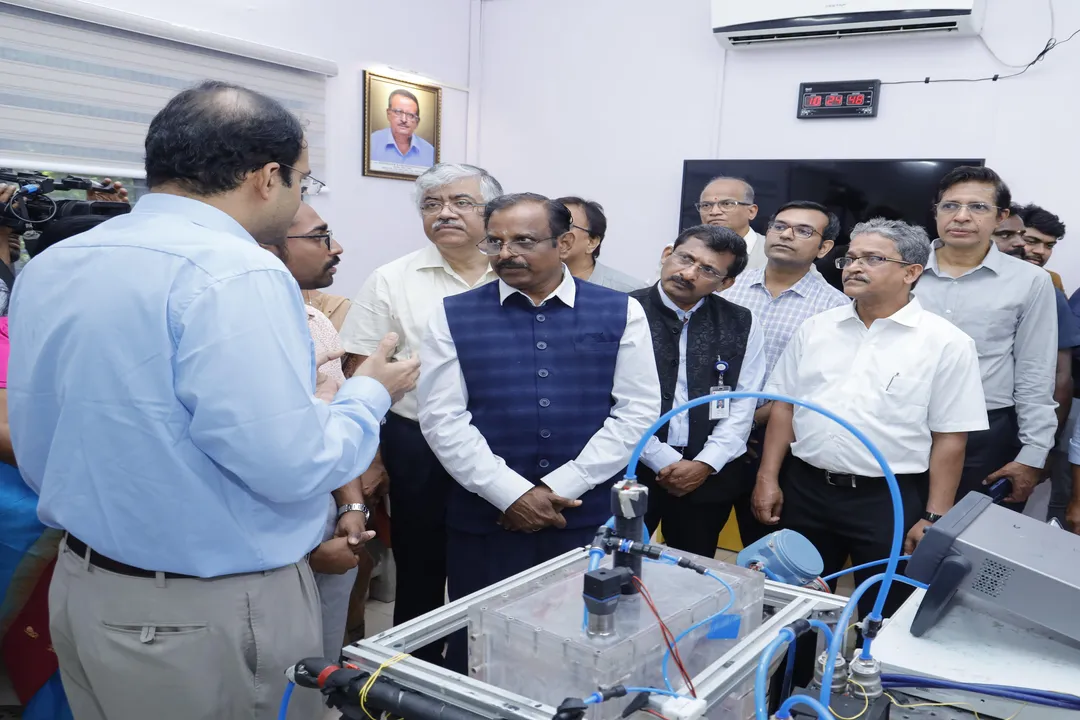
The formal unveiling of the ATSRC involved key figures from both ISRO and IIT Madras. While multiple reports confirm the inauguration was carried out by the Chairman of ISRO, slight variations exist in the publicly cited name of the presiding official at the time of the announcement. Regardless of this minor reporting difference, the presence of the ISRO head underscores the agency's commitment to this area of study. The event, reportedly taking place around mid-May 2024, marked the official commencement of operations for this dedicated research unit.
One notable aspect of the inauguration was the emphasis placed on the academic environment being the perfect incubator for such high-stakes research. This setup, where institutional research capabilities meet national space requirements, often leads to faster prototyping and knowledge translation compared to purely in-house development cycles alone.
# Partnership Dynamics
The relationship between ISRO and IIT Madras in establishing the ATSRC operates as a close mechanism for technology infusion. This model is not unprecedented, but establishing a dedicated centre signals a higher level of institutional commitment than typical grant-funded projects.
Consider the existing structure within ISRO: centres like the Vikram Sarabhai Space Centre (VSSC) in Thiruvananthapuram handle launch vehicle design, while the U R Rao Satellite Centre (URSC) in Bengaluru focuses on spacecraft design. A centre like ATSRC at IIT Madras can act as an advanced, external technology incubator, specializing in a cross-cutting discipline like thermal science that impacts both vehicle stages and the final satellite bus. This external specialization allows ISRO's primary centres to streamline their efforts on system integration while relying on IIT Madras for fundamental breakthroughs and advanced modeling in thermal engineering. It is a distributed approach to expertise building.
# Research Scope
The activities within the Advanced Thermal Science Research Centre are expected to cover several critical areas within thermal management relevant to space technology. This includes:
- Material Characterization: Studying how new alloys and composites react to space-like thermal cycling.
- Thermal Control Systems: Designing improved radiators, heat pipes, and multilayer insulation (MLI) blankets.
- Computational Modeling: Developing high-fidelity simulation tools to accurately predict thermal behavior before hardware is built.
If we examine the requirements for India's planned Gaganyaan human spaceflight programme, thermal management is a life-critical area. Protecting astronauts and sensitive equipment during ascent, orbital operations, and especially during high-speed atmospheric re-entry requires thermal protection systems (TPS) that can absorb or reject massive amounts of kinetic energy converted into heat. The research emerging from ATSRC could directly feed into optimizing the TPS materials used for crew capsules, making the centre's output incredibly valuable for human spaceflight security.
# Institutional Alignment
The decision to base the centre at IIT Madras also points toward a strategic effort to nurture a talent pipeline dedicated to solving these niche, high-technology problems. By embedding research activities within a leading academic setting, ISRO ensures that students pursuing M.Tech and Ph.D. degrees are trained on real-world, mission-critical problems right from their studies. This direct exposure to ISRO's specific thermal pain points creates researchers who are immediately ready to contribute significantly upon graduation, whether they join ISRO directly or work with its partner industries. This differs slightly from older models where research findings flowed back through slower, more generalized academic publications before being adapted for space use.
This close-knit arrangement allows for iterative development. For example, if a new coating designed at IIT Madras shows promise in lab tests simulating vacuum and high heat flux, engineers from ISRO can quickly provide feedback on scaling, manufacturability, and mass penalty, ensuring the research remains grounded in practical limitations. This feedback loop is essential for high-reliability engineering.
# Looking Ahead
The inauguration of the ATSRC is more than just opening a new lab; it signals ISRO's proactive stance toward anticipated technological hurdles. As India targets more complex endeavors, such as sustained presence in Low Earth Orbit or dedicated solar observation missions like Aditya-L1 (which requires managing extreme heat loads pointing towards the Sun), the need for specialized expertise outside the immediate satellite and launch vehicle design centres becomes paramount. This centre directly addresses that need for focused, domain-specific advancement in thermal engineering.
The tangible output will likely involve patents, high-impact publications, and, most importantly, flight-qualified hardware or modeling techniques integrated into future mission designs. For the scientific community and the nation, this centre represents an investment in fundamental engineering capability, ensuring that as Indian space exploration matures, the underlying science supporting its most extreme operational conditions is world-class.
Related Questions
#Citations
ISRO Chairman Dr. V. Narayanan launches Research Centre at IIT ...
ISRO Chairman V Narayanan inaugurates advanced thermal ...
ISRO Chairman Opens Space Research Centre at IIT Madras
ISRO Chairman Dr. V. Narayanan inaugurates research centre at IIT...
ISRO Chairman Dr V. Narayanan inaugurates research centre at IIT ...
ISRO launches research centre at IIT Madras | PanIIT Alumni India ...
IIT Madras partners with ISRO to establish Research Centre to study ...
ISRO Chairman Inaugurates Research Centre At IIT Madras To ...
Dr. V. Narayanan, Chairman, Indian Space Research Organisation ...