What is the ISRO and ESA collaboration mission?
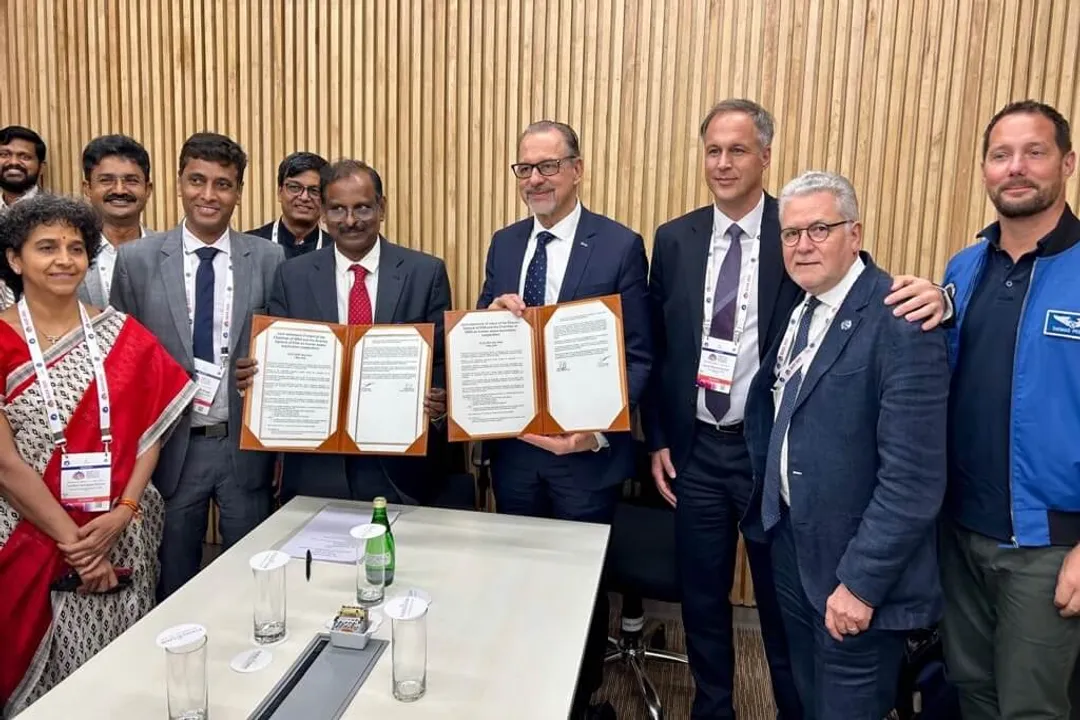
The relationship between the European Space Agency (ESA) and the Indian Space Research Organisation (ISRO) has deepened significantly in recent years, marked by several formal agreements solidifying a powerful international partnership. [1] This cooperation is not just a general statement of goodwill; it represents concrete steps toward joint technical endeavors across various domains of space activity. [2] While both agencies maintain independent, world-class capabilities in areas like Earth observation and planetary science, the most immediate and visible area of this expanding collaboration centers on the very human aspect of space exploration: supporting India's pioneering crewed missions. [1][3]
# Cooperation Formalized
The partnership framework has seen concrete milestones, notably the signing of a Joint Statement of Intent (JSI) between ESA and ISRO. [6] This formal declaration sets the stage for future joint activities and reaffirms a shared vision for space exploration and utilization. [1][2] Such statements are crucial because they signal governmental backing and create a clear political mandate for the technical teams to begin detailed planning. [6] The cooperation spans a wide technological horizon, encompassing space science, Earth observation, satellite navigation, and the development of new technologies. [1][2]
However, beyond these broad areas, the immediate practical focus has coalesced around crewed flight, demonstrating a shared commitment to expanding human presence in low Earth orbit and beyond. [5] This exchange goes beyond simply sharing launch access; it involves a deep integration of expertise where established agencies lend their operational knowledge to a rising space power. [7]
# Human Flight Support
The cornerstone of the current ISRO-ESA collaboration is the support ESA is providing to ISRO’s Gaganyaan program—India's first indigenous human spaceflight mission. [3][5] This assistance is vital for a national program entering the complex phase of putting astronauts into orbit. [7]
ESA is actively contributing by offering crucial training opportunities for Indian astronauts. [3][5] This includes access to ESA's state-of-the-art facilities, such as specialized simulators that replicate the harsh environments and complex procedures of spaceflight. [3] Astronaut training is an area where experience counts most, and leveraging the decades of operational knowledge built through the European Astronaut Centre (EAC) provides an invaluable shortcut for ISRO's crew members as they prepare for their historic flight. [5]
Furthermore, the cooperation extends to the critical phase after launch. ESA has committed to providing network operation support for the Gaganyaan missions. [3][7] This means that during the mission, ISRO can call upon ESA’s global network infrastructure—including ground stations and mission control expertise—to track, communicate with, and support the crewed spacecraft. [9] This represents a significant vote of confidence from the European agency in India’s capacity to manage the core mission elements, while simultaneously acting as an essential safety net. [7]
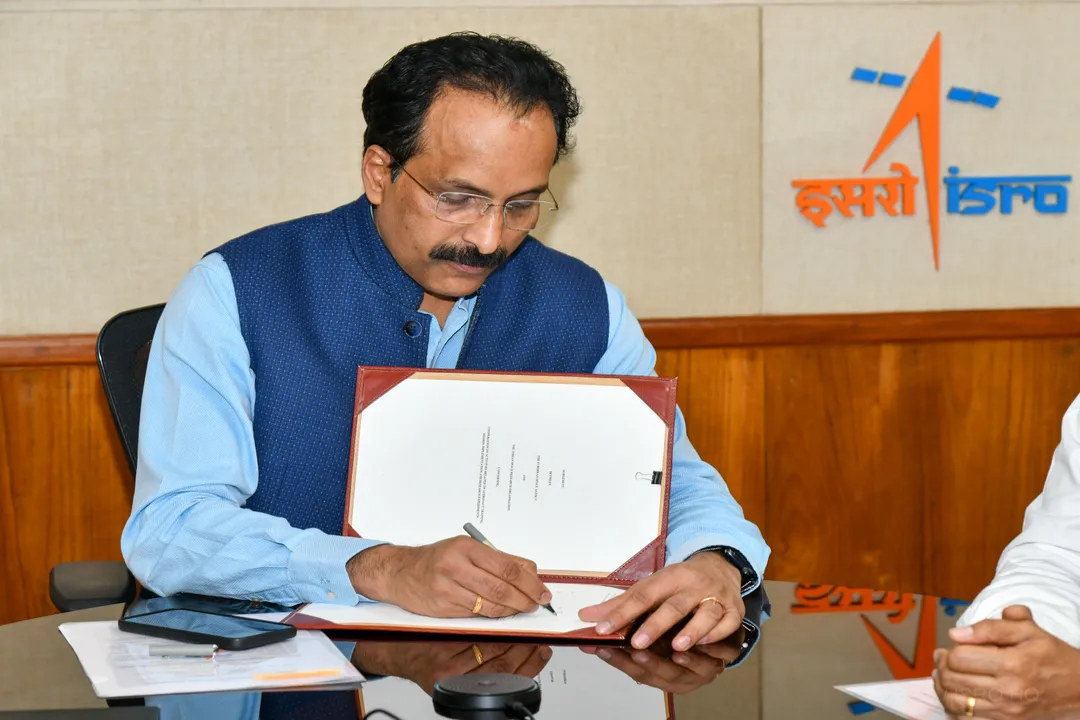
The agreement for this operational support was solidified through a Technical Implementing Arrangement (TIA) signed between the two organizations. [9] This TIA details the specific mechanisms, data exchange protocols, and responsibilities for providing network operation support for the Gaganyaan missions. [9] Looking at the evolution of international space efforts, this arrangement is a fascinating step. Historically, major international contributions often involved hardware contributions to large projects like the International Space Station (ISS). [1] This current dynamic, however, is characterized more by the exchange of expertise and services for a national flagship program, suggesting a maturing relationship where the value proposition is based more on operational skill transfer than on the physical component of a spacecraft. [5]
# Technical Arrangements
The cooperation delves into the technical specifics necessary to ensure mission success and safety. The network operations support agreement via the TIA is a prime example. [9] A mission like Gaganyaan requires continuous, reliable communication across different orbital positions and time zones. ESA's existing ground station network, built up over decades of European space efforts, offers immediate, high-quality coverage that ISRO can integrate into its own mission control architecture. [9]
This integration involves more than just radio links; it requires synchronization in procedures, emergency response protocols, and data handling between the European and Indian mission control centers. [3] For example, the process of handing over tracking responsibility from one ground station to the next must be perfectly rehearsed and executed, a procedure where established agencies like ESA have deeply embedded experience. [7] The TIA is the bureaucratic and technical blueprint that makes this integration possible. [9]
We can see a layered approach emerging:
| Cooperation Layer | Primary Goal | Supporting Document/Mechanism |
|---|---|---|
| Strategic Intent | Define broad areas of joint work and collaboration | Joint Statement of Intent (JSI) [1][6] |
| Crew Support | Astronaut training and facility access | Direct bilateral arrangements [3][5] |
| Mission Operations | Real-time tracking and communication for crewed flights | Technical Implementing Arrangement (TIA) [9] |
This layering indicates a well-planned approach, ensuring that high-level political agreements quickly translate into actionable technical cooperation that directly benefits the Gaganyaan crew's safety. [2][7]
# Global Space Context
The strategic significance of this collaboration for both parties cannot be overstated. For ISRO, securing this level of established support for its first crewed venture de-risks the program considerably. [5] By incorporating ESA expertise and network access, ISRO demonstrates to the world—and to its own stakeholders—that it is building its human spaceflight capabilities not in isolation, but within a recognized international structure of safety and operational best practices. [7] This proactive engagement in securing operational support before the first crewed flight is launched speaks volumes about ISRO's maturity; it's a hallmark of a space agency planning for sustained, long-term human activity, recognizing that mission control reliability is just as vital as launch vehicle capability. [9]
For ESA, the partnership offers significant returns as well. It reinforces Europe's position as a key partner in the global space community and deepens its ties with one of the world's most dynamic and rapidly advancing space agencies. [1] By supporting Gaganyaan, ESA gains insights into different mission architectures and operational philosophies, which can subtly inform the development of future European programs, even those outside the immediate human spaceflight domain. [2] It’s a classic example of how mutual support in one high-profile area—like human spaceflight—can create trust that opens doors for collaboration in other areas, such as advanced technology demonstration missions or data sharing in Earth observation. [1]
This move also positions both agencies favorably in the evolving global space economy. As access to space becomes more democratized, successful, safe, and internationally supported crewed missions become the benchmark for technological standing. India joining this exclusive club with the backing of an established entity like ESA validates both nations' long-term investments in space infrastructure. [5]
# Future Trajectories
While the current focus is heavily on Gaganyaan operations, the foundation laid by the JSI and subsequent arrangements suggests a long-term partnership. [1][2] The expertise shared in mission control and astronaut training today could easily pivot to supporting future joint research objectives once Gaganyaan is operational. [4] For instance, if ISRO decides to launch a dedicated microgravity research module or an orbital platform in the future, the established channels for operational support and crew exchanges will be immediately available, potentially speeding up development and reducing costs. [6]
The collaboration is a powerful statement about international cooperation in a sector often characterized by national competition. It shows that when an agency like ISRO reaches a certain level of capability, the next logical step is not just self-reliance but strategic partnership, augmenting internal capacity with external, trusted expertise. [3] As both agencies look towards ambitious goals like lunar exploration or deep-space science, having this established, trust-based working relationship will be an indispensable asset, providing shared resources and mutual assurance in the challenging environment beyond Earth's immediate vicinity. [1]
Related Questions
#Citations
European Space Agency announces new cooperation with Indian ...
ISRO-ESA Agreement for Cooperation on Activities related to ...
ISRO to Conduct Research on Ax-4 to Support Long-Duration Space ...
ESA and India Agree to Cooperate on Human Spaceflight
ESA Signs Joint Statement of Intent on Collaboration with ISRO
European Space Agency and Indian Space Research Organisation ...
ESA - ISRO Partnership #spaceexploration - YouTube
ISRO signs Technical Implementing Plan with European Space ...