Is ESA bigger than NASA?
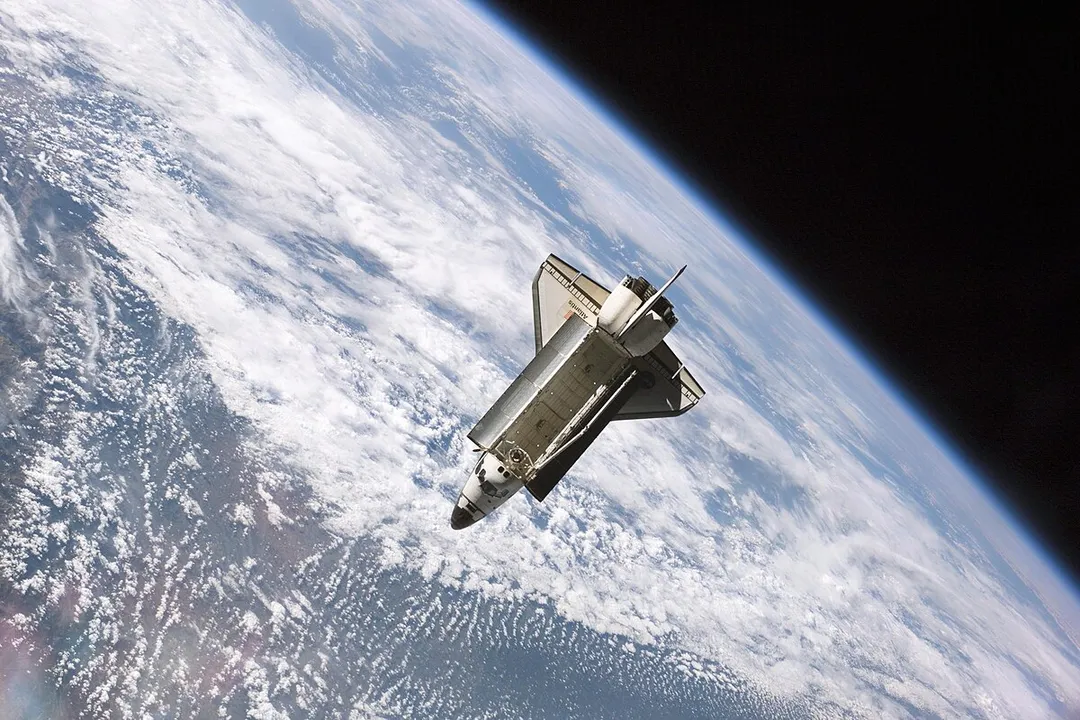
The question of whether the European Space Agency (ESA) is "bigger" than NASA doesn't have a simple yes or no answer; it depends entirely on the yardstick you use—be it membership, budget size, or public recognition. One way to immediately frame the comparison is by looking at their foundational structure. NASA, the National Aeronautics and Space Administration, is the space agency of the United States government. ESA, contrastingly, is an intergovernmental organization established by treaty, comprising 22 Member States. This difference in setup is crucial: NASA operates under a single national mandate, whereas ESA must coordinate the scientific, industrial, and financial interests of two dozen independent nations.
# Agency Scope
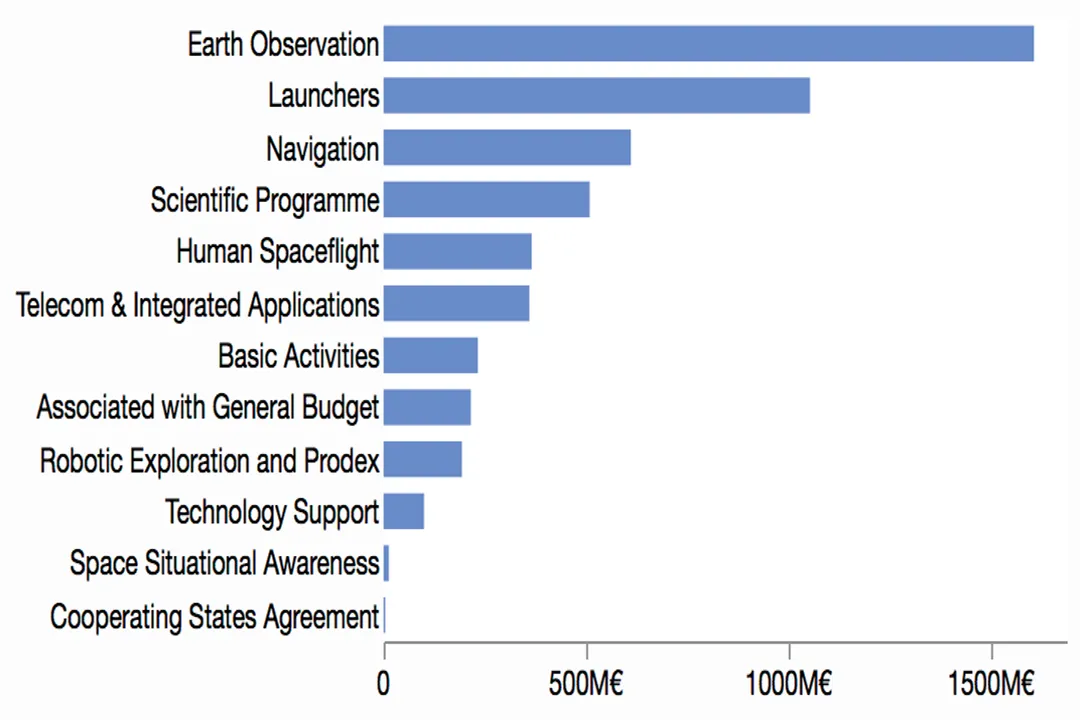
Comparing the agencies by sheer size in terms of global presence, ESA’s structure immediately sets it apart. With 22 members, it represents a coalition of European countries pooling resources for space exploration and utilization. NASA, while operating with a singular national focus, has historically been the world's most recognized name in space exploration, a position it has held for decades.
However, when looking at the sheer breadth of activities, both organizations cover vast ground. ESA has participation from nations across Europe, covering fields from Earth observation and telecommunications to satellite navigation (like Galileo) and human spaceflight, in addition to scientific missions. NASA similarly manages a diverse portfolio, including the Artemis program for the Moon, extensive robotic missions to Mars and beyond, and maintaining leadership in the International Space Station (ISS) partnership. Both agencies have been instrumental in major scientific milestones throughout space history.
The composition of ESA means that its technological and industrial base is inherently distributed across Europe, drawing on specialized expertise from different countries, which can be both a strength and a complexity factor in project management. NASA, by centralizing its major centers like Johnson Space Center or Kennedy Space Center within the US, often benefits from a more direct chain of command, though this is a structural observation rather than a statement on efficiency.
# Financial Metrics

Budget figures are often the first stop when determining which entity is "bigger," but here too, the comparison requires context. Historically, NASA has commanded a budget that far surpassed that of many other space entities globally. However, recent financial trends suggest a potential shift in relative scale or prioritization. Europe has, at times, been seen approving substantial long-term funding commitments that allowed ESA to pursue ambitious projects.
For instance, reports have indicated that Europe passed a record-breaking space budget around the time that NASA was facing pressure from deep cuts in its own funding allocations. This creates a dynamic where ESA’s approved funding might temporarily look larger or more secure in specific fiscal years, even if NASA’s baseline historical funding is larger overall.
When one agency enjoys a significant funding increase while another faces contraction, the immediate operational "size" or capability can change rapidly. If we consider the long-term commitment, an agency like ESA, with its contributions coming from 22 different national budgets funneled through one structure, represents a massive aggregate economic investment from the European continent. This contrasts with NASA, which is funded primarily through the annual appropriations process of the U.S. Congress. Analyzing these figures requires looking beyond the headline number to the source of the funds; ESA’s success hinges on sustained consensus among its members, while NASA’s depends on the priorities of one government.

# Prestige and Public View

In terms of global name recognition and public perception, NASA retains a distinct edge over ESA. Discussions online often reflect a sentiment that ESA needs greater visibility to match NASA’s brand recognition. While scientists and space professionals worldwide deeply respect ESA for its scientific output—such as the Rosetta mission or its contributions to the Hubble Space Telescope—the general public outside Europe is often more familiar with the Apollo missions or the Space Shuttle program.
Reputability-wise, both agencies are considered highly trustworthy custodians of space exploration funding and research. ESA’s missions are generally viewed as scientifically rigorous and technically sound. The perception of prestige is tied up in history and visibility. NASA’s early achievements, such as the Moon landings, cemented its status in the public consciousness globally in a way that few other agencies have matched.
# Mission Focus
Both agencies engage in high-profile science, but their historical focus areas sometimes offer interesting contrast. ESA has strong contributions in Earth observation, often leveraging its membership to maintain extensive satellite constellations for environmental monitoring and climate science. Furthermore, ESA has historically been a major partner in complex international endeavors, such as operating the Columbus laboratory module on the ISS.
NASA, benefiting from a massive domestic aerospace industry and singular budgeting authority, has often been the driving force behind the largest, most expensive flagship missions, particularly those involving human deep-space exploration. The comparison often boils down to ESA being an enabler and equal partner in many large endeavors, while NASA frequently acts as the lead partner in missions with a primary U.S. focus. For instance, while both organizations contribute heavily to space science like astrophysics, the lead role on projects can often default to the agency with the larger budget or specific technological heritage.
# Synthesis and Scale
To directly address the question, Is ESA bigger than NASA?, the best answer is that *NASA is currently larger in terms of total annual budget and staff, which traditionally defines "bigger" in government agencies. However, ESA is broader in geographic representation, drawing on the collective scientific and industrial might of 22 nations.
Consider this: if you were to calculate the total gross domestic product (GDP) equivalent funding represented by ESA’s 22 contributing nations versus the GDP of the single nation funding NASA, the European contribution is immense, suggesting a vast potential resource base that is leveraged through ESA. Yet, the actual fraction of that GDP dedicated annually to space activities—which manifests as the agency’s budget—is what dictates immediate operational size. In 2022, for example, the level of ESA’s approved budget reflected a major commitment from Europe to maintain its standing, even against the backdrop of NASA's own large, though sometimes politically unstable, funding.
The nature of partnership also affects perceived size. When ESA and NASA collaborate, as they often do, the lines blur. For example, NASA's own technical reports detail complex collaborations where ESA provides essential hardware or mission elements, meaning the resulting capability is a product of both entities, making a strict size separation difficult to maintain on a mission-by-mission basis.
# Future Trajectories
The trajectories of both agencies reveal different strategic priorities. While NASA continues to invest heavily in returning humans to the Moon and eventually Mars, ESA often targets specific, high-impact scientific niches or aims for technological sovereignty in areas like launch capabilities (Ariane) and satellite services. The commitment shown by Europe via record budgets suggests a determined effort to ensure ESA is never relegated to a secondary role in major international endeavors.
Ultimately, the existence of both agencies is beneficial for global space exploration. NASA sets the pace on ambitious crewed missions, while ESA provides the necessary counterbalance, ensuring a wider range of scientific priorities are addressed and that expertise is distributed across the Western world. The comparison shifts from a simple size contest to an examination of two distinct, highly capable models for space exploration governance: the singular national powerhouse versus the multinational consortium. Both are essential players in humanity’s reach into the cosmos.
Related Questions
#Citations
ESA vs NASA: Contribution to Space Exploration
Europe, can we make ESA more popular than NASA? - Reddit
List of government space agencies - Wikipedia
Is the European Space Agency as reputable as NASA? How ... - Quora
As NASA faces deep cuts, Europe has just approved its largest ...
Europe passes record-breaking space budget while NASA hit with ...
[PDF] Comparison of ESA and NASA Acquisition Approaches and their ...