Do ESA astronauts go to the ISS?
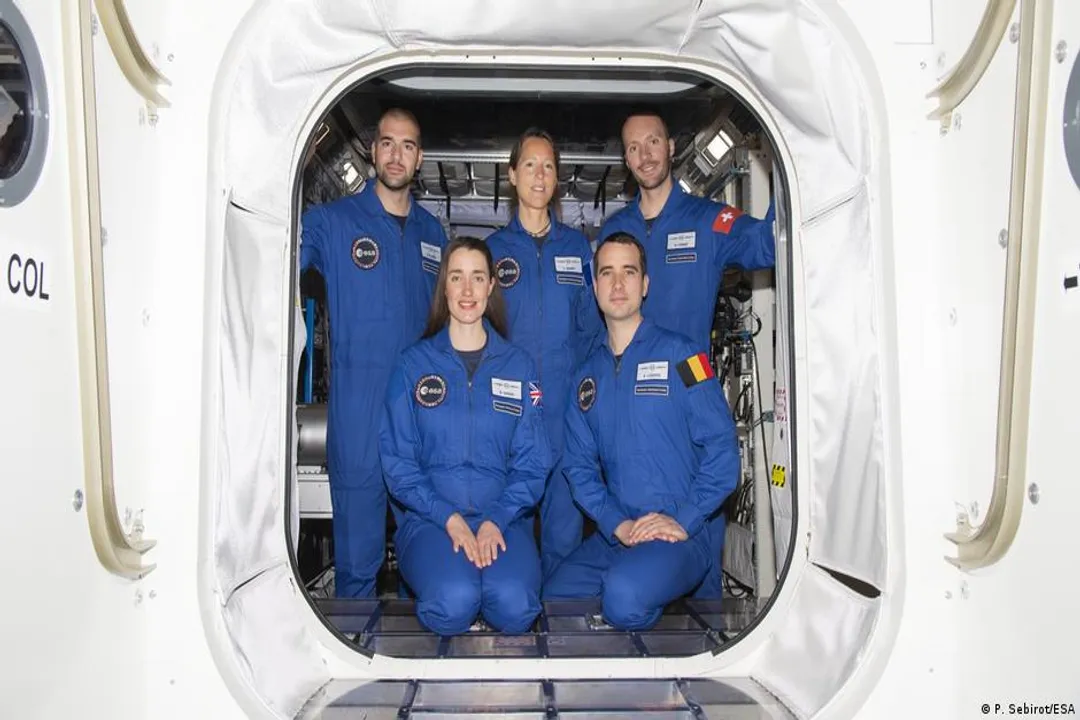
European Space Agency (ESA) astronauts are absolutely part of the team flying to the International Space Station (ISS). The ISS itself is a massive collaborative venture, involving five primary partners: the European Space Agency, NASA, the Russian State Space Corporation Roscosmos, the Canadian Space Agency (CSA), and the Japan Aerospace Exploration Agency (JAXA). [1] When an ESA astronaut heads to orbit, they are embarking on a mission that serves the scientific and operational goals of the entire international consortium, representing Europe's contribution to humanity's largest permanent outpost in space. [1]
# ISS Collaboration
The ISS functions as a permanently crewed microgravity laboratory, a testament to global cooperation in space exploration. [1] While the complex is composed of modules built and managed by the different agencies, the crew complements are integrated into a single operational unit once they arrive. This means an astronaut from Cologne, Germany, or Paris, France, works directly alongside colleagues from Houston, Texas, and Star City, Russia, ensuring the station runs smoothly and that scientific research from around the globe gets completed. [1] ESA’s participation is secured through long-standing agreements that provide flight opportunities for its highly trained specialists. [1]
# Recent Missions
The continuous cycle of spaceflight means that new astronaut assignments are announced regularly, often many years in advance of the actual launch date. For instance, ESA recently announced flight assignments for members of its astronaut corps, including Sophie Adenot and Raphaël Liégeois, earmarking them for missions aboard the ISS. [4] These assignments are highly anticipated milestones in an astronaut's career, signaling the culmination of years of preparation for specific operational roles. [4] Furthermore, the agency continues to introduce new talent; the introduction of the latest class of European astronauts highlights the ongoing investment in future spaceflight capabilities. [8] While the ISS remains the primary destination for current operational astronauts, the selection and training process is geared towards ensuring readiness for any potential future assignment within the agency’s mandate. [8]
# Astronaut Training
The path to the ISS for an ESA astronaut is defined by rigorous, multi-year preparation that goes far beyond simply being fit and clever. Training typically begins at the European Astronaut Centre (EAC) in Cologne, Germany, which serves as the primary hub for foundational instruction. [7] Here, new astronauts learn about the systems specific to the European Columbus laboratory module, alongside basic survival and language skills necessary for international cooperation. [7] Following this initial phase, astronauts transition to the primary training centers of partner agencies, most notably NASA's Johnson Space Center (JSC) in Houston, Texas, for intensive ISS-specific training. [7] This phase involves mastering the intricacies of the entire station, including robotics, life support, and emergency procedures. [7] A key part of this preparation involves practicing emergency landings and procedures in specialized facilities, such as underwater labs that simulate the weightlessness of space, allowing for spacewalk (Extravehicular Activity or EVA) practice. [7] Seeing video footage of this preparation often reveals the sheer commitment required, whether it’s flying parabolic "zero-g" flights or spending long hours in neutral buoyancy tanks. [3][5]
It is interesting to consider that the preparation for an ESA astronaut is less a linear progression and more a web of international requirements. For example, while EAC provides the initial European context, the astronaut must become conversant in Russian for Soyuz operations or fully integrated into the complex checklists managed by NASA mission control for US segment operations. [7] This cross-cultural and cross-procedural immersion is perhaps the most demanding element; they are not just learning how to fix a module, but learning how to communicate complex technical fixes in a shared, high-stakes environment with people from radically different professional backgrounds. [7]
# Flight Frequency
How often ESA astronauts actually reach the station is a point of common curiosity, and the answer is rarely a fixed number. On average, based on historical data and community discussion, one might estimate that an ESA astronaut secures a seat approximately every two to three years, but this is only a soft average. [2] The actual frequency is not dictated by a set European quota but is instead the result of complex seat exchange negotiations between the agencies. [2] For instance, the partnership might involve ESA providing ground support or hardware in exchange for astronaut flight slots on a NASA or Russian vehicle. [1] This means that an astronaut's assignment is highly dependent on the current mission manifest, vehicle availability (like the ongoing transition from Soyuz to commercial crew vehicles like SpaceX Crew Dragon for US segment access), [6] and the specific expertise needed for the science payload scheduled for a given expedition. [2] A new astronaut might wait five years for their first flight, while someone already qualified and proficient in specialized hardware might be slotted in more quickly for a follow-up mission. [2]
# Vehicle Access
Historically, European astronauts frequently launched aboard the Russian Soyuz spacecraft, which was the only way to reach the ISS for a period. [1] However, the introduction of commercial crew capabilities, such as the SpaceX Crew Dragon used for NASA missions, has diversified the options. [6] ESA astronauts fly on a variety of vehicles depending on the specific expedition agreement in place at the time of the launch assignment. [6] For example, crew assignments announced by NASA often list international partner astronauts alongside their US crewmates, utilizing vehicles like the Crew Dragon for transport to the orbital laboratory. [6] This multi-vehicle readiness ensures that Europe maintains a presence regardless of minor disruptions or shifts in the operational status of any single launch system. [1]
# Looking Forward
The commitment to human presence on the ISS continues, even as planning for future deep-space endeavors progresses. The rigorous training and regular mission assignments confirm that the ISS remains the central training ground and operational outpost for Europe's contribution to crewed spaceflight for the foreseeable future. [1] The ESA is actively selecting and training astronauts, like the recent class members, who will staff these orbital missions while simultaneously preparing for the challenges of deep space exploration that lie beyond Low Earth Orbit. [8] The experience gained from years of operating complex systems on the ISS—from life support to intricate research apparatus—directly informs the expertise required for future endeavors, making every ISS mission a building block for what comes next. [1]
#Videos
Docking | Ax-4 mission with Sławosz Uznański-Wiśniewski - YouTube
First Space Station missions for new ESA astronauts - YouTube
ESA astronauts training for ISS mission - YouTube
Related Questions
#Citations
About the International Space Station - ESA
How often on average do esa astronauts go to space per year?
Docking | Ax-4 mission with Sławosz Uznański-Wiśniewski - YouTube
NASA Shares SpaceX Crew-12 Assignments for Space Station ...
ESA astronauts training for ISS - Destination Space
ESA introduces its latest class of European astronauts - DW