Is the ISS technically not in space?
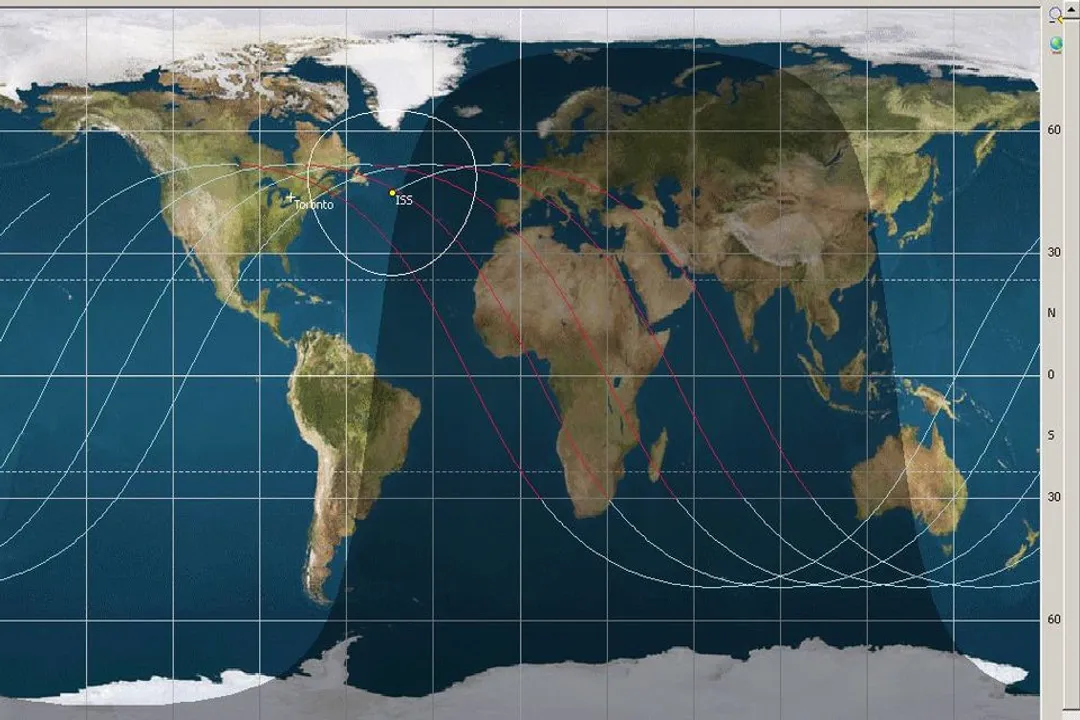
The International Space Station, or ISS, is an extraordinary feat of engineering, continuously circling our planet many times a day. Yet, a surprisingly common debate questions its very location: Is it technically in space? The answer hinges entirely on how you define the boundary of "space" itself, leading to a technical "yes" shadowed by a practical "well, sort of." If you measure its altitude against the generally accepted line separating Earth’s atmosphere from the vacuum above, the ISS is undeniably in space, orbiting hundreds of kilometers up. [1][4] However, if "space" implies a complete absence of Earth’s gaseous influence, the argument becomes much murkier. [4]
# Boundary Definition
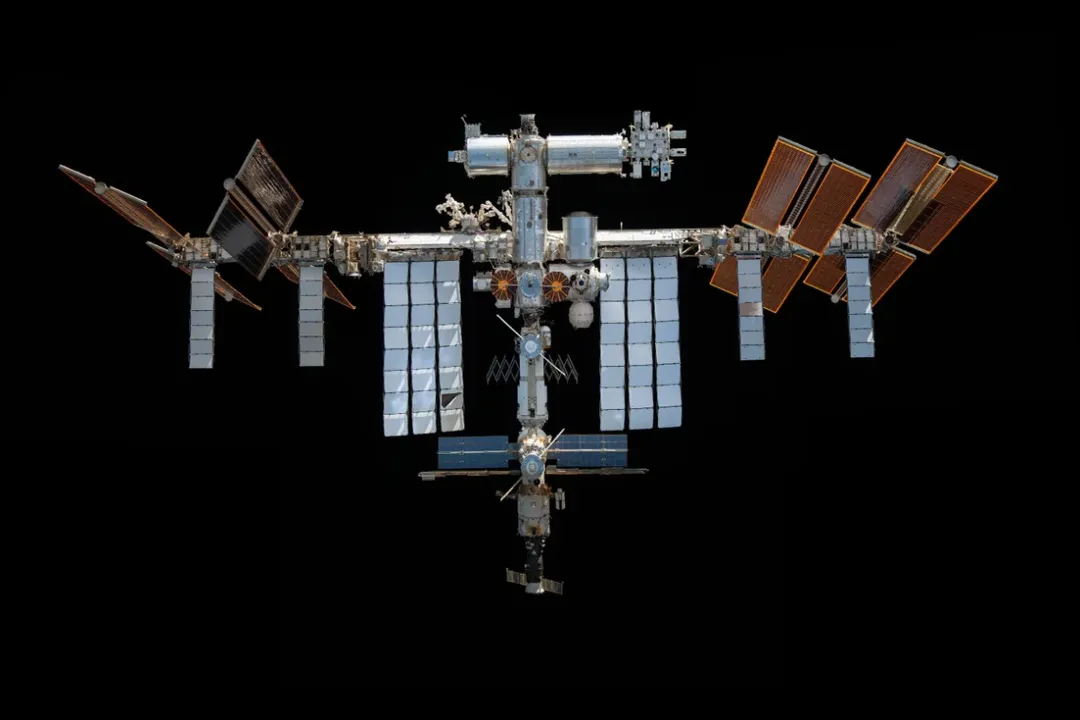
When scientists, engineers, and aviators talk about where space begins, they often point toward a specific, though not entirely universal, benchmark: the Kármán line. [2] This boundary is set internationally at an altitude of () above mean sea level. [2][4] This specific altitude is significant because, at that height, the air density becomes so low that an aircraft would need to travel so fast to generate enough lift to remain airborne that it would actually need to achieve orbital velocity to stay up at all. [2] In simpler terms, conventional aerodynamic flight ceases to be a viable option; you must use propulsion to maintain altitude and speed, meaning you are effectively in orbit. [2]
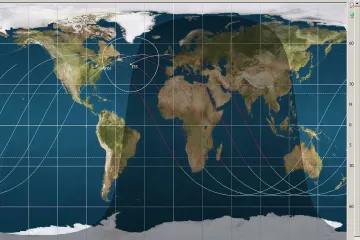
The International Space Station orbits far beyond this marker. Its typical altitude hovers around () above the Earth’s surface. [1][3] To put that distance into perspective, standard commercial airliners cruise at altitudes generally topping out around . [1] Therefore, based on the most widely recognized international demarcation point, the ISS resides well into the realm considered outer space. [2][4] It makes roughly $15.5$ orbits every , completing a full circuit around the Earth approximately every . [1] Given this clear passage over the Kármán line, the most straightforward technical answer is that yes, the ISS is in space. [2]
# Thin Air Drag
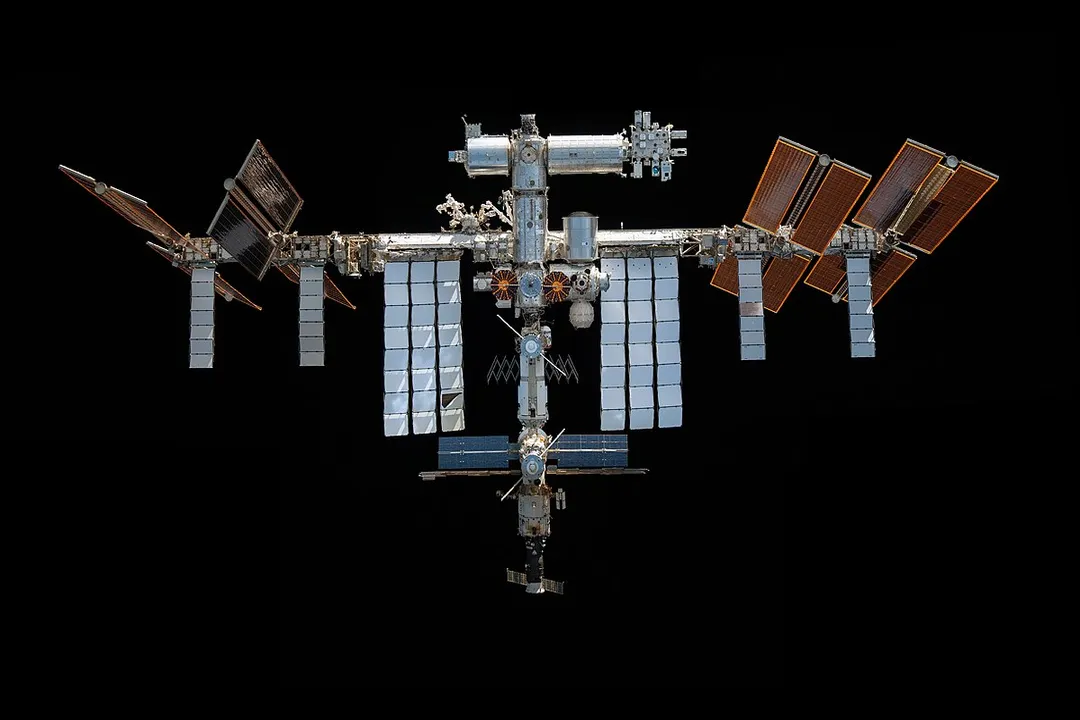
The complication—the reason the question even arises—stems from the fact that the Earth’s atmosphere doesn’t abruptly stop at . [4] Instead, it gradually thins out over hundreds of kilometers. [4] The ISS, orbiting at , is situated within the uppermost fringes of the thermosphere, a layer of the atmosphere where trace amounts of air molecules still exist. [4] While the air up there is incredibly thin—perhaps one-trillionth the density of the air at sea level—it is not a perfect vacuum. [4][6]
These sparse, lingering air particles create a minute amount of atmospheric drag against the massive structure of the ISS. [5] Think of it like trying to run through a swimming pool versus trying to run through molasses; the ISS is experiencing the molasses, albeit extremely diluted molasses. This constant, tiny friction acts as a brake, causing the station’s orbit to decay slowly over time. [5][4] If left unchecked, this drag would eventually pull the ISS down, causing it to re-enter the denser atmosphere and burn up. [5][6] This phenomenon is precisely why the station cannot simply be placed in orbit and forgotten; it requires periodic "reboosts" using its own propulsion systems or visiting spacecraft to push it back up to its operational altitude. [5] It is this persistent interaction with something—even the thinnest breath of atmosphere—that leads some people to argue it hasn't truly left the atmospheric realm. [4]
# Constant Falling
Another common misconception that feeds into the debate about the ISS’s location involves the concept of gravity and weightlessness. People often assume that because the astronauts float, there must be zero gravity aboard the station, implying they have escaped the Earth’s gravitational influence entirely. [5][6] This is incorrect. In fact, the gravitational pull exerted on the ISS at altitude is still roughly $90%$ as strong as the gravity experienced on the Earth's surface. [5]
The true reason for the famous floating sensation is not the absence of gravity, but the state of freefall. [5][6] The ISS is constantly falling toward the Earth due to that strong gravitational pull. [5] However, because it is traveling sideways around the planet at an immense speed—about () [1]—it perpetually misses the surface as it falls. [5][6] Imagine throwing a baseball incredibly hard; it follows an arc and lands. Now imagine throwing it so fast that as it arcs down, the Earth’s surface curves away beneath it at the exact same rate. That is the essence of orbit. [6] The station and everything inside it are falling together, creating the sensation of weightlessness, or microgravity. [5] This mechanism is central to understanding its position; it is very much under the influence of Earth’s gravity, which is precisely what keeps it tethered to its orbital path. [5]
# Altitude Maintenance
The necessity for orbital maintenance provides a tangible marker of the station’s tenuous position relative to the atmosphere. While seems vast when compared to terrestrial distances, in the cosmic scale, it is considered Low Earth Orbit (LEO). [1] This designation is a critical part of the answer; the ISS is certainly in space, but it is in the lower region of space. [1] It sits far below the altitudes of geostationary satellites or the deep space probes that venture out to Mars or beyond. [8]
To counteract the atmospheric drag mentioned earlier, the station requires regular upward nudges. These reboosts are essential to prevent its altitude from dropping too low, which would expose it to denser air, increased heating, and a much faster rate of orbital decay. [5] A significant drop could necessitate an emergency return or even prompt premature deorbiting procedures. [5] For instance, if the station were to dip down to , the air density would be high enough to significantly shorten its operational lifespan without frequent corrections. [4] The need for these maneuvers confirms that the environment surrounding the station, though hostile to traditional flight, is not the perfect void often associated with the term "outer space". [4]
Considering the different orbital tiers, the ISS occupies a region that demands constant vigilance regarding atmospheric interference. It is a working laboratory operating at the very edge of meaningful atmospheric effect. [4] If we were to establish a table contrasting its environment with that of, say, a high-altitude jet or a Moon mission, the ISS sits in a unique middle ground: far too high for airplanes, but much too low for long-term isolation from Earth's gaseous halo. [1][5]
| Characteristic | Commercial Jet (Cruising) | International Space Station (ISS) | Deep Space Probe (e.g., Mars) |
|---|---|---|---|
| Approximate Altitude | Millions of | ||
| Primary Air Influence | Strong Aerodynamics | Trace Drag/Fringe Atmosphere | Near-Perfect Vacuum |
| Gravitational Influence | Near $100%$ Surface Level | Surface Level | Significantly diminished |
| Orbit Duration | Years/Decades |
This comparison highlights that while the Kármán line () technically marks the start of spaceflight capabilities, the quality of that space changes drastically between and . [2][5] The slight but persistent atmospheric friction at is the single largest environmental factor that distinguishes the ISS from objects orbiting much higher, underscoring why some observers feel it is not entirely free of Earth’s domain. [4]
# Evolving Horizons
The long-term perspective also colors the perception of the ISS's location. The station is an aging structure, and there are ongoing discussions about its eventual retirement and deorbiting, which is tentatively planned for around the year $2030$. [8] This planned conclusion signals that its lifespan is tethered to Earth in a way that deep space assets are not; it requires careful, controlled maneuvering back to the planet rather than simply drifting into the solar system. [8]
Ultimately, the ISS occupies a zone that forces a choice in terminology. If "in space" means "above the internationally defined boundary where aerodynamic flight is impossible," then the ISS is in space. [2] If "in space" implies a complete separation from the planet’s atmospheric influence, then it remains technically brushing against the highest, thinnest whisper of the atmosphere. [4] For the astronauts living there, conducting complex science and operating sophisticated equipment hundreds of kilometers above us, the reality is simple: they are operating in orbit, subject to microgravity, and far beyond the reach of any terrestrial vehicle. [3] The technical semantics serve as an interesting, if pedantic, footnote to one of humanity’s greatest long-term endeavors in Low Earth Orbit. [1]
Related Questions
#Citations
International Space Station - Wikipedia
Is the International Space Station really in outer space?
International Space Station - NASA
Is the International Space Station outside Earth's atmosphere? - Quora
How Does the International Space Station Orbit Earth Without ...
Why does the ISS not plunge to Earth despite constant gravity?
Space mysteries: How does the ISS stay in orbit without falling to ...
The End of the International Space Station Will Begin a New Era of ...
International Space Station (ISS) | Facts, Missions, & History