Why is the ISS not in space?
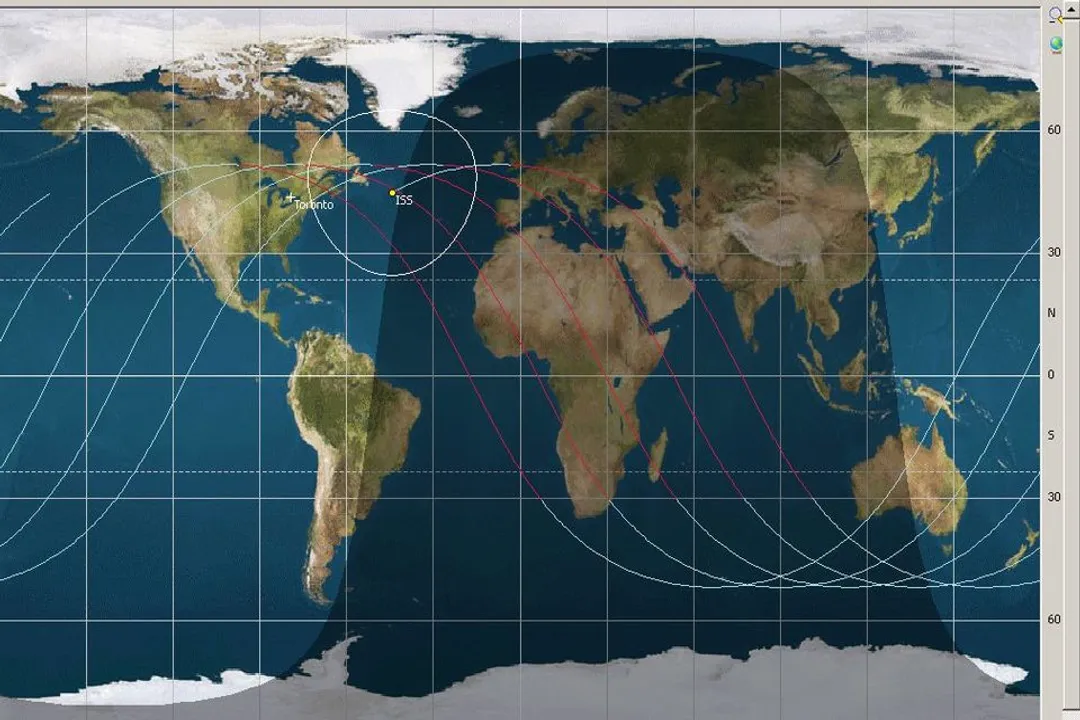
The International Space Station (ISS) is undeniably in space, currently orbiting roughly 400 kilometers above the planet's surface. [8] The confusion surrounding its location, or whether it truly "belongs" in space, often stems from misunderstanding the nature of orbit itself. It circles the Earth at an astonishing speed, clocking in at approximately 17,500 miles per hour, [8] completing a circuit nearly every 90 minutes. [8]
# Orbit Physics
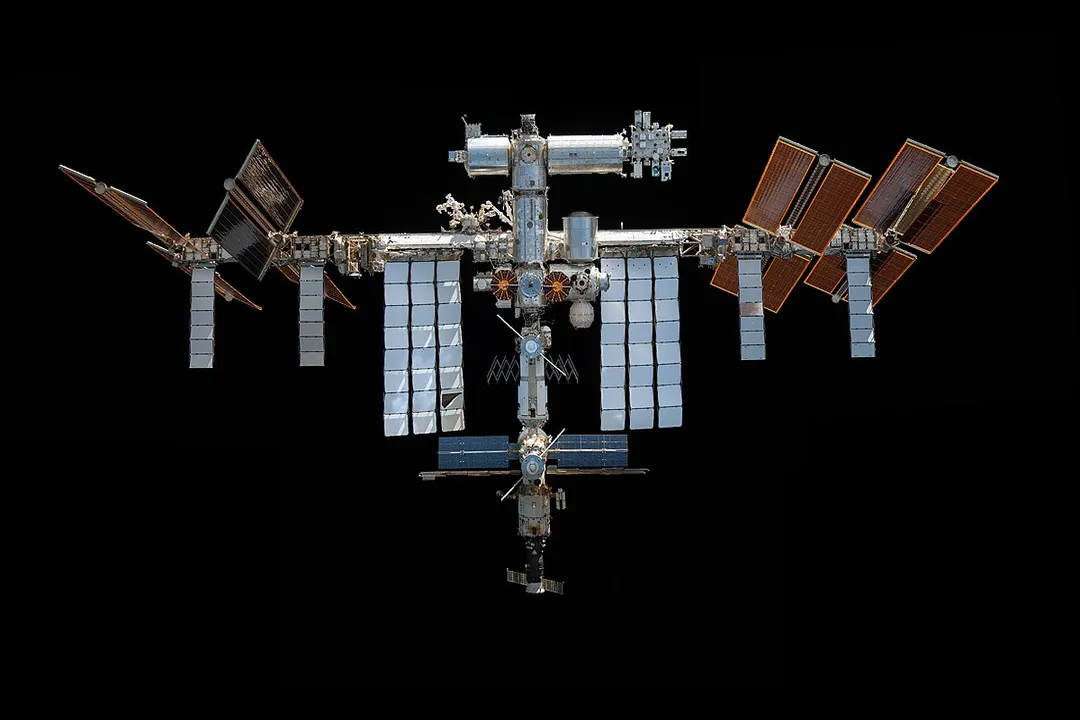
To grasp why the station doesn't simply drift off into the void or crash straight down, one must consider the definition of its orbit. The ISS is perpetually falling toward Earth, but because of its tremendous horizontal speed, it continuously curves around the planet and misses the surface. [6] This constant state of near-collision is what keeps it aloft. Gravity is not absent up there; in fact, it is the necessary force dictating the curved path, creating a state often described as free fall relative to the ground below. [2][6] If the station were suddenly to stop moving sideways, gravity would immediately pull it down. [2] The situation is a perfect, dynamic balance between momentum and gravitational pull. [6]
# Orbital Decay
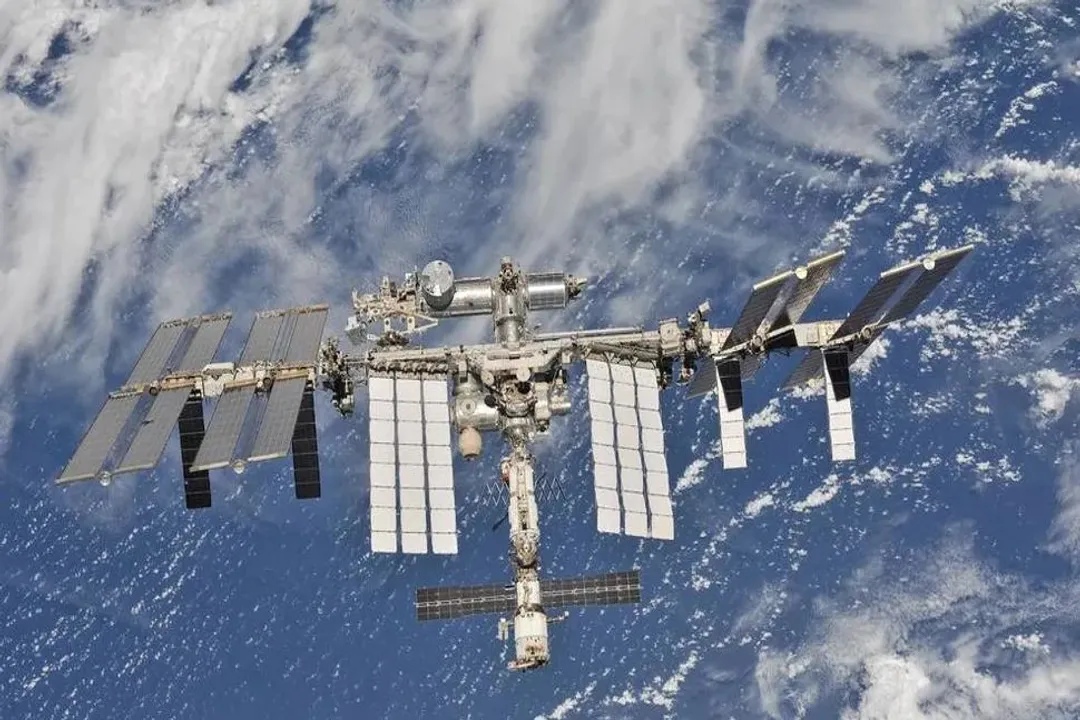
However, even at that altitude, the station is not in a perfect vacuum. A very thin layer of the upper atmosphere, known as the thermosphere, extends far enough to impose a tiny but persistent resistance on the massive structure. [2] This atmospheric friction, or drag, acts like a subtle brake, slowly bleeding off the station's orbital velocity. [2] When the station slows down, gravity gains a slight advantage, causing the station's altitude to gradually decrease over time. [2]
While the drag is incredibly small—imagine trying to run through molasses that is only a few molecules thick—over months, this resistance accumulates. If no intervention occurred, the station would naturally spiral down into thicker air and burn up within a few years, depending on the subtle expansion and contraction of the atmosphere influenced by solar activity. [2]
To counteract this inevitable downward creep and keep the station in its operational band, it requires regular reboosts. [2] These maneuvers inject the necessary energy back into the orbit to raise the altitude back up to its target range. [2] This is typically achieved using the propulsion systems of visiting Russian Progress vehicles or, in some cases, other docked resupply craft like Northrop Grumman's Cygnus spacecraft. [2][3] These reboosts are planned and executed to ensure the station remains safely far above the densest layers of the atmosphere. [3]
# Operational Limits
The question then shifts from how it stays up to why it must eventually come down. The ISS cannot operate forever because it is an aging, incredibly complex machine operating in a harsh environment. [4] The structure has been continuously inhabited and operated for over two decades, and the original design life for many components was significantly shorter. [4]
The requirements for continued maintenance are enormous, encompassing everything from power systems and life support to the structural integrity of modules built by different international partners. [4] As systems age, the likelihood of critical failures increases, while the availability of spare parts and specialized expertise for decades-old technology naturally decreases. [4] Furthermore, the multinational agreement that underpins the station’s existence has defined operational deadlines for the partners involved. [4] Continuing to fund and staff the platform indefinitely becomes less viable when considering the cost compared to developing next-generation, potentially more efficient, commercial LEO platforms. [4]
# Controlled Return
Because of its massive size and accumulated orbital energy, simply allowing the ISS to decay naturally would be extremely hazardous. Its sheer mass means that large, uncontrolled pieces would survive re-entry and impact the Earth over a wide, unpredictable area. [1] To mitigate this risk, the partner agencies have developed a formal decommissioning plan designed for a controlled disposal. [3]
This process involves using propulsive burns, likely executed by a visiting vehicle like a Soyuz, or perhaps a dedicated tug, to slow the station down precisely and direct its descent path. [1][3] The target trajectory aims for an impact zone in a remote, unpopulated section of the South Pacific Ocean, often referred to as the South Pacific Ocean Uninhabited Area (SPOUA), which serves as a designated "spacecraft cemetery". [3] This is a far more complex and resource-intensive maneuver than deorbiting a small satellite. Unlike many defunct satellites which are simply left to eventually fall wherever atmospheric currents take them—a process that can take years or decades—the ISS requires an active, choreographed end-of-life burn to ensure the debris lands in a predetermined, safe location. [1][3] The target timeframe for this final descent is currently set around the year 2031. [3]
This planned retirement marks a transition point, shifting the focus from government-owned orbital infrastructure to supporting the development and operation of private, commercial space stations that will take over low Earth orbit research and access in the coming decade. [3]
Related Questions
#Citations
when they decommission the ISS why not push it out into space ...
Space mysteries: How does the ISS stay in orbit without falling to ...
FAQs : The International Space Station Transition Plan - NASA
Why can't the ISS operate forever? | The Planetary Society
Why can't the International Space Station be put to rest by pushing it ...
Why do people say that the International Space Station (ISS) is not ...
Why does the ISS have to be destroyed?
Is the International Space Station really in outer space?
International Space Station - Wikipedia