Why are the Starliner astronauts stuck?
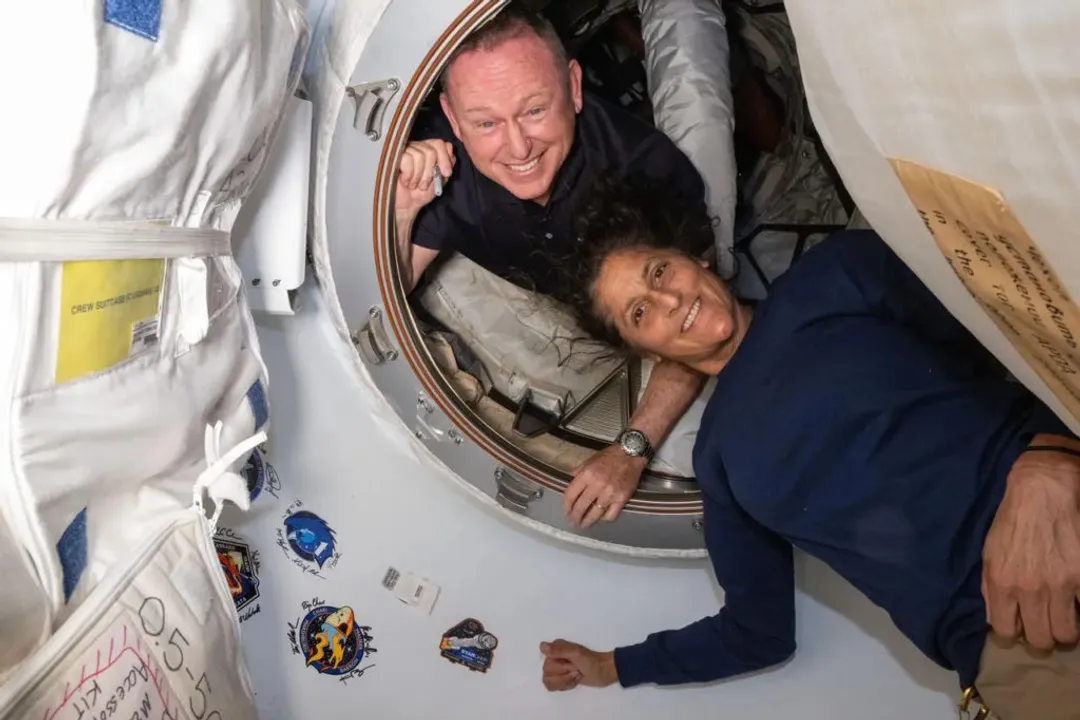
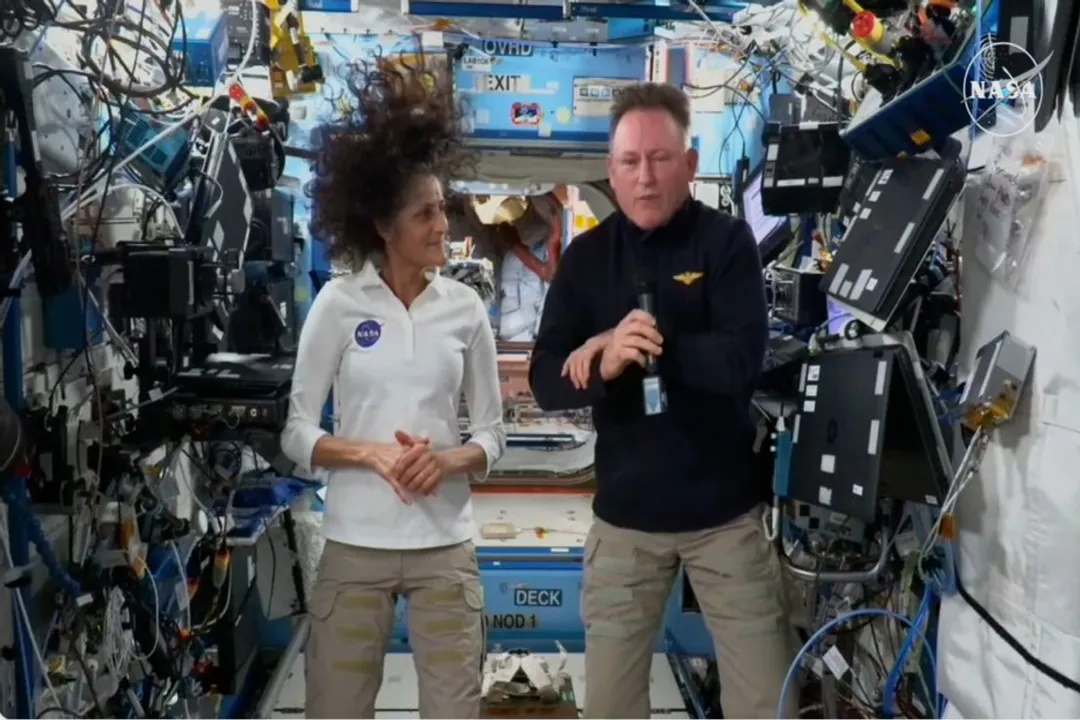
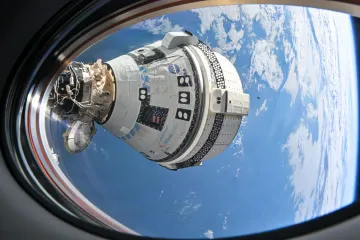
The situation surrounding the Boeing Starliner crew remains a focal point of the human spaceflight community, centering on the fact that two astronauts, Butch Wilmore and Suni Williams, have remained aboard the International Space Station (ISS) far longer than originally planned. Their mission, intended to be a relatively brief test flight to certify the spacecraft for regular crew rotation missions, has stretched into months, turning what should have been a short duration demo into an extended operational stay. The complexity of returning them safely has boiled down to several interconnected technical challenges that NASA and Boeing are methodically working through before granting the final undocking command.
# Thruster Failures

The primary technical hurdle causing the extended delay stems from the performance issues observed in the spacecraft’s propulsion system, specifically the Reaction Control System (RCS) thrusters. During the initial rendezvous and docking maneuvers, several of these small maneuvering engines malfunctioned or behaved unexpectedly. While the crew successfully docked, the anomalies immediately raised red flags regarding the vehicle's ability to safely execute the critical deorbit and re-entry sequence back on Earth.
The RCS thrusters are vital for precise attitude control and maneuvering, especially in the critical moments leading up to undocking and the subsequent deorbit burn that sets the spacecraft on its path back to Earth. If these engines fail during that burn, the capsule might miss its re-entry corridor or lack the necessary control to manage atmospheric interface angles, posing a serious risk to the crew.
# Leak Discovery
Compounding the initial thruster issues was the discovery of additional helium leaks within the propulsion system. Helium is used to pressurize the propellant tanks for the RCS thrusters, ensuring they fire correctly and consistently. Multiple leaks, even small ones, indicate integrity issues within the high-pressure plumbing of the service module.
Boeing and NASA teams back on the ground had to perform extensive diagnostic work to understand the nature of these leaks. They needed to determine if the leaks were stable, whether they would worsen over time, and if the remaining available helium stores were sufficient to manage all necessary maneuvers—including course corrections, the deorbit burn, and any potential abort scenario during descent. It is one thing to manage a few known issues during a planned operation; it is quite another to manage unknown degradation across an extended, unplanned stay while relying on the same hardware to function perfectly during the return.
# Testing Fixes
The process of deciding whether the vehicle is safe to return has been characterized by caution and iterative testing. Engineers have spent considerable time analyzing telemetry data and running ground simulations based on the in-space observations. In a highly unusual step for a crewed mission already docked, NASA authorized the Starliner flight controllers to conduct hot-fire tests of some of the problematic thrusters while the spacecraft was attached to the ISS. This ground-breaking approach allowed the team to deliberately stress the system and gather new data in a relatively safe configuration, supported by the massive resources of the orbiting laboratory.
These tests were essential to validate any proposed workarounds or fixes for the thruster behavior and to better characterize the helium leakage rates. For instance, if a thruster was found to be firing erratically, the teams needed to confirm if there was an alternative set of thrusters they could rely on exclusively for the return burn, or if a specific procedure could mitigate the erratic firing. The methodical nature of this testing, while necessary for safety, inherently adds significant time to the mission schedule.
# Mission Extension
The result of this deep technical dive has been a series of rolling schedule extensions. The initial crew was expected to depart shortly after arriving, but as investigations continued, the return date kept slipping further into the future. As of recent reports, the astronauts have marked several months in space, with potential return dates being pushed back even further, moving into the later part of the year.
It is interesting to note the logistical shift this creates. A routine crew swap mission becomes an extended stay where the crew essentially transitions from a test flight mission profile to an ISS expeditionary role, albeit one without the formal preparation of a regular Expedition crew member. This highlights a key difference from the already established Crew Dragon missions; while those missions can often utilize a "free-flyer" contingency return period, Starliner’s extended stay relies on continuous on-orbit support and assurances from mission control that the vehicle itself is sound.
# Crew Context
For Commander Butch Wilmore and Pilot Suni Williams, the experience has been professionally demanding but survivable, thanks to the ISS infrastructure. They are sharing quarters and resources with the existing long-duration crew. While the ISS is designed to support crews far beyond typical six-month rotations, any unplanned extension places additional stress on consumables and equipment, though the station itself is robust. The astronauts have reportedly remained active, assisting with ISS maintenance and science tasks while mission control finalized the Starliner certification.
One aspect often discussed when missions extend indefinitely concerns compensation for the crew’s time and the increased risk taken. Reports have surfaced suggesting that for personnel like Wilmore and Williams, who are military members, remaining on an extended mission past their scheduled window can result in financial impacts, with discussions around overtime compensation or salary adjustments for their heightened job risk. While the primary focus is always safety, the operational reality includes managing the personnel commitments involved in such a prolonged scenario.
# Certification Bar
The core of the issue rests on the certification process. This mission was not just about transporting crew; it was the final major hurdle for NASA’s Commercial Crew Program to declare Starliner fully operational and ready for regular crew rotation assignments. For NASA to sign off on the return, they must be absolutely convinced that the hardware will perform as expected, which means proving the fixes work reliably across the mission timeline. This high bar for safety is non-negotiable, especially given the stakes of a high-speed atmospheric re-entry.
If we consider the previous successful certification test flights by SpaceX's Crew Dragon, the issues encountered by Starliner represent the inherent unpredictability of developing novel, complex, human-rated hardware. Each component—valves, seals, software controllers—must be scrutinized under real-world stress. The fact that the system failed in flight, even in a controlled manner, means the certification process must restart its clock for that specific subsystem failure mode. This meticulous, slow verification process, prioritizing the lives of the crew over schedule adherence, establishes a high precedent for future commercial spaceflight providers: demonstrate a fix beyond any reasonable doubt before allowing the capsule to leave the station.
# Operational Parallel
Looking at this situation from an engineering perspective, it bears resemblance to high-stakes maintenance in other fields, though the environment is vastly different. Imagine an aviation incident where a critical flight control system showed intermittent failures during a delivery flight. The operator wouldn't simply proceed based on a successful initial landing; they would ground the fleet until a flight-test program could definitively isolate, repair, and re-test the faulty component under every conceivable load case. The time taken isn't necessarily a reflection of incompetence but rather a reflection of the rigor required when dealing with systems where failure means catastrophic loss. The process here is less about flying and more about proving the ability to fly home safely, which requires time for simulation updates and test execution that cannot be rushed.
# Next Steps
The path for Wilmore and Williams to return involves the Starliner spacecraft completing a final set of checks, likely including a final, successful firing of the critical deorbit thrusters in a specific configuration, followed by the undocking sequence. Once undocked, the return path involves a precise sequence of maneuvers, including the deorbit burn, separation of the service module, and then atmospheric re-entry through Earth’s atmosphere, culminating in parachute deployment and landing. Until the teams are fully confident that the propulsion system can manage all necessary burns without unforeseen degradation, the astronauts will remain aboard the ISS, which continues to operate normally. Their extended time has inadvertently turned the test mission into one of the longest solo-docked flights for a commercial crew vehicle, providing Boeing and NASA with an unprecedented amount of real-world data on the vehicle's long-term performance in orbit.
#Videos
Concerning the Stranded Astronauts - YouTube
Related Questions
#Citations
Why are astronauts stuck in space? Here's how the Boeing Starliner ...
Can someone explain the starliner situation? : r/space - Reddit
Boeing Starliner astronauts say they aren't stuck in space - CNN
Concerning the Stranded Astronauts - YouTube
The Boeing Starliner astronauts have returned to Earth after nine ...
Boeing Starliner Spacecraft Issues - Facebook
nasa - What caused 2 astronauts to be stranded in space
Stuck Starliner astronauts hit 6 months in space with 2 more to ... - PBS
'We're not stuck.' Why Boeing's Starliner isn't returning to Earth (yet)