What's the difference between astronaut & cosmonaut?
The distinction between an astronaut and a cosmonaut is less about the act of flying into space and more about which nation’s space agency trained and certified the individual. [5] While both terms describe a person trained to command, pilot, or serve as a crew member aboard a spacecraft, the specific title used reflects the heritage of the program that developed them. [10] This difference is rooted deeply in the space race history between the United States and the Soviet Union. [1][5]
# Linguistic Roots
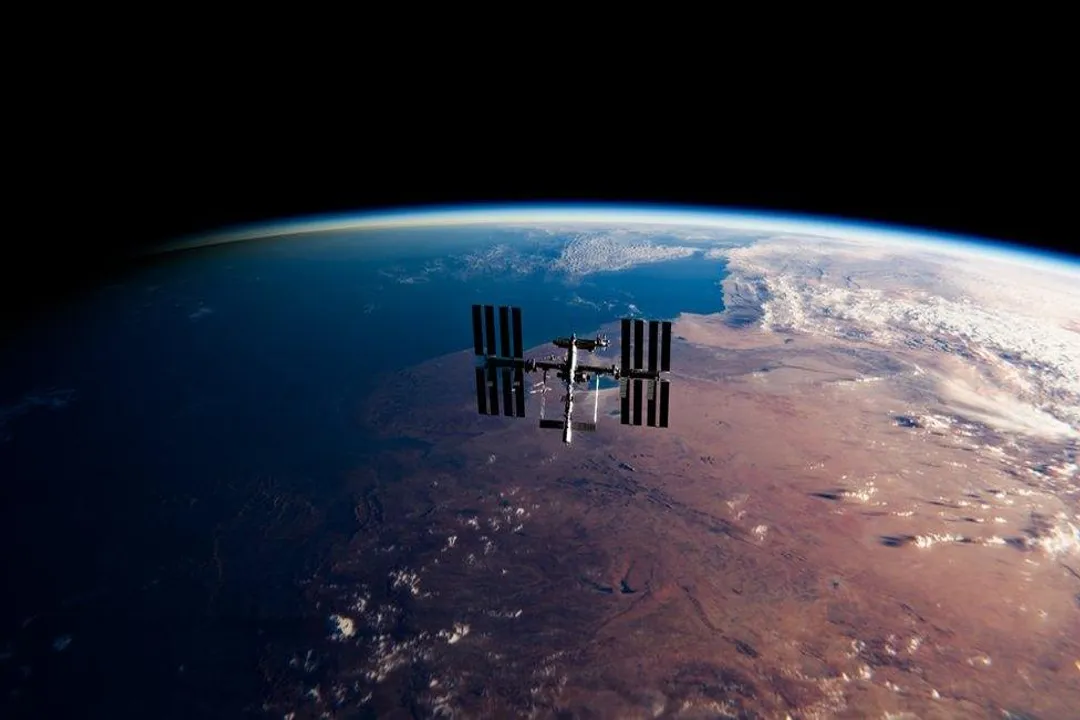
The difference begins with the etymology of the words themselves. Both terms draw from Greek roots to describe someone who travels in the stars. [1]
The term astronaut combines ástron (), meaning "star," with nautēs (), meaning "sailor". [5] Therefore, an astronaut is essentially a "star sailor". [1] This term was adopted by the American space agency, NASA. [1]
Conversely, cosmonaut uses the Greek word kósmos (), which translates to "universe" or "order," paired with the same root nautēs for "sailor". [1][5] Thus, a cosmonaut is a "universe sailor". [1] This designation was established by the Soviet Union for its space travelers. [1][5]
It is worth noting that other spacefaring nations have their own unique terms. China, for instance, uses taikonaut, derived from the Chinese word tàikōng (), meaning "space" or "cosmos". [5] However, for the purposes of comparing the historical rivals, astronaut and cosmonaut remain the most frequently contrasted terms. [1]
# Agency Definitions
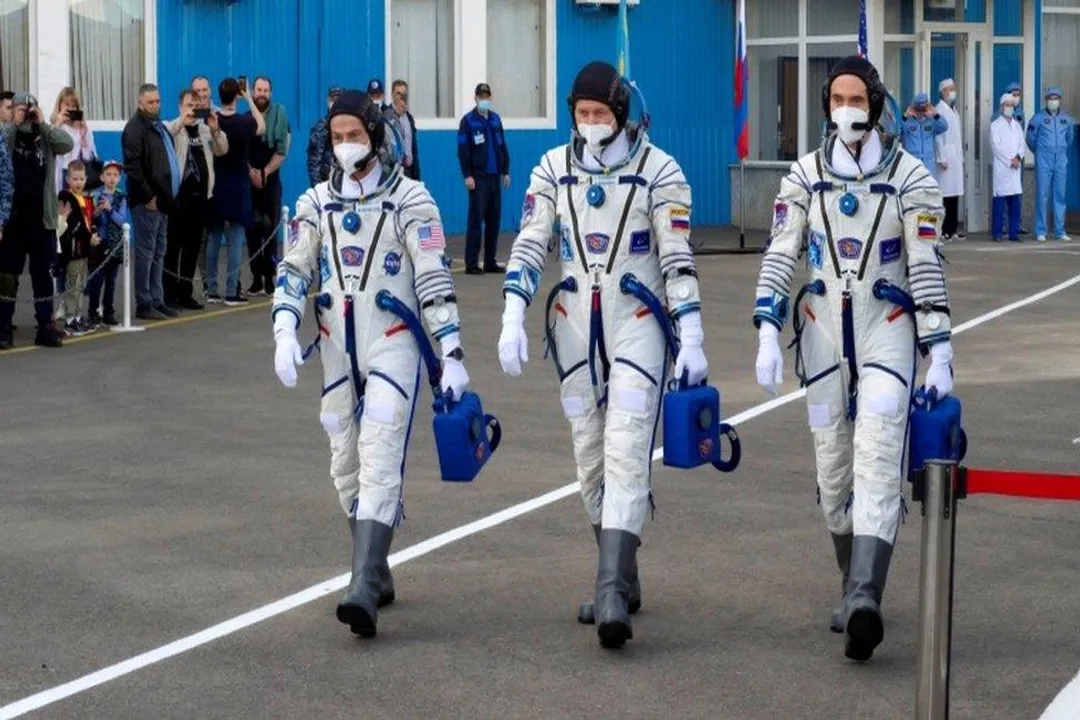
The functional definition is entirely tied to the training organization. [1][10] The United States, along with its partners in the European Space Agency (ESA), the Canadian Space Agency (CSA), and the Japan Aerospace Exploration Agency (JAXA), trains and certifies individuals as astronauts. [10] When a European, Canadian, or Japanese trainee successfully completes the rigorous NASA-led process, they are referred to as an astronaut. [10]
On the other side of the historical divide, the cosmonaut title is reserved for those trained by the Russian Federal Space Agency, Roscosmos, or its predecessor, the Soviet space program. [1][5] The first person to earn the title was Yuri Gagarin, who flew aboard Vostok 1 in April 1961. [1]
This split is a direct reflection of the Cold War competition. [5] During the early years of crewed spaceflight, each nation used its own nomenclature as part of projecting national identity and technological prowess onto the global stage. [1] While the political climate has changed significantly since the 1960s, the terminology has persisted, partly out of tradition and respect for the foundational programs of both countries. [5][10]
# Selection Process
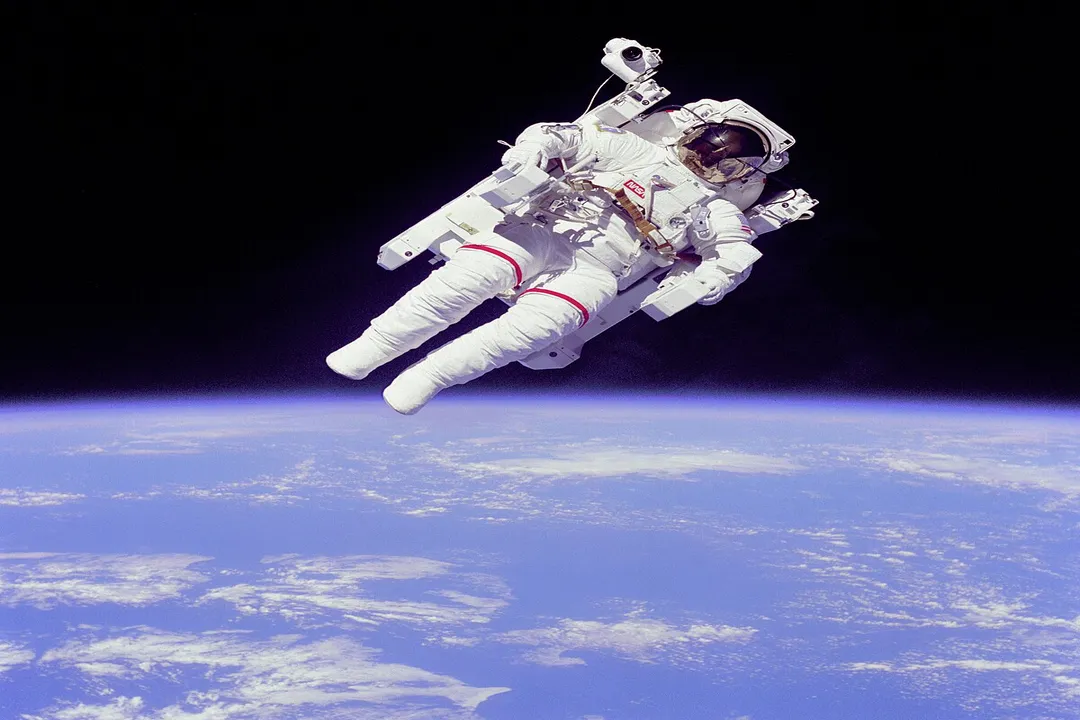
While the title differs based on the granting agency, the underlying requirements for selection are extraordinarily high for both roles, demanding peak physical and psychological fitness. [5] The selection processes are notoriously difficult, often involving filtering thousands of highly qualified applicants down to a handful of candidates. [5]
For example, NASA astronauts often come from backgrounds in military aviation, engineering, or science, usually requiring an advanced degree and significant professional experience. [5] Similarly, candidates for the cosmonaut corps must demonstrate exceptional aptitude, often drawn from the Russian military pilot corps or scientific research fields. [5]
When international cooperation began, particularly with the Shuttle-Mir program and later the International Space Station (ISS), procedures had to be established for how crews would be titled. [10] The standard operating procedure dictates that if a crew member is launched aboard a Russian Soyuz spacecraft, they are generally referred to as a cosmonaut, regardless of their nationality. [10] Conversely, if they launch aboard a NASA Crew Dragon or another Western vehicle, they are referred to as an astronaut. [10] This establishes an operational convention layered on top of the political/training convention.
| Criterion | Astronaut (NASA/ESA/JAXA/CSA) | Cosmonaut (Roscosmos) |
|---|---|---|
| Primary Training Agency | NASA, ESA, JAXA, CSA | Roscosmos (Russia) |
| Linguistic Root | Star Sailor (Greek: ástron + nautēs) | Universe Sailor (Greek: kósmos + nautēs) |
| First Honoree | Alan Shepard (US, 1961) | Yuri Gagarin (USSR, 1961) |
| Typical Mission Vehicle for Titling | Crew Dragon, Starliner, Space Shuttle | Soyuz |
This delineation shows how deeply entrenched the historical context remains even when individuals from the two camps work side-by-side on the ISS. A Western trainee sent to the ISS on a Soyuz will complete much of their primary survival and flight training at the Yuri Gagarin Cosmonaut Training Center in Star City, Russia, yet they retain the title astronaut given by their home agency. [10] The designation sticks to the person, not the hardware they fly on, although operational naming can sometimes blur the lines temporarily. [10]
# Current Missions
On the International Space Station, the two groups work together as a single crew, sharing duties and resources. [10] The station itself is a physical embodiment of the blending of the two traditions, involving modules built by both American and Russian engineers, requiring cross-training in both languages and procedures. [10]
Despite the joint operation, protocol dictates that crew members are addressed using their agency-assigned title. [5] For instance, a Russian crew member working alongside an American crew member will be called a cosmonaut, and the American will be called an astronaut. [5] This seemingly minor linguistic detail is a constant, subtle reminder of the complex geopolitical history that underpins global space exploration efforts today. [5] Think of it as maintaining national honor within a shared workplace; the engineering is integrated, but the lineage remains distinct.
One subtle point of consideration for those following space news is that while NASA often uses "astronaut" as a default umbrella term when speaking broadly about space travelers, they are careful to use "cosmonaut" when specifically referring to their Roscosmos counterparts. [4][5] This careful distinction confirms the official nature of the two titles within inter-agency communications.
# Shared Spaceflight
Is there a single word that encompasses both? Yes, though it is less common in official governmental documentation. Many sources suggest that space traveler or spacefarer could serve as the generic, overarching term for anyone who journeys into space, regardless of origin. [4] However, in common, non-official parlance, astronaut is sometimes used generically to cover all space travelers, perhaps due to the earlier and more visible role of the US program in Western media. [4]
When speaking generally about the profession without political context, like discussing the sheer difficulty of the job, one might opt for the universally understood space explorer or the literal space professional to avoid favoring one historical designation over the other. [4] The most accurate generic term, however, remains astronaut when one needs a single word that may be understood by a broader audience, though this usage can sometimes cause confusion or be seen as imprecise by those keen on the historical specifics. [4]
The persistence of the two terms, astronaut and cosmonaut, rather than settling on a single generic word like spacefarer, provides a historical marker. Every time one of these titles is used, it subtly references the decades-long competition between superpowers that ultimately propelled humanity into the cosmos. This linguistic duality ensures that the achievements of both the Soviet/Russian and American/Western programs are individually acknowledged, even as they collaborate daily aboard the orbiting laboratory.
# Further Distinctions
While the main difference is political and historical naming convention, the training programs themselves, historically, emphasized different priorities that shaped the resulting crew members. Early Soviet training, focused on keeping the Soyuz operational and relying on established orbital mechanics, often favored shorter, more direct mission profiles. [5] American training, particularly during the Apollo era, was geared toward complex orbital rendezvous, lunar landing procedures, and the development of entirely new vehicular systems. [5]
Today, the differences are more about procedure than capability. A new astronaut class assigned to the ISS will spend significant time learning Russian, practicing procedures on Russian hardware, and understanding the workings of the Zvezda module. Simultaneously, a new cosmonaut trainee must become proficient in the systems of the US Orbital Segment (USOS), including the complex robotics and life support systems managed by NASA and its partners. [10] They must be functionally bilingual in the language of the spacecraft they are operating, whether it is Russian or English, which highlights an ongoing, practical need for linguistic expertise beyond mere cultural awareness. [10] This requirement for mutual fluency underscores the depth of cooperation required to keep the station running, making the choice of title secondary to the shared objective of mission success. This intense, cross-cultural training regime, demanding proficiency in systems entirely foreign to one's home agency's standard, is perhaps the most significant practical difference that exists today—the necessity of mastering the other's operational paradigm.
#Videos
Cosmonaut vs Astronaut - What's The Difference? - YouTube
Related Questions
#Citations
What's the difference between an astronaut and a cosmonaut? - BBC
The difference between "cosmonaut" and "astronaut". : r/etymology
cosmonaut vs. astronaut - Dictionary.com
Cosmonaut vs Astronaut - What's The Difference? - YouTube
What is the generic word for both astronauts and cosmonauts? - Quora
Cosmonaut or Astronaut? - NASA Spaceflight Forum
What Are The Differences Between An Astronaut And A Cosmonaut?
Cosmonauts and Astronauts - Space Exploration Stack Exchange
Astronaut vs Cosmonaut? - Kerbal Space Program Forums
Astronaut - Wikipedia