When can you call someone an astronaut?
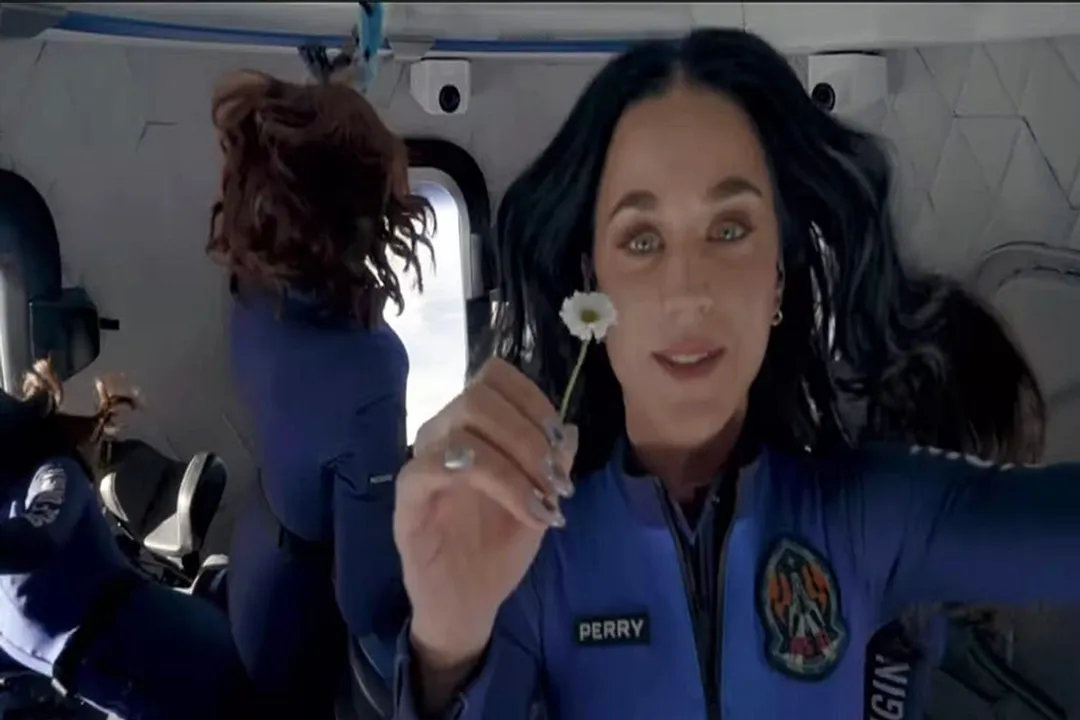
This is a question that has moved from the realm of science fiction debates to real-world media headlines: when does someone who has traveled above the Earth truly earn the title of astronaut? The answer is not neatly defined and depends heavily on who you ask—whether it’s a traditional government agency, a new commercial space enterprise, or the public, whose perception of the term is rapidly evolving.
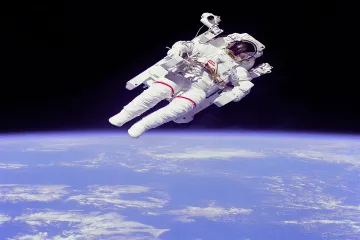
For decades, the word carried a certain gravitas, reserved for a select few: the rigorously trained military test pilots, scientists, and engineers selected by national space programs like NASA, Roscosmos, or the ESA. These individuals dedicated years to preparation, risking their lives to push the boundaries of human endeavor. Now, with the dawn of commercial spaceflight, the definition is being stressed to its breaking point, forcing us to consider whether astronaut is a title earned by rigorous merit or simply by purchasing a ticket to cross the atmospheric boundary.
# Etymological Roots
To understand the present argument, it helps to look at the word’s origins. Astronaut is a compound word derived from the Greek roots astron (star) and nautēs (sailor). Literally translating to star sailor, the term suggests any person who travels through space.
This etymological meaning is broad, suggesting that anyone who traverses space—even briefly—fits the literal description. This contrasts sharply with the historical usage. When the space age began, NASA settled on astronaut for its professional spacefarers, while the Soviet Union chose cosmonaut (traveler of the universe), and China later adopted taikonaut (navigator of the void). This initial cultural variation already hints that the term is shaped by the issuing agency's context.
The term pilot offers an interesting parallel in aviation history. While it now primarily refers to the person controlling the aircraft, its root relates to steering a rudder. Similarly, the title engineer has broadened from medieval siege builders to encompass numerous technical professions today, often causing debates over who truly qualifies. The evolution of language shows that as technology and access change, so too does the public’s understanding of job titles.
# Defining the Boundary
One of the most immediate points of contention in the modern debate is the very altitude at which one becomes an "astronaut." This is not internationally standardized:
- The Kármán Line, often cited as the beginning of space, sits at 100 kilometers (about 62 miles). Most international agencies align with this.
- The U.S. boundary, used by NASA and the military, is set lower, at 50 miles (about 80 kilometers).
This difference means a person flying on a suborbital trajectory just above 50 miles might be considered an astronaut by U.S. standards but not by those in many other nations. Furthermore, some discussions suggest that achieving a full orbit should be the minimum requirement for the title, as mere suborbital "up-and-down" flights only involve free-fall, which can be simulated on roller coasters or parabolic flights.
If the definition rests on altitude, then a commercial passenger vehicle reaching 51 miles could technically confer the title under current U.S. regulations for crew members, leading to confusion.
# Professional vs. Passenger Status
The most intense debate centers on the difference between those who are paid to fly and those who pay to fly.
Those arguing for the exclusivity of the term suggest that astronaut should be reserved for career professionals—those whose job is to travel to space, train others, or conduct mission-critical experiments. This perspective often views space tourists as analogous to passengers on a cruise ship; while they travel by sea, they are not considered sailors, as that implies a professional role within the crew.
Key arguments for reserving the title for professionals include:
- Preserving Status: Over-applying the term risks inflation, blurring the line between elite, highly trained professionals and short-term visitors.
- Institutional Integrity: Government astronauts undergo years of rigorous, formalized training that commercial passengers often bypass, even if they receive brief mission-specific preparation.
- Merit vs. Money: Allowing the title to be claimed purely through wealth distribution seems to tilt prestige away from merit and sacrifice—the qualities historically associated with the pioneers of spaceflight.
Conversely, those who argue for a more inclusive definition point out that the original astronaut title was never explicitly protected by law in the U.S., unlike some other professions like engineer in certain countries. They suggest that, etymologically, anyone who travels in space qualifies.
This inclusivity camp often offers counter-analogies:
- A person who completes a short training course and flies can still be called a pilot, just as a highly trained military test pilot is a pilot.
- NASA has designated astronaut candidates who are considered astronauts even before flying, implying the title relates to selection and training status as much as flight experience. In the past, payload specialists who flew commercially without extensive operational roles were still generally referred to as astronauts.
One source noted that NASA has historically selected 370 astronaut candidates since 1959, comprising men, women, military personnel, civilians, pilots, and non-pilots, demonstrating the agency's own internal acceptance of diverse backgrounds within its corps.
# The Commercial Caveat: Crew vs. Passenger
The Federal Aviation Administration (FAA) in the U.S. has offered a regulatory distinction: one can be considered a commercial astronaut if they fly above 50 miles as a crew member in a non-NASA vehicle. This implies that even in commercial flight, a discernible role is important.
The difficulty arises when non-employee space tourists fly. For instance, on a Virgin Galactic flight, the crew members (like the pilot and trainer) were often distinguished from the paying customers who had minimal contributions beyond experiencing the flight. A common argument circulating is that if you are getting paid to fly, you are an astronaut; if you are paying, you are a passenger or space tourist.
However, even the concept of "crew member" can be stretched to include the wealthy passengers who have contractual tasks, even if those tasks are minimal, such as performing a simple experiment or carrying company documentation. In the case of Blue Origin flights, where the occupants are typically just passengers, calling them astronauts is even more contentious for traditionalists.
If we were to adopt a functional split, a helpful system might look like this, based on the current landscape:
| Status | Primary Criterion | Common/Proposed Title |
|---|---|---|
| Career Professional | Paid to fly, rigorous training, mission specialist (NASA/ESA/Roscosmos/etc.) | Astronaut, Cosmonaut, Taikonaut |
| Commercial Crew | Employed by a private operator, flew above the boundary, has defined tasks | Commercial Astronaut (FAA designation) |
| Paying Visitor | Purchased ticket, flew above the boundary, limited/no mission role | Space Tourist, Spacefarer, Spaceflight Participant |
| Trained Candidate | Selected and trained by a recognized agency, but has not flown | Astronaut Candidate (e.g., ASCAN) |
# Original Insight: The Status of the Suborbital Pilot
A key distinction that often gets lost in the general argument is the status of the pilot flying the suborbital craft, such as those employed by Virgin Galactic or Blue Origin. These individuals are often former military test pilots with decades of experience, like David William Donald Mackay, the first native-born Scot in space, who was a former RAF test pilot. If the core objection to space tourists is a lack of skill and sacrifice, then these professional pilots—who are compensated for performing the complex task of getting people to the edge of space—should unquestionably retain the highest-tier astronaut designation, perhaps even warranting a Professional Astronaut or Suborbital Astronaut qualifier to separate them from the career orbital specialists. They possess the skills of highly trained aviators and have achieved the altitude/velocity necessary for spaceflight, making their case for the title very strong, even if they aren't flying to orbit.
# The Inevitable Future of Language
Despite the strong arguments for exclusivity, many observers concede that language is destined to adapt. As spaceflight moves from being a rare event involving a few hundred people to a more routine occurrence involving thousands, the exclusivity of the term will likely diminish.
When Charles Lindbergh made his historic transatlantic flight, it was a monumental event; decades later, routine air travel made the title of aeronaut irrelevant for passengers. A similar outcome is predicted for astronaut. When the number of people who have experienced space crosses a certain threshold (perhaps 10,000 or 100,000), the general public may simply adopt astronaut as a synonym for space traveler, much like Kleenex or Google.
For now, an insightful approach might be to recognize that prestige in the future will derive from what one did in space—duration, risk, scientific output, or destination—rather than just holding the title. The difference between an Artemis crew member and a suborbital tourist will naturally speak for itself, regardless of shared nomenclature.
Ultimately, the current debate is important because it signifies that human spaceflight is profoundly changing. While for the immediate future, reserving the title for career professionals seems to satisfy the historical and institutional context, the language will shift toward inclusion, one flight at a time. We may need to coin new, specific terms, like orbital astronaut or suborbital astronaut, to maintain precision while still acknowledging that everyone who breaks the boundary is, in a factual sense, a star sailor.
#Videos
What are the qualifications to be called an 'astronaut' ? - YouTube
Related Questions
#Citations
Discussion about using the 'Astronaut' title : r/space - Reddit
Astronauts - NASA
What are the qualifications to be called an 'astronaut' ? - YouTube
What is the definition of an astronaut? - collectSPACE: Messages
What is an astronaut? - by Graham Lau - The Cosmobiologist