Is Jeff Bezos considered an astronaut?
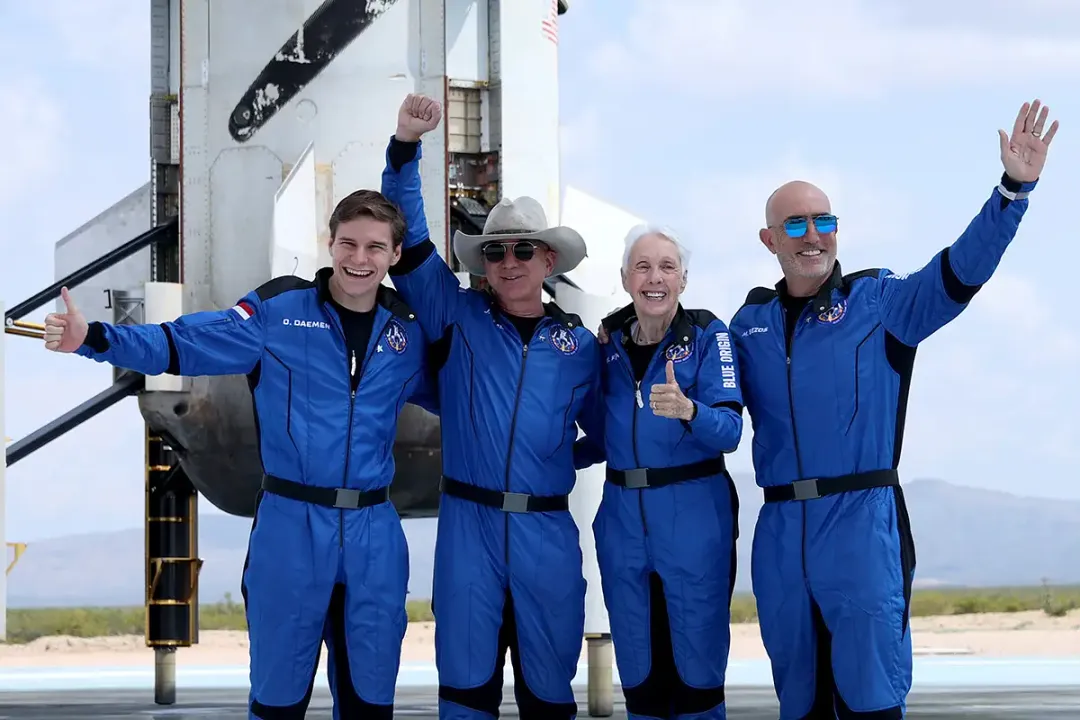
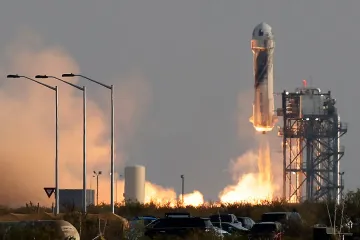
The brief, suborbital flight that propelled Amazon founder Jeff Bezos past the widely accepted threshold of space ignited an immediate and persistent debate about nomenclature: Was he an astronaut? His journey on July 20, 2021, aboard the Blue Origin New Shepard rocket carried him and three others to an altitude of approximately 66 miles, or 107 kilometers, before returning to Earth just minutes later. [8][9] While the achievement was monumental for commercial spaceflight, the official status of its participants in the established hierarchy of space travelers quickly became a point of contention, revealing a complex web of regulatory standards and historical precedent. [4]
# Reaching Space
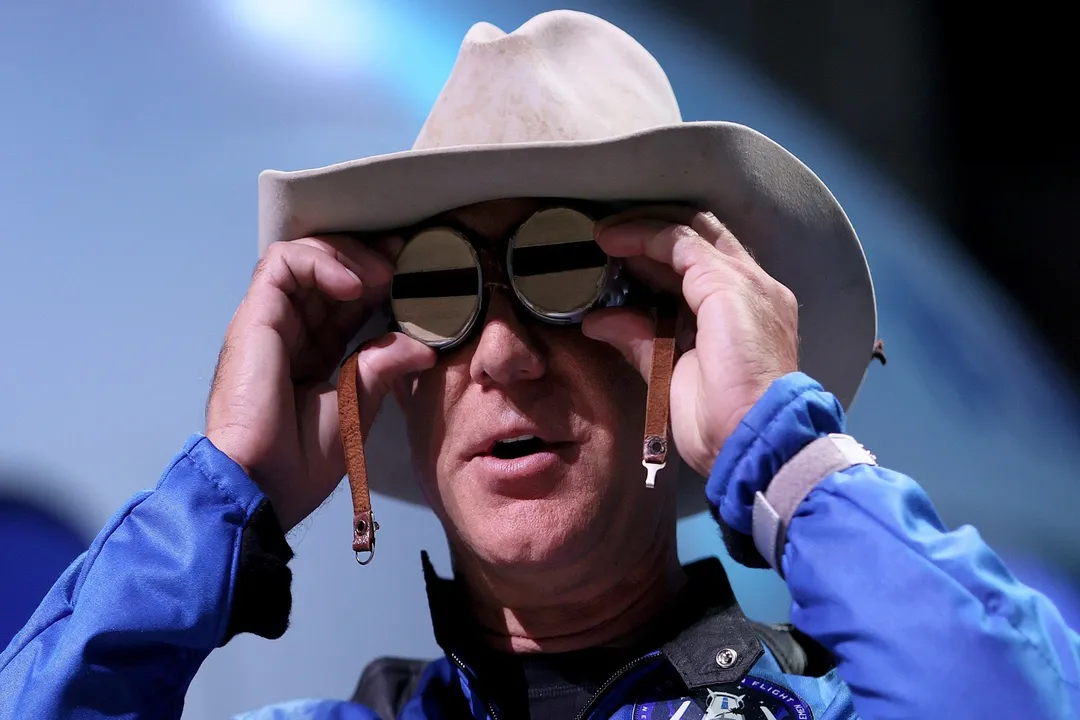
Bezos’s flight marked a significant moment for private citizens accessing the edge of space, representing a substantial net worth investment in personal space exploration. [8] The New Shepard vehicle is designed for automated, vertical launch and descent missions. [8] Upon returning, Bezos and his fellow crew members, including his brother Mark and Wally Funk, were greeted with excitement, and there was an initial expectation that they would receive the coveted astronaut wings. [1] However, the very definition of what constitutes "space" and who qualifies to use the title "astronaut" proved far more nuanced than a simple altitude reading might suggest. [4][6]
# Defining Altitude
The fundamental issue stems from a lack of global consensus on the exact boundary between Earth's atmosphere and outer space. For decades, the internationally recognized standard has been the Kármán line, situated at an altitude of 100 kilometers (about 62 miles) above sea level. [1] Since Bezos’s craft reached about 66 miles (107 km), he definitively crossed this internationally accepted demarcation. [1][8]
Yet, the United States has historically used a lower benchmark for official recognition. The US military and NASA recognize space as beginning at 50 miles (80 kilometers) above sea level. [2][6] Under this domestic standard, Bezos’s flight did qualify him, as 66 miles is greater than 50 miles. [9] This domestic criterion is the one that the Federal Aviation Administration (FAA) uses for awarding its commercial astronaut wings. [2]
| Boundary Standard | Altitude (Kilometers) | Altitude (Miles) | Awarding Authority | Status for Bezos's Flight (Approx. 107 km) |
|---|---|---|---|---|
| Kármán Line (International) | 100 km | ~62 miles | International Aeronautical Federation (FAI) | Crossed [1][8] |
| US Commercial Spaceflight | 80 km | 50 miles | FAA | Crossed [2][9] |
This slight, but important, divergence between the 50-mile standard and the 100-kilometer standard often gets lost in public discussion, but it underpins the regulatory confusion that followed his trip. [1][6]
# FAA Wings

The granting of "astronaut wings" in the US is managed by the FAA's Office of Commercial Space Transportation. [2] Historically, the agency presented these wings to individuals who flew above 50 miles on an FAA-licensed commercial space flight, provided they also contributed to human spaceflight safety or the advancement of space travel in some demonstrable way. [2][6] This criterion seemed to cover Bezos’s flight based on altitude alone. [9]
However, the situation became complicated by a subsequent action taken by the FAA. In July 2021, shortly after Bezos’s flight, the agency announced it would be pausing its Commercial Astronaut Wings Program. [6] The FAA decided to review the eligibility requirements, specifically for those flying on commercial missions that do not travel high enough to reach the recognized orbit necessary for space missions. [6]
This pause meant that while the previous rules might have supported awarding wings based on the 50-mile crossing, the new, temporary status review created an immediate block. [2] Furthermore, the previous rules required recipients to be an "invaluable crew member" who "participated in each flight" in a way that contributed to safety or the advancement of the endeavor. [2] Some interpretations suggest that a paying passenger, even one who crosses the 50-mile mark, might not meet the spirit of the original criteria, which were designed to honor those actively involved in the mission's success, not merely those paying for a ticket. [5] One perspective suggests that if you are a passenger who is not actively involved in the operation of the flight, you might not qualify, even if you cross the boundary. [6]
The former Associate Administrator for Commercial Space Transportation, Candice Robson, even stated that they were reviewing the criteria following the flights of both Bezos and Richard Branson. [2] This review suggested that simply purchasing a ticket and crossing the 50-mile line might soon become insufficient for formal recognition, especially given that Bezos’s flight was purely suborbital, meaning the craft never achieved the speed necessary to orbit the Earth. [1]
# Status Ambiguity
The argument against labeling Bezos an astronaut often rests on the distinction between career astronauts—those trained by government agencies like NASA or international counterparts for orbital missions—and private citizens who take short, suborbital "space tourism" flights. [4][5] Career astronauts typically train for months or years, often flying on craft designed for sustained space travel or orbital velocity. [4]
This historical context suggests that the term has always carried the weight of professional expertise and mission dedication. [5] When Bezos flew, he occupied the position of passenger. [6] While he had extensive preparation for the few minutes of weightlessness, it was not comparable to the preparation undertaken by NASA astronauts. [4] One common analogy used to frame this is that of a pilot versus a passenger on an airplane; both are on the plane, but only the pilot holds the professional title. [5]
In an interesting parallel, the debate even spilled over into political discourse when a Trump administration official suggested that Katy Perry, who had previously expressed interest in space travel, should be considered an astronaut alongside others who had flown commercially, which drew commentary and debate online regarding the merit of the title. [3] This shows how deeply ingrained the term is in public perception, often separate from technical or regulatory definitions. [4]
# Commercial Future
What the Bezos flight undeniably achieved was marking the arrival of a new era: the commercialization of space travel for private individuals. [8] Regardless of the official "astronaut" designation, his successful flight validated the technology for short trips to the edge of space. [9]
For the industry moving forward, the ambiguity created by the differing altitude standards and the FAA's pause highlights a need for clearer public communication and industry standards. [4][6] If space tourism expands, how the FAA defines "commercial astronaut" will shape public perception of the achievement. For instance, one might observe that if an individual pays millions for a 10-minute flight that reaches 66 miles, and another spends a decade training to spend six months on the International Space Station, the public needs a framework to distinguish the nature of their respective achievements without diminishing either one. The former is a pioneer of access; the latter is a career explorer. [5]
If the FAA proceeds with stricter guidelines—perhaps requiring orbital velocity or greater involvement in mission operation—then the wealthy passengers of the first wave of commercial spaceflight, like Bezos, may never formally earn the wings, even though they flew higher than many of the early American Mercury astronauts who were awarded them. [2][6] For now, Jeff Bezos holds the distinction of being a billionaire who successfully flew into the US-recognized definition of space, a pioneer in private access, but the official astronaut wings remain an administrative question mark dependent on evolving FAA policy. [2]
#Videos
Can Bezos and Branson Be Called Astronauts? It Depends Who ...
Related Questions
#Citations
Jeff Bezos and Sir Richard Branson may not be astronauts, US says
Sorry, Jeff Bezos, you're still not an astronaut, according to the FAA
Trump official to Katy Perry and Bezos' fiancée: “You cannot identify ...
Who gets to be called an astronaut? It's complicated - NBC News
Why can't Jeff Bezos be considered as an astronaut? - Quora
Who counts as an astronaut? Not Jeff Bezos, say new US rules
Can Bezos and Branson Be Called Astronauts? It Depends Who ...
Amazon's Jeff Bezos, Virgin Galactic's Richard Branson stripped of ...
Jeff Bezos went to the edge of space. Does that make him an ...