Is Jeff Bezos technically an astronaut?
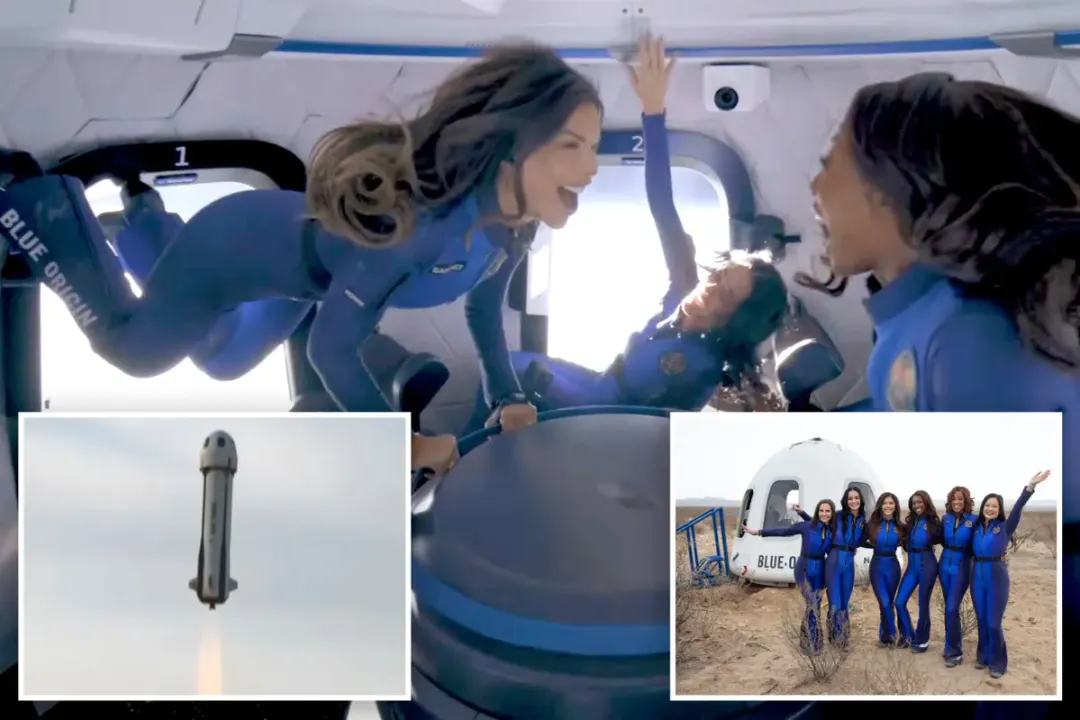
The simple act of flying to space has captured the human imagination for decades, but who gets to claim the title of "astronaut" once they return? When Jeff Bezos ascended aboard his Blue Origin New Shepard rocket in July 2021, he certainly crossed a threshold few humans ever experience. [6] He and the other passengers spent several minutes in weightlessness above the Earth, a verifiable trip to the edge of the void. [5] Yet, despite this extraordinary feat, the official designation remains stubbornly ambiguous, leading to a significant debate over what, exactly, qualifies a space traveler as an astronaut. [1][4]
# Boundary Crossing
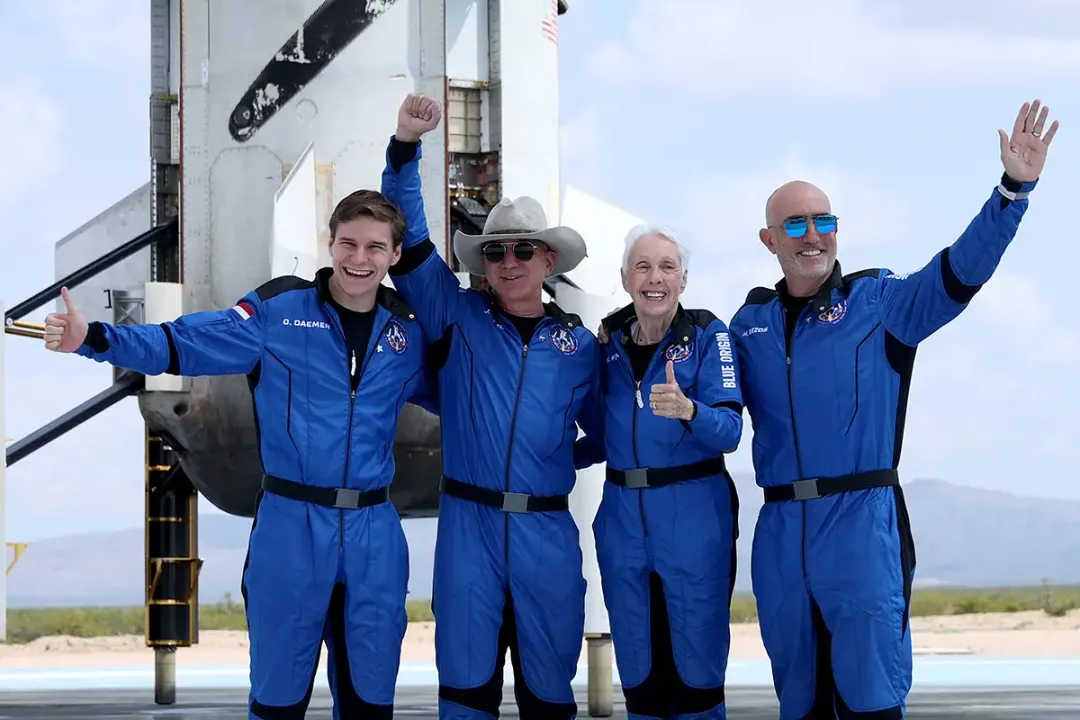
The primary point of contention revolves around altitude and definition. For a long time, the globally recognized boundary of space has been the Kármán line, situated at 100 kilometers (about 62 miles) above sea level. [4][6] Bezos’s capsule definitely cleared this mark, reaching an apogee of about 107 kilometers. [6] However, the United States has historically utilized a slightly different benchmark for its own purposes: 50 miles (about 80 kilometers). [4][8] Both the Blue Origin flight and Richard Branson’s Virgin Galactic flight achieved altitudes exceeding both the 50-mile and 100-kilometer thresholds. [4][6][8] If crossing a recognized boundary is the sole requirement, Bezos fits the bill by multiple measures.
What complicates this is the nature of the flight. Bezos’s journey was suborbital, meaning the craft shot up to space and then immediately fell back down, rather than entering orbit around the Earth, which is what NASA astronauts typically do. [4][5] This distinction matters immensely to career astronauts and regulatory bodies alike.
To better visualize this altitude challenge, consider the difference between the recognized markers:
| Boundary Marker | Distance (Miles) | Distance (Kilometers) | Status |
|---|---|---|---|
| US Definition | 50 mi | ~80.5 km | Met by Bezos [8] |
| Kármán Line | ~62.1 mi | 100 km | Met by Bezos [4][6] |
This dual standard—the U.S. system recognizing 50 miles and the international system recognizing the Kármán line—creates a unique cultural tightrope walk for commercial space tourists like Bezos and Branson. While they satisfy the domestic recognition criteria, the lack of a universal consensus means their claim to the title is constantly scrutinized by the global space community. [4]
# FAA Wing Rules
The Federal Aviation Administration (FAA) plays a critical role in this discussion because they are the body responsible for regulating U.S. commercial spaceflight and, until recently, awarding astronaut wings to commercial flyers. [3][8] Historically, the FAA awarded wings to individuals who flew above 50 miles on a U.S. commercial launch vehicle and were essential to the operation of the flight. [3] However, after Bezos and Branson made their high-profile flights, the FAA made a notable change: they paused the awarding of commercial astronaut wings. [3][4][8]
The FAA stated that the criteria for awarding wings were under review, essentially putting the designation for passengers on hold. [3][8] This pause was reportedly to allow time to determine what future guidelines should look like for this burgeoning industry. [4] When the policy was first implemented, the FAA stated that it would only award wings to those who flew above 50 miles and were "essential to the operation of the spaceflight". [3] This "essential" component is where Bezos’s status runs into difficulty, as he was a passenger on his Blue Origin flight, not a professional crew member executing mission-critical tasks. [5]
This regulatory indecision means that, officially, Jeff Bezos has not been granted the FAA commercial astronaut wings that other participants in early commercial flights might have received, due to the agency shelving the criteria. [3][4]
# Traditional View
The established standard for being an astronaut has long been set by NASA. Under NASA’s criteria, an individual generally needed to fly above the Kármán line and be a professional astronaut, a mission specialist, or someone whose participation was integral to the flight’s success—not merely a tourist. [4][5] NASA astronauts often spend months, if not years, in rigorous training for orbital missions that last days or weeks. [5]
This is a significant contrast to the brief, suborbital trips offered by companies like Blue Origin. Bezos’s flight lasted approximately 10 minutes from launch to landing, with only a few minutes spent in weightlessness at the peak altitude. [6] Because Bezos was a paying customer who did not fulfill the professional or operational requirements traditionally expected by NASA, he does not meet their definition of an astronaut. [4][5] It is telling that even after flying, Bezos has not publicly claimed the title with the same certainty as someone who has completed a NASA program; instead, the debate centers on whether he should qualify. [1]
The differing requirements—NASA’s focus on mission criticality versus the FAA’s prior focus on altitude—created the current situation where suborbital flyers like Bezos technically reached space but fall into a bureaucratic gray area. [4][8]
# Crew Role
A key element separating career astronauts from space tourists is the concept of the crew. When discussing figures like Bezos or Branson, the question often shifts from "Did they go high enough?" to "Were they working?". [5]
For government-sponsored missions, the crew members are responsible for piloting, navigating, maintaining systems, and conducting experiments. [5] Their presence is operationally necessary. In contrast, the Blue Origin system is designed to be almost entirely automated, requiring minimal input from the passengers. [5] Bezos was a participant, not a mandated operator. This difference—the distinction between a passenger who buys a ticket and a crew member who executes a mission profile—is the strongest argument against classifying him as an astronaut under traditional definitions. [4][5]
This leads to a fascinating cultural calculation. When considering the legacy of space exploration, the title has historically signified immense dedication and professional risk. To simply open the door based on the ability to afford a ticket, even if the altitude is met, risks cheapening that historical weight. We are currently observing a moment where technological capability (reaching space) outpaces cultural acceptance and regulatory consensus on nomenclature. [4]
This lack of consensus is creating a new class of individual: the commercial space tourist. Unlike the pioneering astronauts of the Mercury or Apollo eras, these individuals are part of a transactional experience. As more such flights occur, the industry—and the FAA—will eventually need a new, clearly defined tier of designation, perhaps one that acknowledges the altitude crossed without equating it directly to the status of a career orbital astronaut. [5] For now, the title remains debatable, resting somewhere between "space traveler" and "astronaut," depending entirely on which set of rules you choose to follow. [1]
Related Questions
#Citations
Jeff Bezos Isn't Actually an Astronaut, According to the FAA
Trump official to Katy Perry and Bezos' fiancée: “You cannot identify ...
Jeff Bezos Is Getting Astronaut Wings. But Soon, the F.A.A. Won't ...
Who counts as an astronaut? Not Jeff Bezos, say new US rules
Why can't Jeff Bezos be considered as an astronaut? - Quora
Are Jeff Bezos and Richard Branson now astronauts? | wcnc.com
Why Katy Perry, Lauren Sanchez and the Blue Origin crew may not ...
Jeff Bezos and Richard Branson Aren't Astronauts, According to FAA
Jeff Bezos Couldn't Qualify for Normal Astronaut Wings, So Blue ...