What did Jeff Bezos say about space?
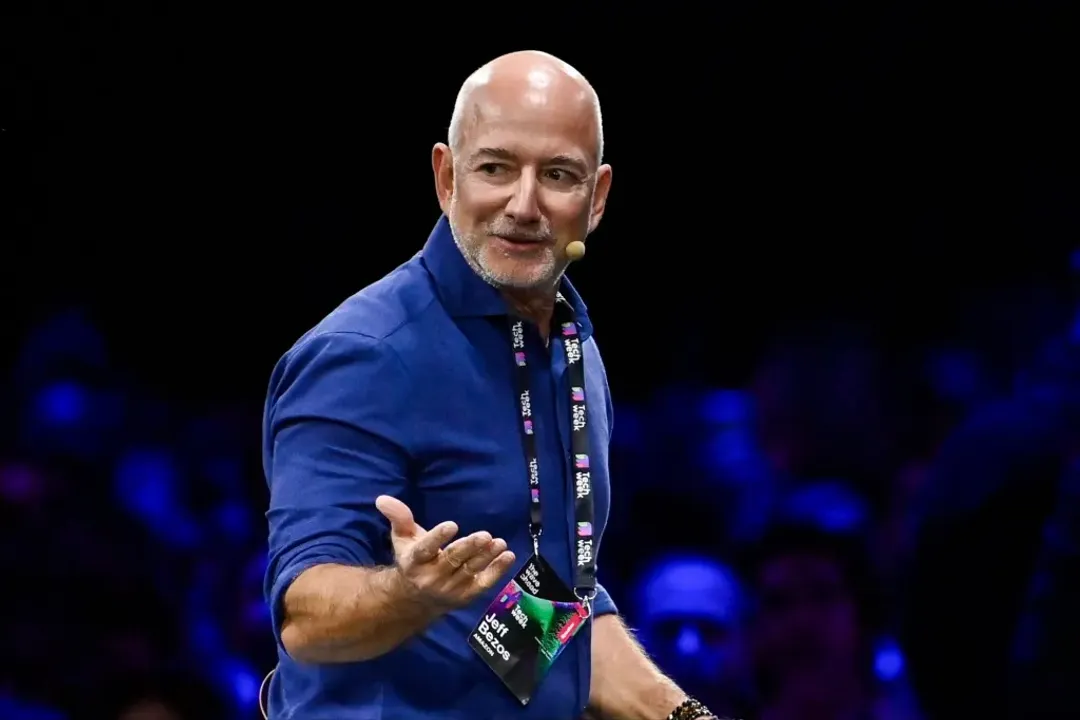
Jeff Bezos’s perspective on space is not merely one of scientific curiosity or exploration; it is fundamentally rooted in creating a viable, multi-planetary future for humanity by moving heavy industry off Earth. He envisions a future where millions, perhaps billions, of people will inhabit large, orbiting structures—space colonies—freeing our home planet from the environmental strain of industrialization. This vision positions space not as a destination for tourists, but as the necessary next frontier for Earth's long-term survival and prosperity.
# The Million Inhabitant Goal
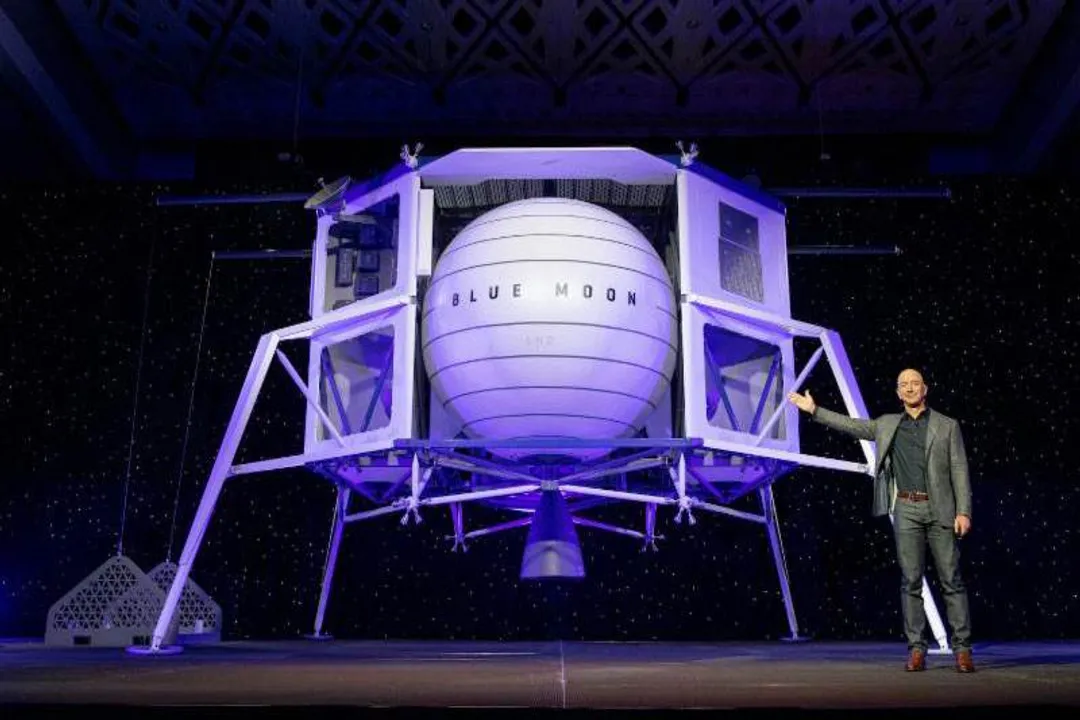
The assertion that millions of people will eventually live in space is a centerpiece of Bezos’s long-term outlook. This is not presented as a distant fantasy but as a logical endpoint of technological development aimed at alleviating Earth's limitations. The core reasoning centers on population growth and energy consumption; he suggests that if current trends continue, Earth will eventually become overcrowded and environmentally exhausted. To prevent this, humanity needs space habitats that can support immense populations far from the terrestrial surface.
Bezos emphasizes that these future living spaces would not be confined to barren lunar bases or Martian outposts, but rather massive, spinning O’Neill-style space colonies capable of replicating Earth’s environment. In these habitats, life would be comfortable, possibly even superior to life on Earth, as they could be engineered for optimal conditions. The argument presented is one of practical necessity rather than escapism; it’s about expanding humanity’s physical and economic footprint responsibly. If you consider the energy and material demands of even a moderately prosperous global population today, relocating the bulk of heavy manufacturing and energy production to space becomes an essential step to preserving Earth’s natural beauty and function. The sheer scale of this migration—moving industry and millions of people—requires a robust, reusable transportation system, which is the initial focus of his space venture, Blue Origin.
# Earth's Fragility
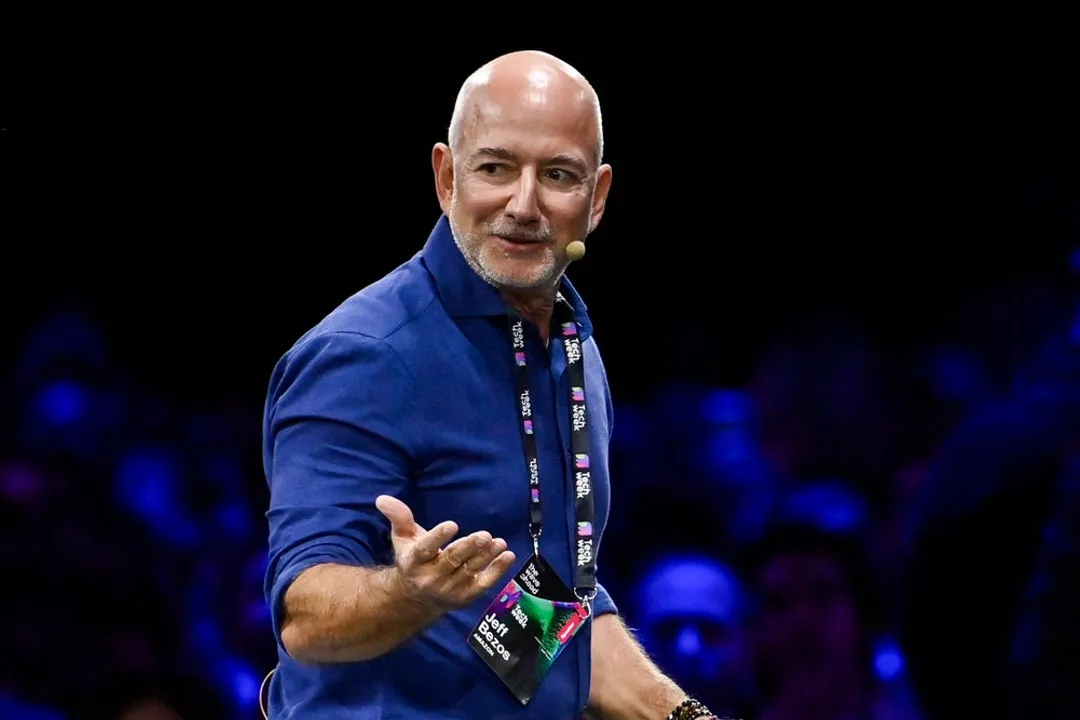
A major driver behind Bezos’s space advocacy is a deep concern for the long-term health of the planet. He often articulates a philosophy centered on the idea that Earth is a finite system facing unsustainable demands. While Earth provides the perfect starting point and a place people love, relying on it to sustain an ever-growing industrial civilization places it under undue stress.
The solution, as he frames it, involves a strategic migration of high-impact activities outward. Moving energy-intensive, polluting industries into orbit—where resources are theoretically abundant and environmental consequences for Earth are minimized—is the key to preserving the terrestrial environment. This approach acknowledges the emotional and biological imperative to protect Earth while simultaneously acknowledging the inevitability of growth and technological advancement. The juxtaposition is stark: continue choking the planet with industry, or send the industry to space and keep Earth as a beautiful, protected home for living and recreation. This framing suggests a prioritization where Earth becomes a living museum and garden, supported by the massive industrial apparatus orbiting overhead.

# Orbital Infrastructure
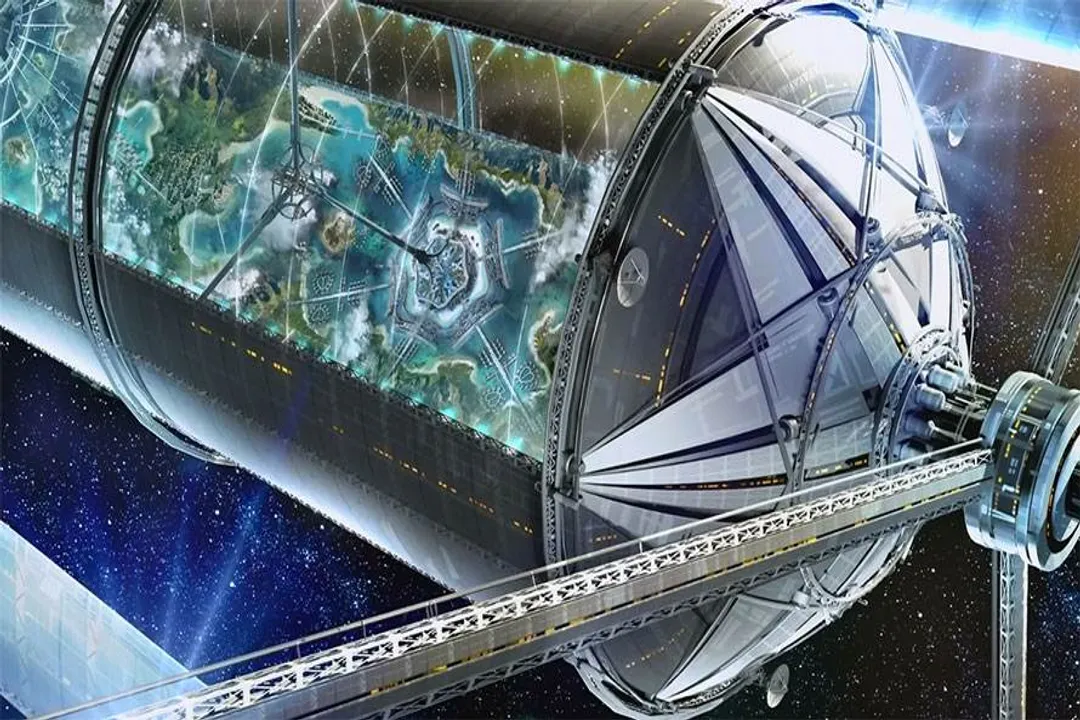
The transition to a spacefaring civilization capable of supporting millions requires far more than just bigger rockets; it demands functional orbital infrastructure. Bezos has specifically highlighted the necessity of developing in-space capabilities, such as orbital data centers, as a critical early step. This concept illustrates how the vision connects directly to current technological realities.
Data centers, which consume massive amounts of power and require significant cooling, are ideal candidates for relocation to space. By placing these facilities in orbit, they can be powered by abundant solar energy and utilize the cold vacuum of space for cooling, effectively removing a major environmental burden from Earth’s power grid. This move serves a dual purpose: it eases Earth’s power demands while simultaneously creating necessary computational infrastructure for the growing space economy itself.
The construction of such massive habitats and industrial centers in orbit necessitates an entirely new economic model for access to space. This is where the "Day One" philosophy, a concept familiar from his time at Amazon, is applied to the space industry. Day One implies maintaining the energetic, urgent, and customer-focused mindset of a startup, even as the enterprise scales. For space, this means ensuring that launch systems are reliable, reusable, and increasingly affordable to support the monumental task of building off-world infrastructure.
# Contrasting Motivations
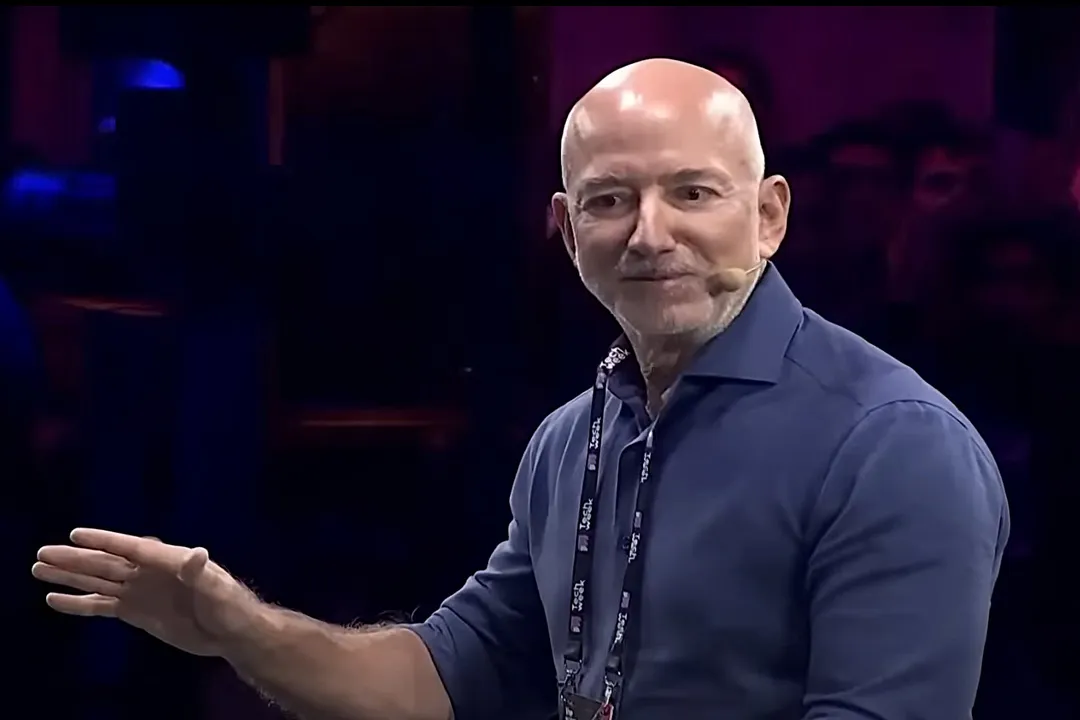
When examining Bezos’s statements, one can discern a subtle but important tension between the economic argument and the environmental argument for space settlement. On one hand, the move to space is framed as an environmental necessity to save Earth—a humanitarian goal. On the other hand, it is framed as an economic opportunity to unlock the near-infinite resources of the solar system to support a growing economy.
If the primary goal were only saving Earth, perhaps a focus on radical sustainability efforts on the ground, combined with limited satellite deployment, might suffice. However, the explicit mention of moving millions of people and all heavy industry suggests an ambition that goes beyond merely preserving a static state on Earth; it aims for massive expansion of human activity, just relocated. This duality suggests that Bezos sees space as both the ultimate life-support mechanism for Earth and the ultimate platform for growth, making his vision inherently tied to expansion rather than conservation alone.
Consider the required investment magnitude. Moving heavy industry off-world necessitates infrastructure build-out on a scale that dwarfs current space budgets. This economic justification, promising vast new capabilities and resources, likely underpins the financial feasibility of the vision, while the environmental narrative provides the essential moral and public impetus for undertaking such a generational project.
# The Pathway to Settlement
Bezos has spoken about the pathway to achieving this future, emphasizing that it is a long-term endeavor requiring perseverance from multiple generations of engineers and entrepreneurs. He views Blue Origin's role as establishing the foundational transportation layer necessary for others to build upon. The goal is to lower the cost of access sufficiently so that other companies, researchers, and eventually settlers can build the actual habitats and industries in orbit.
This aligns with the historical precedent of how infrastructure evolves; the initial high-cost phase is managed by visionaries, leading to lower costs that enable widespread economic activity later on. The creation of reusable rockets is the essential first domino, much like the development of affordable, reliable shipping routes opened up new continents in past human history. For the millions to live comfortably in space, the launch cadence and cost must reach a level where transporting the materials and people for massive construction projects becomes economically rational, rather than an exotic endeavor.
If one were to conceptualize the required logistics for just one O'Neill cylinder capable of housing a small city—perhaps fifty thousand people—the material throughput needed from Earth or asteroid mining would be staggering, likely requiring thousands of heavy-lift launches over decades. This realization underscores that the journey to Bezos’s orbital vision is not a single technological leap but a sustained industrial build-up, requiring sustained commitment, which is why the initial stages focus heavily on making access reliable and routine. The infrastructure for computing and data storage is merely a precursor to the heavier, bulkier infrastructure of habitats and power stations.
# Human Scale Engineering
The scope of engineering required to sustain millions in orbit demands a completely new approach to resource management that respects the physics of closed-loop systems. While Earth’s systems benefit from vast, open cycles, orbital colonies are inherently closed environments. This means that every atom of water, air, and material must be managed and recycled with near-perfect efficiency.
This challenge of closed-loop life support is where the expertise gained from terrestrial environmentalism paradoxically meets space engineering. To convince the public that space habitats can offer a better life than Earth, they must not feel like sterile, cramped environments, but thriving biospheres. This requires engineering not just structures, but entire ecosystems capable of handling the psychological and physical needs of large, diverse populations over multiple generations.
When Bezos speaks about this future, it often comes across as a direct appeal to ingenuity—a challenge issued to the next generation of builders. He sees the establishment of these habitats as the definitive challenge that will absorb the energy and creativity of humanity once the immediate environmental pressures on Earth are addressed by moving industry elsewhere. The transition is essentially about creating a new home that is designed for sustainability from the ground up, rather than trying to retrofit an ancient planet that has already borne the weight of industrialization.
# Applying Business Principles to Space
The application of an Amazonian "Day One" mindset to the space industry, as noted in discussions of Blue Origin’s initial foray, reveals a key element of Bezos’s approach: treating space development as an iterative, cost-reducing business rather than a government-run exploration project. In a traditional model, a new rocket system is built, flown a few times for prestige, and then retired once its primary scientific or exploratory goals are met. Bezos’s stated intention is the opposite: achieving reusability to drive down the marginal cost of placing mass into orbit.
This mirrors the early days of e-commerce, where the initial infrastructure build-out was costly, but the incremental cost of serving one more customer eventually dropped dramatically due to optimized processes and scale. In space, the "customer" initially is the orbital construction effort itself, requiring the system to be optimized for heavy, routine cargo transfer rather than just one-off crewed missions. It is this focus on creating a predictable, affordable supply chain that underpins the multi-million-person vision; without that chain, the vision remains purely theoretical.
The difference in approach can be visualized simply by looking at projected costs. If launching a kilogram to low Earth orbit costs $$10,000$100$ per kilogram, the necessary construction materials become economically viable to transport, even if the total dollar cost is still in the billions. This economic tipping point is what Bezos appears to be engineering toward.
# Conclusion on the Vision
Jeff Bezos’s statements on space converge on a singular, ambitious theme: securing humanity’s long-term existence by relocating the burdens of industrial civilization off-world. The transition involves establishing space-based data centers as an early win, moving toward large-scale orbital habitats for millions, and using the profits and technological advancements from space activities to ensure Earth remains a cherished, pristine environment. It is a philosophy where expansion is the ultimate form of conservation, achieved through the relentless application of scalable, reusable engineering principles. The pathway is long, demanding commitment over decades, but the endpoint he consistently describes is one where humanity occupies the solar system, while guarding its cradle.
#Videos
Jeff Bezos Predicts Millions Will Live In Space Within the Next Few ...
Related Questions
#Citations
Amazon founder Jeff Bezos says 'millions of people' will be living in ...
Amazon founder Jeff Bezos says 'millions of people' will be living in ...
Jeff Bezos says data centers are the 'next step' for space ventures
Here's Everything Jeff Bezos Said to Convince Humanity That Space ...
Jeff Bezos: Day One in the Space Industry - Via Satellite
Jeff Bezos: 'Millions' of People Will Inhabit Space - Entrepreneur
Jeff Bezos Predicts Millions Will Live In Space Within the Next Few ...
Jeff Bezos says his launch to space gave him greater appreciation of ...
Jeff Bezos' Inspiring Pathway to Humanity's Better Future – NSS