Why is Jeff Bezos interested in space?
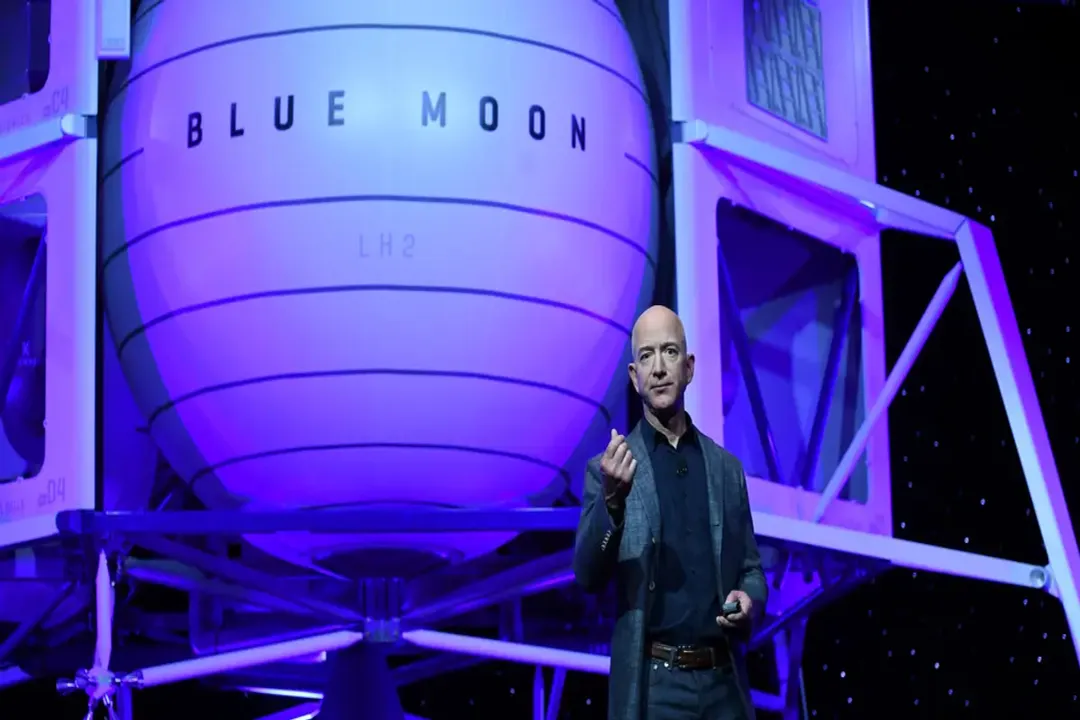
Jeff Bezos’s deep involvement in the space industry is not a recent business pivot but rather the culmination of a lifelong fascination that stretches back to his childhood. [2][5][6] While his success in e-commerce and cloud computing might seem worlds away from rocket engines and orbital mechanics, the drive to move humanity into space is the stated core purpose behind his aerospace company, Blue Origin. [7] This ambition is framed not just as a desire for personal adventure, but as a necessary endeavor to secure humanity’s future and protect the Earth itself. [3]
# Childhood Dream
The seed of Bezos’s interest was planted very early on, manifesting as an intense curiosity about the cosmos. [5] As a young boy, he reportedly spent time dreaming about the possibility of traveling to space. [5][9] This early infatuation developed into a sustained passion that guided his aspirations long before he founded Amazon. [6] The names and projects within Blue Origin often pay homage to this foundational inspiration. For instance, the name of their suborbital vehicle, New Shepard, honors Alan Shepard, the first American in space, signaling a direct connection to the pioneers who first inspired Bezos. [6]
# Preserving Earth
The immediate impetus for Bezos’s investment in space exploration, particularly through Blue Origin, centers on environmental preservation here on our home planet. [3] He articulates a clear vision where the ceaseless demand for energy and resources conflicts with the finite capacity of Earth. [3] The solution, in his view, lies in expanding human activity off-world. [3]
Bezos believes that if heavy industry, manufacturing, and power generation could be moved into space, Earth could be re-zoned for residential and light commercial use, allowing the planet to recover and thrive. [3] This vision is an extension of the company’s stated goal: enabling a future where millions of people can live and work in space. [7] It positions space access as an ecological imperative rather than just a scientific pursuit.
The concept that drives many astronauts and space advocates—the Overview Effect—also features heavily in his motivation for personally flying to space. [8] This effect is the cognitive shift in awareness reported by those who see Earth from orbit: a borderless, fragile blue marble suspended in blackness. [8] Experiencing this firsthand is seen as crucial for internalizing the need to protect the planet. [8] For Bezos, the brief trip aboard New Shepard was about internalizing that perspective before focusing on the infrastructure required to make that perspective accessible to others. [2][8]

# Infrastructure Focus
Blue Origin operates under a guiding principle known as the "Day One" philosophy. [1] This concept mandates a persistent, pioneering spirit, focusing on immediate action and agility, much like a startup, even as the company grows. [1] When translated to space, this philosophy means building the necessary road to space. [7]
Bezos views the initial challenge as reducing the cost and increasing the reliability of access to space so that the next generations of entrepreneurs and scientists can build upon that foundation. [1] This is a crucial distinction in strategy. While some private space ventures immediately focus on lunar missions or orbital tourism, Blue Origin’s stated mission has consistently emphasized creating reliable, reusable hardware to lower the barrier to entry for everyone else. [7]
An interesting strategic contrast emerges when looking at the private space sector. Where some focus on rapid, high-value satellite deployment or crewed orbital flights as the primary revenue driver, Blue Origin appears committed to achieving a foundational infrastructure platform first. [1][7] This approach suggests a commitment to the long game, prioritizing the development of heavy-lift capacity and reusable rocketry—the essential plumbing of space commerce—over immediate, high-profile commercial returns. [1]
# The Billionaire Contest
Bezos’s ventures place him squarely within what has been popularly termed the "Billionaire space race". [4] This informal competition involves wealthy entrepreneurs investing significant personal capital into ambitious private spaceflight initiatives. [4] His primary rivals in this arena include Elon Musk, associated with SpaceX, and Richard Branson, with Virgin Galactic. [4]
While all three figures are driven by a desire to expand humanity's reach, their execution and stated primary focuses differ. Musk often centers on the multi-planetary colonization of Mars, while Branson has concentrated on suborbital space tourism for paying customers. [4] Bezos, by contrast, tends to frame his efforts through the lens of preserving Earth via moving industry off-world, even while New Shepard offers suborbital trips akin to Branson’s model. [3][7] The presence of these other titans provides a competitive environment that has arguably accelerated technological development across the entire commercial space sector. [4]
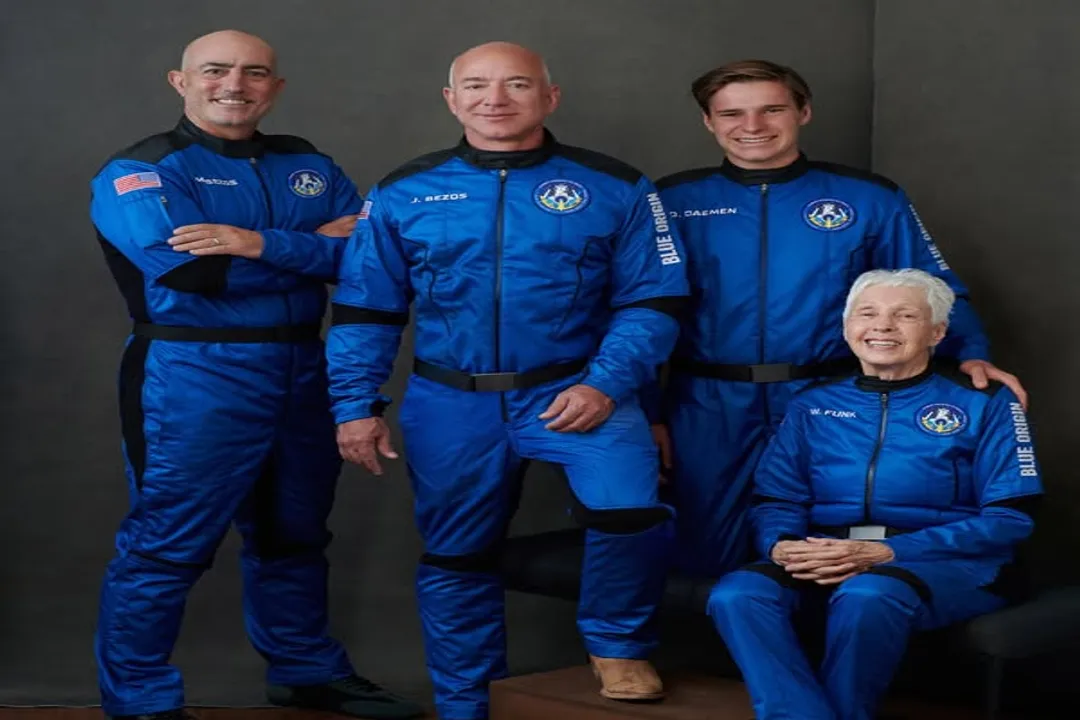
The decision to fly on the very first crewed New Shepard flight in July 2021 was a powerful demonstration of belief in his own hardware. [2][6] It was a public declaration that he trusted the technology developed by Blue Origin enough to become its first passenger, alongside other crew members. [2] This act serves as a significant confidence booster for investors, employees, and potential future customers alike, grounding the abstract, decades-long vision in a tangible, successful flight. [6]

# Future Trajectory
The path forward for Bezos’s space interest involves scaling up from suborbital hops to orbital capabilities. [7] The ultimate goal is not just to fly people up and bring them back down, but to build the necessary infrastructure to sustain a significant human presence beyond Earth’s surface. [7] This requires heavier lift capability and vehicles designed for sustained orbital mechanics, which represents the next logical step beyond the suborbital New Shepard system. [1]
If the Day One philosophy is about immediate action, the New Glenn rocket—a planned heavy-lift, reusable orbital launch vehicle—is the tangible embodiment of their long-term aspiration. [7] By focusing on reusability across the board, Bezos aims to make access so routine and cost-effective that it stops being an endeavor reserved for national agencies and becomes accessible to a wider commercial and scientific base. [1] This commitment to reusability across launch systems is a key differentiator, aiming to bring down the recurring cost structure that has historically limited space access to governments and specialized organizations. [1]
Related Questions
#Citations
Jeff Bezos: Day One in the Space Industry - Via Satellite
Why Jeff Bezos is going to space, and why we should care - Quartz
Bezos Wants to Create a Better Future in Space. His Company Blue ...
Billionaire space race - Wikipedia
Why did Jeff Bezos travel to space? - Quora
Jeff Bezos' Lifelong Obsession With Space Travel - Business Insider
About Blue | Blue Origin
Why Jeff Bezos Should be Applauded for Going to Space
Jeff Bezos' fascination with space began as a child, when he ...