What happens to astronauts who eat spirulina?
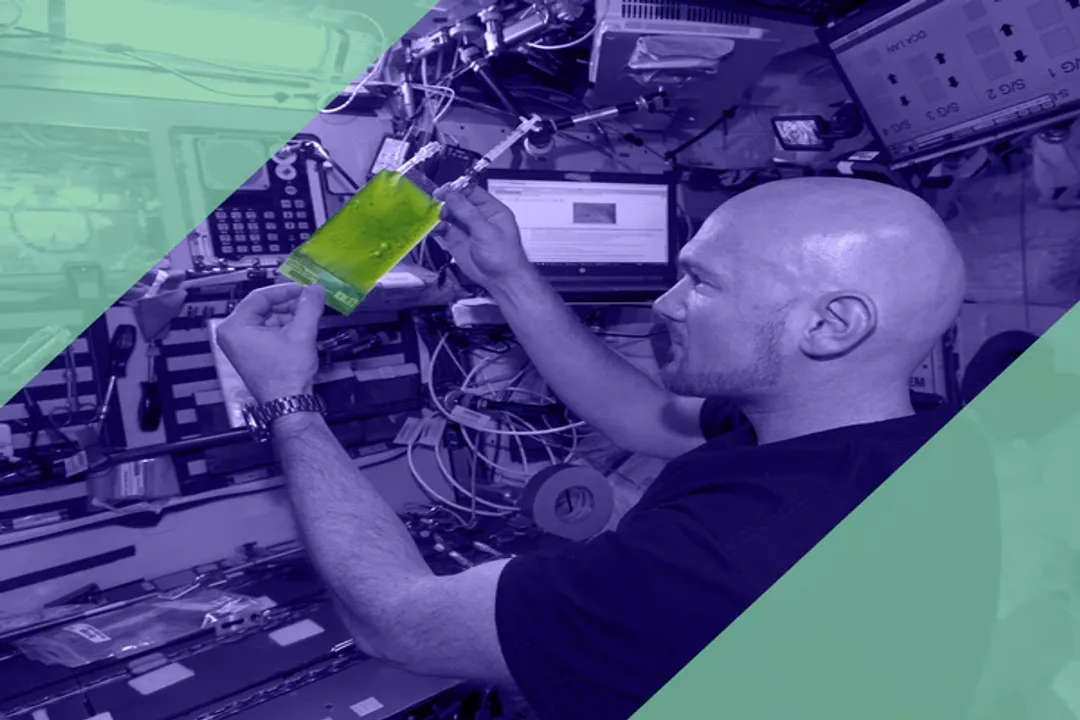
Astronauts consuming spirulina aren't just reaching for a trendy health supplement; they are interacting with a critical component of long-duration space mission planning. [1][4] This blue-green algae, known scientifically as Arthrospira platensis, has earned significant attention from space agencies like NASA for its incredible potential as a compact, sustainable food source far from Earth. [6][9] What happens when an astronaut adds this algae to their diet is a fascinating interplay between advanced nutrition and life support engineering.
# Nutrient Density
The primary draw for incorporating spirulina into an astronaut’s diet centers on its remarkable nutritional profile, especially when considering the limited volume and mass available in a spacecraft or habitat. [2] It is often touted as a superfood for this very reason. [4][6]
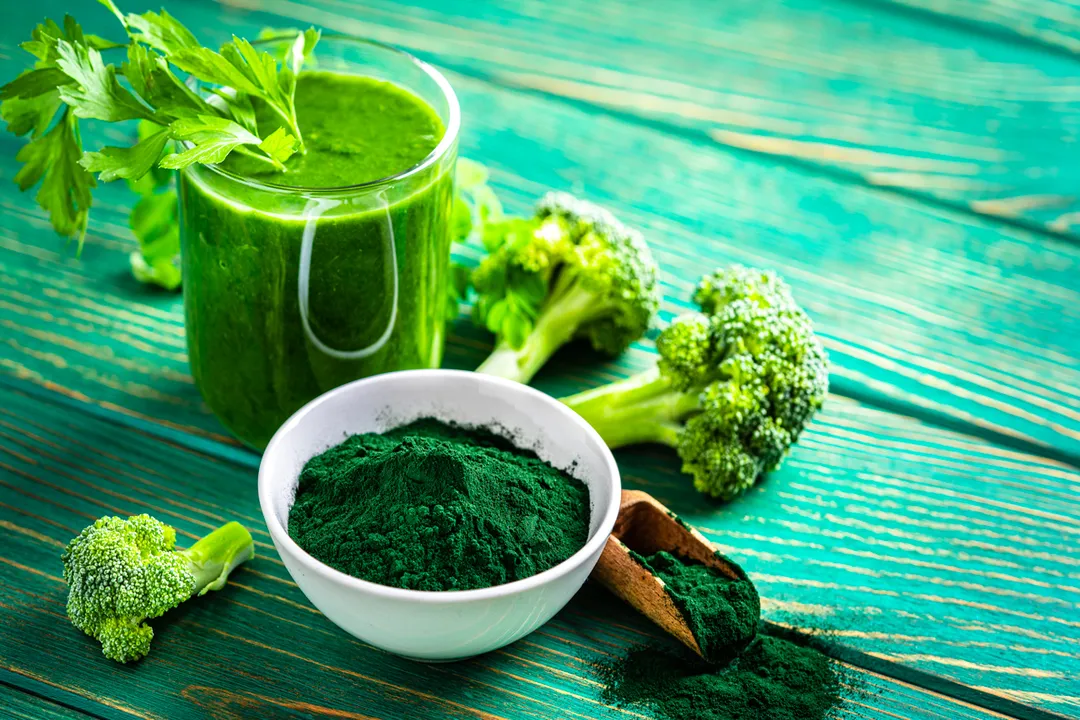
Spirulina boasts an extremely high protein content, sometimes reaching up to 70% of its dry weight, making it a far more efficient protein source by mass than many traditional foods. [8] For crews on long voyages, such as a theoretical trip to Mars, maximizing the nutritional return on every gram of stored or grown material is paramount. [4] Beyond protein, spirulina provides a substantial array of essential vitamins and minerals that can be difficult to source reliably and consistently from shelf-stable packaged goods over years. [2] Astronauts need to maintain bone density and muscle mass, and the micronutrients supplied by algae contribute to overall health maintenance in the hostile environment of space. [2]
Astronauts require significantly more energy than sedentary people on Earth due to the physical exertion involved in microgravity maneuvering and necessary countermeasures against muscle atrophy. While spirulina is dense in protein, it needs to be balanced with sufficient carbohydrates and fats, which are less abundant in algae cultures compared to terrestrial staples. This means spirulina likely serves as a nutritional backbone, supplementing, rather than entirely replacing, staple calorie sources for missions lasting many months or years. [2]
# Life Support Link
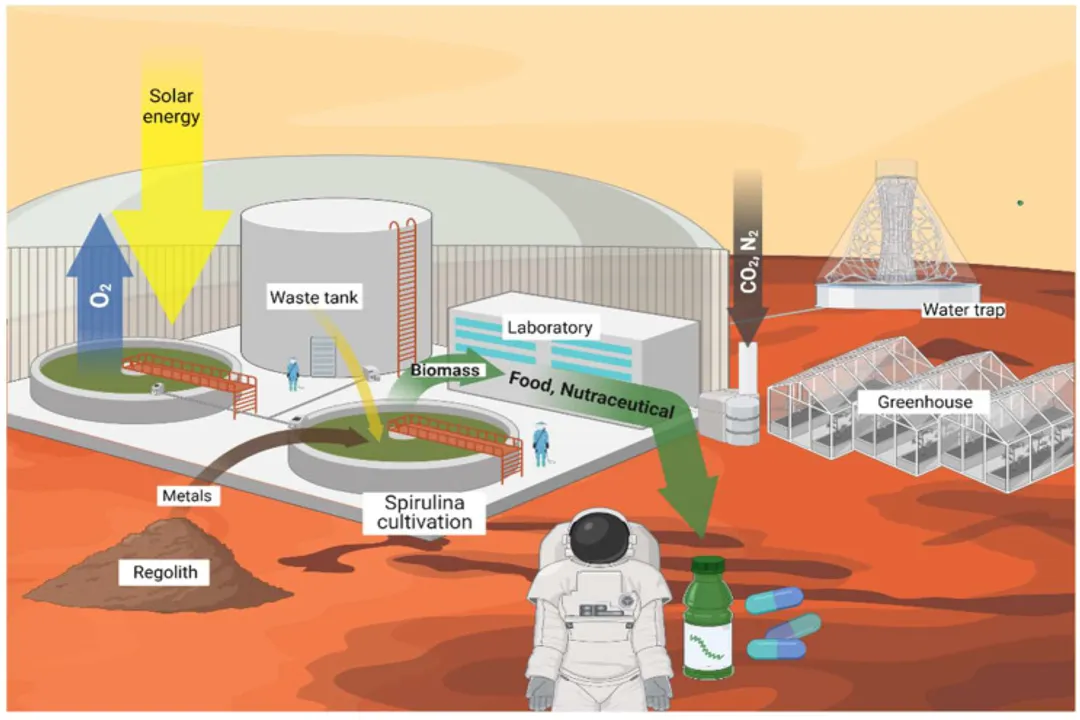
The utility of spirulina in space extends well beyond simply being a meal replacement; it is deeply connected to closed-loop life support systems. [2] When planning for self-sufficiency during deep space travel, resources like water and air must be recycled efficiently, and any biological system that can contribute to that cycle becomes invaluable. [5]
Spirulina is photosynthetic, meaning it requires light and carbon dioxide () and produces oxygen () as a byproduct. [2] In theory, a bioreactor cultivating this algae can function as a biological air revitalization system, scrubbing exhaled by the crew and converting it back into breathable air. [5] This intertwining of food production and environmental control is what makes microalgae so attractive to mission planners. [2] The system is designed to be regenerative, reducing the need to launch massive amounts of consumables from Earth, which is extremely costly. [4]
The consumption process itself is part of this cycle. When astronauts eat the processed spirulina biomass, they are essentially consuming the concentrated solar energy and recycled atmospheric components that the algae captured. The waste products generated after digestion can then be processed and potentially reintroduced into the cultivation medium, closing the loop further. [2] This regenerative capability elevates spirulina from a simple ration to an active part of the spacecraft's ecosystem. [7]
# Mission Context
While the potential for spirulina cultivation in space environments is a major area of research, its actual introduction into an astronaut's regular menu is a phased process. [4] NASA has certainly studied spirulina for years, recognizing its viability. [1][6] Historical context shows that humans have depended on algae for sustenance for millennia, dating back to the Aztecs, [9] lending credence to its use in novel environments.
For current International Space Station (ISS) operations, food generally consists of thermostabilized, freeze-dried, or irradiated items that have long shelf lives. [7] The application of spirulina has often been tested in controlled experiments simulating space conditions to verify nutritional stability and absorption rates over time. [2] The experience of astronauts consuming it provides crucial data on palatability and digestive tolerance in microgravity, which can differ from ground-based studies. [2]
One challenge in space is the psychological need for variety and fresh food, which is difficult to maintain with pre-packaged rations. [7] Cultivating spirulina on board, even if it is harvested from a controlled bioreactor rather than a traditional garden setup, offers a dual benefit: it produces necessary biomass while also offering the crew a sense of connection to a living, actively growing resource. [7] This psychological boost is an often-overlooked component of long-term astronaut well-being.
# Terrestrial Spinoffs
What happens to astronauts consuming spirulina is rarely kept isolated in space research. Technologies and findings related to growing, harvesting, and processing these biological systems frequently find their way back to Earth in a process known as technology transfer. [7]
The efficiencies gained in growing nutrient-dense food crops in minimal space and with minimal water, which are crucial for Mars missions, can translate directly into improved sustainability for food production in arid regions or densely populated urban areas on Earth. [7] Essentially, ensuring astronauts can eat healthily millions of miles away helps researchers develop more efficient, Earth-friendly cultivation methods here at home. [7] The data gathered on how the human body processes and extracts nutrients from spirulina under radiation stress or in a closed system contributes to general nutritional science as well. [2]

# Processing the Harvest
The raw algae needs preparation before it becomes an astronaut’s meal. In a space environment, the method of processing is as important as the growing itself. The goal is to convert the wet biomass into a palatable, dry, or encapsulated form that minimizes waste and maximizes storage safety. [2]
This often involves drying or extraction techniques. For instance, if it is being used as a dietary supplement powder, it must be carefully dried to prevent microbial contamination over long storage periods, a risk that is heightened when resupply missions are months away. [2] The astronaut might mix this powder into rehydrated food items or beverages. The taste profile of spirulina can be quite intense—often described as earthy or slightly fishy—so successful implementation requires blending it with other space food items to ensure consistent acceptance by the crew over extended periods. [8] If the crew is involved in cultivation, the act of harvesting, washing, and drying the biomass offers a tangible, task-oriented routine, another benefit for mission engagement. [2]
#Videos
Why Do Astronauts Use Spirulina? - YouTube
Related Questions
#Citations
Spirulina: the food supplement already used by NASA astronauts
Wide Range Applications of Spirulina: From Earth to Space Missions
Why Do Astronauts Use Spirulina? - YouTube
Superfood goes to space - News - Blogs - University of Florida
Astronauts Could Rely on Algae as the Perfect Life Support Partner
Spirulina in Space | We Are The New Farmers
Space for Kids - Astronaut food helps people on Earth - ESA
Spirulina – Benefits and Side Effects - WebMD
Spirulina: From Aztecs to astronauts