How is space weather different from normal weather?
The concept of weather typically conjures images of rain clouds, wind speed indicators, and thermometers measuring conditions within the lower atmosphere. However, an entirely different, invisible form of atmospheric activity is constantly at play: space weather. While both terrestrial weather and space weather are fundamentally driven by energy radiating from our star, the mechanics, locations, and consequences of these two phenomena are vastly different. [1][4]
# Solar Drivers
The primary distinction between these two weather systems lies in what fuels them and where the action takes place. Terrestrial weather, the kind we plan our commutes around, is chiefly governed by the uneven heating of Earth’s surface by the Sun, coupled with the planet’s rotation and the presence of water vapor in the troposphere and stratosphere. [4] This results in familiar elements like temperature fluctuations, precipitation, and wind currents. [4]
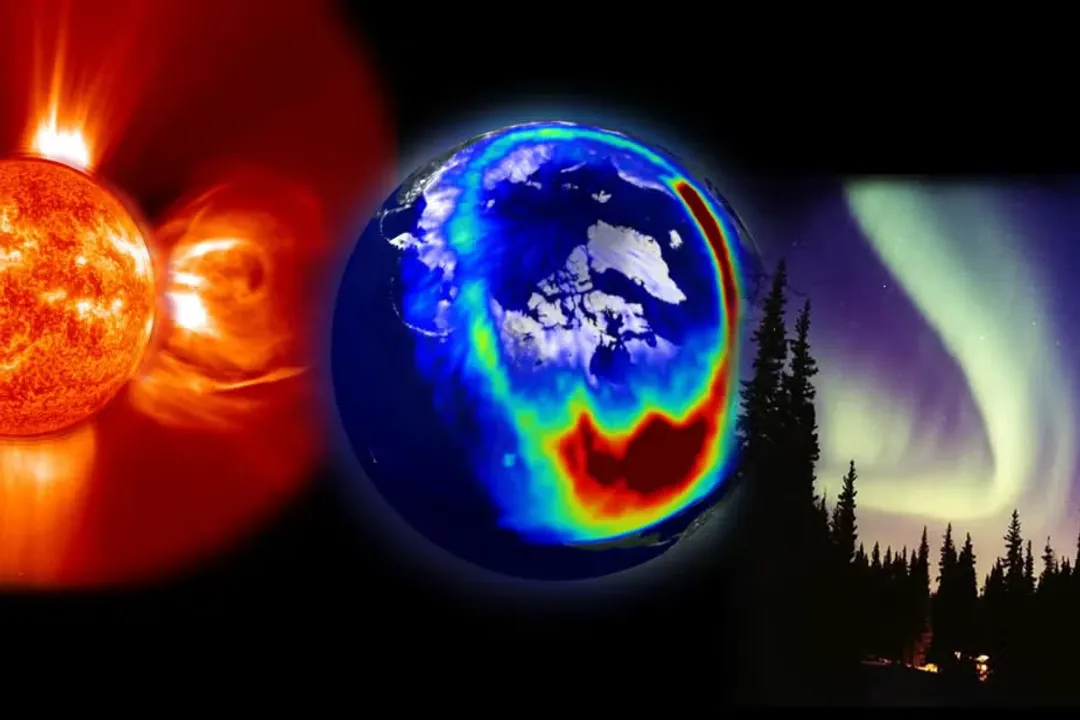
Space weather, conversely, is the dynamic state of the Sun's environment, which includes the solar wind, energetic particles, and magnetic fields that permeate the solar system. [2][3] It is driven not by steady solar heating but by sudden, explosive events on the Sun’s surface. [5][6] Key drivers include solar flares, which are intense bursts of radiation, and coronal mass ejections (CMEs), which are massive expulsions of solar plasma and magnetic field material flung into space. [1][6][8] The continuous stream of charged particles emanating from the Sun, known as the solar wind, is the baseline environment that these eruptions dramatically interrupt. [5]
# Atmospheric Zones
The physical separation between the two is perhaps the easiest contrast to grasp. Earth’s weather occurs within a relatively thin shell of gases surrounding our planet, primarily the troposphere, where most weather phenomena reside. [4]
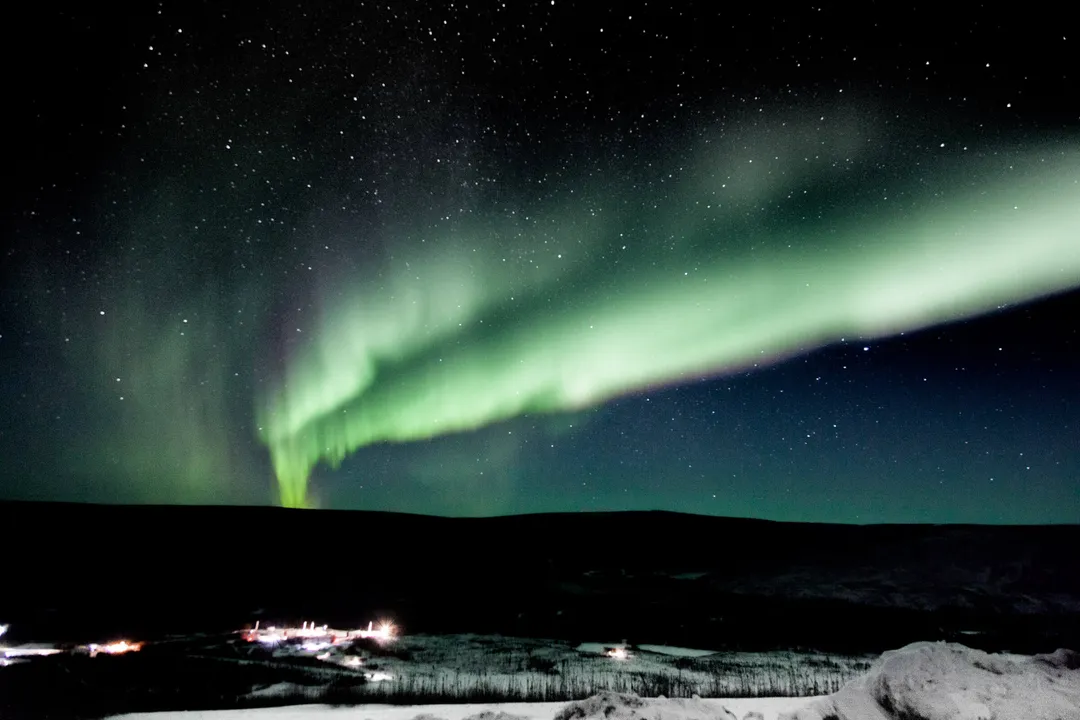
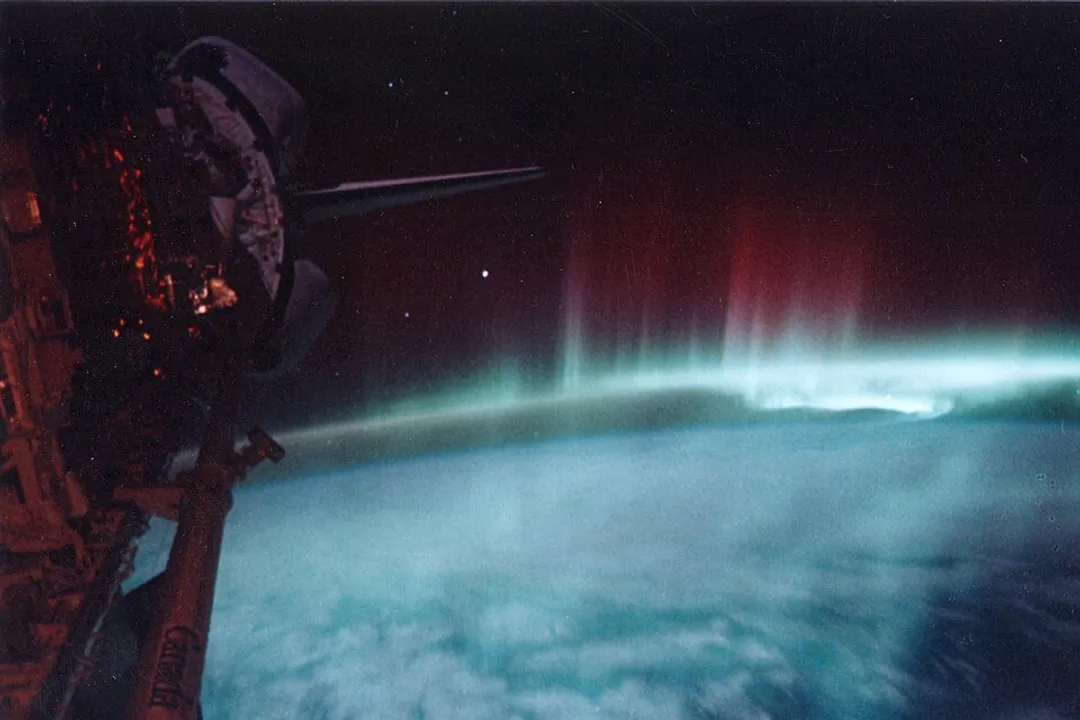
Space weather operates in the vacuum and plasma outside this habitable layer. [3] Its effects begin impacting Earth when the ejected solar material—often traveling millions of miles per hour—reaches our planet’s protective magnetic bubble, the magnetosphere. [1][5] When a CME hits, it compresses the magnetosphere, sending energy and particles down along the magnetic field lines toward the poles. [9] The charged particles then interact with the upper atmosphere, specifically the ionosphere, creating visible effects like the aurora. [5][9]
One key differentiator that influences forecasting is the medium itself. Terrestrial weather deals largely with gas and liquid dynamics, governed by fluid dynamics and thermodynamics. Space weather involves plasma—an ionized gas—and magnetic fields, making it a matter of magnetohydrodynamics, a much more electrically driven physics set. [4]
# Impact Spectrum
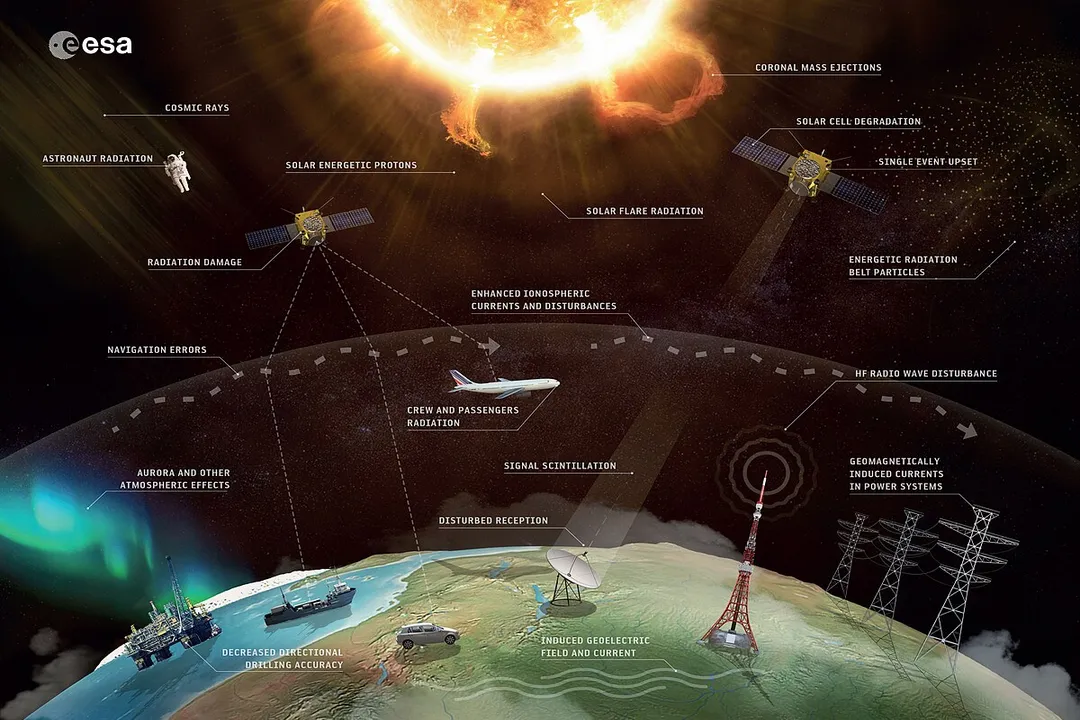
The tangible effects experienced by humans provide the sharpest contrast. If Earth weather is inconvenient (a canceled picnic), space weather can be globally disruptive to modern infrastructure. [9]
For terrestrial weather, impacts are local or regional: floods, drought, storms, and temperature extremes that affect agriculture, travel, and daily life. [4]
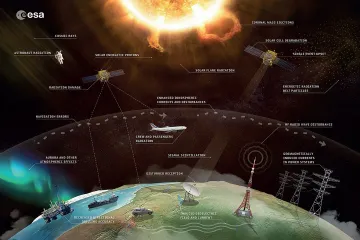
For space weather, the impacts are largely technological and appear in the upper atmosphere or space itself. [5][9] When solar eruptions strike, the resulting geomagnetic storms can induce currents in long conductors on the ground, posing a threat to electrical power grids, leading to widespread blackouts. [9] Furthermore, space weather affects technologies orbiting the planet: it can increase atmospheric drag on satellites, altering their orbits, damaging sensitive electronics via charged particles, and disrupting high-frequency radio communications and GPS signals necessary for navigation and timing systems. [5][9] The visual manifestation for many people, however, is the beautiful, but non-disruptive, result of these interactions: the aurora borealis and australis. [5][9]
| Feature | Earth Weather | Space Weather |
|---|---|---|
| Primary Location | Troposphere/Stratosphere | Near-Earth Space, Magnetosphere, Ionosphere |
| Primary Driver | Uneven Solar Heating, Rotation | Solar Flares, CMEs, Solar Wind |
| Medium Studied | Gases, Water Vapor (Fluid Dynamics) | Plasma, Magnetic Fields (Magnetohydrodynamics) |
| Visible Effects | Clouds, Rain, Wind, Temperature | Aurora, Satellite Drag, Geomagnetic Storms |
# Forecasting Timescales
Forecasting also differs significantly due to the speed and source of the phenomena. Earth weather forecasting relies on measuring current conditions across the globe and using atmospheric models, typically providing accurate short-term forecasts (a few days) with skill rapidly declining beyond that. [4]
Forecasting space weather involves tracking the Sun itself, which requires a completely different set of tools, often involving specialized solar observatories. [2][6] A solar flare’s radiation reaches Earth in about eight minutes, meaning forecasting its immediate impact is nearly impossible, as the event is already underway when detected. [6] The more significant threat, the CME, travels slower, taking anywhere from one to four days to arrive at Earth. [1] This provides a crucial lead time for operators of satellites and power grids to implement protective measures, such as putting systems into safe mode or re-routing power. [1] This inherent difference in arrival time—near-instantaneous for radiation versus multi-day transit for mass ejections—is why space weather has a preparatory window that the fastest-moving Earth weather fronts rarely offer.
# Technological Vulnerability
In an age highly dependent on interconnected electronics, the stakes of poor space weather forecasting have risen dramatically. While a severe blizzard might shut down roads, a major geomagnetic storm has the potential to cause infrastructure failures across continents simultaneously. [9]
Consider the sensitivity of orbiting assets. A satellite designed for one orbital altitude suddenly experiences increased atmospheric drag due to an expanding upper atmosphere caused by solar heating. [5] This subtle change, if uncorrected, can lead to orbital decay and eventual reentry, representing a significant loss of assets that cost billions to launch. The impact isn't just on large governmental satellites; the entire communication and navigation ecosystem, including the common GPS that guides everything from tractors to smartphones, relies on signals that can be distorted or lost during severe ionospheric disturbance. [5] It is fascinating to observe how the energy, traveling through the near-vacuum of space, ultimately manifests its destructive potential by inducing currents in conductive materials—wires, cables, and circuits—that we’ve placed back on the Earth's surface, effectively creating an electrical feedback loop between the Sun and our ground infrastructure. [9] Monitoring solar activity, from imaging sunspots to tracking CME velocity, becomes a vital form of planetary defense for technological society. [2][6]
#Videos
What Is The Difference Between Space Weather And Space Climate?
Related Questions
#Citations
What Is Space Weather and How Does It Affect the Earth?
Space Weather - NSO - National Solar Observatory
Space weather - Wikipedia
How is the weather in space? Is it similar to Earth's weather? - Quora
What Is Space Weather?
Space Weather | Center for Astrophysics | Harvard & Smithsonian
What Is The Difference Between Space Weather And Space Climate?
What causes space weather and how does it affect Earth? - C&EN
Type Of Space Weather | Solar Weather - Rainbow Symphony