How does space affect our weather?
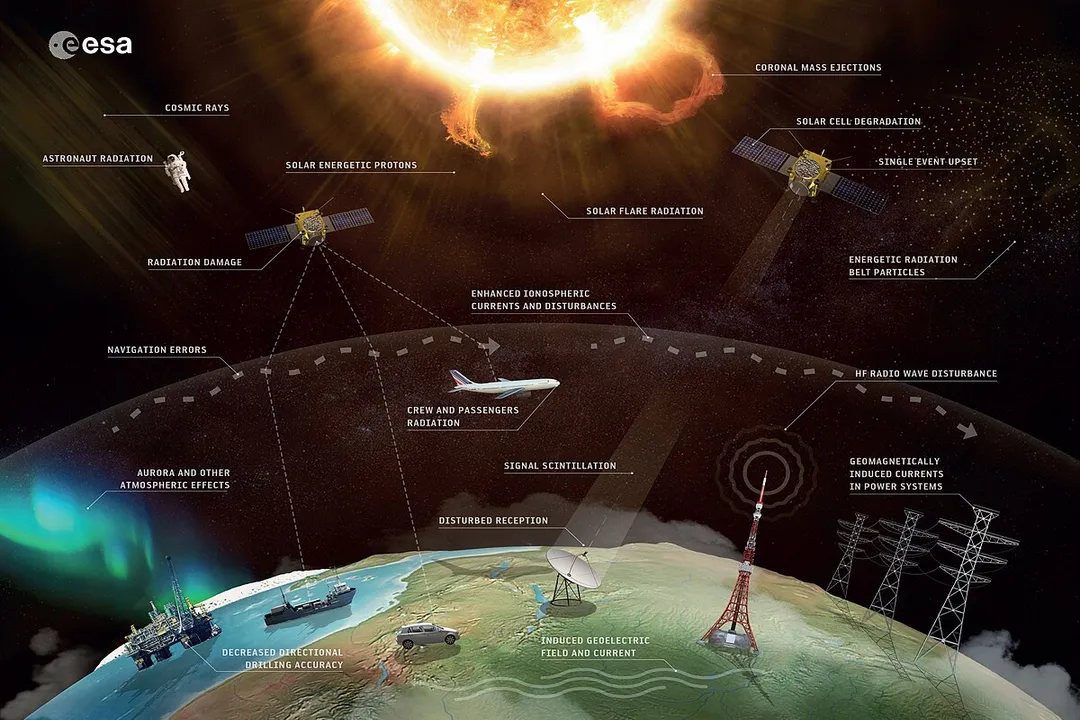
The conditions in space, which involve the Sun and its influence on the near-Earth environment, certainly affect life and infrastructure on our planet, though perhaps not in the way most people think when they check the forecast for rain or snow. While the Sun is the primary driver of our familiar terrestrial weather—the circulation of winds, the formation of clouds, and the patterns of precipitation—the term "space weather" refers to a distinct set of dynamic conditions originating from the Sun that can impact technology and astronauts. It is less about tomorrow's thunderstorm and more about the invisible hazards streaming past our satellites and power lines.
# Defining Space
Space weather describes the constantly changing environment in space, encompassing conditions stretching from the Sun out past Earth's orbit and beyond. This environment is filled with solar wind, a stream of charged particles continuously flowing outward from the Sun, and it is shaped by the Sun's magnetic field. The key difference between this and atmospheric weather lies in the medium: atmospheric weather involves gases and water vapor in the troposphere, while space weather deals with plasma, magnetic fields, and high-energy radiation in the vacuum of space.
The Sun itself is the source of these disturbances, which range from steady background noise to dramatic, sudden eruptions. Solar activity is central to space weather because the Sun is not a static body; it constantly spews out solar wind, but periodically, it releases much larger bursts of energy and matter.
# Solar Eruptions
The most consequential space weather events are directly linked to magnetic activity on the Sun's surface. This activity manifests in several ways that affect Earth:
- Solar Flares: These are intense bursts of radiation that reach Earth in about eight minutes. They are powerful electromagnetic events, primarily affecting the ionosphere, which is a layer of Earth's upper atmosphere charged by solar radiation.
- Coronal Mass Ejections (CMEs): These are massive clouds of solar plasma and magnetic field ejected from the Sun's corona. A CME travels much slower than a flare's radiation, typically taking one to three days to reach Earth. If a CME is aimed our way, its arrival can trigger a geomagnetic storm.
- High-Speed Solar Wind Streams: These are faster flows of solar wind that can interact with Earth's magnetic field, though they generally cause less severe impacts than CMEs.
When analyzing the Sun's influence, it's helpful to remember the timing difference: the light and radiation from a flare arrive almost instantly, causing immediate but often temporary disruptions to radio communications, whereas the physical particles from a CME create a drawn-out magnetic event that can last for days. This distinction helps explain why our daily tropospheric weather remains unaffected by the speed of these solar phenomena, as the physical particle arrival time is on the scale of days, not hours or minutes like sunlight.
# Earth Shield
Fortunately, Earth possesses robust natural defenses against the worst effects of space weather. Our primary protection is the magnetosphere, a protective magnetic bubble generated by our planet's molten iron core. This magnetosphere deflects the vast majority of the solar wind and charged particles originating from the Sun, channeling them around the planet.
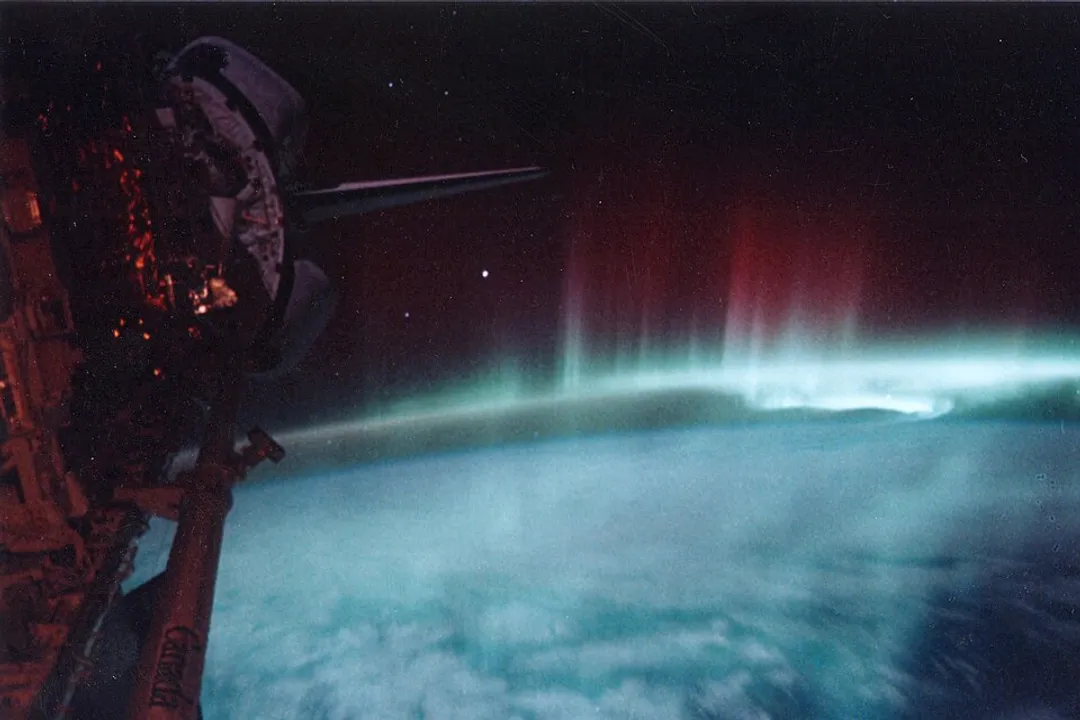
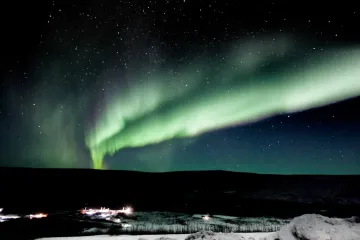
However, the shield is not impenetrable, especially when struck by a powerful CME. When the magnetic field lines carried by the CME interact with Earth's magnetic field, some energy and particles can couple into our planetary system. These particles are then directed toward the polar regions where Earth's magnetic field lines converge, resulting in the beautiful, but tell-tale, aurora borealis and australis. These auroras are a visible sign that space weather is actively interacting with our atmosphere.
The atmosphere itself also plays a critical role in buffering the surface. While high-energy particles can penetrate the upper layers, creating the ionosphere where they charge particles, the bulk of the atmosphere absorbs the remaining radiation and particulate matter long before it could ever influence surface conditions like temperature or wind speed. The protection is layered: magnetic deflection first, followed by atmospheric absorption.
# Geomagnetic Hazards
When the magnetosphere is significantly compressed by a strong solar event, a geomagnetic storm occurs. These storms represent the most significant space weather hazard to human systems. The main effect is the rapid fluctuation of the magnetic field at the surface of the Earth.
This fluctuating magnetic field induces currents in long, highly conductive structures on the ground. These are known as Geomagnetically Induced Currents (GICs).
If we visualize Earth's surface as a vast circuit board, GICs act like unwanted surges across long wires. For instance, a major solar event in 1859, known as the Carrington Event, caused telegraph systems worldwide to fail, with some equipment catching fire due to induced currents. While modern infrastructure is better protected, GICs remain a serious concern for several critical systems:
- Power Grids: GICs can enter high-voltage transmission lines via transformer connections, potentially overloading and damaging equipment, leading to widespread and prolonged power outages.
- Satellites: In orbit, satellites are exposed to a much higher flux of energetic particles. These particles can cause "surface charging," leading to electrical shorts, or "deep dielectric charging," which can damage internal electronics. Furthermore, the increased heating of the upper atmosphere causes it to expand outward, increasing drag on low-Earth orbit satellites, potentially forcing premature de-orbiting or requiring extra fuel for orbit maintenance.
- Navigation and Communication: Solar flares can temporarily disrupt the ionosphere, causing radio blackouts on the sunlit side of Earth, particularly affecting high-frequency (HF) communication used by aircraft and ships. GPS signals, which must pass through the ionosphere, can also experience delays and errors during magnetic storms.
# Terrestrial Weather
It is important to clearly distinguish the phenomena above from the weather we experience daily. Space weather does not directly cause changes in tropospheric weather patterns like hurricanes, local temperature shifts, or rainfall rates. The energy input from space weather events is minute compared to the energy driving Earth's lower atmosphere. The primary energy input for surface weather comes from the Sun's heat—its visible and infrared radiation—not the charged particles that constitute space weather.
However, the complex interaction in the upper atmosphere warrants continued study. While direct causation is unproven for surface weather, some scientific inquiry exists regarding possible, albeit subtle, coupling mechanisms. Consider the difference in drivers: terrestrial weather is fundamentally about atmospheric thermodynamics and fluid dynamics driven by differential solar heating across the globe, whereas space weather is fundamentally about electrodynamics driven by solar ejection and particle acceleration in the near-vacuum of space. This means that while a solar flare won't spoil your picnic, understanding the upper atmosphere's electrodynamics is vital for communications infrastructure that underpins modern society.
# Monitoring Space
Because the impacts are primarily technological, monitoring and forecasting space weather is an essential service provided by agencies worldwide. Forecasters track the Sun continuously, looking for signs of instability like sunspots and active regions.
The goal of space weather forecasting is to provide advanced warning so that operators can take protective measures before a damaging event arrives. For instance, utility companies can power down certain sensitive equipment or use reserve capacity if a major CME impact is predicted days in advance. Satellite operators can place spacecraft into "safe mode" to shield critical electronics from the most intense radiation during a particle storm. Effective preparedness relies on lead time, which is why predicting the speed and orientation of CMEs after they leave the Sun is so crucial.

# System Resilience
The continued advancement of our reliance on sensitive electronics means that understanding the space environment is increasingly important, even if the sky itself doesn't look different down here. While the natural world has adapted to the Sun's 11-year activity cycle and random flares for eons, our reliance on interconnected electrical systems creates new vulnerabilities that did not exist a century ago. If you are an amateur radio operator, for example, you might notice a sudden worsening of HF band propagation right after a significant solar flare, which can be a distinct sign that the ionosphere is absorbing your signals instead of reflecting them, a situation that might require switching frequencies or modes rather than waiting for a weather front to pass. Protecting our space-based assets—which we depend on for GPS, global communication, and Earth observation—is fundamentally about mitigating the hazards created by this constant stream of solar activity.
Related Questions
#Citations
Space Weather Impacts - NOAA
Space Weather | Center for Astrophysics | Harvard & Smithsonian
Five Questions About Space Weather and Its Effects on Earth ...
Space weather and its hazards - ESA
Space Weather and Safety
Space weather - Wikipedia
Space weather effects on technology
What is Space Weather? | ECT on RBSP
What is space weather and how does it affect us down on Earth?