Would the astronauts have survived Starliner?
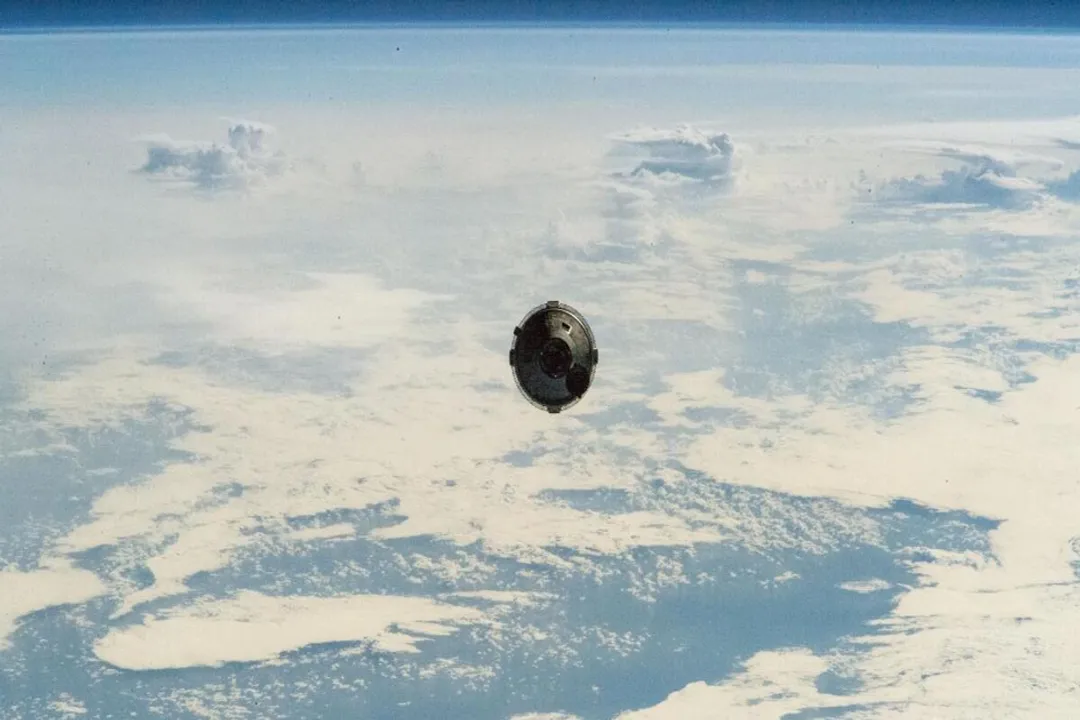
The discussion surrounding the safety of the Boeing Starliner capsule often centers on worst-case scenarios, but the real-world operational anomalies encountered during its flight tests provided a more immediate, tangible test of astronaut survivability. When issues arose that potentially extended the crew's stay, the conversation immediately shifted from nominal performance to endurance. The very fact that astronauts were aboard a spacecraft experiencing significant anomalies, yet continued to operate and plan for return, itself speaks volumes about the immediate safety margins built into the system.
# Survival Margins
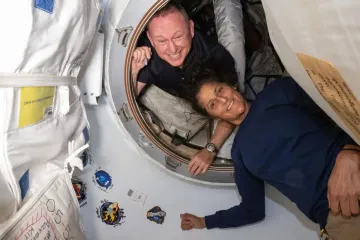
The initial design of any crewed vehicle must account for contingencies that push the boundaries of nominal operations. For Starliner, the concern centered on whether its life support and propulsion systems could sustain a crew beyond their planned mission duration if required. Reports indicated that astronauts onboard faced the prospect of an extended stay, with projections reaching as long as six months in orbit, and potentially two more months beyond that before a return could be executed. This is not merely an inconvenience; it forces a hard look at consumable reserves—oxygen, water, carbon dioxide scrubbing capacity—and the psychological resilience required of the crew. The opinion held by some within the spaceflight community was that, even under the stress of the in-flight issues encountered, the astronauts would have been fine. This assessment relies on the assumption that critical systems had sufficient margin beyond the planned mission length to cover the unplanned extension, even if that extension meant facing the known physiological stresses of long-duration exposure.
# Mission Adjustments
NASA’s response to the in-flight challenges clearly reflected a conservative approach to crew safety, prioritizing their well-being over mission objectives or schedule adherence. In a significant decision point during one flight, NASA opted to bring the Starliner spacecraft back to Earth without its crew on board. This action provides a crucial data point: when faced with uncertainties, the agency elected to test the vehicle’s autonomous return capabilities—including re-entry and landing—without putting human lives at direct risk for the final phase. This decision contrasts sharply with the situation of astronauts who were already in situ and facing an extended stay. It suggests that while the immediate situation for the already-docked crew might have been manageable based on known consumables, the risk profile associated with an emergency return sequence or further unknown system degradation was deemed too high to risk human passengers in that specific phase.
It is interesting to note the distinction between returning the capsule empty versus having a crew on board for an extended period. The capsule slated for an uncrewed return was making a return that NASA determined safer to execute solo. Yet, astronauts were evidently situated such that a return timeline stretching potentially eight months was being calculated. This implies a tiered assessment of risk: the initial docking and on-orbit operations were survivable enough for the crew to remain aboard for an extended duration, perhaps managing minor issues proactively, but the final, high-stress departure maneuver was better validated without them. Furthermore, the scheduling of future missions without crew suggests a deliberate step back to re-validate the hardware before placing astronauts inside again, even after a successful crewed return.
Analytic Aside: The pressure on consumables like the lithium hydroxide canisters used to scrub is non-linear in terms of perceived risk. While Starliner might carry enough for a nominal 10-day mission plus a 30-day emergency margin, moving from a 30-day margin to an 8-month potential stay requires not just extra scrubbers, but also reliable power to run the scrubbers, waste heat rejection, and psychological support. The engineers’ confidence that astronauts would be fine likely stems from a detailed, real-time assessment of the remaining margin on every critical resource, not just the headline items.
# Autonomy and Proof
A key element in validating any crewed vehicle is demonstrating its ability to return safely, even if ground control intervention is minimal or non-existent. The discussion arises whether a safe, autopilot-driven return after a crewed flight can definitively prove the vehicle's inherent safety for future missions. If the issues encountered were operational or procedural, a successful automated return confirms the hardware functions as intended under nominal command parameters. However, if the onboard crew had to manually manage systems to keep the craft stable for an extended period, a subsequent uncrewed, autopilot-only return validates only the baseline software path, not the crew override and management capability under stress.
The interviews conducted while astronauts were effectively "stuck" highlight the operational reality versus the engineering expectation. When astronauts speak about their situation, they often frame it in terms of maintaining mission discipline and managing contingencies, suggesting that survival wasn't immediately in doubt, but the mission objectives were certainly on hold due to technical snags. This contrasts with catastrophic failure scenarios; the challenge here was endurance and system management, not an immediate life-or-death struggle against a depressurization or massive leak.
# Physical Toll
The longer astronauts remain in space, the greater the well-documented physiological challenges become, regardless of the spacecraft. Issues such as bone density loss, muscle atrophy, and cardiovascular deconditioning accelerate with time away from Earth's gravity. For Starliner's crew, being in orbit for a period stretching toward six months or more means they were subjecting their bodies to the physical risks associated with long-duration exposure, risks typically associated with much larger, more established habitats like the International Space Station (ISS). While Starliner is a transfer vehicle, an extended stay forces it to temporarily function as a rudimentary habitat. The capacity for the capsule to recycle air, manage temperature, and provide acceptable sleeping and hygiene conditions for such a duration becomes paramount to surviving the mission in good health, even if the structure itself remains intact.
Editor's Insight: The concept of "survival" in spaceflight must be segmented. There is immediate survival (not blowing up or falling out of the sky), and long-term survival (returning without permanent health impairment). The Starliner situation, based on reports of extended stays, tested the latter category significantly more than the former. A successful 10-day flight proves immediate structural integrity; a successful 8-month flight proves life support capacity and crew tolerance. The margin for error shrinks dramatically between these two benchmarks.
# Future Confidence
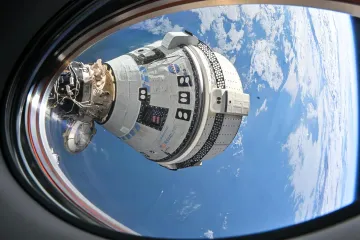
Following any significant in-flight anomaly, rebuilding confidence is essential. NASA’s decision to fly the next Starliner mission without a crew underscores the need to close the loop on the preceding flight's technical anomalies before committing human lives again. If the crew in question did manage to return safely despite the extended time, the success is qualified: the vehicle can support a crew under stress, but the root causes of the initial problems must be fully resolved. If the return was uncrewed, it was a direct acknowledgment that the crew’s safe return pathway, while theoretically possible, was not sufficiently guaranteed to justify the risk of another crewed flight until fixes were implemented. This structured, methodical approach—test uncrewed, fix issues, test crewed—is the standard procedure, and Starliner's path reflects this cautious validation cycle necessary to earn public and astronaut trust.
#Videos
Boeing's Starliner astronauts could be in space until 2025 - YouTube
Related Questions
#Citations
Astronauts would have been fine on Boeing's Starliner during ...
NASA Decides to Bring Starliner Spacecraft Back to Earth Without ...
Stuck Starliner astronauts hit 6 months in space with 2 more to ... - PBS
Next Boeing Starliner mission will carry no astronauts
How the Starliner astronauts bodies overcame 10 months in space
Boeing's Starliner astronauts could be in space until 2025 - YouTube
If Starliner returns safely on autopilot, can this still prove that it's safe ...
Were they stuck? NASA's Starliner astronauts finally weigh in
Can Boeing Starliner safely leave the ISS and return 2 astronauts?