What is the ESA contribution to the ISS?

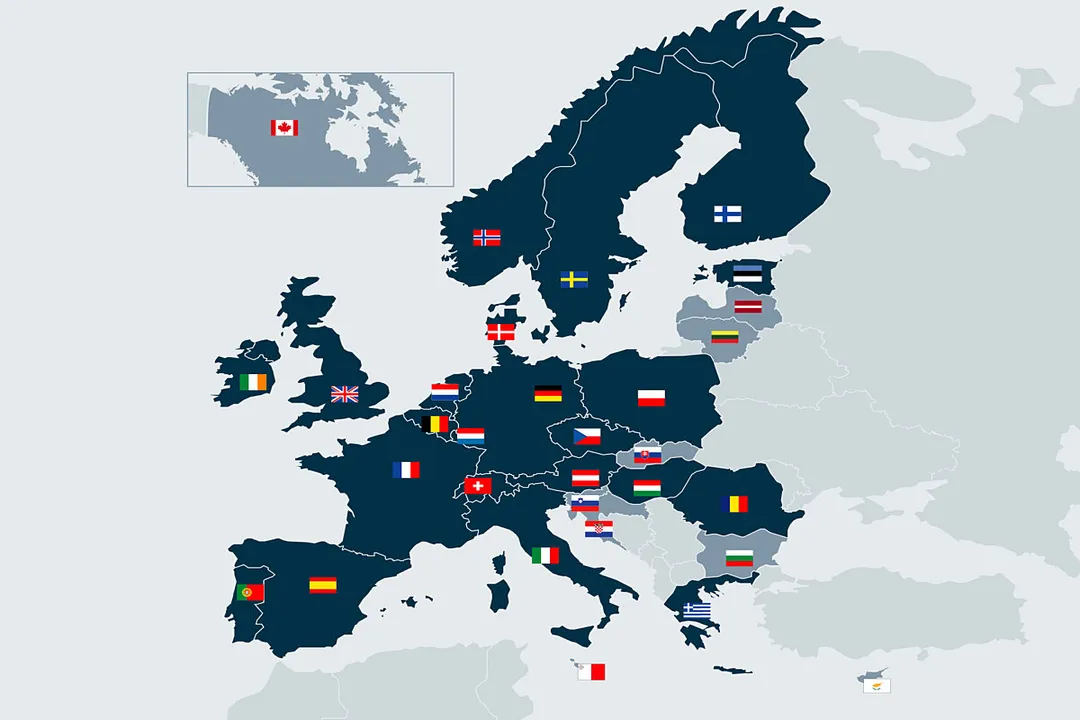
The European Space Agency (ESA) contribution to the International Space Station (ISS) is extensive, moving far beyond simple participation to being a foundational pillar of the orbiting laboratory's operational life and scientific output. As one of the five main international partners—alongside the United States, Russia, Japan, and Canada—Europe has provided critical hardware, vital logistical services, and a sustained commitment to utilizing the station for breakthrough research in microgravity. [1][2][4] The arrangement is governed by complex multilateral agreements that define responsibilities and resource sharing, ensuring the station functions as a unified entity. [9]
# Global Collaboration
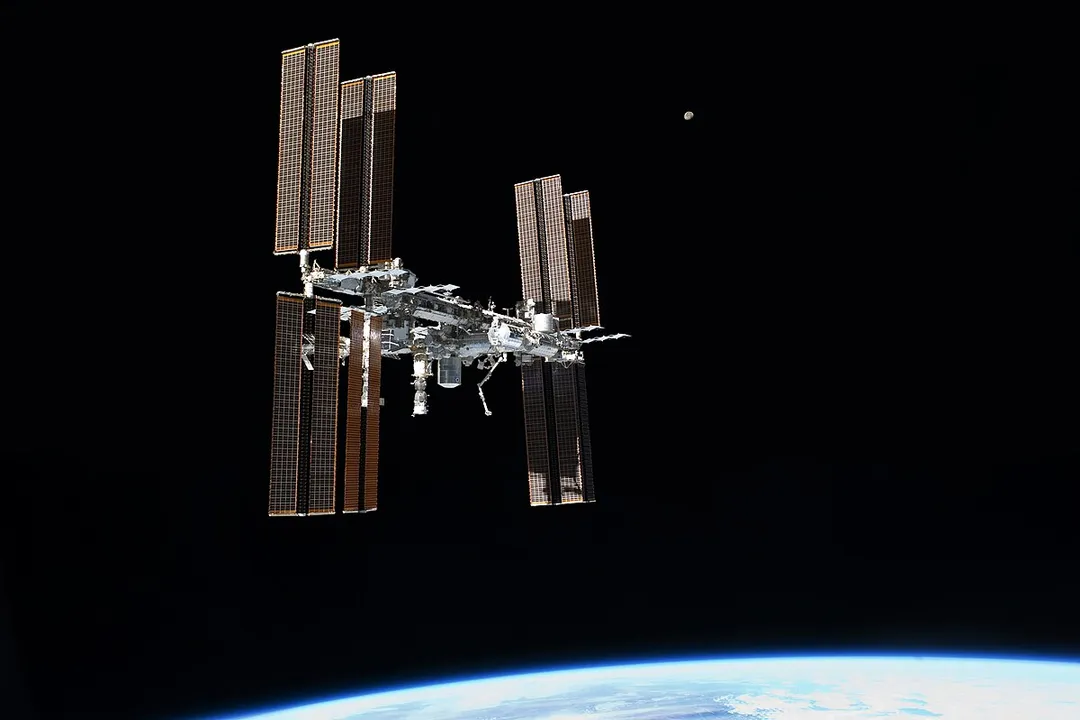
The architecture of the ISS is intrinsically international, meaning no single nation built the station alone. [4] ESA’s role centers heavily on providing specialized, permanent laboratory infrastructure and advanced robotics. [1][2] While major structural elements like the primary pressurized modules were divided among partners, Europe focused its primary contribution on creating a dedicated, long-duration research platform. This dedication is formalized through agreements detailing the exchange of research access and logistics capabilities between partners. [9] For instance, NASA grants ESA access to its facilities, and ESA provides access to its facilities in return, ensuring that researchers from all partner nations benefit from the entire laboratory complex. [9]
The funding model reflects this cooperative structure. ESA’s budget contributions cover the construction, launch, and operational support for its assigned elements. A key point of distinction is the long-term planning: ESA has affirmed its commitment to supporting ISS operations through 2030. [5] This extended commitment is significant because terrestrial research teams require multi-year planning cycles to develop, test, and prepare complex biological or materials science hardware for microgravity exposure, making this longevity crucial for maximizing scientific return. [5]
# Key Modules
Europe’s most visible and crucial physical contribution to the pressurized structure of the ISS is the Columbus Laboratory. [7] This is ESA’s dedicated research module, launched in 2008, which serves as the primary European laboratory in orbit. [1][2] Columbus is designed to host a wide variety of experiments simultaneously. It utilizes standardized racks that can be swapped out, allowing for a versatile mix of life science, physical science, and technology demonstration payloads. [2]
While the US Destiny lab focuses on a broad spectrum, ESA designed Columbus with an emphasis on providing extremely flexible internal infrastructure for its national research programs. This meant prioritizing standardized interfaces for internal racks—known as International Standard Payload Racks (ISPRs) and European Drawer Racks (EDRs)—to maximize the diversity of investigations that could be hosted within its confines. [1] This focus on internal payload flexibility stands as a characteristic feature of ESA’s hardware approach.
Beyond the laboratory itself, ESA contributed the Cupola, an observation module that provides astronauts with the best panoramic view of the Earth and the exterior of the station. [7] This module is not merely for looking out; it is a critical operational hub. Its windows are essential for monitoring external hardware, inspecting the station’s exterior, and especially for ground-based robotic operations, offering unparalleled visual perspective for astronauts assisting ground controllers. [7]
# Advanced Robotics
Perhaps one of the most sophisticated pieces of European hardware on the station is the European Robotic Arm (ERA). [1][2] This 12.5-meter-long robotic arm is unique in that it can be operated both from inside the station and by external crew, and it is capable of anchoring itself to two different points on the Russian segment of the ISS, effectively "walking" around the module structure. [1]
The ERA offers capabilities that augment the larger Canadarm2 provided by Canada. While Canadarm2 is essential for large-scale assembly and visiting vehicle berthing, the ERA’s primary function is to maneuver external European and Russian payloads and support the movement of astronauts during spacewalks. [2] Furthermore, it has the dexterity to assist in inspecting external cameras and connecting external science experiments without requiring a full crewed Extravehicular Activity (EVA), which saves critical crew time. [1] The technology developed for this complex, autonomous arm demonstrates a high level of expertise in precision space mechanics.
# Logistical Support
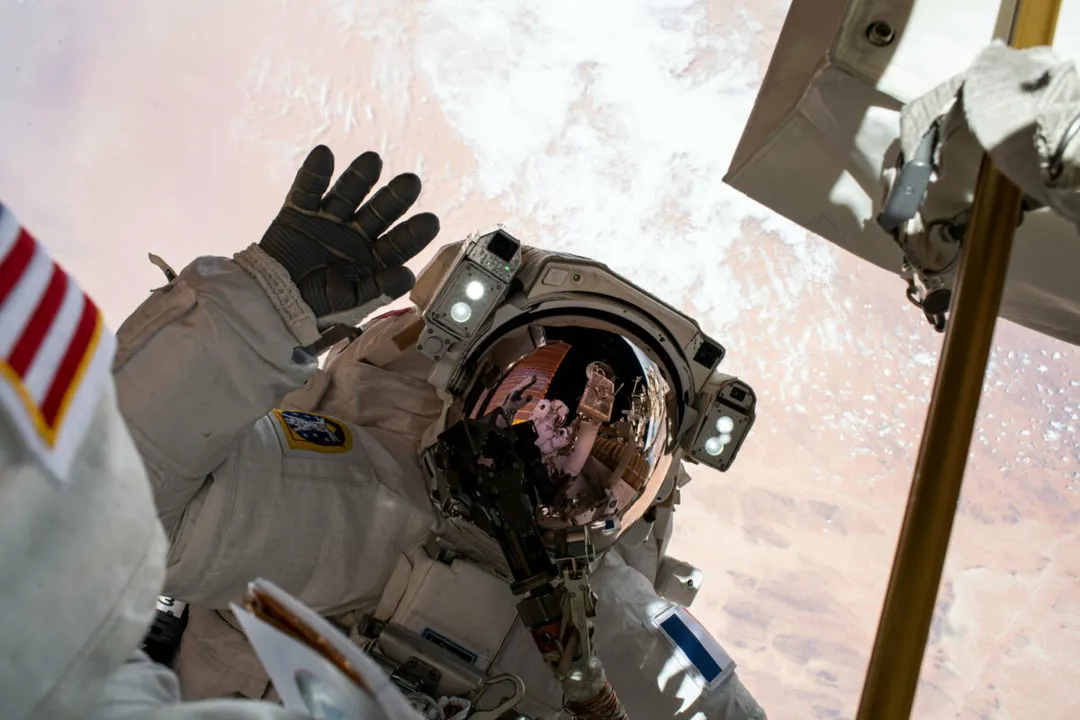
For many years, ESA played an indispensable role in keeping the ISS resupplied and its orbit stable through the Automated Transfer Vehicle (ATV). [1] The ATV, often referred to as Jules Verne or Albert Einstein, was an uncrewed cargo spacecraft that docked autonomously to the Russian Zvezda module. [2]
The ATV’s capabilities went beyond simple delivery. It carried essential supplies, including propellant, water, air, and pressurized gases for the crew. [1] Crucially, the ATV was utilized for re-boosting the station’s altitude. [1] Because the ISS constantly loses altitude due to atmospheric drag, periodic re-boosts are necessary to keep it in a stable orbit. The ATV’s propulsion system was powerful enough to perform these maneuvers, a task shared historically with the Russian Progress vehicles. [2] While the ATV program concluded, it proved ESA’s capability to design, build, and operate a large, complex spacecraft capable of high-precision rendezvous and docking with a crewed station. [2]
# Scientific Output
The physical infrastructure provided by ESA is directly aimed at advancing scientific knowledge. Within the Columbus module, thousands of hours of research have been conducted across physics, biology, and materials science. [2][8] ESA’s involvement supports specific European research priorities, such as long-term studies on human physiology in space, which informs both space exploration planning and terrestrial medicine. [8]
A review of utilization logs shows that the station's European facilities support a wide spectrum of microgravity research, including fluid physics, combustion science, and crystal growth experiments. [2] Moreover, the ability to perform external manipulations via the ERA opens up opportunities for specialized technology demonstrations and servicing of external instruments that might not be accessible or safe for an astronaut to approach manually. [1] The data gathered through these facilities contributes to fundamental scientific understanding, providing insights unobtainable on Earth due to gravity’s interference. [8]
# Experience Transfer
The experience gained from designing, building, launching, and operating the ISS elements is not siloed; it actively informs Europe’s next steps in space exploration. Building complex, long-duration life support and habitation systems for the ISS provides invaluable expertise directly applicable to future endeavors, such as the Lunar Gateway station. [6] For instance, the development of advanced exercise equipment designed to counteract muscle and bone degradation in microgravity, as required for ISS crews, serves as a crucial precedent for designing similar, necessary systems for astronauts spending extended periods orbiting the Moon. [6]
This long-term operational commitment through 2030 provides a stable environment for European industry and researchers to refine procedures and technologies. [5] It creates a reliable testbed for closed-loop systems and long-term human presence, acting as an essential stepping stone to deep space missions where resupply is far more difficult and costly. [5] In essence, ESA’s contribution is an ongoing investment in the know-how required to build and sustain permanent human outposts beyond low Earth orbit.
Related Questions
#Citations
European contribution to the International Space Station - Wikipedia
Europe's contributions to the Space Station - ESA
The European Space Agency (ESA) | The Planetary Society
International Space Station Facts and Figures - NASA
ESA Gets Big Increase, Commits to ISS Through 2030 and ExoMars ...
ESA to Build Exercise Machine for Gateway Space Station - Reddit
The ESA Active Dosimeter (EAD) system onboard the International ...
ESA, NASA, and the International Space Station