Who is the biggest contributor to ESA?
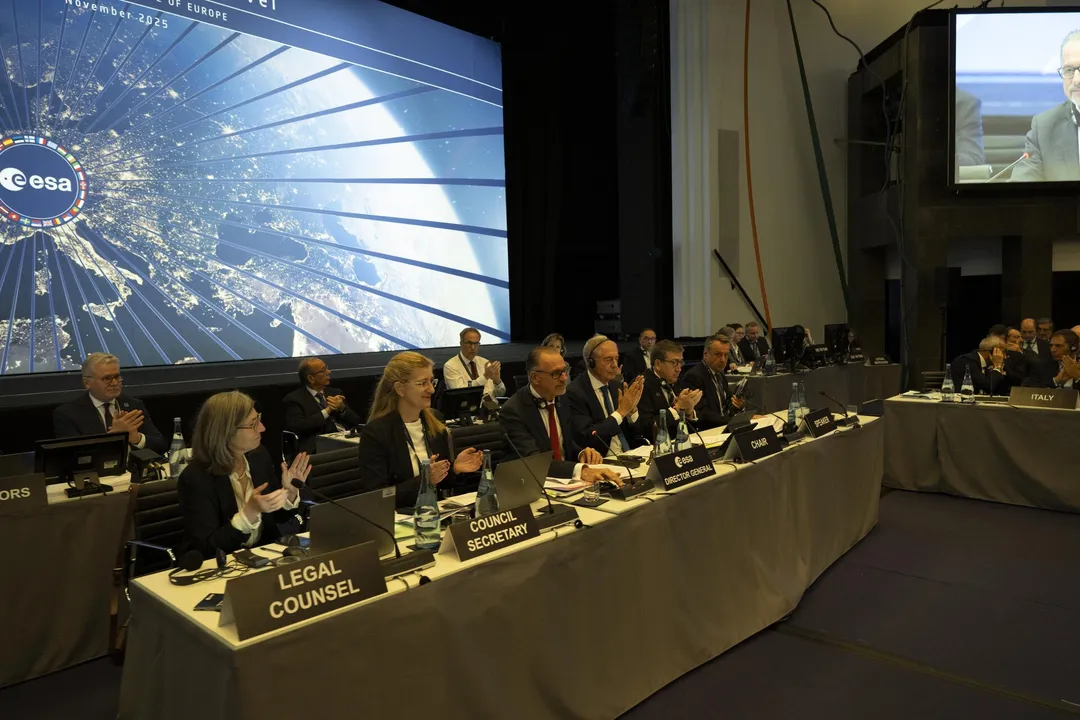
The central figure in the European Space Agency’s (ESA) financial structure, the nation that consistently claims the title of "biggest contributor," is Germany. This leadership position is reflected across ESA’s budget allocation, even as the agency recently secured a historic level of funding totaling around €22.3 billion for the next three years at the Ministerial Council in Bremen, Germany. While the final breakdown for this record commitment—a significant 31% increase over the previous council's figures—is being finalized, historical data clearly establishes the leading financial backers of Europe’s space endeavors.
# Major Financial Backers
Examining the budget allocations from 2024 provides the clearest relative picture of national commitments before the latest funding boost. According to that data, Germany provided the largest single contribution from any Member State, amounting to €1,171.6 million, which represented 22.4% of the total budget contributions listed for the Member States that year.
Close behind is France, which historically holds the second-largest financial stake. France contributed €1,048.4 million, accounting for 20.1% of the total national contributions. Rounding out the top tier is Italy, at €881.2 million, or 16.9%. Together, these three nations—Germany, France, and Italy—account for nearly 60% of the financial backing provided directly by the Member States whose contributions are explicitly listed. This concentration of funding means that decisions, particularly regarding the large, voluntary programs, often require their explicit and sustained buy-in. Even when considering the European Union’s substantial contribution (which accounted for over 23% of the grand total budget in the 2024 figures) and other income sources, the financial weight of these three states remains undeniable in setting the agency's strategic direction.
# Funding Structure Explained
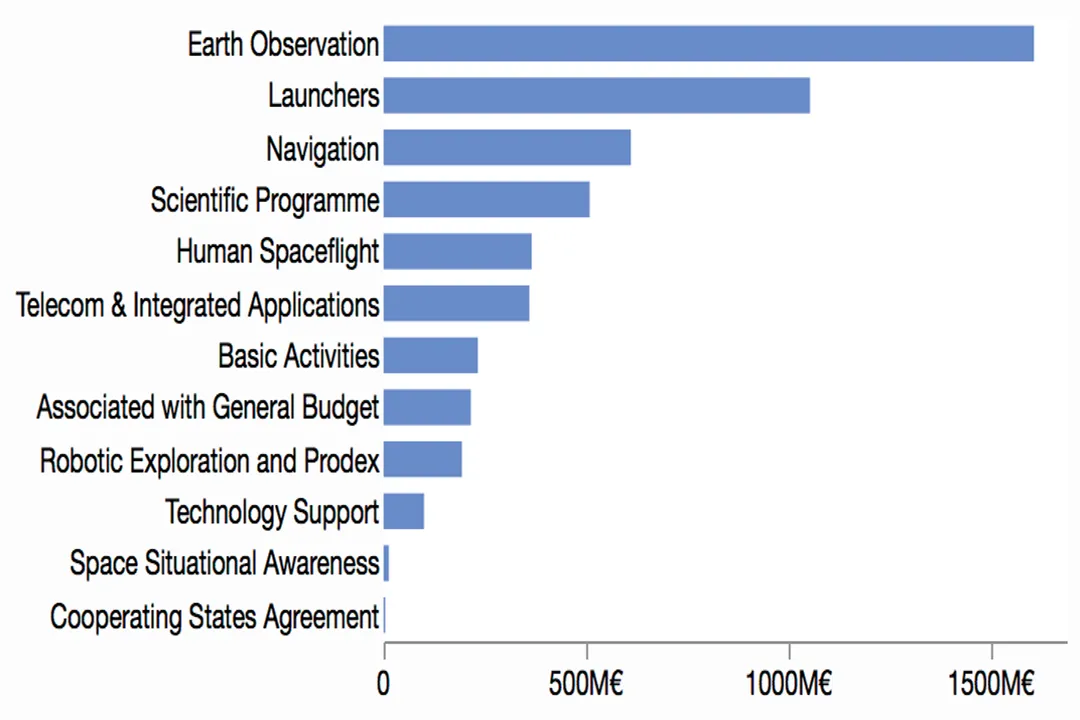
Understanding who contributes the most requires first grasping how ESA is funded, as the money flows through distinct channels. ESA’s budget is broadly categorized into mandatory programmes and optional programmes. This division dictates both the level of commitment required from each country and their resulting influence over specific project outcomes.
# Mandatory Core
The mandatory programmes, which encompass essential activities like the Science Programme (including long-term planning like Cosmic Vision and Voyage 2050), the Technology Development Element Programme, and the core elements of Space Safety, require every Member State to participate. Crucially, contributions to these mandatory pillars are calculated based on the Member States’ Gross National Product (GNP). This mechanism ensures a baseline financial commitment proportional to a nation's economic size, guaranteeing that the foundational scientific and basic technology work of the agency is consistently funded and that decisions require unanimous agreement within these core areas.
# Optional Programs Influence
In sharp contrast, the optional programmes are where Member States choose where to invest based on their national strategic interests. These areas include major segments like Launchers (Ariane, Vega), Earth Observation (Copernicus), Human Spaceflight and Exploration (Terrae Novae), and Telecommunications (ARTES). Historically, as much as 75% of ESA's total expenditure could be tied to these optional programmes, though the 2025 Ministerial Council introduced a new focus, significantly increasing funding for space applications related to security and resilience. While the mandatory budget ensures ESA can continue its renowned deep-space science, the high value placed on optional programmes means that the largest contributors—Germany, France, and Italy—hold outsized decision-making power here, simply because they fund the lion's share of these endeavors.
If we were to track the funds based on the 2024 figures, the combined national contributions of Germany and France alone were more than four times that of the United Kingdom, the fourth largest contributor. This financial reality suggests that their participation levels often dictate the ambition—or sometimes the risk mitigation strategies—within high-cost, long-term projects like the development of future launchers or major exploration hardware like the Argonaut Moon lander. The principle of "georeturn," where funds are returned as contracts to companies within the contributing country, further solidifies the national interest tied to these large optional commitments.

# Strategic Direction and National Goals
The identity of the biggest contributor has significant implications for ESA's direction, a point that has become even more relevant following the recent Ministerial Council. The fact that Germany is the lead funder is not accidental; it reflects a deep, sustained national commitment to space science and technology, evidenced by the large infrastructure hosted by the German Aerospace Center (DLR) and ESA facilities like ESOC in Darmstadt.
The recent broadening of ESA's mandate to explicitly include security and defense applications marks an "historic change" for the agency. This shift, embodied in the European Resilience from Space initiative, means that the priorities of the largest financial backers now steer ESA toward dual-use capacity—technologies that serve both civil and non-aggressive defense purposes. The largest contributors, having approved this mandate, will naturally be central to defining which technologies are prioritized for full funding within these new security envelopes, such as the Vigil space weather mission.
A fascinating dynamic emerges when comparing the funding for mandatory science against the political goals embedded in the optional budget. While ESA commits to imaginative science missions like LISA or the Enceladus life-finding mission (L4) through its GNP-based contributions, the agency’s ability to commit to high-profile exploration like the Rosalind Franklin Mars rover or the Argonaut Moon lander relies heavily on the voluntary buy-in from the top states. This implies that while Germany's mandatory contribution establishes the baseline for Europe’s scientific prestige, its willingness to increase its optional commitment in areas like exploration directly shapes which ambitious, long-term, "dream-fulfilling" projects actually move from concept to construction. It creates a subtle balance: the majority of funding ensures the lights stay on for science, but the largest extra funding defines the headlines for exploration.
# The Role of Per Capita Spending
While Germany contributes the largest absolute sum, a different perspective emerges when looking at the contribution per capita. This metric reveals which nations are dedicating the largest portion of their national wealth, on average, to the agency. In the 2024 figures, nations like Luxembourg and Switzerland, despite smaller absolute budgets, showed significantly higher per capita spending than the major financiers. Luxembourg’s per capita spend was listed as over €62 per person, compared to Germany’s €14.10 and France’s €15.38.
This difference is an important counterpoint to the "biggest contributor" discussion. Absolute financial input dictates contractual return via georeturn and provides voting weight in optional programs, but per capita spending reflects a broader, more intense national commitment relative to the size of its economy or population base. While Germany provides the largest foundation for the entire structure, the high per capita commitment from smaller states ensures that every nation, regardless of size, maintains a tangible stake and voice in the overall direction of the agency.
# International Context and Canada’s Jump
The funding landscape is further complicated by the agency’s international relationships. ESA operates under the georeturn policy, which is designed to ensure industrial workshare proportional to the financial input. This mechanism ties national contributions directly to domestic high-tech employment and industrial performance, which is a key political driver for Member States to commit large sums.
A noteworthy development outside the core Member States in the recent funding cycle involved Canada. Canada, a long-standing Cooperating State, announced an increase in its subscription by an astonishing 400 percent as part of the latest cycle. This significant commitment, part of a broader plan to invest €326 million over the next three to five years, signals an increasing reliance by major partners on ESA’s capabilities, particularly as cooperation with Russia has been largely severed following the 2022 geopolitical situation.
# Conclusion on Contribution
To answer the question directly, Germany stands as the single biggest financial contributor to the European Space Agency based on absolute figures, closely followed by France. This status grants it, alongside France and Italy, the most significant influence over the agency's substantial optional programme budgets and strategic direction. However, the true picture of ESA’s financial strength lies in the collective agreement of all 23 Member States, who recently ratified a budget increase reflecting a unified European desire for autonomy and leadership in an increasingly competitive and security-focused space environment. The commitment to a nearly one-third funding increase underscores that while Germany leads the pack, the future of European space capability is a collective financial endeavor.
Related Questions
#Citations
ESA Member States commit to largest contributions at Ministerial
ESA Member States Pledge Record Level of Funding
European Space Agency - Wikipedia