What is NASA's biggest rocket?
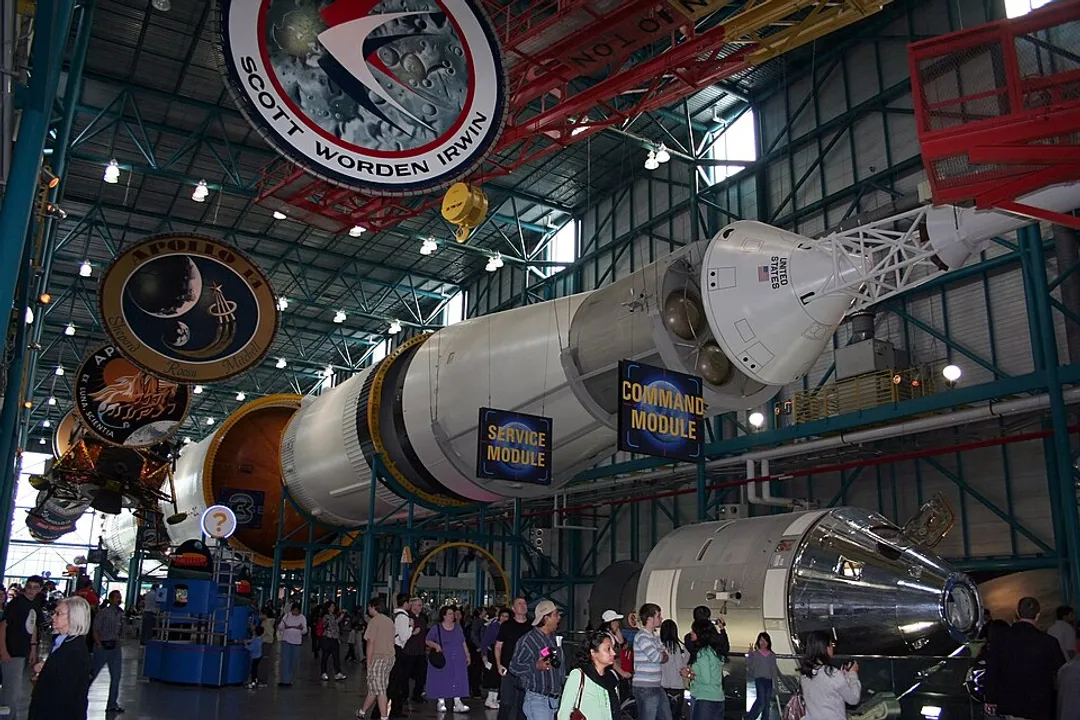
The question of which rocket holds the title of "biggest" in NASA's history is not as straightforward as one might think; it depends entirely on the measurement used—raw power, sheer mass, or physical height. For decades, the answer was settled, a towering monument to the Apollo era. However, with the advent of new heavy-lift vehicles designed for deep space return, the title has become hotly contested. The true heavyweight champion must be assessed across both historical achievement and modern capability.[1][7]
# Height Records
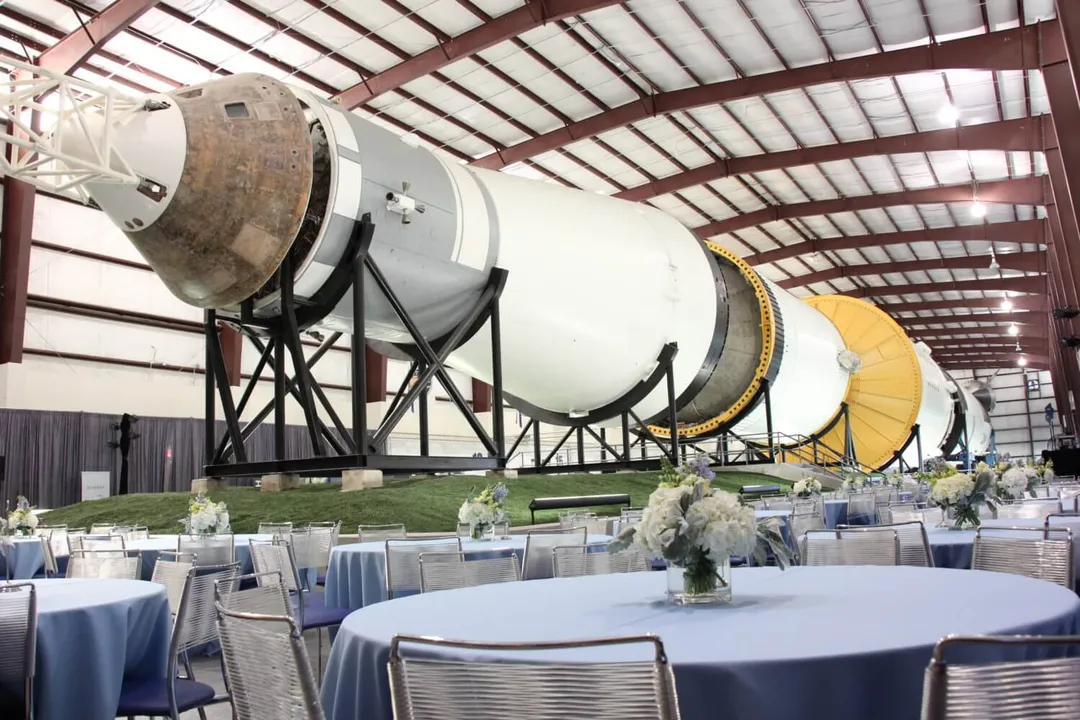
When considering sheer physical stature, the benchmark has long been the Saturn V. This behemoth remains an icon, a vehicle so immense that standing beside one, even in retirement, is an awe-inspiring experience.[2] The Saturn V rocket stood approximately 363 feet (110.6 meters) tall from the base of its first stage to the tip of its Apollo spacecraft adapter.[1][5] This staggering height meant it towered over most buildings, a structure designed for a singular, audacious goal: taking humans to the Moon and bringing them back safely.[8]
Other contenders have certainly existed throughout history, with various nations developing massive launchers for their own ambitions. For instance, other rockets that vied for height records have included the Soviet Union's massive N1 rocket, which, while not succeeding in reaching orbit, was comparable in scale to the Saturn V during its development phase.[5] Today, NASA's current vehicle aims to recapture that sheer scale while significantly improving payload capacity to destinations farther than the Moon.[7]
# Thrust Ascendancy

While height is impressive, engineers often argue that thrust—the raw force generated at liftoff—is the truest measure of a rocket's "bigness" and lifting capability. It is here that the historical champion has finally been eclipsed by its modern successor.[7]
The Saturn V, powered by five massive F-1 engines on its first stage, generated approximately 7.5 million pounds of thrust at liftoff.[5] These engines, burning RP-1 (highly refined kerosene) and liquid oxygen, were engineering marvels for their time, capable of moving the massive multi-stage vehicle and its precious cargo toward lunar trajectory.[8] The sheer energy output required to escape Earth's gravity with a full complement of Apollo hardware remains a testament to the team that designed it.[1]
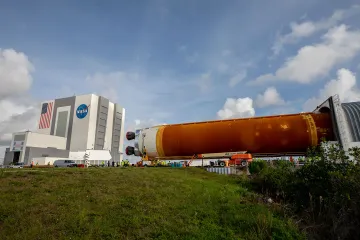
NASA's current most powerful rocket is the Space Launch System (SLS), the vehicle central to the agency's Artemis missions designed to return astronauts to the lunar surface.[7][9] When configured in its initial Block 1 design, the SLS generates 8.8 million pounds of thrust at liftoff.[7] This figure represents a substantial leap forward from the Saturn V, making the SLS the most powerful rocket ever successfully launched by NASA, surpassing its predecessor by over a million pounds of force.[7]
Analyzing this generational leap reveals an interesting shift in propulsion philosophy. While the Saturn V relied on massive, clustered, liquid-fueled engines (the five F-1s) for its primary boost, the SLS Block 1 utilizes a modernized approach by combining two updated Space Shuttle Main Engines (RS-25s) with two five-segment Solid Rocket Boosters (SRBs).[7] The reliance on SRBs for initial high thrust is a calculated move that streamlines the first-stage design, trading the complexity of a fifth massive liquid engine for established solid-fuel technology for the initial ascent phase. This engineering trade-off allows the SLS to achieve higher initial thrust while potentially simplifying manufacturing and integration processes compared to the entirely new F-1 development required for the Saturn V.
# Mission Focus

The definition of "biggest" must also consider what the rocket is tasked to carry. The Saturn V was purpose-built for the Apollo program, designed to launch the Command Module, Service Module, and Lunar Module toward the Moon. Its primary payload capability to Low Earth Orbit (LEO) was around 140,000 kilograms (about 310,000 pounds).[1]
The SLS, particularly in its Block 1 configuration, is engineered to lift the Orion spacecraft and associated hardware. Its capability is defined not just by LEO mass, but by its massive Trans-Lunar Injection (TLI) capability. The initial Block 1 SLS is expected to send over 27 metric tons (nearly 60,000 pounds) directly toward the Moon.[7] While the raw LEO mass comparison might seem closer than the thrust suggests, the SLS is designed with scalability in mind, with future configurations (like Block 1B and Block 2) planned to carry significantly heavier payloads, including elements for a sustained human presence near and on the Moon.[7]
The Saturn V was a single-purpose giant; the SLS is designed as a versatile, modular system intended to support a sustained presence across the solar system, starting with the Artemis missions. This underlying architectural difference—a non-reusable, singular design versus a scalable, deep-space transportation system—highlights that modern "biggest" is less about one-time spectacle and more about long-term infrastructure.
# Beyond NASA's Walls

To fully appreciate the scale, it helps to look at the current landscape of rocketry, even outside of NASA’s direct purview. While the Saturn V and SLS stand as the titans of American heavy lift, other organizations have also aimed for unprecedented size.[5]
The SpaceX Starship program, for example, aims to create a fully reusable super-heavy-lift vehicle that, once fully operational, could dwarf the mass and capacity of both the Saturn V and the initial SLS configuration.[10] Starship’s aspirational performance figures place it potentially above all predecessors in terms of total payload capacity to orbit, though it operates under a very different paradigm: full reusability from the outset.[10]
If we stack the record-holders by stated height from various sources, the hierarchy generally holds this order:
| Rocket | Agency/Owner | Approximate Height | Status |
|---|---|---|---|
| Saturn V | NASA | 363 feet (110.6 m) | Retired |
| Space Launch System (SLS) | NASA | Approx. 322 feet (98 m) for Block 1 | Operational |
| Energia | Soviet Union | 198 feet (60 m) | Retired |
| Starship (Fully Stacked) | SpaceX | ~394 feet (120 m) (Projected) | In Development |
Note: The exact operational height of the SLS Block 1 configuration is often cited slightly shorter than the Saturn V, yet its superior thrust solidifies its claim as the more powerful "biggest" rocket for current operations. Starship's projected height would surpass all others if successfully launched in its current intended configuration. [5][7][10]
# Sustaining the Ascent
This continuous striving for bigger, more powerful rockets is not merely about breaking records; it is a necessary step in the economics of space exploration. Each generation of heavy-lift vehicle represents an attempt to drastically lower the cost per kilogram to orbit or send more mass beyond Earth orbit than was previously conceivable.[1]
When looking at the Saturn V’s retired status, one can see the historical limitation: a magnificent, single-use machine whose operational cost was astronomical, making sustained, routine access to space economically unfeasible for anything other than the highest-priority national missions.[8] The SLS, while also currently expendable, is designed to be the workhorse for the Artemis architecture, supporting the Lunar Gateway and future Mars concepts, implying a longer operational life span to amortize its massive development cost.[9]
The fact that NASA has again built a vehicle larger and more powerful than the Saturn V underscores a fundamental truth about human ambition in space: to go farther, we must first build a larger door through which to step. The comparison between the Saturn V and the SLS is less a rivalry and more a relay race where the baton of peak power has been successfully passed, ensuring that the next generation of explorers has the necessary lift capability to achieve destinations previously reserved for science fiction.[7][9]
#Videos
NASA Launches the World's Most Powerful Rocket - YouTube
Related Questions
#Citations
Saturn V - Wikipedia
Saturn V at George W.S. Abbey Rocket Park - Space Center Houston
What Was the Saturn V? (Grades 5-8) - NASA
Saturn V Rocket - Kennedy Space Center Tickets
Space records: Five tallest rockets in history
NASA Launches the World's Most Powerful Rocket - YouTube
The rocket that carried Americans into space. A history of the Saturn ...
Artemis 1: NASA sends world's most powerful rocket to the Moon
Starship - SpaceX