Who is the biggest contractor for NASA?
The question of who holds the title of NASA’s largest contractor isn't answered with a single, static name; it depends entirely on the fiscal year you examine and whether you are looking purely at external for-profit entities or including NASA’s unique management structures. When drilling down into the dollar figures obligated directly by the agency, the landscape shows a dynamic mix of aerospace veterans and commercial disruptors, with some academic institutions holding surprisingly high positions.
To accurately gauge the biggest players, one must turn to NASA’s own accounting, specifically the reports published by the Office of Small Business Programs (OSBP). These lists reveal the Top 20 Prime Contractors based on total dollars awarded for a given fiscal year. Comparing the Fiscal Year (FY) 2023 and FY 2024 data makes this clear: the very top echelon of NASA’s spending power is concentrated among a small group of entities.
# Prime Contractor Rankings
Analyzing the Top 20 data for consecutive years shows both consistency and shifts. In FY 2023, the total dollars obligated to the top 20 primes was approximately \14.78 billion**. A year later, in FY 2024, that total dropped slightly to about **\13.79 billion for the top 20.
The composition of the top spots reveals an interesting structure. The absolute top earner, by a significant margin, is not a traditional defense giant but the California Institute of Technology (CalTech). In FY 2023, CalTech secured nearly \2.92 billion** in obligations, followed by **\2.23 billion in FY 2024. This prominence is rooted in the fact that CalTech manages the Jet Propulsion Laboratory (JPL), which constructs robotic spacecraft and manages vital infrastructure like the Deep Space Network. This situation highlights a structural aspect of NASA procurement: the largest single financial recipient is an entity operating under a management contract rather than solely executing specific hardware builds.
Following CalTech is Space Exploration Technologies Corp. (SpaceX), which has secured the second-highest dollar volume for two straight years, with \2.25 billion** in FY 2023 and **\2.00 billion in FY 2024. This places them firmly in the upper tier, demonstrating the commercial sector's increasing significance.
The next group represents the long-standing aerospace anchors:
- The Boeing Company held the third spot in both years, receiving approximately \1.57 billion** in FY 2023 and **\1.49 billion in FY 2024. Boeing’s work includes major programs like the Starliner spacecraft.
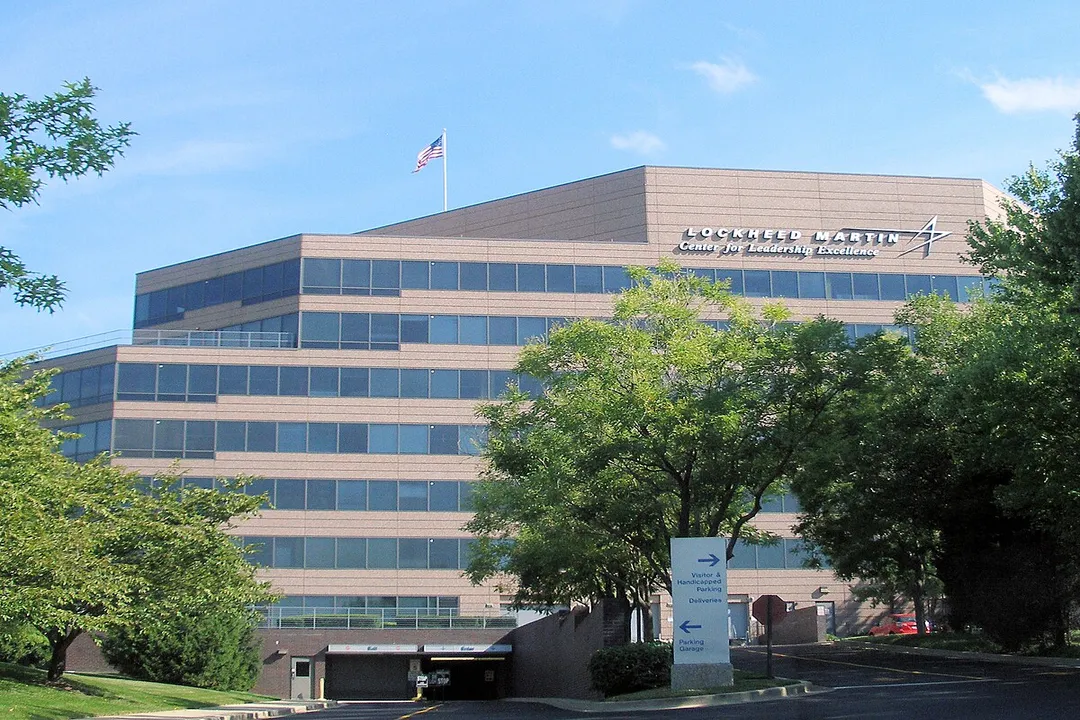
- Lockheed Martin Corporation held the fifth spot in FY 2023 (\1.22B) but moved to fourth in FY 2024 (\1.29B). They are key players in initiatives like developing nuclear thermal propulsion rockets for Mars missions.
- Northrop Grumman Systems Corp. took fourth place in FY 2023 (\1.25B) before dropping to sixth in FY 2024 (\959 million). Northrop Grumman is notably involved in developing the lunar railway system for the Artemis program.
The consistency of these entities—CalTech, SpaceX, Boeing, Lockheed Martin, and Northrop Grumman—in the top five across two years underscores the massive scale of ongoing, multi-year programs like Artemis, which require predictable, multi-billion dollar commitments.
# Beyond the Top Five
The list extends down to reveal a second tier of major partners handling hundreds of millions of dollars annually. Jacobs Technology, Inc. frequently sits near the top, securing over a billion dollars in FY 2024. KBR Wyle Services, Inc. also features prominently, earning \722 million in FY 2023 and nearly \790 million in FY 2024. KBR’s relationship with NASA spans decades, and they have recently been recognized with top contractor awards at two major centers, Johnson Space Center (JSC) and Goddard Space Flight Center (GSFC), for their performance and utilization of small businesses.
Other consistent heavyweights in the Top 20 across both years include L3Harris Technologies, Inc., Blue Origin, LLC, Johns Hopkins University Applied Physics Laboratory, LLC, and Leidos, Inc..
It is worth noting that companies like Peraton are recognized as being among the Top 100 NASA Contractors, reflecting the vast ecosystem that supports the agency’s diverse needs, even if their total dollars don't crack the Top 20 list.

# Context of Government Spending
To fully appreciate the term "biggest," it helps to step back from NASA-specific contracts and look at the entire federal government procurement picture. While CalTech and SpaceX dominate NASA's internal rankings, they appear further down the list when compared against contractors serving the Department of Defense (DoD) across all federal agencies.
According to the Top 100 Contractors Report for FY 2023 across the entire U.S. federal government, Lockheed Martin was the undisputed leader, pulling in over $70.8 billion in obligated funds, accounting for nearly 9.2% of the total.
In contrast, NASA itself accounted for only about \13 billion** of the total federal obligations in 2015, placing it among the top five departments receiving services, well behind the DoD's **\212.5 billion. This comparison shows that while NASA’s top contractors are massive entities by any standard, their NASA-specific revenue is often dwarfed by the contracts they secure from other defense and civilian agencies. For instance, in FY 2023, SpaceX was ranked 31st on the overall federal list, obligated by \3.19 billion, while CalTech was 35th, obligated by \2.95 billion. This means that while they are the biggest for NASA, they are just one part of a much larger federal contracting reality where traditional defense primes hold significantly larger government-wide contracts.
# Analyzing the Contractor Mix
A closer look at the nature of the work secured by the top firms reveals a strategic balance NASA is striking. The agency is simultaneously pursuing groundbreaking exploration, exemplified by the Artemis moon landings and the Europa Clipper mission, while also focusing on fundamental research and aeronautics.
The highest earners often secure contracts that span multiple mission types. KBR, for example, has contracts supporting both mission control posts (like those integral to Artemis) and Earth atmospheric research missions at the Goddard Space Flight Center. Jacobs supports the Crew Health and Performance Exploration Analog (CHAPEA) program—a Mars surface simulation—while also handling basic research facility operations like wind tunnels at Langley.
The reliance on academic institutions like CalTech and Johns Hopkins University (JHU APL) is a defining characteristic of NASA that separates it from purely defense-focused contracting. JHU APL secured over $430 million in FY 2024, illustrating NASA’s commitment to using world-class research institutions for science and exploration development. The existence of these institutional primes, which are not focused on shareholder profit in the same way as a public company, shapes the entire procurement environment.
This partnership structure is further emphasized by awards focused not just on output, but on process. KBR’s recognition as a top contractor at multiple centers was specifically tied to their "smart small business utilization" and outreach, indicating that how a prime contractor manages its subcontracts is a factor in their standing with the agency, perhaps even more so than pure contract value.
# Business Focus
The work these top companies undertake is highly specialized and central to NASA's current portfolio. The FY 2024 focus areas, as indicated by the contracts awarded, involve essential hardware and mission support for deep space travel and Earth observation.
| Top NASA Prime Contractor (FY 2024) | Approx. FY 2024 Obligation | Key Program/Role Mentioned |
|---|---|---|
| California Institute of Technology (JPL) | $2.23 Billion | Robotic spacecraft, Deep Space Network |
| SpaceX | $2.00 Billion | Human Landing System (HLS), Artemis |
| The Boeing Company | $1.49 Billion | Orion spacecraft, Starliner |
| Lockheed Martin | $1.29 Billion | Nuclear Thermal Propulsion (DRACO) |
| Jacobs Technology, Inc. | $1.05 Billion | Ground-based Mars simulation (CHAPEA) |
| Northrop Grumman | $959 Million | Lunar railway planning, Orion |
| KBR Wyle Services, Inc. | $790 Million | Mission operations, spacesuit development support |
| L3Harris Technologies, Inc. | $681 Million | Varied space support, including Aerojet Rocketdyne |
When looking at the sheer operational scope, the stability seen in the primary aerospace contractors suggests that NASA relies on deeply integrated partners for core hardware development and long-duration platform support, such as the International Space Station, which NASA intends to maintain until 2030. However, the high ranking of SpaceX reflects NASA's deliberate strategy to inject commercial, often fixed-price, competition into its services, which can transform mission logistics and accelerate development timelines compared to the traditional cost-plus models favored by legacy primes.
For those seeking entry into this high-stakes environment, whether directly at NASA or through a contractor, recognizing these deep, multi-year relationships is key. While the major federal players like Lockheed Martin and RTX win massive overall contracts that touch defense and intelligence (with RTX earning over $31 billion federally in FY 2023), roles supporting NASA missions are often highly specified and tied to the centers, making targeted applications to firms like KBR near Houston or Jacobs near Kennedy Space Center more effective than broad applications to the largest defense contractors. The ecosystem is layered, with the biggest financial recipients often acting as integrators or center managers, subcontracting specialized engineering and services to hundreds of other firms.
Related Questions
#Citations
[PDF] TOP - NASA
NASA Contractors Changing the Space Exploration Game in 2024
Peraton: Top 100 NASA Contractors
NASA contractors companies : r/NASAJobs - Reddit
Top 100 Contractors of the U.S. federal government - Wikipedia
KBR Awarded Top Contractor Title at Two NASA Centers for the ...