How did the astronauts get back from the ISS?
The process by which astronauts travel nearly 250 miles above Earth and safely return to the planet's surface is a carefully choreographed sequence of physics, engineering, and pinpoint timing. It is far more complex than simply pointing the spacecraft downward; the deceleration from orbital velocity—over 17,000 miles per hour—must be managed precisely across multiple phases to ensure a survivable touchdown. [6]
# Vehicle Types
The method of return is dictated almost entirely by the spacecraft used for transport to and from the International Space Station (ISS). [1] Historically, the Russian Soyuz capsule has been the workhorse, designed for a land landing, typically in the steppes of Kazakhstan. [1] More recently, commercial crew vehicles, primarily the SpaceX Crew Dragon, have joined the fleet, employing a water landing, known as splashdown, in the ocean. [2]
The choice between a land landing and a splashdown has significant implications for the forces experienced by the crew and the immediate post-landing environment. While both rely on robust parachutes to slow the descent, the final deceleration profile differs substantially. A land landing, like that executed by Soyuz, requires incredibly precise calculations to ensure the rockets fire correctly just above the ground to cushion the impact, which can still result in noticeable jolts for the crew. [1] Conversely, the Crew Dragon targets the ocean, where the water provides a large, yielding surface for deceleration, though recovery operations must be ready immediately upon impact. [2][3] Considering that an astronaut’s body is suddenly subjected to forces far exceeding normal gravity, managing that final few moments is arguably the most critical engineering challenge of the entire return trip.
# Leaving Orbit
The actual return journey begins long before the spacecraft fires its engines for a controlled fall toward Earth. After saying their goodbyes and sealing the hatches, the crew performs final checks and ensures all personal items are secured within the return vehicle. [6] Undocking from the ISS is a highly automated maneuver, involving the release of soft-capture latches and then the firing of small thrusters to gently push the capsule away from the station. [6]
Once safely clear, the mission clock starts ticking toward the de-orbit burn. This burn, a carefully timed firing of the main engines, reduces the spacecraft’s velocity enough for its trajectory to intersect the Earth’s atmosphere at the correct angle. This precise moment is crucial; too shallow an angle, and the capsule will skip off the atmosphere like a stone across water, while too steep an angle leads to excessive deceleration and heat stress. [1] For missions departing the ISS, the entire process from undocking to the moment of landing can span about 17 hours, giving ground teams ample time to monitor and calculate the trajectory leading up to this critical burn. [6]
# Atmospheric Entry
After the de-orbit burn places the capsule on a re-entry course, the next phase involves a dramatic separation. The vehicle discards any unnecessary modules, such as the service module containing propulsion and power systems, leaving only the sturdy descent module that houses the crew. This separation is usually followed by an orientation maneuver so that the blunt, heat-shielded end faces forward into the oncoming air.
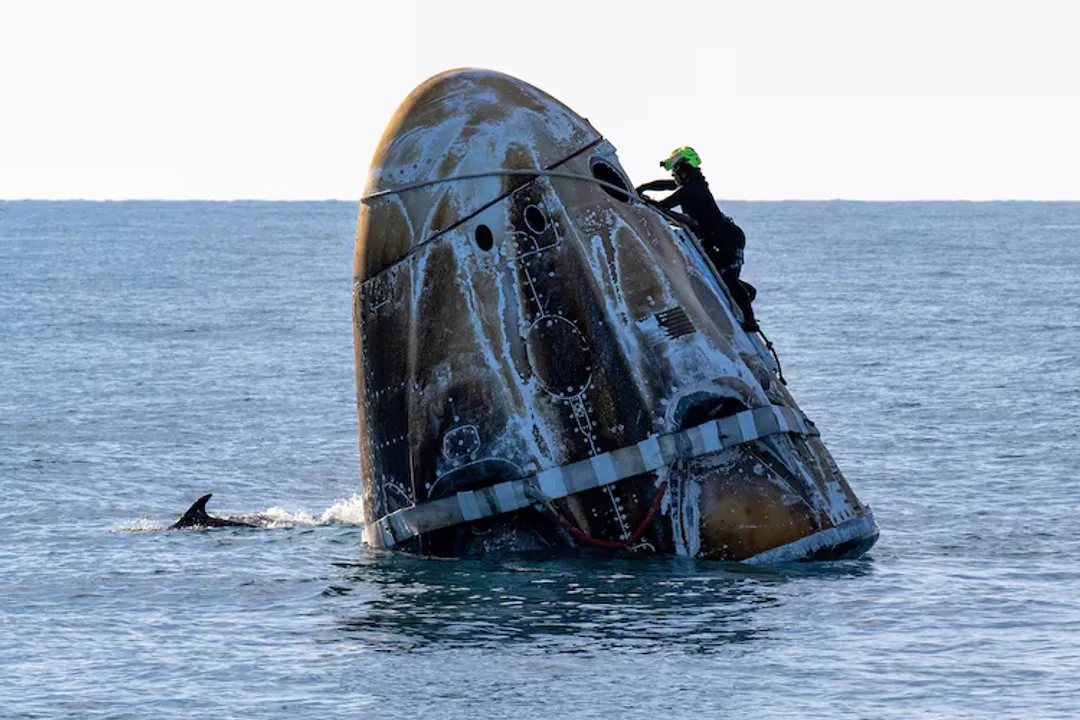
As the capsule slams into the upper layers of the atmosphere, it encounters rapidly increasing drag and friction, generating intense heat and plasma around the vehicle. The heat shield absorbs the brunt of this thermal energy, protecting the occupants inside. The outside temperature can soar to around 3,000 degrees Fahrenheit, a testament to the power of kinetic energy converting to heat as the speed drops rapidly. [1] During this intense phase, the G-forces experienced by the astronauts climb significantly, pushing them firmly back into their seats.
# Slowing Down
The reliance on atmospheric drag is the first major braking mechanism. Once the speed is reduced sufficiently, typically around 35,000 feet above the ground, the parachute system is deployed. [1]
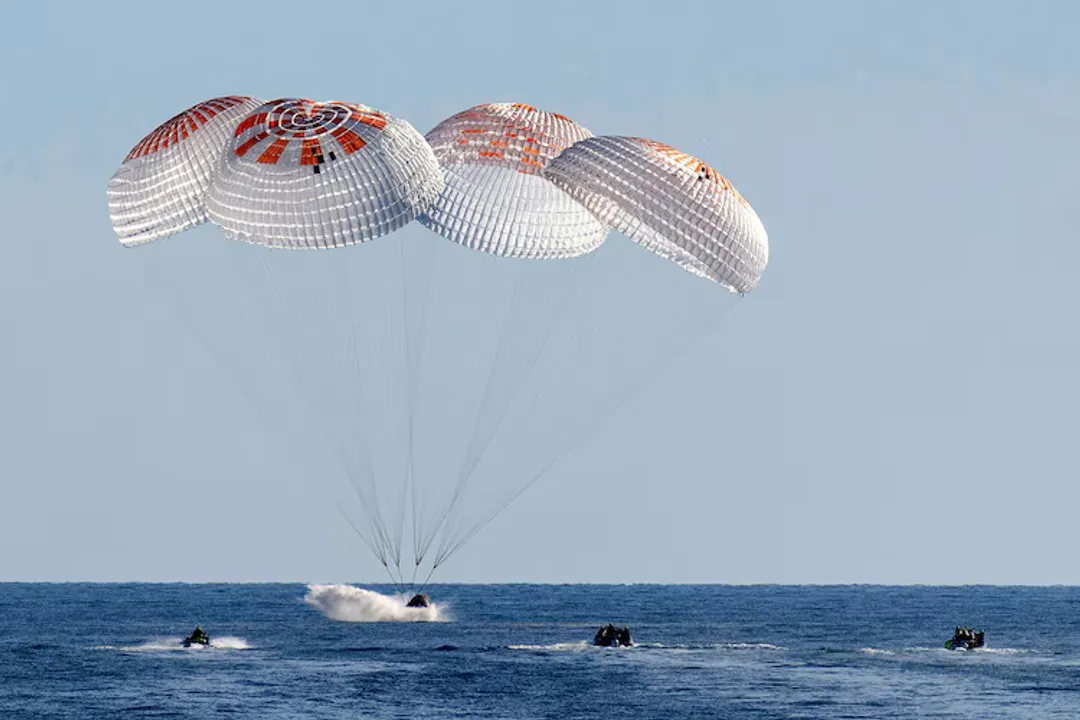
For Crew Dragon splashdowns, a sequence of progressively larger parachutes is deployed. First, the drogue chutes stabilize the capsule’s descent and orientation. This is followed by the deployment of the three main parachutes, which slow the vehicle to a manageable speed for impact with the water. [2] A similar, though mechanically different, sequence occurs for the Soyuz lander. [1] The successful deployment and function of these parachutes are paramount; without them, the final impact velocity would be catastrophic. [1]
# Landing Site
Where the capsule finally comes to rest depends entirely on its design lineage. A Soyuz return vehicle aims for a specific landing zone in Kazakhstan, often requiring teams to meet the capsule via helicopters and all-terrain vehicles shortly after touchdown. [1]
The Crew Dragon, in contrast, is engineered for a soft splashdown in one of several designated recovery zones in the Atlantic or Gulf of Mexico. [2][3] This water landing necessitates immediate response teams arriving by boat to secure the capsule and assist the astronauts in egressing. [3] The environment for recovery differs radically: one involves dry, remote steppe recovery, the other involves immediate maritime operations involving the Navy or Coast Guard vessels. [3]
# Recovery Crew
The moment the capsule settles, the recovery process shifts into high gear. Specialized teams are positioned near the predicted landing zone well in advance of the arrival time. [3]
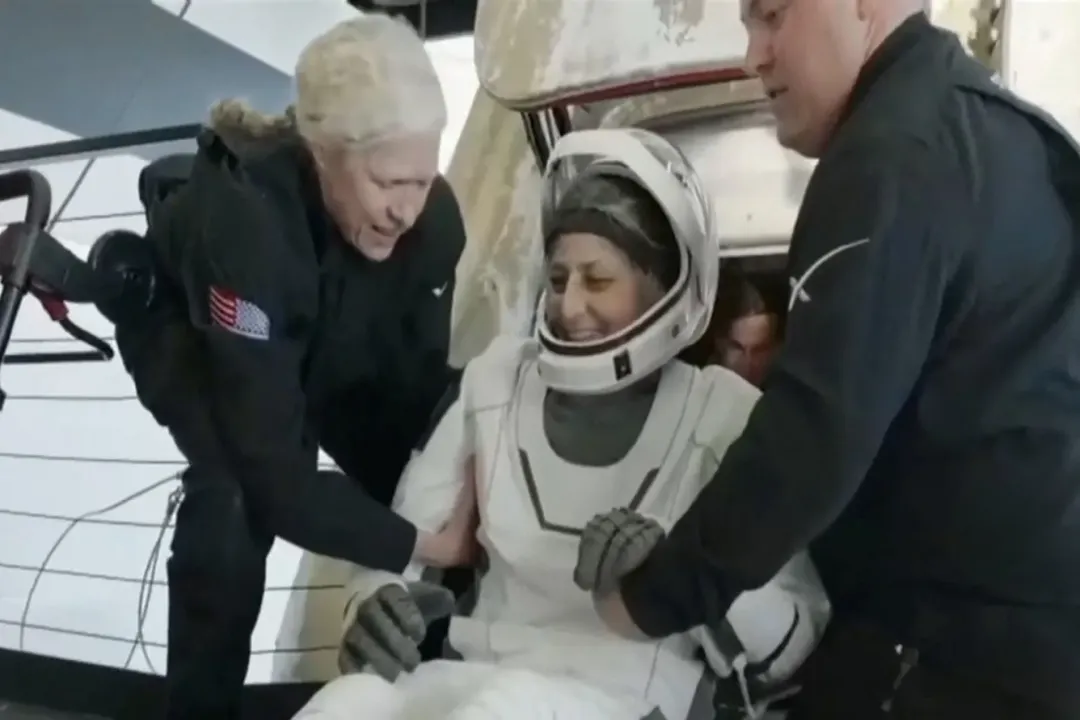
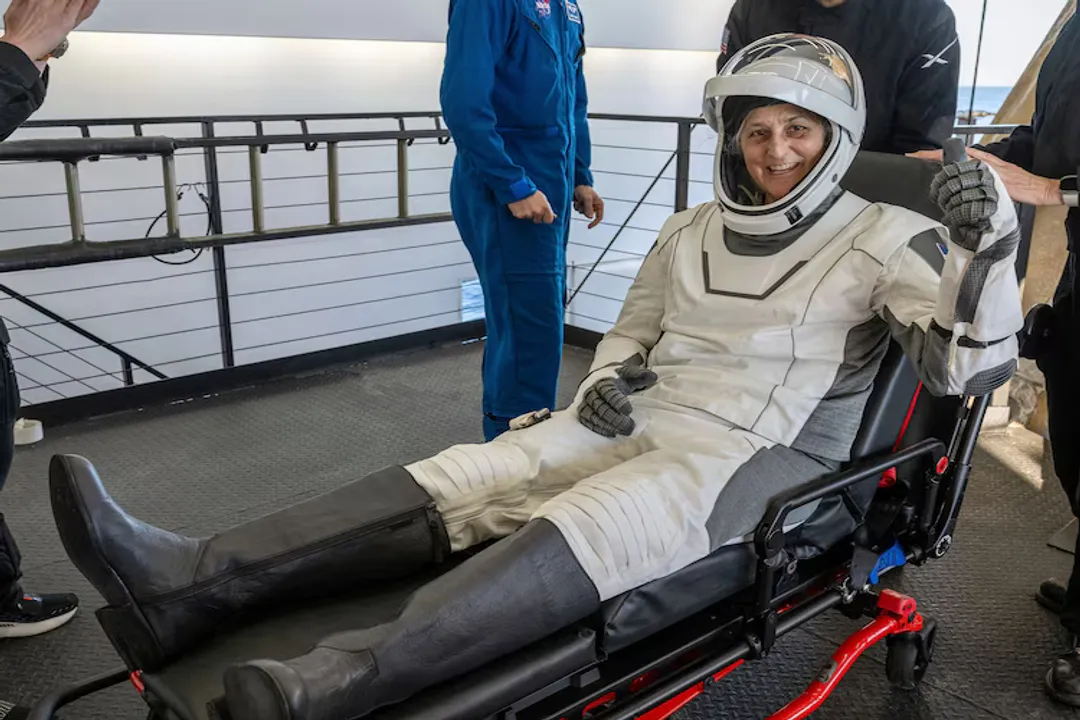
For a splashdown, recovery personnel approach the capsule via fast boats. [3] Their initial tasks involve securing the capsule to prevent it from tipping over in the waves and ensuring the atmosphere inside is safe before opening the hatch. [3] Once cleared, the astronauts—who have been enduring significant physical stress and high G-loads—are carefully assisted out of their seats and lifted from the capsule, often requiring immediate medical checks to manage the readjustment to Earth's gravity. [3] This extraction and initial medical assessment must be swift, especially given the prolonged time they have spent living in microgravity. [4]
One fascinating difference often overlooked is the post-landing medical protocol based on the vehicle. Astronauts returning in Soyuz often have specialized medical personnel ready to assist them right after egress because the land landing puts unique stresses on their lower body joints and spines, which have not borne weight for months. [1] While both methods require immediate care, the specific physiological challenges differ based on whether the final deceleration was against the Earth or the sea.
# Mission Delays
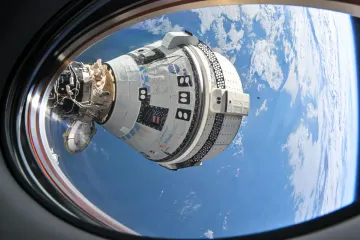
While the return procedure is standardized, it is not immune to real-world complications. Astronauts can occasionally find themselves "stuck" longer than planned in orbit if issues arise with the return vehicle. [4] For instance, technical evaluations might need to be completed before a crew is cleared to depart. Such technical reviews could relate to the vehicle's systems, such as the service module or the life support, which must be fully certified for the high-stress journey back to Earth. [4] Missions, even short ones, often require crews to extend their time aloft while ground teams resolve these issues, demonstrating the layered safety checks built into every stage of spaceflight, even the return segment. [4] These delays, while stressful for the crew, underscore the high level of engineering scrutiny applied to ensure every component functions perfectly when it counts the most. [4]
#Videos
Astronauts Return To Earth From the ISS. Undocking and Landing
How did a pair of NASA astronauts get stranded in space ... - YouTube
Related Questions
#Citations
Astronauts Return To Earth From the ISS. Undocking and Landing
Nasa astronauts Butch and Suni finally back on Earth - BBC
ESA - How do astronauts return to Earth? - European Space Agency
How are astronauts recovered after splashdown? : r/nasa - Reddit
Astronauts stuck in space return to Earth. Here's why they were stuck
SpaceX Dragon successfully splashes down, returning NASA ...
2 NASA astronauts return to Earth after an unexpectedly long ... - NPR