How does the ISS not get hit by meteors?
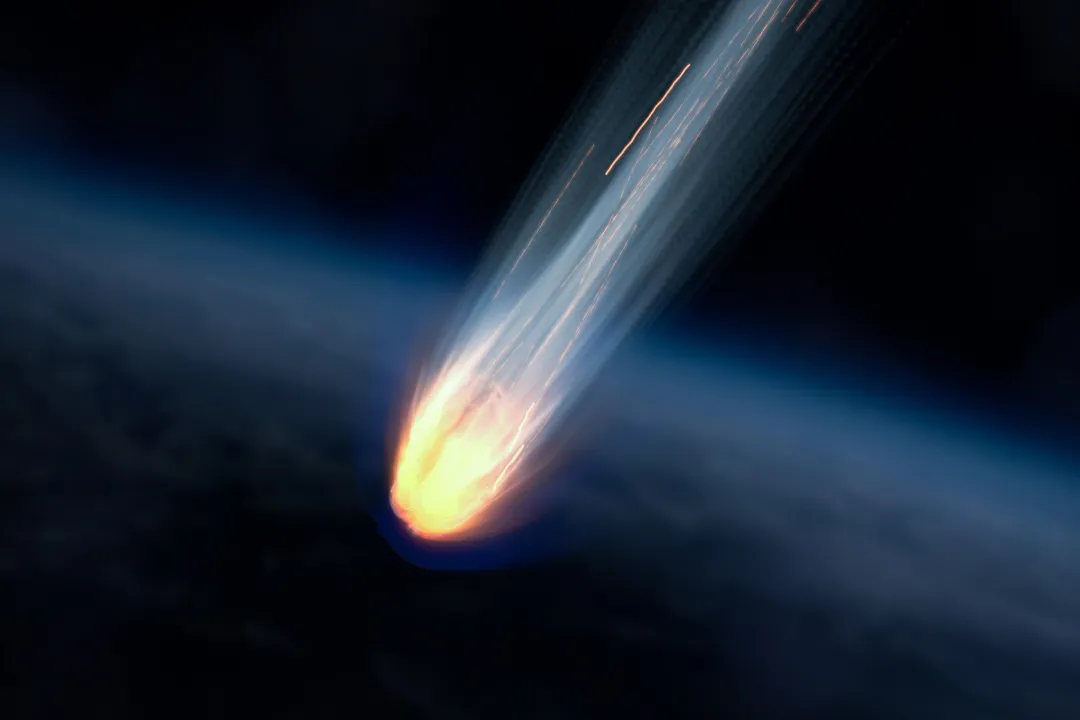
Orbiting hundreds of miles above Earth, the International Space Station (ISS) appears to glide through empty space, but the environment it inhabits is far from vacant. It’s a constant high-speed collision course with everything from natural space dust to human-made junk. Protecting a structure the size of a football field traveling at nearly 17,500 miles per hour requires a multi-layered defense strategy involving prediction, maneuverability, and physical armor. [2][5]
# Debris Danger
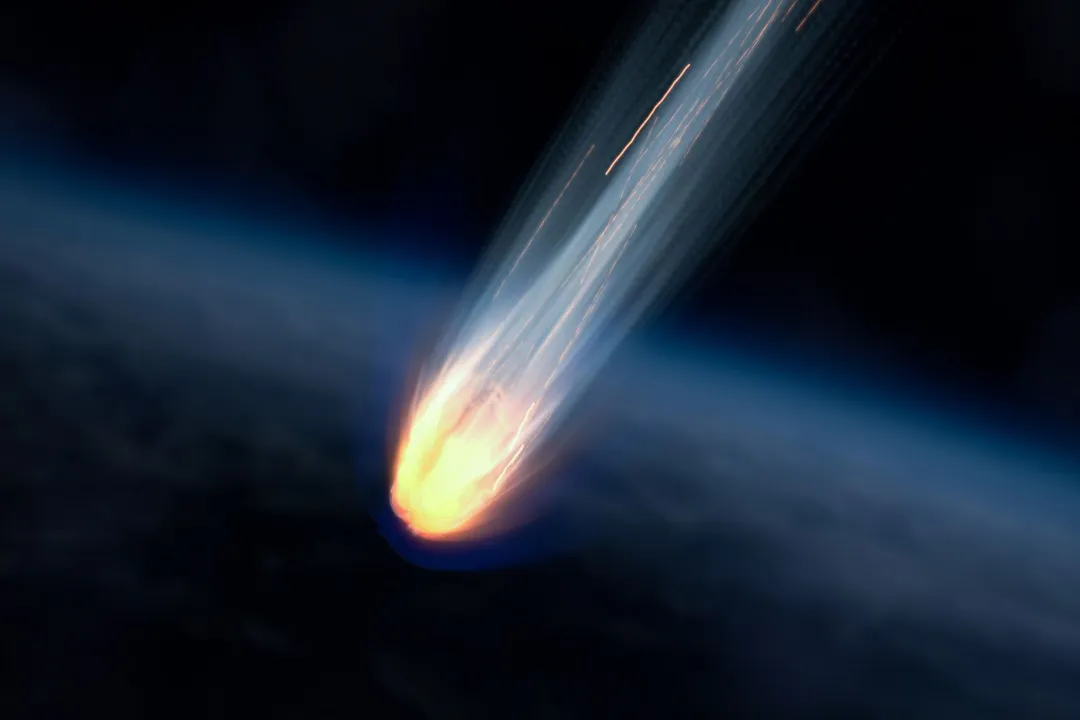
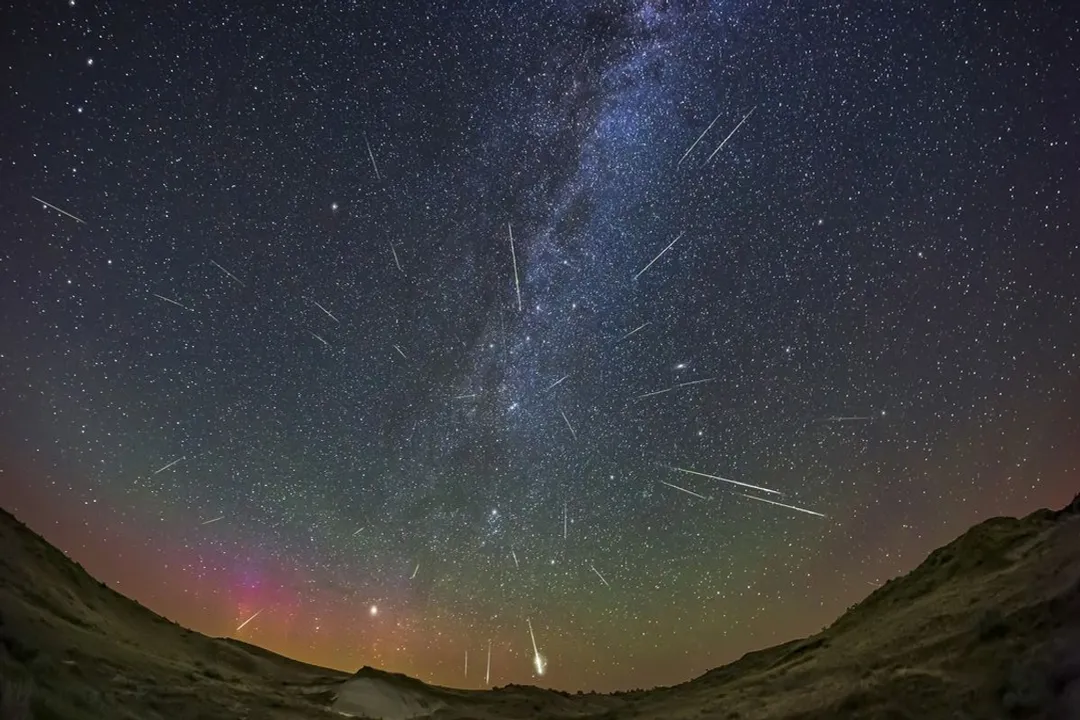
When most people think about objects hitting the ISS, they picture the spectacular streaks of light we see during a meteor shower. These natural objects are meteoroids, which, once they enter the atmosphere, become meteors. In space, however, the threat profile changes significantly, and it often shifts away from the natural phenomena. [2]
For the astronauts and the station itself, the primary concern is often the vast amount of human-made space debris, also known as orbital debris or space junk. [2][8] This junk includes spent rocket stages, old satellite fragments, and paint flecks from previous missions. [5] What makes debris so dangerous is its relative velocity. A tiny fleck of paint, perhaps only a millimeter across, can strike the station with the kinetic energy of a bowling ball moving at highway speeds due to the extreme orbital velocity. [2]
Meteoroids, on the other hand, are typically smaller than the debris tracked by official catalogs. While micrometeoroids—particles ranging from sand grain size to larger fragments—are a constant hazard, the actual threat posed by these natural objects is often statistically lower than the threat posed by tracked debris for much of the ISS's operational life. [8][9] Many meteoroid showers, such as the Perseids, send particles into orbits that do not pose a significant direct threat to the station’s specific altitude and orbital plane. [1][3] While it is impossible to completely eliminate the risk from uncataloged natural objects, operational procedures focus heavily on the larger, trackable catalog items, which are predominantly human-made debris. [2][5]
If the ISS were to pass through a particularly dense stream of natural meteoroids, like during an intense shower, the risk would increase. However, mission control typically has advance warning of these events, allowing them to prepare defenses or adjust operations accordingly. [1][4] Interestingly, the physical effect of a collision, whether from natural rock or artificial metal, is dictated by energy, meaning a small piece of debris moving at 17,500 mph is fundamentally just as destructive as a natural meteoroid of the same mass traveling at the same speed. [2]
# Threat Tracking
A defensive strategy is only as good as its warning system, and for the ISS, this system relies on dedicated tracking networks. [1] The United States Space Surveillance Network (SSN) is crucial, continuously monitoring objects in orbit. Objects larger than about 10 centimeters are generally cataloged, allowing ground controllers to predict potential close approaches with the ISS. [1][5]
When a potential collision is predicted, the event is assigned a risk probability. If the probability of impact exceeds a certain threshold, often around one in 10,000 or higher, action must be taken. [1][5] This process is not instantaneous; tracking satellites provide positional data, but calculating a precise trajectory that accounts for orbital decay and atmospheric drag takes time and computational power. [4]
It is worth noting a subtle difference in how these threats are prioritized. While smaller debris and micrometeoroids are too numerous to track individually, they are addressed through passive shielding, discussed later. The maneuvers are reserved for the cataloged objects, which are large enough to cause catastrophic damage if a direct hit occurs. [5] Imagine this: ground teams are essentially running continuous "near-miss simulations" for thousands of objects every single day, hoping to flag the one or two that require an active response during any given week. [4]
# Maneuver Protocols

When a high-risk conjunction—a close approach—is predicted, the crew and ground control activate procedures to avoid a potential strike. This active avoidance is called a Debris Avoidance Maneuver (DAM) or, less commonly, a maneuver to avoid a meteoroid cloud. [1][4]
These maneuvers are not trivial. They require firing the station’s own thrusters, usually the Russian segment’s Progress cargo craft engines, to slightly alter the ISS’s velocity and, consequently, its orbit. [1][4] A typical DAM might raise or lower the station’s altitude by only a few kilometers, but because the ISS is traveling so fast, this small change is enough to shift its path away from the predicted location of the threatening object. [3]
The timing of the maneuver is critical. It must be executed with enough lead time to ensure the object passes safely, but not so early that the station drifts into the path of a different uncataloged piece of debris later on. [4] This introduces an interesting trade-off: correcting for a specific, tracked threat might inadvertently increase the statistical risk from the background population of smaller, untracked objects. The entire process, from detection to execution, is highly optimized to minimize the delta-v (change in velocity) used, as every burn uses up propellant and slightly alters the station’s long-term orbital characteristics. [1] If the object is predicted to pass by when the station is over an area where the crew can take shelter, they might opt to ride it out instead of burning fuel—a decision that highlights the balance between risk management and resource conservation.
# Passive Shielding

Even with the best tracking and the ability to move, complete avoidance is impossible, especially for the constant rain of uncataloged particles smaller than the tracking threshold. This is where physical protection comes in—the ISS is built like a fortress. [7]
The primary defense against smaller impacts is a multi-layered armor system, famously known as the Whipple shield. [7] This concept involves creating space between an outer layer and the pressurized hull of the station. When a small, high-velocity particle strikes the outer shield layer, it vaporizes or shatters into a cloud of smaller, lower-energy particles. [7] This dispersed cloud then impacts the subsequent layers of the shield over a larger area, dissipating the kinetic energy before it ever reaches the crew compartment or critical systems.
The actual construction is complex, featuring layers of materials like aluminum and other protective fabrics. [7] The gaps within the shield are essential; without that space to allow the particle to spread out, the impact energy would concentrate on a single point, likely puncturing the pressure hull. While these shields are highly effective against objects smaller than, say, a marble, they cannot reliably stop a piece of debris larger than a few centimeters traveling at orbital speeds. [5] For those larger threats, the DAM is the only reliable recourse. [1] The design is a testament to engineering where empty space is intentionally incorporated as a primary defensive material.
# Orbital Altitude
To fully appreciate the protective measures, it helps to understand where the station is flying. The ISS orbits Earth at an altitude generally around 400 kilometers (about 250 miles). [6] This is high enough to be truly in space, but critically, it is still within the very fringes of Earth's atmosphere. [6]
The atmosphere, while incredibly thin at that height, provides a subtle, persistent layer of friction, causing the station’s orbit to decay slowly over time. This is why the station must periodically perform reboosts, often using the thrusters of docked Soyuz or Progress vehicles. [6] This atmospheric drag actually serves a dual protective purpose. First, it ensures that small, low-mass particles that do hit the station—especially micrometeoroids—often slow down and burn up before they can inflict major damage, similar to how meteors burn up in the denser atmosphere below. [6] Second, the drag helps clear out some of the lower-orbit debris over time as those objects slow down and eventually reenter the atmosphere to burn up themselves. [6] Therefore, while the operational focus is on avoiding immediate, high-energy strikes, the very nature of the low-Earth orbit provides a background cleansing mechanism that helps mitigate the cumulative effect of the smallest impacts. This constant, slow interaction with the thin upper atmosphere offers a passive, natural layer of protection that a station in a much higher, cleaner orbit would not benefit from.
#Videos
How ISS avoids collision with deadly debris & asteroids? - YouTube
Related Questions
#Citations
How does the ISS avoid meteors during heavy meteor shower ...
Could the Geminid meteor shower threaten satellites and astronauts ...
How does the ISS evade meteor showers? - Quora
How ISS avoids collision with deadly debris & asteroids? - YouTube
How do satellites remain safe from space debris and meteorites?
How Does the International Space Station Orbit Earth Without ...
Q&A: What Happens When a Meteor Hits the ISS - SKY LIGHTS
Spacecraft Fear "Space Junk" More Than Meteorites - VOA Africa