Has a satellite ever been hit by a meteor?
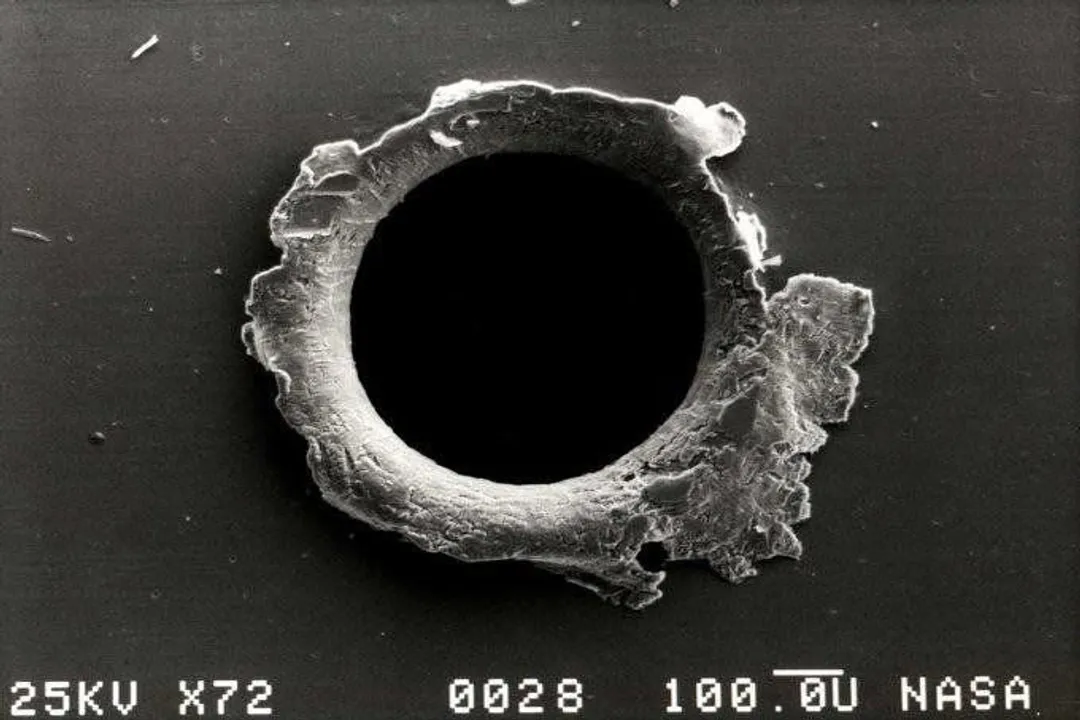
The question of whether satellites have been struck by natural space rocks—meteoroids—is one that often surfaces when we think about the harsh environment of space. While the image of a massive asteroid instantly obliterating a multi-billion-dollar asset is dramatic, the reality of orbital impacts is far more nuanced, involving a constant barrage of tiny, invisible particles and an ever-present threat from human-made junk. [1][2] In short, yes, satellites are constantly being hit by objects, but the source of the majority of catastrophic risk is often not the natural solar system debris we call meteors.
# Defining The Impactors
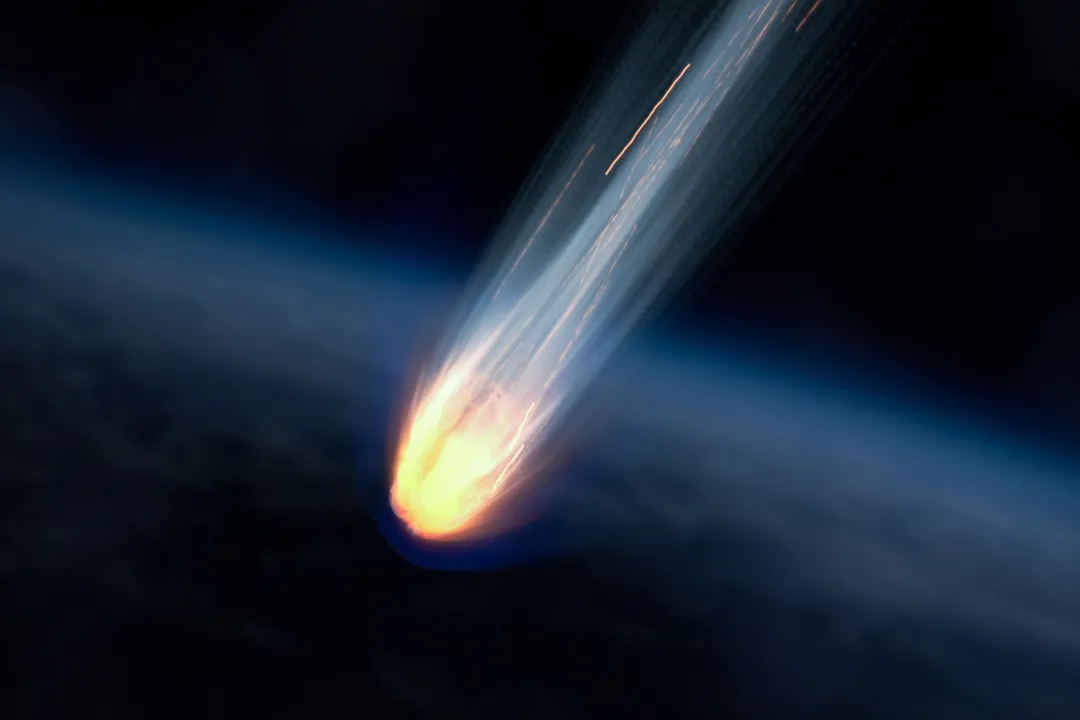
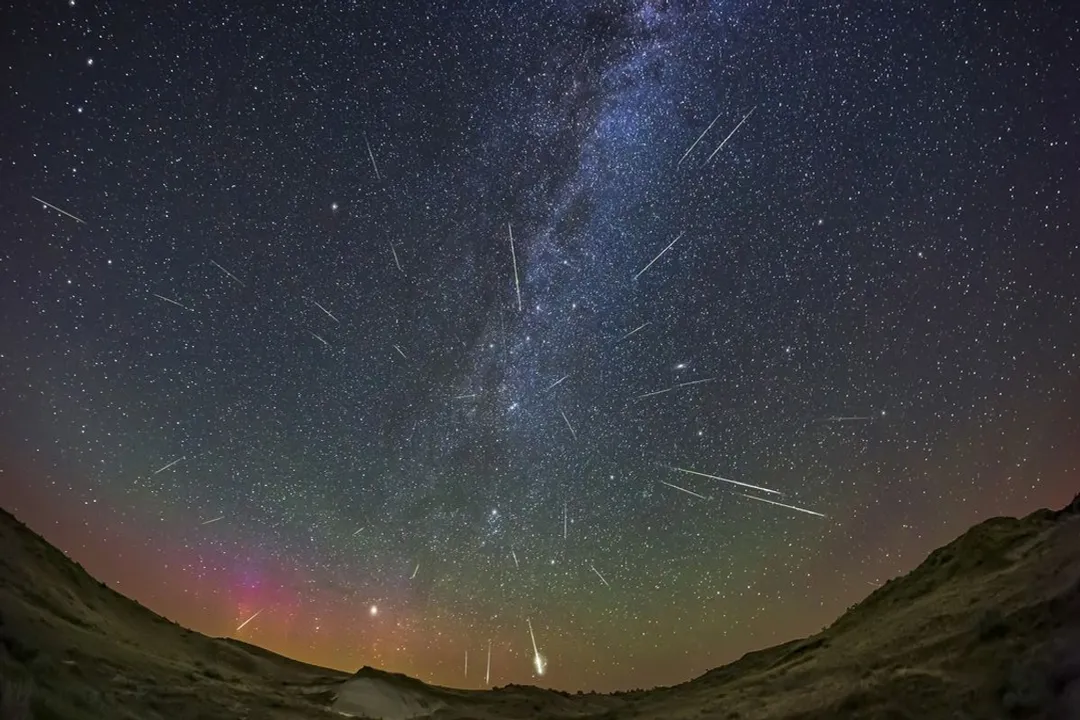
To properly address the issue, we first need to establish clear definitions for what is striking what. In the realm of space science, an object's name changes based on its location. A meteoroid is a small rocky or metallic body in outer space. If that object enters the Earth's atmosphere, it becomes a meteor, commonly known as a shooting star. Should that object survive its fiery passage and land on the Earth's surface, it earns the designation meteorite. [5]
When we talk about satellites orbiting Earth, particularly in Low Earth Orbit (LEO), they are constantly exposed to meteoroids. [2] Any particle, no matter how small, traveling at orbital velocities—which can be tens of thousands of miles per hour—carries enormous kinetic energy. [1] Even microscopic dust grains can cause erosion over time, similar to sandblasting a surface, which can degrade optical sensors or solar panels. [1] While a natural, large meteoroid strike is a statistical rarity in specific orbits, the continuous chipping away by smaller natural debris is an accepted operational hazard for any spacecraft operator. [2]
# Debris Dominance

The paradox of modern orbital mechanics is that the greatest threat to an operational satellite is not from the cosmos above, but from the clutter we ourselves have left behind. [1][3] Sources consistently point out that the density of space debris—defunct satellites, spent rocket stages, paint flecks, and fragmentation debris—is significantly higher in busy orbits, like LEO, than the population density of natural meteoroids in the same regions. [3][5]
A classic and devastating example of this man-made threat is the 2009 satellite collision. [3] This event involved two non-operational satellites: the defunct Russian military satellite Kosmos-2251 and the active commercial communications satellite Iridium 33. [3] Crucially, this was not a natural impact; it was a self-inflicted wound on the orbital environment. [3] The crash occurred at roughly 485 miles (780 km) above Siberia and completely destroyed both objects, creating thousands of new, traceable pieces of debris that continue to pose risks to operational spacecraft worldwide. [3]
When comparing the probability of impact, the math often favors human-made objects as the primary cause of high-velocity, mission-ending collisions in crowded orbits. [1][5] Operators spend significant time and computational resources tracking debris to execute avoidance maneuvers, a proactive step rarely taken for statistical, unpredictable natural meteoroids unless a known meteor shower is passing through the orbital plane. [1] This operational reality means that when we look at documented "hits," the evidence overwhelmingly points toward junk rather than natural cosmic rock.
# Accidental Collisions
While the 2009 event highlights catastrophic debris collision, smaller, unpublicized impacts from both natural and artificial sources likely occur regularly without being formally announced to the public. [2] For an event to be widely reported as a "satellite collision," it usually needs to be a major casualty, like the Iridium 33 incident, or involve a high-profile asset where the damage can be confirmed via telemetry or observation. [1]
It is possible that smaller satellites, particularly cubesats or older, un-tracked objects, have suffered degraded performance or mission failure due to an unconfirmed impact from a micrometeoroid. [2] However, because the damage from a small natural particle might mimic other electronic failures or slow degradation, assigning a definitive "meteor strike" cause is exceptionally difficult for objects that aren't actively monitored by multiple global tracking networks. [2]
One way to conceptualize the constant bombardment is to consider the shielding applied to spacecraft. Many critical components, like the International Space Station (ISS) or vital service modules, are protected by Whipple shields. [1] These shields are designed specifically to address high-speed impacts by fragmenting the incoming object—whether natural or debris—into a less energetic plasma cloud before it reaches the main hull. [1] This engineering practice implicitly acknowledges that impacts are not if but when, though the shields are optimized for the high collision frequency of debris environments. [1]
An analytical perspective on survivability suggests that the altitude of a satellite heavily dictates its exposure profile. Satellites in Geosynchronous Orbit (GEO), far above the bulk of LEO junk, face a lower rate of human-made collisions but may be more exposed to higher-energy, larger micrometeoroids traveling on less regular trajectories across the ecliptic plane, which are less shielded by Earth's mass or magnetic field than LEO objects are to some degree. Therefore, a GEO satellite might statistically be more likely to suffer a mission-ending strike from a natural meteoroid than an LEO satellite, despite the general threat hierarchy.
# Controlled Strikes
In recent years, the discussion around satellite impacts has shifted slightly with the advent of intentional kinetic impact testing. This is not an accidental meteor strike, but rather a calculated maneuver designed to test planetary defense capabilities. [9]
The most famous recent example is NASA’s Double Asteroid Redirection Test (DART) mission. [9] In September 2022, the DART spacecraft intentionally collided with the asteroid moonlet Dimorphos. [9] The goal was to alter the asteroid's orbit through the transfer of momentum from the impactor. [9] This deliberate crash was successful and resulted in the breakup of the DART spacecraft and the creation of ejected fragments, sending material scattering into space. [9] While this demonstrates that an artificial object can successfully strike a natural body, sending fragments outward, it remains fundamentally different from a passive satellite being hit by an object it did not invite or predict in orbit.
# Threat Comparison
To organize the primary sources of orbital danger, we can look at the types of threats based on their origin and energy:
| Impact Source | Typical Size Range | Relative Frequency in LEO | Primary Risk Level |
|---|---|---|---|
| Natural Meteoroid | Dust to meters | Constant, small hits; rare, large hits | Low to Moderate (Erosion/Rare Catastrophe) [2] |
| Space Debris | Millimeters to meters | High frequency, especially millimeters [5] | High (Frequent Maneuvers/Catastrophic Collision) [3] |
| Intentional Impact | Meters (Large Impactor) | Extremely Rare (Testing only) | Controlled/Test Scenario [9] |
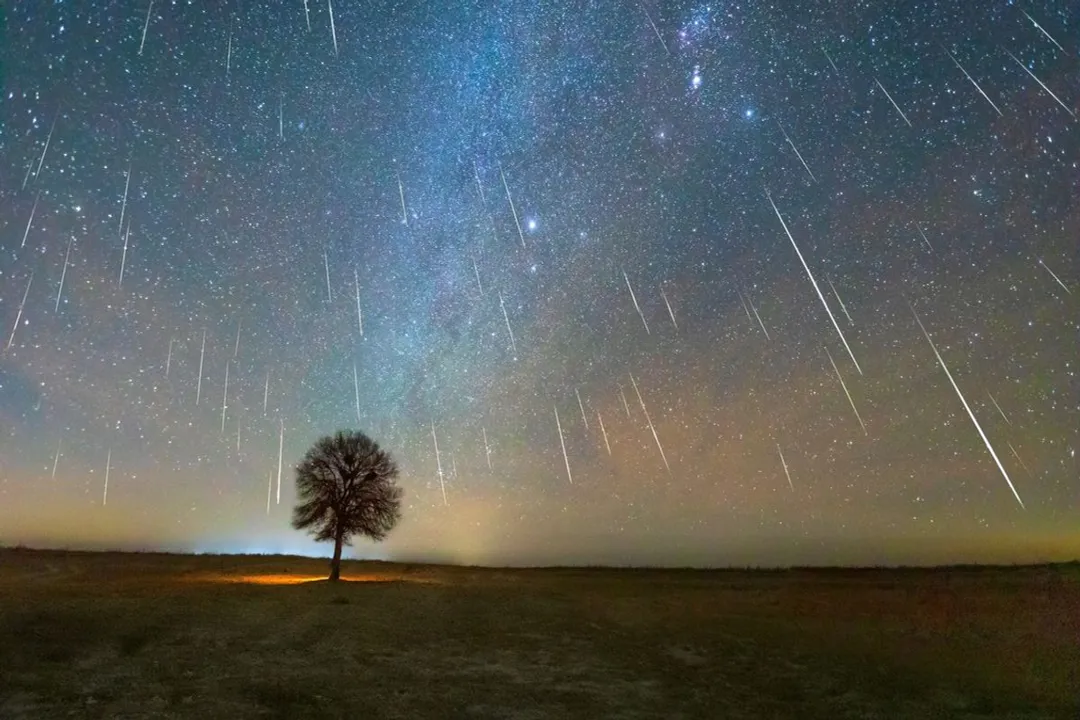
The takeaway from analyzing these scenarios is that while a satellite can be hit by a natural meteoroid—and almost certainly is, on a microscopic level daily—the significant, mission-ending risk is currently dominated by the environment we created. [1][5] Furthermore, actual footage of a satellite surviving a significant natural strike is exceedingly rare because they are either too small to notice or too large to survive without pre-installed protection or detection. [2] Astronauts in spacecraft like the ISS have the added risk of objects passing close by, but the hardware itself is built to withstand the expected barrage. [1]
For satellite design teams, the distinction between natural and artificial impacts dictates the required level of resilience. Since natural meteoroid streams are relatively predictable (e.g., during a known meteor shower), collision avoidance systems are primarily programmed to react to cataloged debris objects. If a spacecraft flies through the path of a dense, uncatalogued natural cloud, the only defense is inherent physical shielding, which is expensive and adds mass. Thus, operational safety procedures are fundamentally biased toward mitigating the known, high-density threat posed by man-made objects.
In summary, the answer to whether a satellite has been hit by a meteoroid is affirmative, as the orbital path is seldom completely clear of natural dust and rock fragments. [2] However, the most newsworthy and dangerous collisions documented in orbital history have involved human-made objects striking other human-made objects, underscoring the self-generated risk we manage in the space domain. [3]
#Videos
Stunning New Videos From NASA's Asteroid Impacting ... - YouTube
Nasa Dart spacecraft successfully smashes into asteroid - BBC News
Related Questions
#Citations
Are astronauts and satellites susceptible to being hit by meteors?
Was a satellite ever hit by an asteroid? Has any satellite filmed an ...
2009 satellite collision - Wikipedia
Stunning New Videos From NASA's Asteroid Impacting ... - YouTube
Meteorite Falls | Recent Events - NASA • ARES
Could the Geminid meteor shower threaten satellites and astronauts ...
A meteorite the size of a grain of sand damaged the solar max satellite
NASA satellite's collision with asteroid sent boulders into space