What is a meteor that hits the ground?
This is a complex classification puzzle that often confuses people: distinguishing between a space rock before it hits the atmosphere, the bright streak it makes while passing through, and the remnant after it lands. When we talk about an object that hits the ground, we are specifically referring to a meteorite. [3][4] The object's identity changes based on its location and status in its journey toward Earth. [3]
# Naming Conventions
The simplest way to look at the terminology involves three distinct stages, representing the same fundamental object originating from space: [4]
- Meteoroid: This is the object while it is still in space. [3][4] Meteoroids are solid bodies orbiting the Sun, significantly smaller than asteroids, with sizes ranging from tiny dust grains up to about one meter in diameter, though definitions can vary slightly across scientific bodies. [4] They can be fragments resulting from collisions between larger bodies like asteroids or the Moon, or debris shed from passing comets. [4]
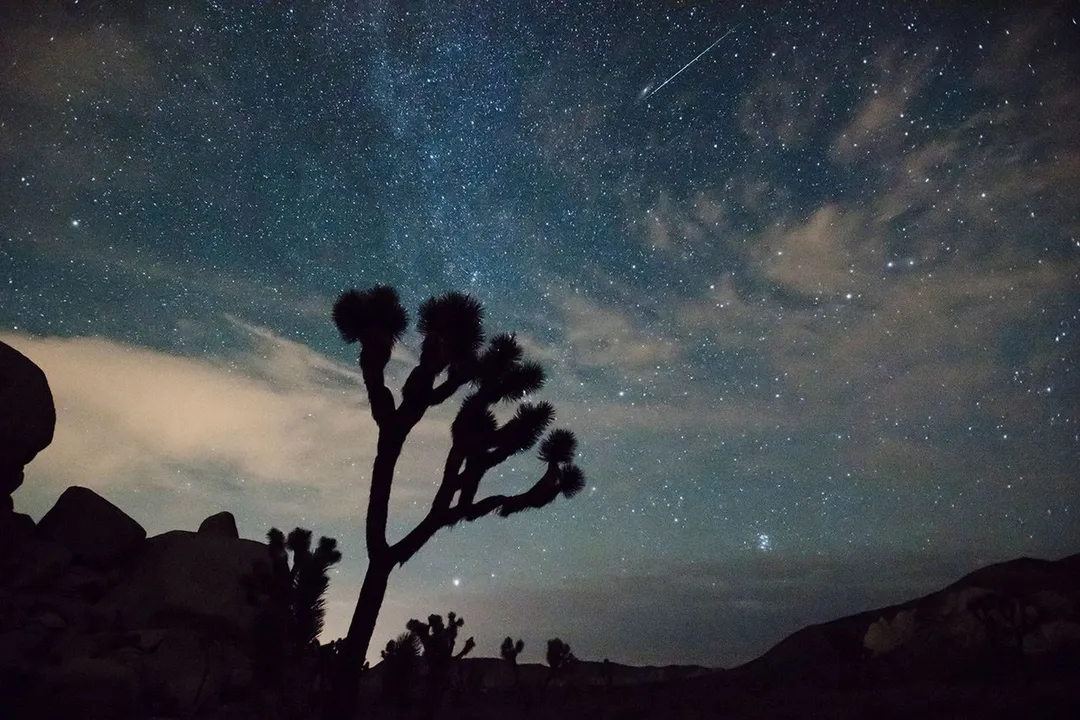
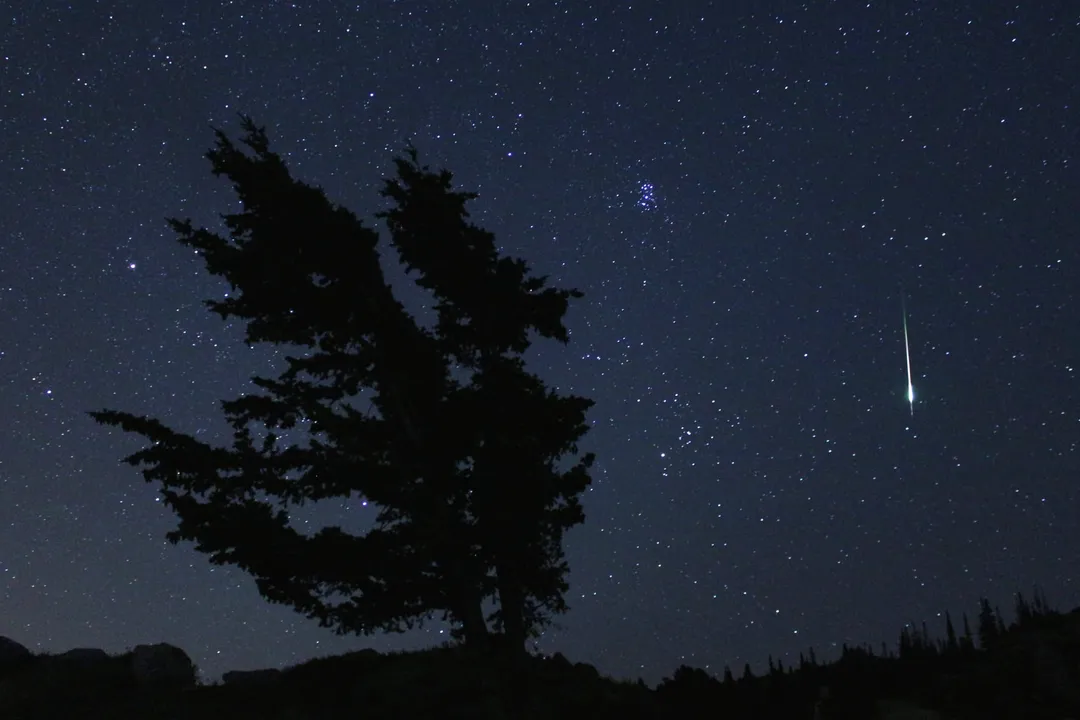
- Meteor: This is the light phenomenon observed when a meteoroid enters Earth’s atmosphere at high velocity and begins to burn up. [3][4] This visible streak of light is what most people call a "shooting star" or, if particularly bright, a fireball or bolide. [2][3]
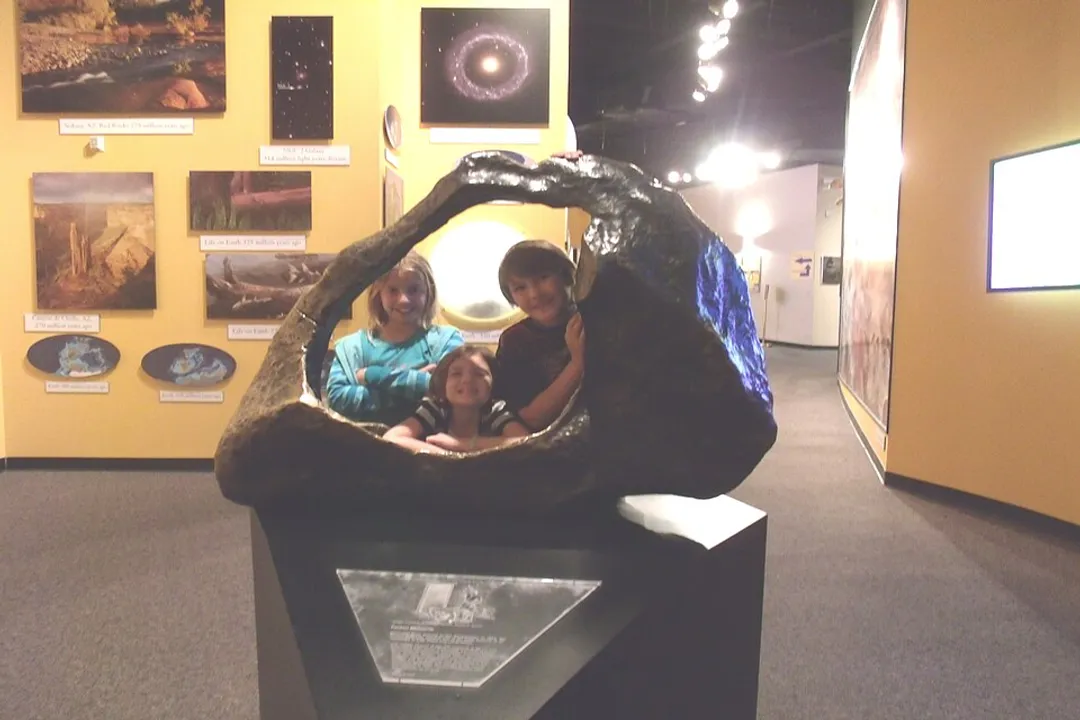
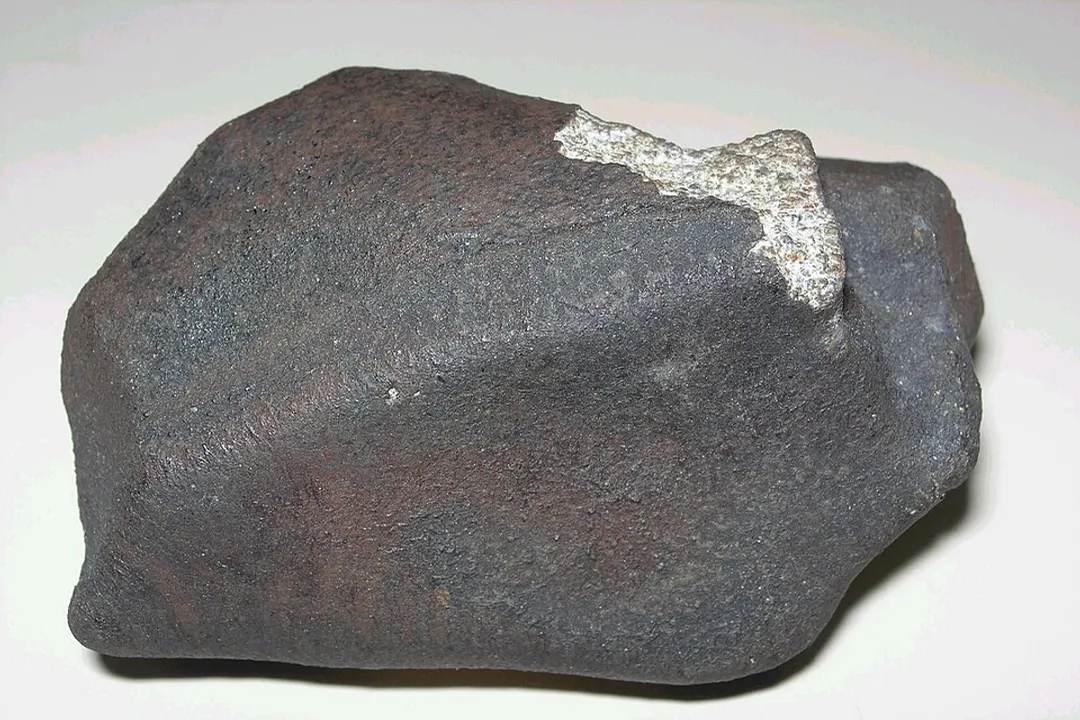
- Meteorite: This is the portion of the original meteoroid that survives its fiery passage through the atmosphere and successfully impacts the Earth’s surface. [3][4]
If you find a rock on the ground, it is not a meteor; the light show was the meteor, and the rock is the meteorite. [2] Importantly, if you see a meteor during a well-known annual event like the Perseids, the object causing that light is almost certainly sand-to-pea sized and will have ablated completely, meaning you won't find a meteorite from that specific streak. [2]
# Entry Mechanics
The dramatic display of a meteor occurs because of friction and compression in the atmosphere, not simple burning. [2] Meteoroids typically intersect Earth's atmosphere at speeds ranging from about (). [2] In some head-on collisions, like those associated with retrograde orbits, the speed can reach about . [4]
As the object plunges in, the intense speed compresses the air in front of it. This compression, combined with the immense heat generated, causes the exterior of the meteoroid to glow white-hot (incandesce). [2] This process of surface material vaporization and shedding creates the visible streak we call a meteor. [2]
The physics of entry dictates survival rates. For the smaller objects, particularly those encountered during meteor showers—often the size of sand grains—they vaporize entirely high up in the atmosphere. [2] Only the larger, denser objects stand a chance of reaching the ground intact enough to be classified as a meteorite. [2]
# Surviving the Fall
For an object to become a meteorite, it must overcome the atmospheric drag and thermal stress. [4] The glow from the meteor ceases tens of kilometers above the surface. [2] Any surviving material then enters a phase known as dark flight. [2] During this phase, the object, now decelerated, falls more vertically, subject to local winds, and no longer incandesces. [2]
The velocity upon landing is significantly slower than the entry speed. Fragments reach what is called terminal velocity, estimated to be around (). [2] This reduced speed means that when a meteorite lands, it is generally not hot, and it certainly does not glow. [2] The typical size of a found meteorite is often smaller than popularly imagined, frequently measuring only a few centimeters across. [2] This disparity in landing speed versus atmospheric speed is why fragments land far from the last visible point of the meteor, making casual finds extremely difficult unless precise trajectory data from multiple sources, like dedicated cameras, is available. [2]
# Meteorite Composition
The material composition of these space rocks provides deep insight into the early Solar System. [4] Nearly all meteoroids contain extraterrestrial nickel and iron, which helps scientists classify them into three primary categories: iron, stone, and stony-iron. [4]
- Stony Meteorites: These are the most common type found on Earth. [3] Within this group, those containing grain-like inclusions called chondrules are termed chondrites. [4] Stony meteorites without these features are called achondrites, typically resulting from extraterrestrial igneous activity and often containing little to no extraterrestrial iron. [4]
- Iron Meteorites: Composed primarily of an iron-nickel alloy. [4]
- Stony-Iron Meteorites: A mixture of silicate minerals and iron-nickel metal. [4]
Studying these meteorites helps scientists understand the chemistry and physical processes that shaped the parent bodies from which they originated. [4] For instance, some stony meteorites provide evidence of the very first planetesimals that formed the solar system. [4]
# Impact Scale and Events
While an estimated $48.5$ tons of meteoritic material dusts the Earth daily, most of it is vaporized in the atmosphere. [3] However, the impactors that do survive and strike the ground—or explode high above—come in a wide range of sizes, leading to dramatically different outcomes. [5]
The sheer scale of impact effects can be categorized:
| Approximate Diameter | Typical Outcome | Historical Example |
|---|---|---|
| Dust Grains to PeaSized | Ablates completely, visible only as a faint meteor (shooting star). [2] | Everyday occurrence, leads to meteor showers. [2] |
| Explodes in the atmosphere (airburst), causing a shockwave but no surface crater. [5] | Chelyabinsk, Russia, 2013: Injured 1,500 people via broken glass from the delayed shockwave. [5] | |
| Powerful airburst, capable of flattening forests over hundreds of square kilometers. [5] | Tunguska, Russia, 1908: Estimated $1,000$ times the energy of the Hiroshima bomb. [5] | |
| Massive impact resulting in global devastation, extinction events, mega-tsunamis, and long-term climate disruption. [5] | Chicxulub Event, 65 million years ago: Killed $70%$ of Earth's species, including the dinosaurs. [5] |
It is fascinating to consider that while the largest impacts fundamentally reshape planetary history, the vast majority of objects that do reach the surface are quite small, perhaps only a few centimeters in size. [2] A lucky circumstance for us is that Earth's active geology—weathering, plate tectonics, and erosion—erases most evidence of smaller impact events relatively quickly, unlike airless bodies like the Moon, where craters persist for eons. [4]
# Craters and Impactites
When a large object impacts the surface, the energy release is so catastrophic that the impactor itself may be completely vaporized, leaving no recoverable meteorite fragments. [4] In these hypervelocity collisions, the resulting feature is an impact crater. [4] If the impact happens on a solid, rocky body with little atmosphere, like Mars or the Moon, these craters become the dominant surface feature. [4]
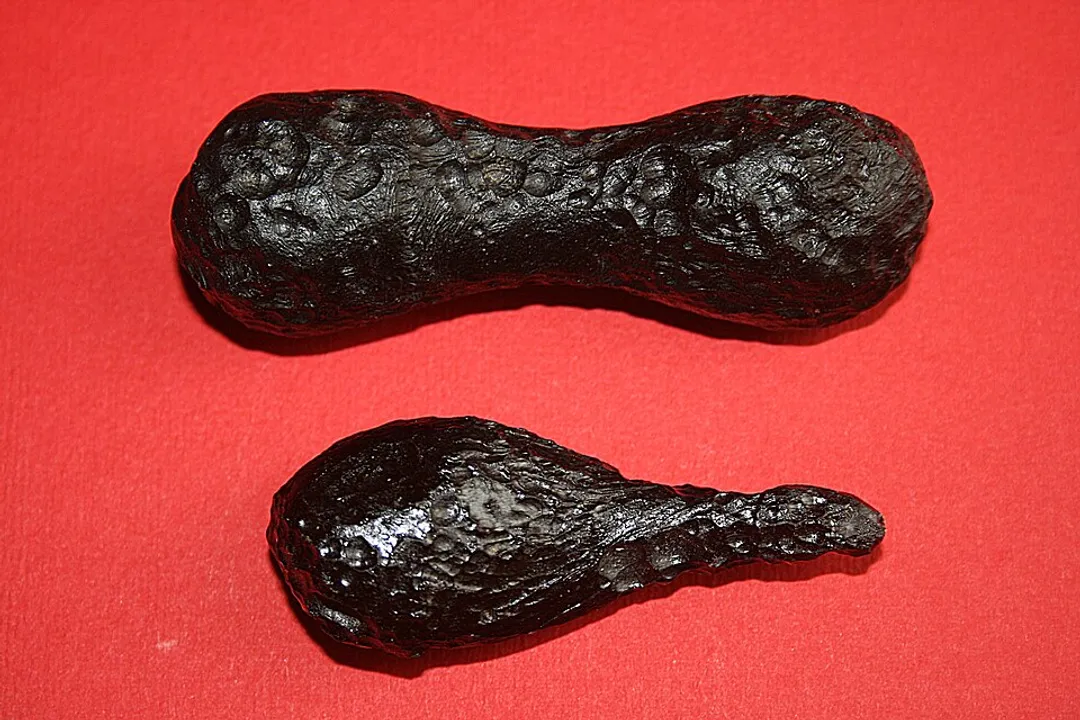
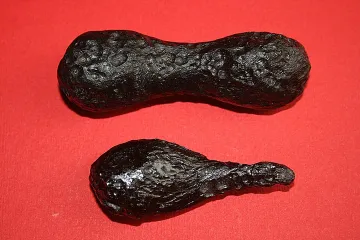
On Earth, the aftermath can be complex. The intense pressure and heat melt local terrestrial material, which can be ejected and cool rapidly into glass-like objects called tektites. [4] These tektites, which are terrestrial in origin but formed by the impact, are often confused with actual meteorites. [4] Rock that is either created or modified by the impact event, sometimes containing pieces of the original space rock, is termed impactite. [4] The study of these impact structures, even when the original projectile is gone, offers clues about the projectile's velocity and the resulting seismic and atmospheric effects. [4]
# Finding the Grounded Rock
The process of finding a meteorite involves more than just spotting a streak of light; it requires careful observation and understanding of the final fall mechanics. [2] As mentioned, the fragments undergo dark flight, losing their glow and slowing to terminal velocity. [2] They land much further away and are often indistinguishable from terrestrial rocks unless one knows what to look for. [2]
For example, the discovery of the New Zealand meteorite in 2024 was greatly aided because a sharp-eyed enthusiast had a specialized camera pointed in the right direction, capturing the fireball which allowed researchers to use the trajectory data to pinpoint a landing zone away from where it looked like it landed. [2] This illustrates that even seemingly localized events can have widely dispersed fragments, making non-instrumented recovery of an entire fall exceptionally rare. [2]
When you do examine a potential find, remember that meteorites are chemically and structurally altered by atmospheric entry. [4] A key distinction for identification is the likely presence of nickel-iron alloy, which is rare in terrestrial rocks but common in meteorites. [4] Furthermore, many stony meteorites (chondrites) possess chondrules, small, glassy spherules that are almost exclusively an extraterrestrial feature. [4]
One way to appreciate the rarity of ground impacts versus atmospheric flashes is to consider the sheer volume of material involved daily. NASA estimates approximately $48.5$ tons of material enter the atmosphere daily. [3] If we assume that most of this is small debris, and knowing that the Chelyabinsk event, a relatively small object, caused significant local damage from an airburst, the ratio of airbursts to true ground strikes (recoverable meteorites) must be heavily skewed toward the harmless atmospheric incineration. Therefore, the survival of a body large enough to survive atmospheric breakup and be found on the ground is a statistical anomaly of celestial mechanics meeting terrestrial geography.
Another practical consideration for anyone interested in meteorite recovery relates to the search area. Since the fragments fall at terminal velocity, they tend to follow a relatively narrow "footprint" downwind from the point where the visible meteor ended. [2] If an observer reports seeing a fireball seemingly land just over the nearest hill, as happened in the New Zealand case, the actual impact zone could be tens or even over a hundred kilometers away, depending on the altitude of the dark flight and local wind patterns. [2] This means that without trajectory data, searching based on a visual sighting alone is often futile, as the true impact zone is likely well outside the immediate vicinity. [2] For the layperson, finding a genuine meteorite is usually the result of stumbling upon a freshly exposed specimen—perhaps uncovered by construction or erosion—rather than tracking a recent, visible fall.
Related Questions
#Citations
Meteors and Meteorites - NASA Science
Meteoroid - Wikipedia
Meteors | Some Meteorite Information | Washington University in St ...
Notable Asteroid Impacts in Earth's History | The Planetary Society
What Happens When Large Meteorites Impact the Earth? | AMNH