What color is a fast meteor?
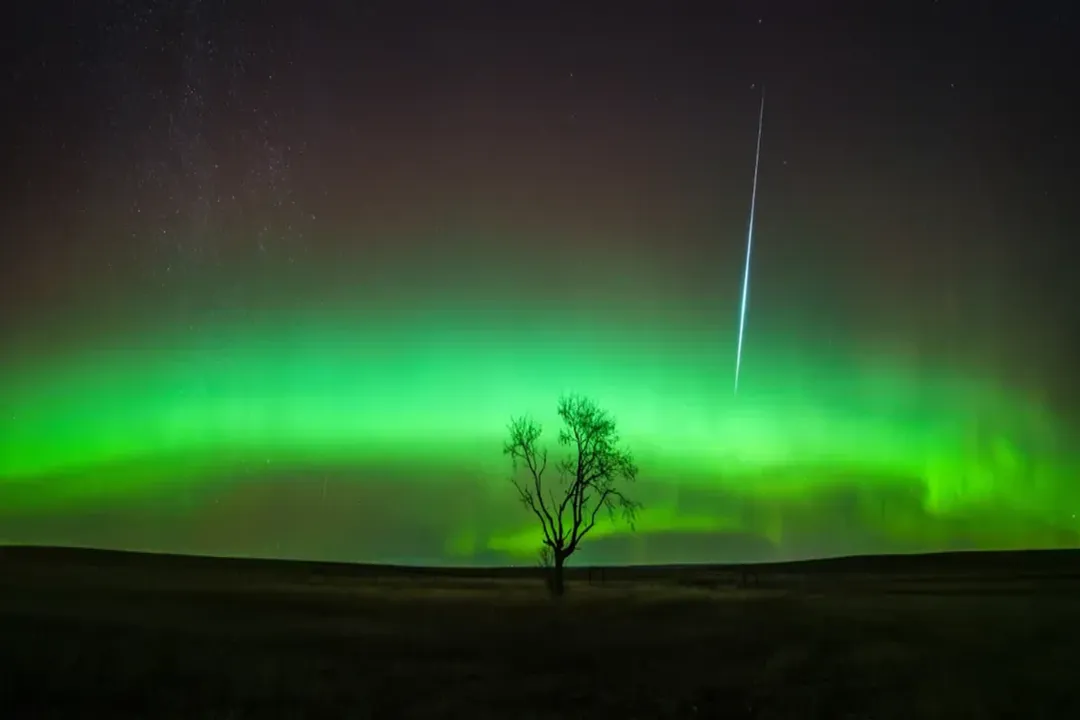
The streak of light left by a space rock plunging through our atmosphere is a brilliant, fleeting spectacle, and one of the most captivating aspects is the color painted across the sky. This luminous display isn't just a pretty visual effect; it offers researchers a direct window into the object's physical state and its elemental makeup. The color of a meteor is determined by the extreme heat generated from atmospheric friction, which excites the atoms both in the incoming dust particle and the surrounding air, causing them to emit light at specific wavelengths.
# Heat and Plasma
When a meteoroid—the technical term for the dust particle before it streaks—hits the air, it travels at astronomical speeds, often in the range of kilometers per second as it encounters Earth. The object compresses the air in front of it so rapidly that the air molecules become superheated into a plasma, reaching temperatures as high as or . This process is known as impact excitation, where the intense collisions cause atomization and ionization of both the meteoric material and the atmospheric gases. The light we see is essentially the atoms relaxing back to their normal energy states after absorbing this immense energy, much like the principle behind a laboratory flame test.
# Elemental Signature
The vibrant colors, which elevate a simple "shooting star" into a memorable event, are primarily the signature of the vaporized materials from the meteoroid itself. The final color observed depends on which element's emission spectrum dominates the visible light.
Common terrestrial elements found in meteorites, such as silicon, oxygen, and iron, translate into distinct hues when vaporized in this plasma environment.
| Element (Ionized State) | Typical Color in Meteor | Context |
|---|---|---|
| Sodium () | Orange-Yellow | Contributes a strong, distinct shade. |
| Iron () | Yellow | Often present, contributing to the common yellow glow. |
| Magnesium () | Blue-Green | Signals the presence of this element. |
| Calcium () | Violet Tinge | Ionized calcium produces a violet hue, unlike its orange-red color in a lab flame. |
| Nickel () | Green | Often observed alongside magnesium. |
While many meteors look uniformly white or yellowish to the casual observer, a strong concentration of a specific metal can make its signature color pop through. When numerous spectral lines from various elements merge—as happens when rock rich in iron, nickel, and magnesium vaporizes—the result is the common, continuous spectrum we perceive as bright white.
# Atmospheric Hue
It is important to remember that the light isn't only from the space dust. The super-heated atmosphere itself, composed mainly of nitrogen () and oxygen (), also glows when ionized. Both nitrogen and oxygen atoms tend to emit a characteristic red light when heated.
If a meteor is slower, the lower energy of the event means the red glow from the atmospheric gases is more likely to influence or even dominate the overall color. However, the faster the object, the more effectively its own chemistry takes center stage.
# Velocity Dominance
The defining factor in what color a fast meteor is comes down to the sheer violence of its entry. Meteoroids that strike Earth head-on are traveling much faster than those that merely overtake the planet in orbit. This increased velocity leads to hotter plasma and a more intense ablation process, where the metal emissions from the meteoroid itself become the primary light source, overriding the atmospheric background glow.
This relationship between speed and composition color is quite specific according to spectroscopic analysis, illustrating that the physics of the entry dictates the visual result:
- Fast Meteors (greater than ): These tend to ionize magnesium readily, resulting in a predominant green flash. The extremely fast Leonids, for instance, are known for showing bluish-white or green hues.
- Moderate Velocity Meteors (): These velocities tend to ionize iron more effectively, leading to a blue appearance.
- Slow Moving Meteors (less than ): These are more likely to show the color associated with sodium, appearing yellow-orange.
Observing a bright, fast meteor is therefore the best opportunity to see these metallic colors, as the energy is high enough to fully vaporize and excite elements like magnesium and calcium.
# Seeing the True Colors
The visual experience can also be dramatically altered by the observer’s own physiology. At the low light levels encountered when observing meteors, our eyes rely heavily on the rod cells, which are most sensitive to the bluish-green portion of the spectrum. This biological bias can make an object that is, chemically speaking, white or pale yellow appear distinctly greenish-white to the naked eye. To see the subtler, more vibrant colors—like the violet from calcium or a pure blue from iron—the light needs to be bright enough to fully engage the cone cells responsible for true color perception. One way to circumvent this natural limitation is by using binoculars; by gathering more light from the streak, you can increase the apparent brightness enough to activate those cone cells, potentially revealing colors hidden from the unaided eye. This suggests that if you are observing a faint but potentially colorful meteor, try viewing it slightly off-center or with magnification to enhance the color signal above the ambient rod-cell sensitivity.
# Shower Signatures
While the color of any single, random meteor offers limited scientific insight, when observing a meteor shower, the consistent colors across multiple events reveal information about the parent body. Since all the debris in a shower originates from the same comet or asteroid, their chemical fingerprints should align.
For example, the Geminids, which are unique because they originate from the asteroid 3200 Phaethon rather than a comet, are known for being multi-colored, often showing white, yellow, and occasionally green or blue-green streaks. This mixture points toward a rocky composition rich in iron and sodium. Conversely, the Perseids and Leonids frequently display green, suggesting a higher concentration of magnesium and nickel in their respective parent comets. By analyzing the spectrum of several meteors from a single shower, astronomers can effectively analyze the chemistry of a distant comet without ever sending a probe. Even the rare, long-lasting atmospheric effects, like persistent trains that can hang in the sky for minutes, are chemical clues, glowing due to sodium or iron oxide reacting with ozone and oxygen high in the atmosphere.
Related Questions
#Citations
Leonid MAC - Facts on meteors and meteor showers
What Do Meteors' Colors Tell Us? - IFLScience
How true is this? : r/Astronomy - Reddit
How big are the meteors that we see as shooting stars? What factors ...
What is one peculiar visual characteristic of each type of meteor ...
Geminid meteor shower 2025: when and where to see it in the UK