Will the meteor shower be visible everywhere?
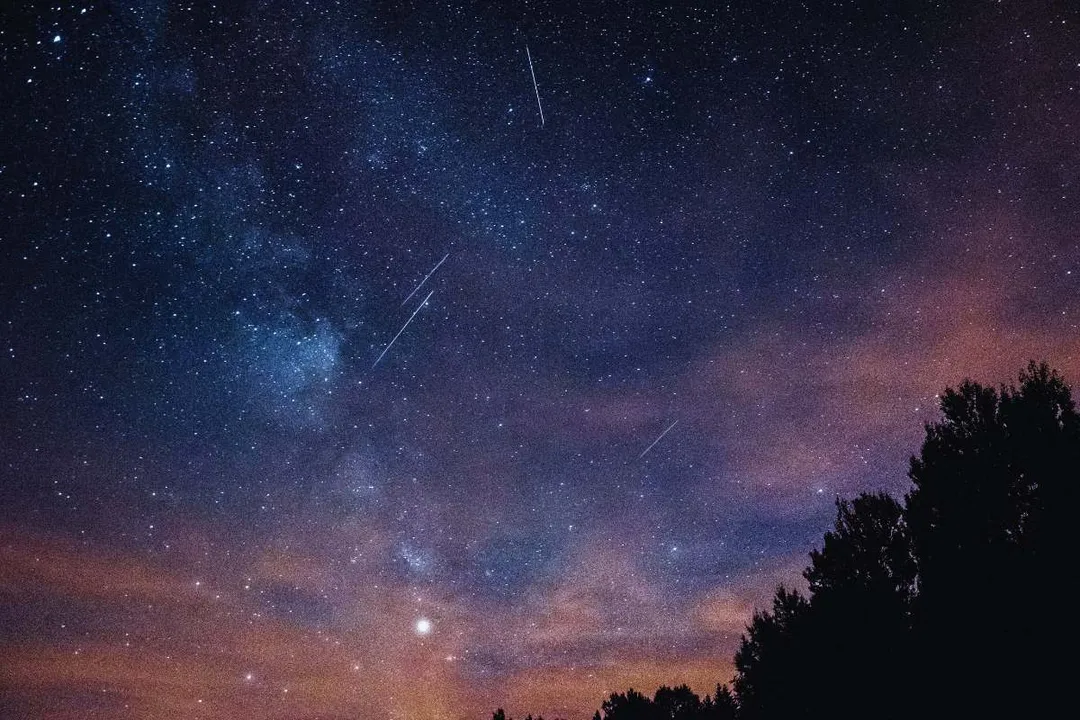
The visibility of any given meteor shower is never a guarantee of a spectacular show for every person on Earth simultaneously. While the debris streams that cause these celestial events blanket regions of space, observing them successfully depends heavily on where you are standing, what time it is locally, and what obstacles exist between you and the night sky. [3][4] It is a common misconception that because a shower is active, millions of streaks will be visible worldwide; in reality, viewing success is a highly localized affair governed by geography and atmospheric conditions. [2]
# Global Reach
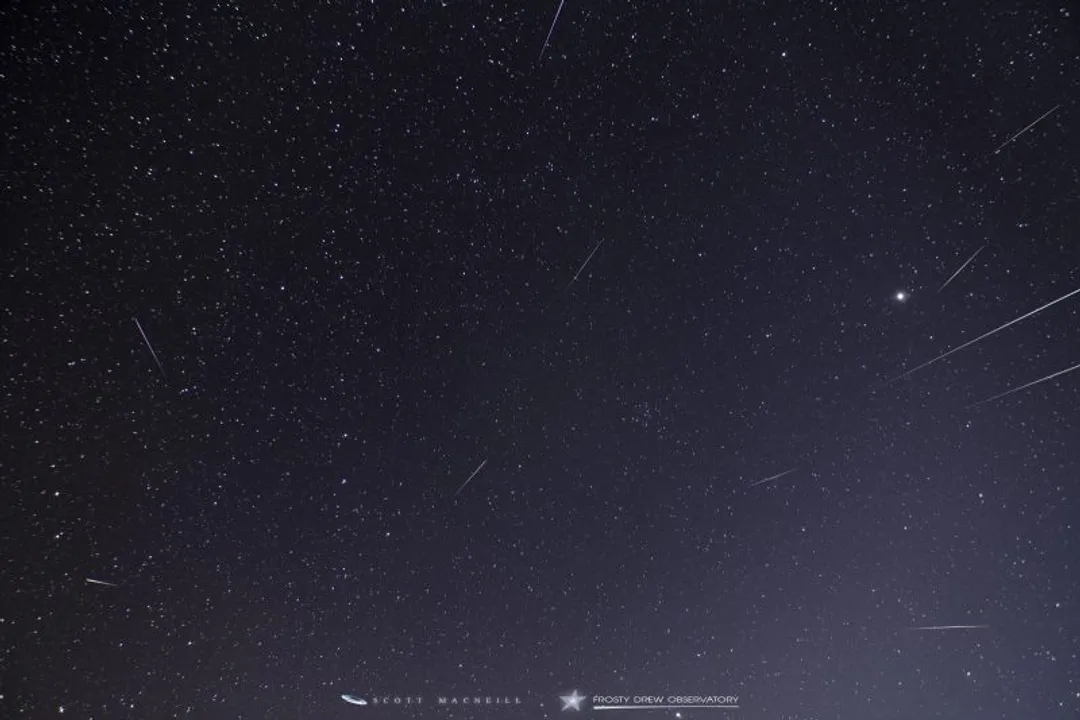
Meteor showers are not uniform across the globe because the Earth rotates and the orientation of the shower’s radiant—the apparent point in the sky from which the meteors seem to originate—changes relative to different latitudes. [1][5] For instance, showers associated with constellations primarily visible in the Northern Hemisphere may offer a superior display to observers in North America or Europe compared to those near the Equator or in the Southern Hemisphere. [1] Conversely, some events favor Southern observers. The visibility window for any particular shower is tied directly to the position of its radiant above the local horizon. [4] If the radiant point is below your horizon, you will see nothing from that specific shower, regardless of how intense the activity is elsewhere. [3] The American Meteor Society (AMS) calendar highlights various showers throughout the year, demonstrating this geographical spread as different events become optimal for different parts of the world at different times of the year. [1]
# Radiant Height
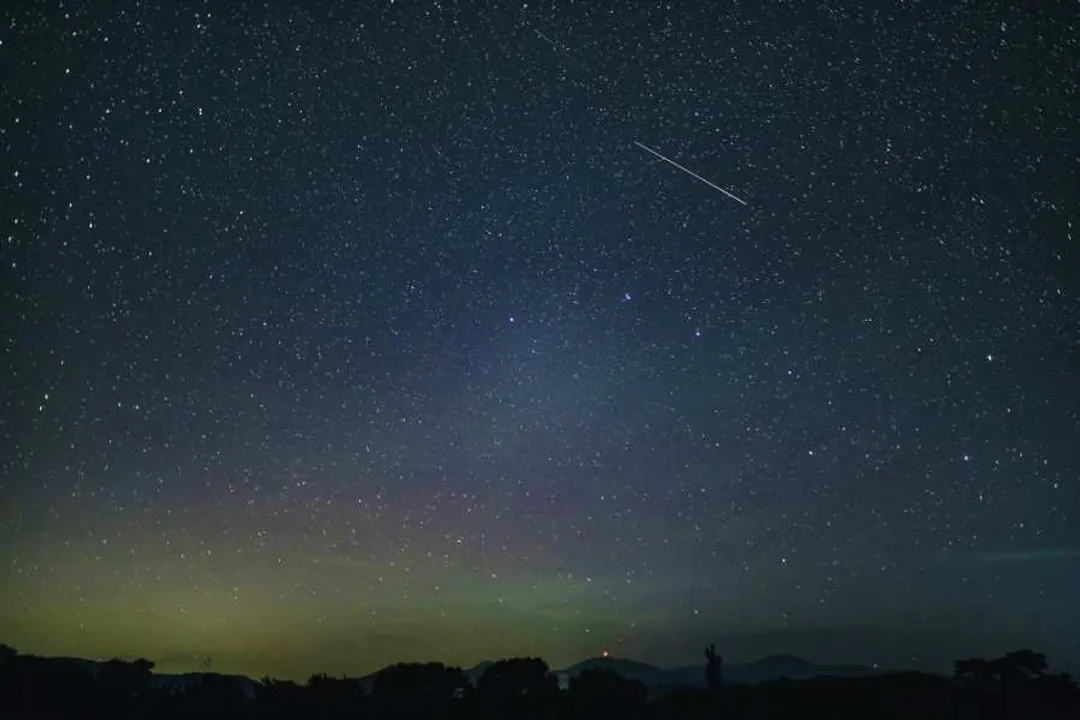
The critical determinant for local visibility is the height of the radiant above the horizon. A meteor entering the atmosphere will only be visible if it streaks across a portion of the sky that is actually above you. [3][4] When the radiant is near the horizon, meteors that appear will trace very short paths because most of their trajectory occurs below the horizon line, effectively being cut off by the curvature of the Earth. This geometric limitation means that even during the peak hour of a major shower, an observer whose radiant is low will see far fewer meteors than someone positioned at a location where the radiant is high overhead. [3]
To maximize your chances, look for times when the radiant is highest in the sky, generally in the hours just before dawn for most established showers. [2][4] If a shower’s radiant is near the celestial equator, observers in both hemispheres might catch some activity, but the shower’s true peak intensity (often measured by the Zenithal Hourly Rate, or ZHR) is usually achieved when the radiant is at its highest point for the most favorable latitudes. [5] Considering latitude difference, if a shower originates from a radiant close to the North Celestial Pole, viewers far south will have a much harder time seeing it than those near the pole, as the radiant may never clear the southern horizon for them. [1]
# Sky Darkness
Even when the radiant is perfectly positioned overhead, the sky itself must be dark enough to reveal the event. This is perhaps the most common reason for disappointment when viewing, especially for those living in or near metropolitan areas. [2][3] Light pollution, generated by streetlights, buildings, and vehicles, effectively drowns out the fainter meteors that make up the bulk of a shower's activity. [2]
While a major shower like the Geminids, which sometimes boasts high ZHRs, might produce visible fireballs even in moderately bright skies, the subtle background meteors responsible for the bulk of the count disappear entirely. [3][5] An observer in a dark rural location might count 100 meteors per hour under ideal conditions, whereas a city dweller might only register five or six bright streaks in the same time frame, leading to the feeling that the shower was a flop. [2]
Furthermore, the Moon acts as a natural, albeit temporary, source of light pollution. [3] Astronomers often note that the best viewing occurs when the Moon is new or below the horizon during the shower's peak hours. A bright, near-full Moon can reduce the visible count by 75% or more, similar to the effect of moderate city lighting. [3] If the peak of a highly anticipated shower, such as the Perseids, coincides with a bright gibbous Moon, the show will be muted everywhere, regardless of the local light pollution profile. [3]
| Viewing Factor | Best Condition | Impact on Visibility | Source Mention |
|---|---|---|---|
| Radiant Position | High in the sky (near zenith) | Maximizes visible meteor paths | [3][4] |
| Local Time | After midnight, before dawn | Radiant is typically highest | [2][4] |
| Light Pollution | Near zero (rural/remote site) | Reveals fainter, more numerous meteors | [2][3] |
| Moon Phase | New Moon or Moon below horizon | Prevents natural sky brightening | [3] |
# Shower Calendar
A look at any comprehensive meteor shower calendar reveals that activity is almost continuous, but the prominence of these events varies greatly throughout the year. [1][5] For example, the Quadrantids in early January peak very sharply and are generally better viewed from the Northern Hemisphere, as their radiant is well-placed for those latitudes. [1][5] In contrast, some less-known showers might have activity spans lasting weeks but yield only a handful of visible meteors per hour even under perfect conditions. [1]
When comparing annual events, the viewing window is often a subtle calculation based on annual Earth orbit mechanics rather than pure radiant placement. The Geminids, peaking in December, are often cited as one of the most reliable annual showers because the peak activity frequently aligns well with local midnight hours in many populated areas and the radiant is quite high for mid-northern latitudes. [5] By contrast, the Taurids, which appear over a long period, are often most visible in the evening, but the radiant stays quite low to the horizon for many northern viewers, meaning the true expected hourly rate might be significantly lower than the advertised ZHR. [5]
To genuinely assess visibility for a specific night, one must cross-reference the shower's radiant coordinates (declination and right ascension) with their own latitude and the time of the peak for that evening, something specialized astronomy apps can do instantly, but which requires manual calculation otherwise. [4] For instance, if a shower’s radiant has a declination of +60 degrees, an observer at a latitude of +30 degrees (like central Florida or parts of the Mediterranean) will never see the radiant much higher than 30 degrees above their northern horizon, drastically limiting the visible streaks compared to an observer in Canada at +50 degrees latitude. [1]
# Viewing Tips
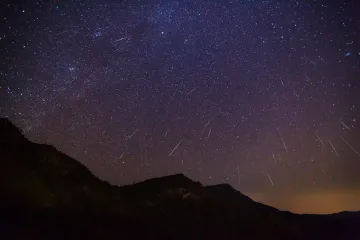
Achieving a good view requires preparation that goes beyond simply knowing the date. First, get as far away from artificial light as possible. [2] This means driving out to a park, rural area, or using a dark-sky map to find an optimal location, a step sometimes easier said than done depending on regional geography, as the Instagram and local guides for dense areas like Los Angeles attest—even finding a slightly less light-polluted spot is considered a win there. [6]
Second, allow your eyes time to adapt to the darkness, a process that takes about 20 to 30 minutes. [2][3] During this adaptation period, avoid looking at any bright screens, including cell phones, or direct your gaze toward oncoming headlights. If you must use a device, utilize a red-light mode, as red light minimally impacts night vision adaptation. [2] Finally, avoid staring directly at the radiant point. [2][3] While the meteors appear to stream from that spot, the longest and most impressive streaks are often seen when looking about 10 to 20 degrees away from the radiant, giving the meteors a longer visible path across your field of view. [2]
Related Questions
#Citations
Meteor Shower Calendar 2025-2026
Meteor shower guide 2025: Up next … the Ursids - EarthSky
Meteor showers 2025: When, where and how to see the best ...
Meteor Shower 2025/2026 – What Time to See Shooting Stars
Meteor Shower Calendar | IMO - International Meteor Organization
Meteor Shower Tonight: Shooting Stars in December 2025
The Ursid meteor shower 2025: How to watch | The Planetary Society
Follow @the_secrets_of_the_universe for regular space ... - Instagram
Where And When To See Meteor Showers Near L.A. This 2026