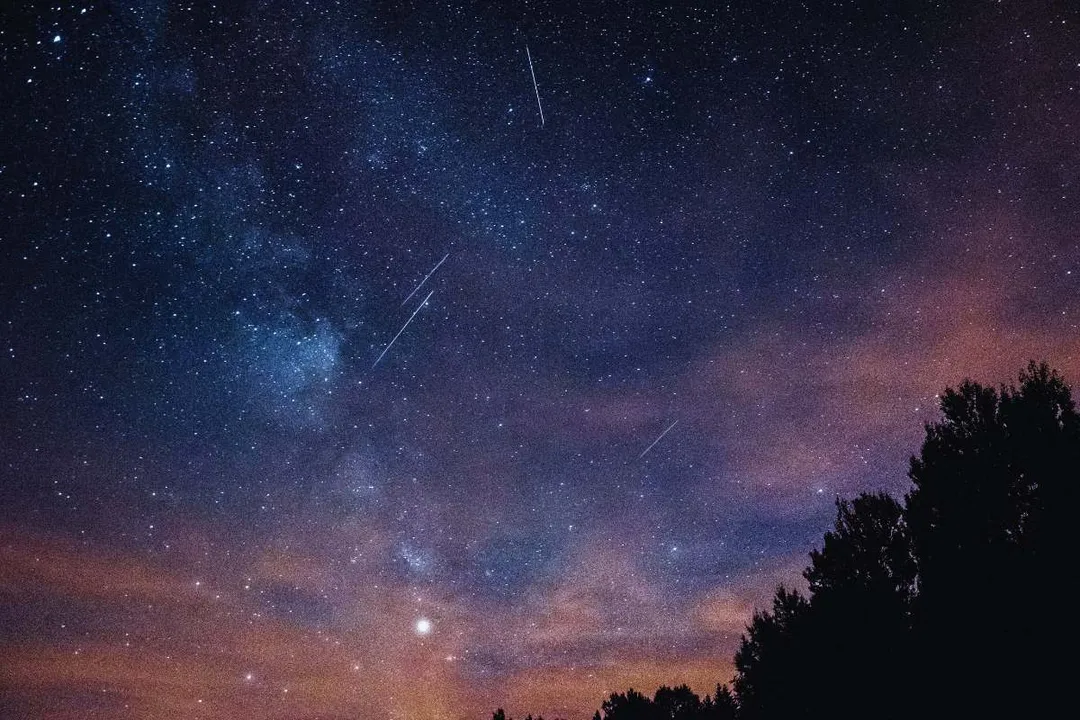
What geometric limitation occurs when a meteor shower radiant is near the horizon?
Meteors trace very short paths because most of their trajectory is below the horizon line.
When the radiant, the apparent origin point of the meteors, sits low near the local horizon, the visible portion of a meteor's path is severely curtailed. Since a meteor will only be visible if it streaks across a portion of the sky that is actually above the observer, if the radiant is low, the majority of the meteor's travel path occurs beneath the horizon line. This geometric constraint results in observed meteors exhibiting unusually short streaks because the curvature of the Earth effectively cuts off the initial and final parts of their atmospheric entry path before they can be seen or after they pass from view, regardless of how intense the shower activity is elsewhere.