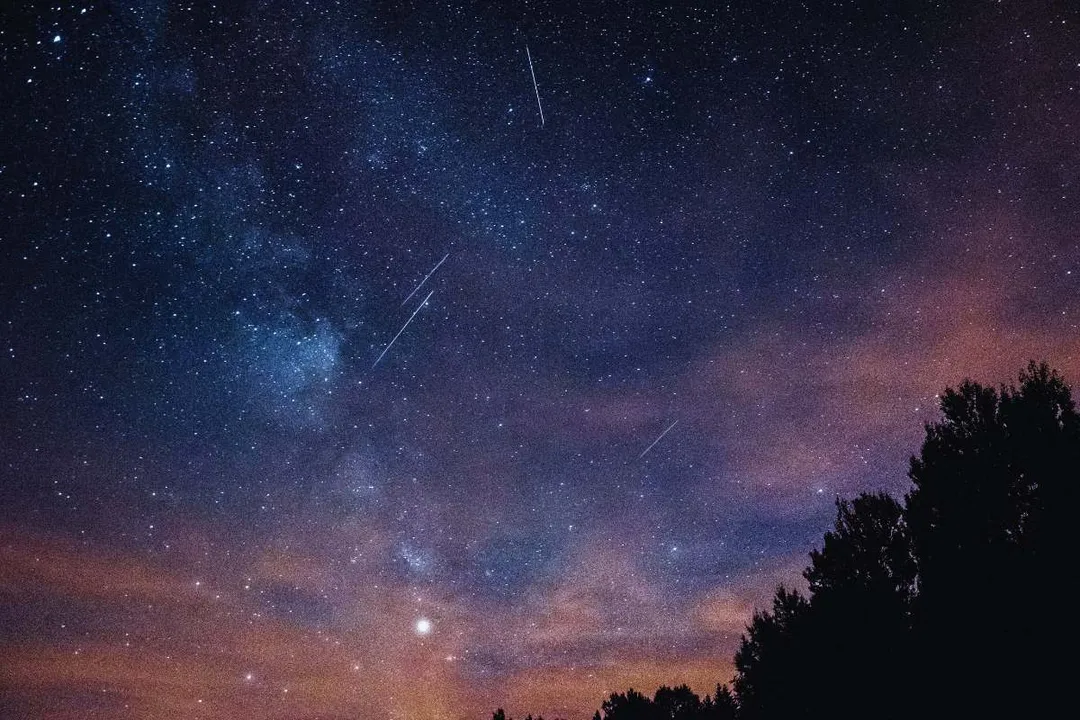
How significantly can a bright, near-full Moon diminish the visible count of a meteor shower?
By 75% or more, similar to moderate city lighting.
The Moon, when bright (such as during a gibbous or full phase), acts as a natural but powerful source of light pollution that temporarily degrades viewing conditions across the entire illuminated area. Astronomers frequently observe that the presence of a bright, near-full Moon can cause a drastic reduction in the number of visible meteors, sometimes cutting the observable count by 75 percent or even more. This level of reduction is comparable to the interference caused by moderate levels of city lighting. Consequently, if the peak of an anticipated shower, such as the Perseids, coincides with a bright gibbous Moon, the entire display will be significantly muted everywhere, overriding local light pollution profiles.